Sea creatures identification Addition & Subtraction Worksheets for 5-Year-Olds
3 filtered results
-
From - To
Introduce your 5-year-old to the magical underwater world with our "Sea Creatures Identification Addition & Subtraction Worksheets." These fun and educational worksheets blend math skills with marine life exploration, helping young learners practice basic addition and subtraction while identifying various sea creatures. Designed to engage imaginative minds, the colorful and interactive activities make math learning enjoyable and relatable. Perfect for early learners, these worksheets aim to build a solid mathematical foundation while enhancing their knowledge about fascinating sea animals. Dive into learning today and make addition and subtraction an aquatic adventure!
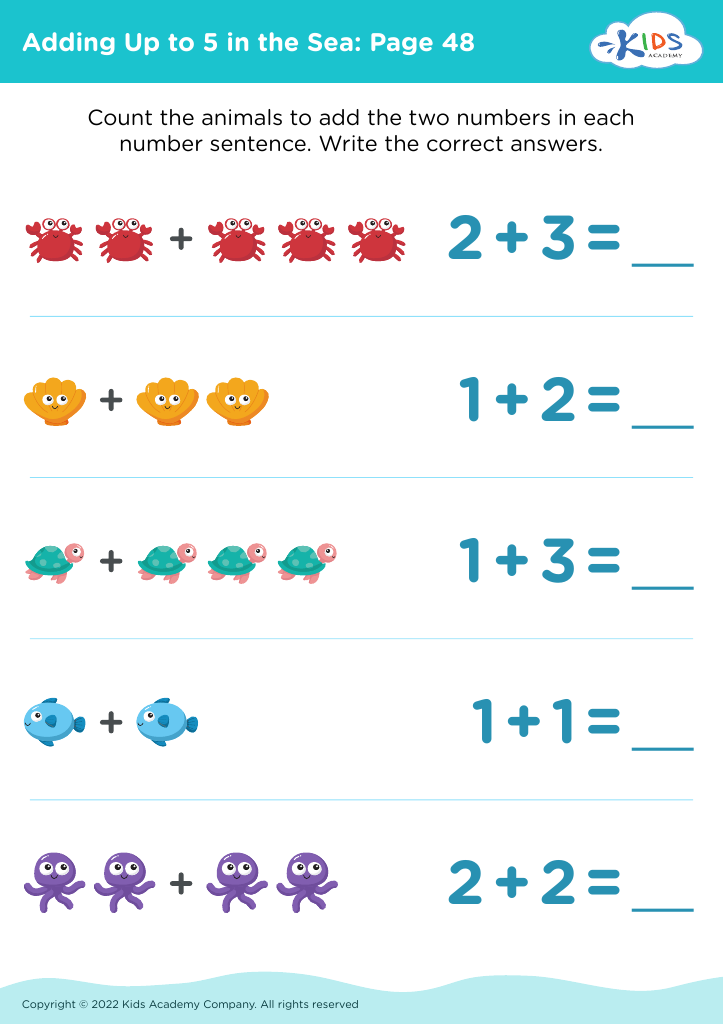
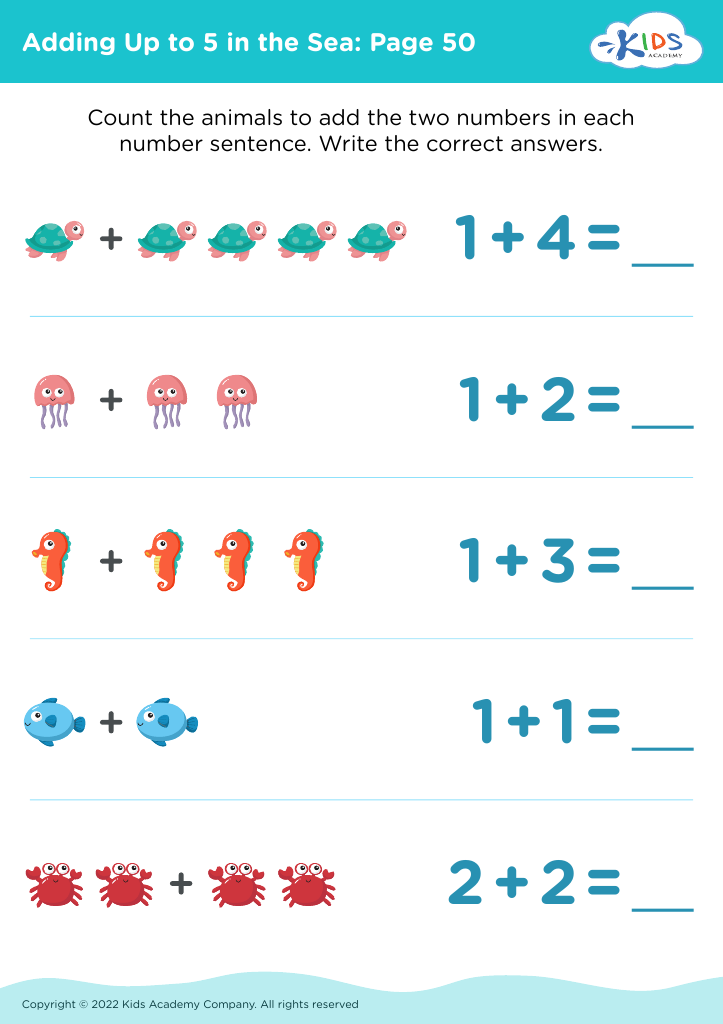
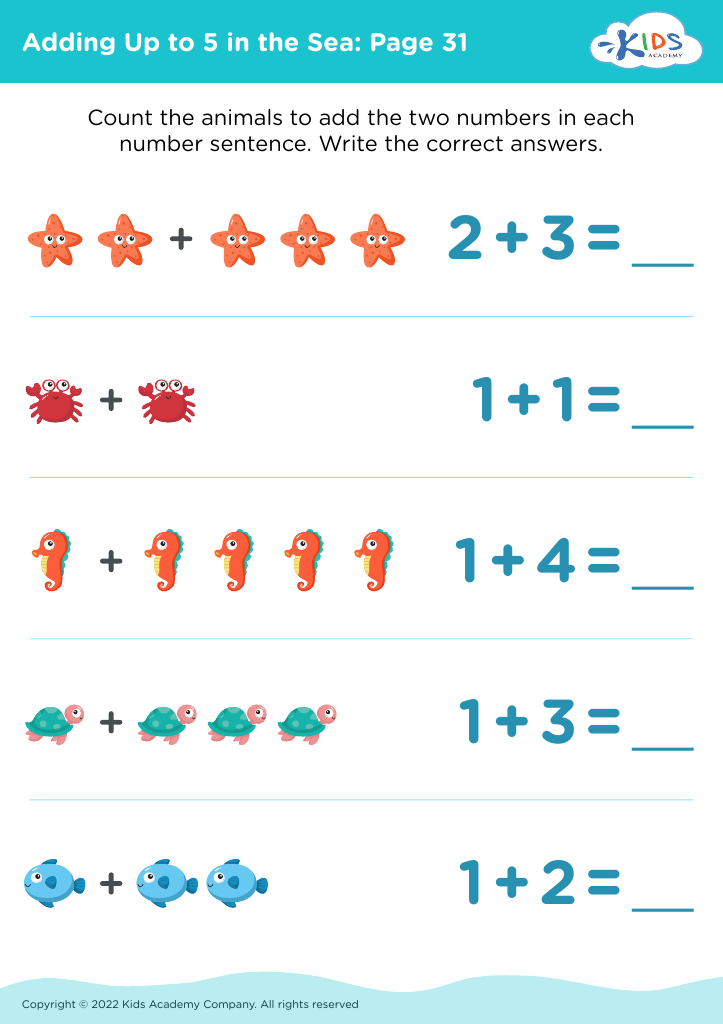








Understanding sea creatures while also incorporating addition and subtraction exercises can significantly benefit 5-year-olds. Firstly, sea creatures fascinate young children, stimulating their interest and enhancing their engagement with learning activities. This interest can be harnessed to teach essential math skills in a way that feels playful and exciting, rather than tedious.
Introducing addition and subtraction in this context leverages a child's natural curiosity about the ocean to pave the way for academic growth. Learning to identify different sea creatures expands a child's vocabulary and general knowledge about the natural world, setting a solid foundation for future scientific learning. Moreover, since 5-year-olds are in a crucial developmental stage where they are honing their cognitive, motor, and social skills, combining sea creature identification with math exercises fosters multifaceted development.
Mathematics is a cornerstone of early learning that enhances problem-solving abilities and logical thinking. By integrating numbers with sea creatures, children practice counting, addition, and subtraction in a visual and interactive manner. This multi-sensory approach aids memory retention and concept grasping. Parents and teachers investing time in these combined activities contribute to well-rounded foundational skills that will benefit the children long-term in both academic and everyday situations.








