Check out this FREE Trial Lesson on Addition & Subtraction for age 5!

H

Favorites
With answer key
Interactive
  • 5
  • Visual Learning
  • Addition & Subtraction
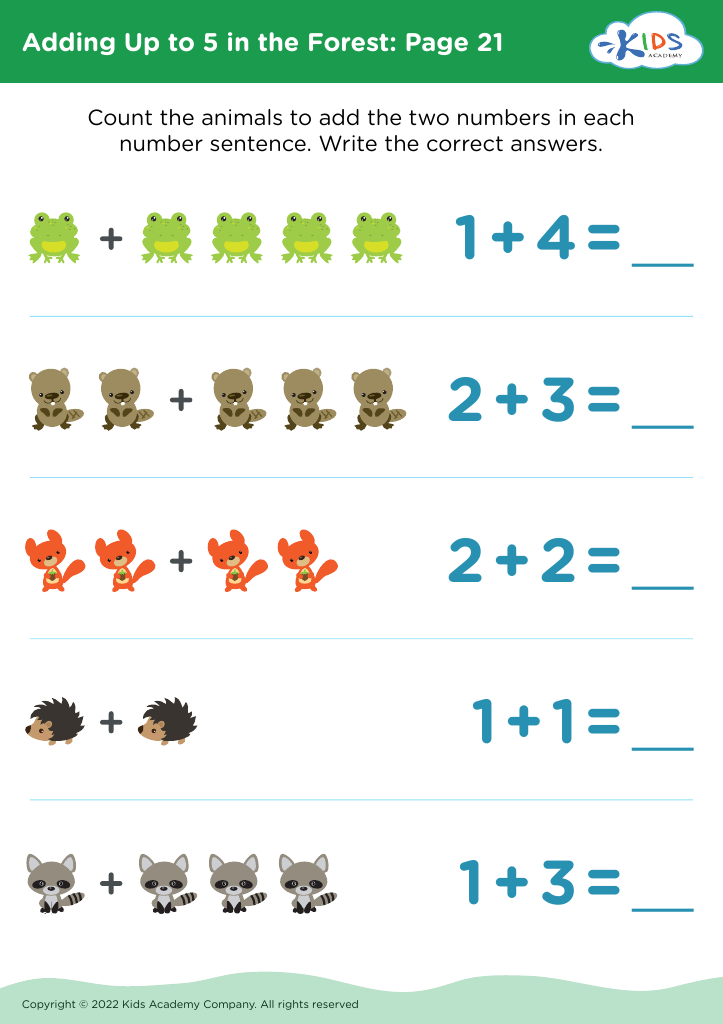
Adding Up to 5 in the Forest: Page 21
Worksheet
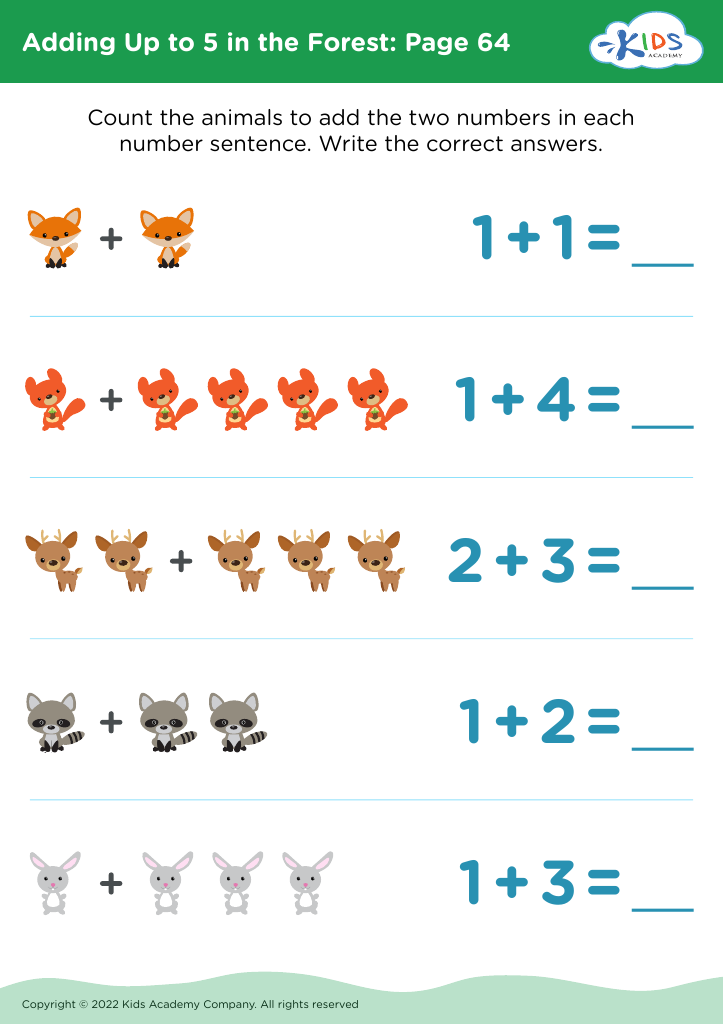
Adding Up to 5 in the Forest: Page 64
Worksheet
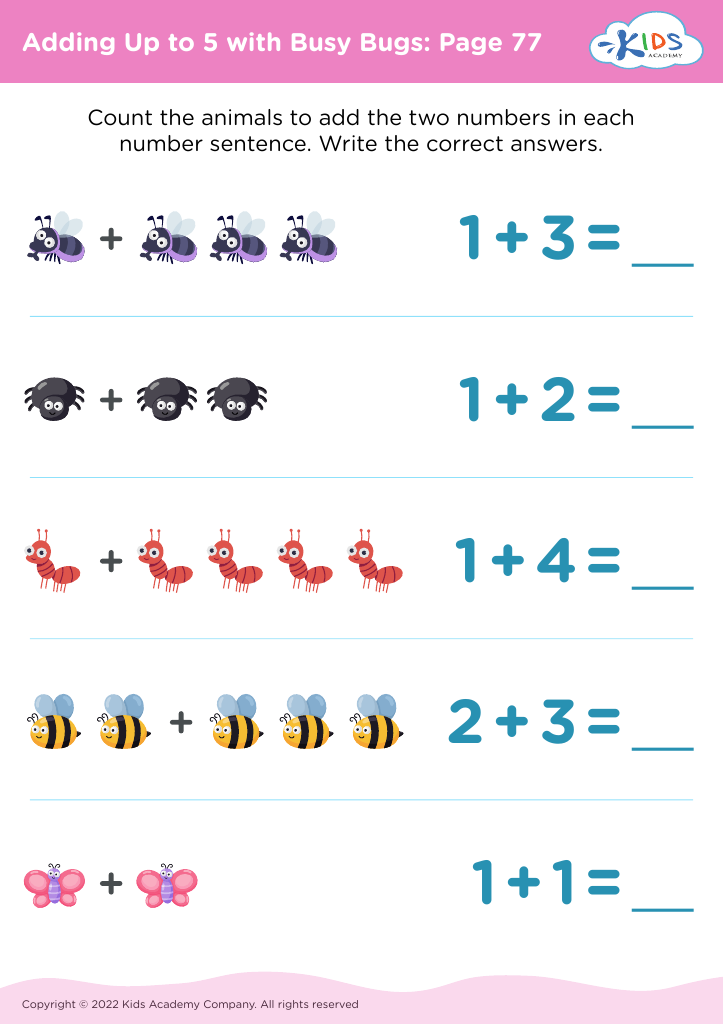
Adding Up to 5 with Busy Bugs: Page 77
Worksheet
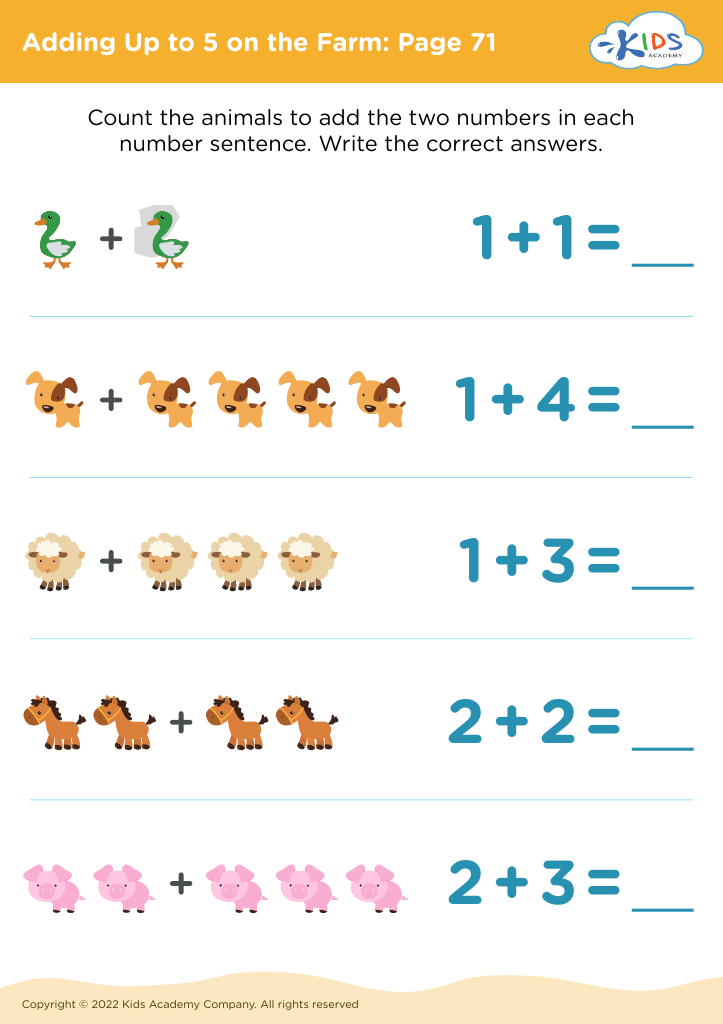
Adding Up to 5 on the Farm: Page 71
Worksheet
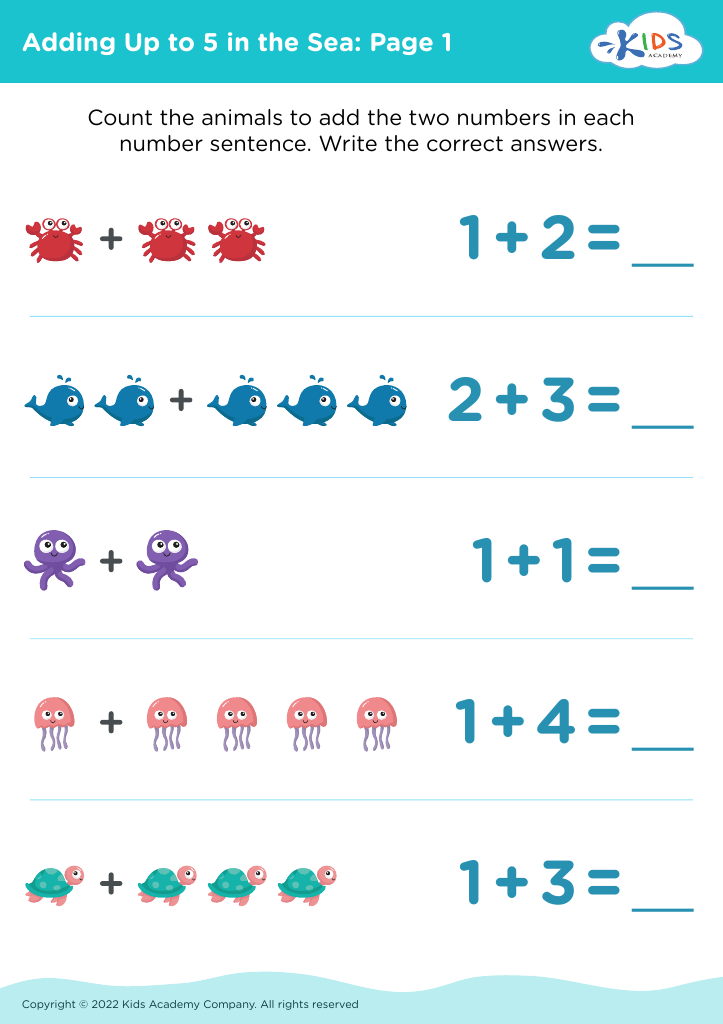
Adding Up to 5 in the Sea: Page 1

Adding Up to 5 in the Sea: Page 1

Adding Up to 5 in the Sea: Page 1
Worksheet
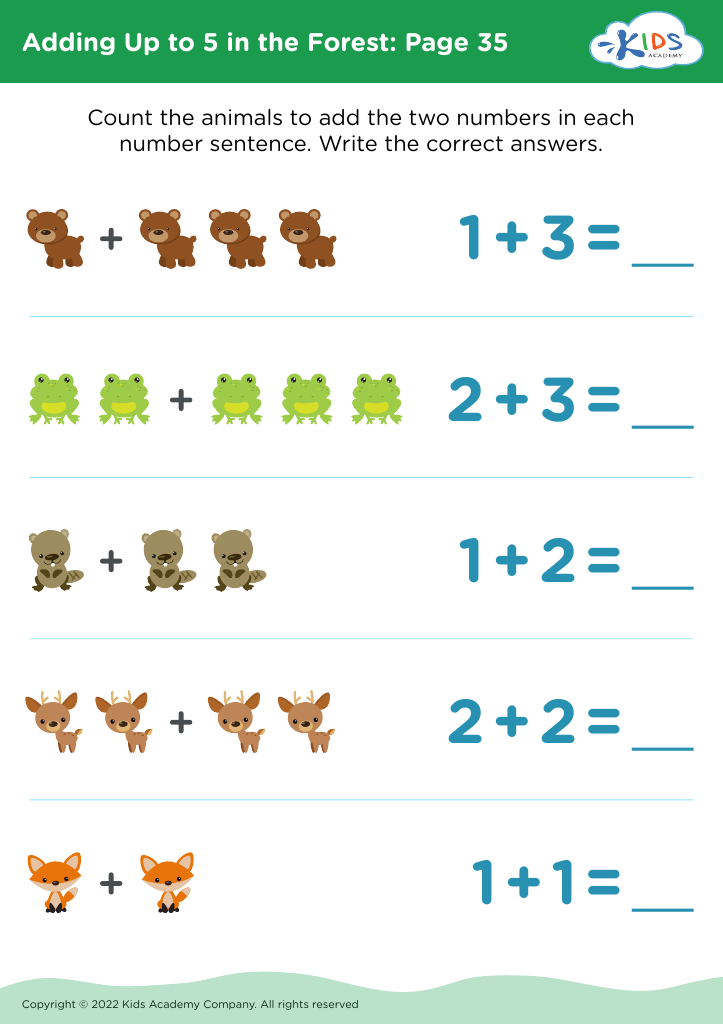
Adding Up to 5 in the Forest: Page 35
Worksheet
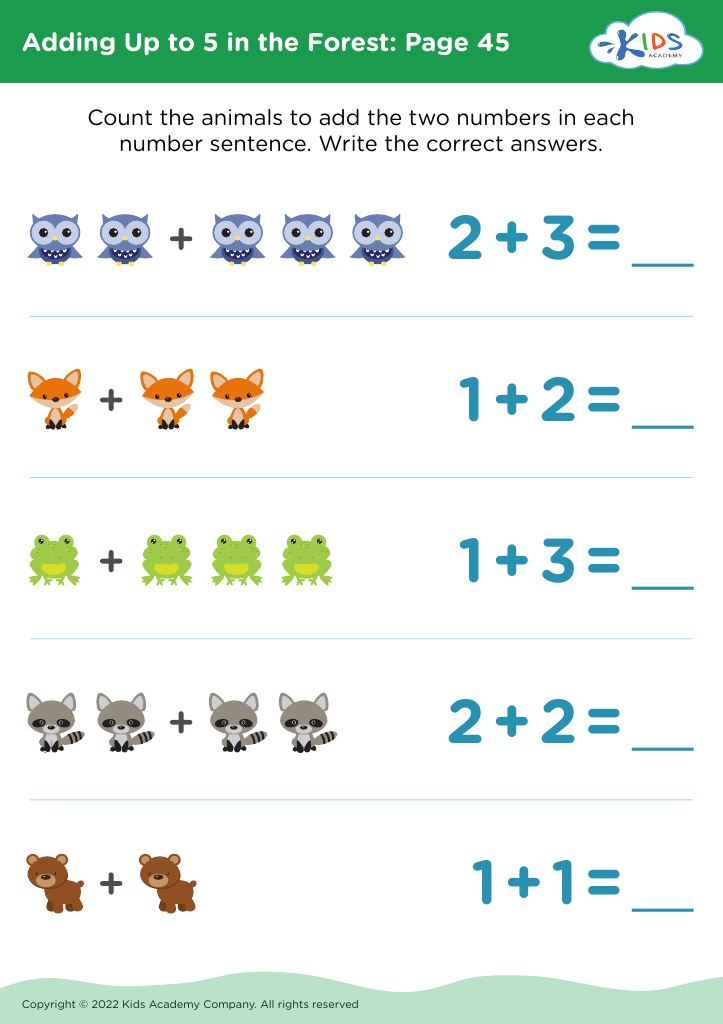
Adding Up to 5 in the Forest: Page 45
Worksheet
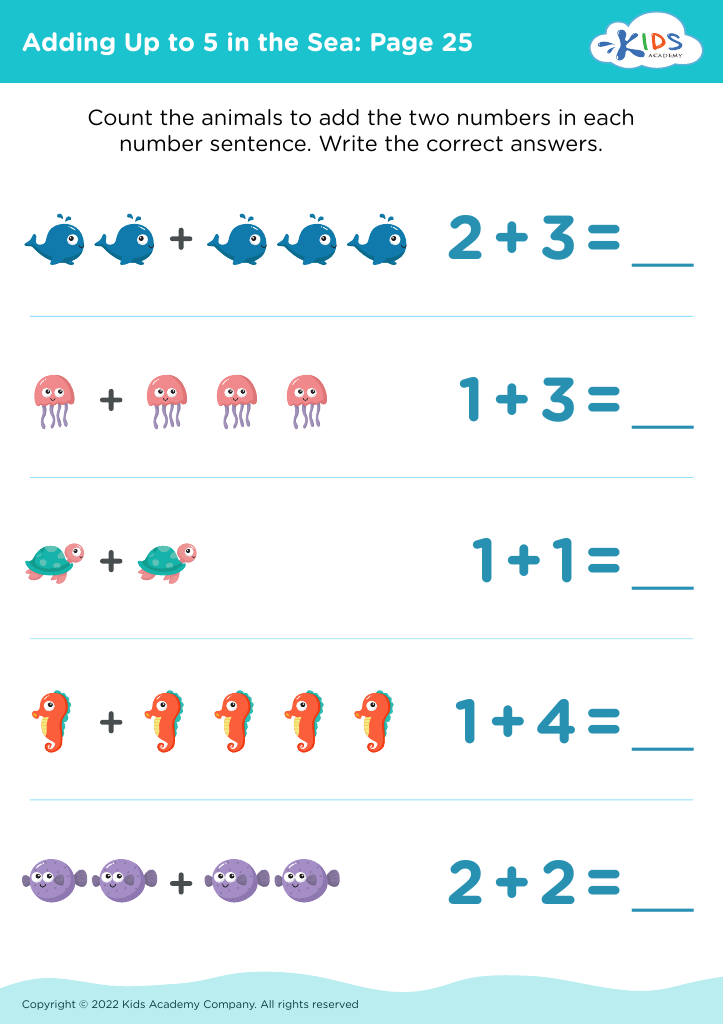
Adding Up to 5 in the Sea: Page 25
Worksheet
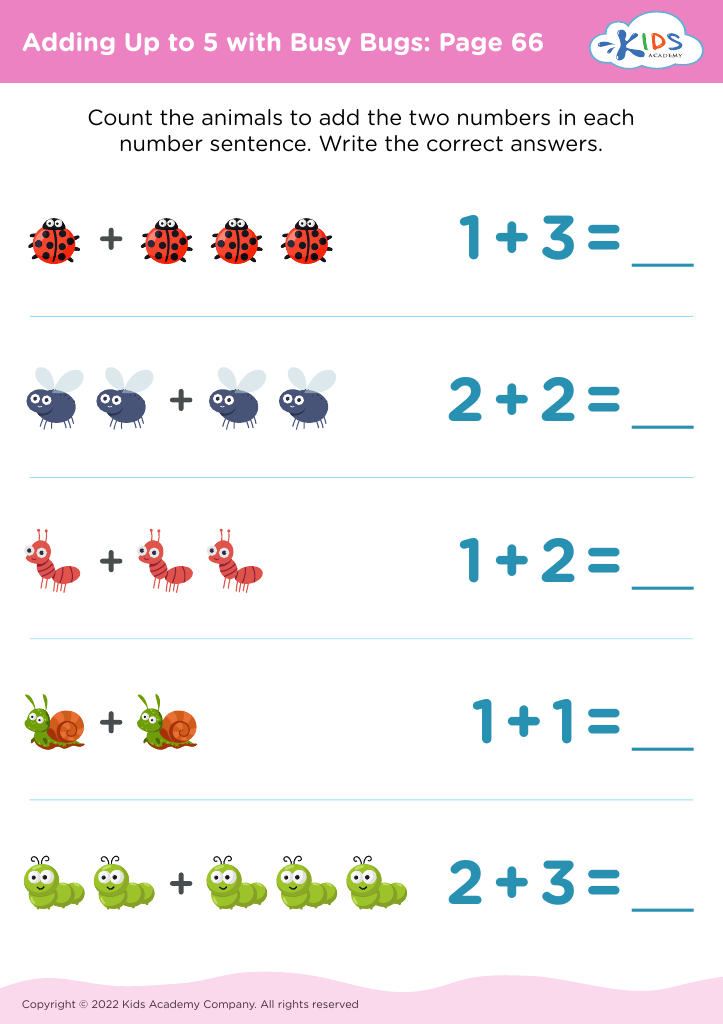
Adding Up to 5 with Busy Bugs: Page 66
Worksheet
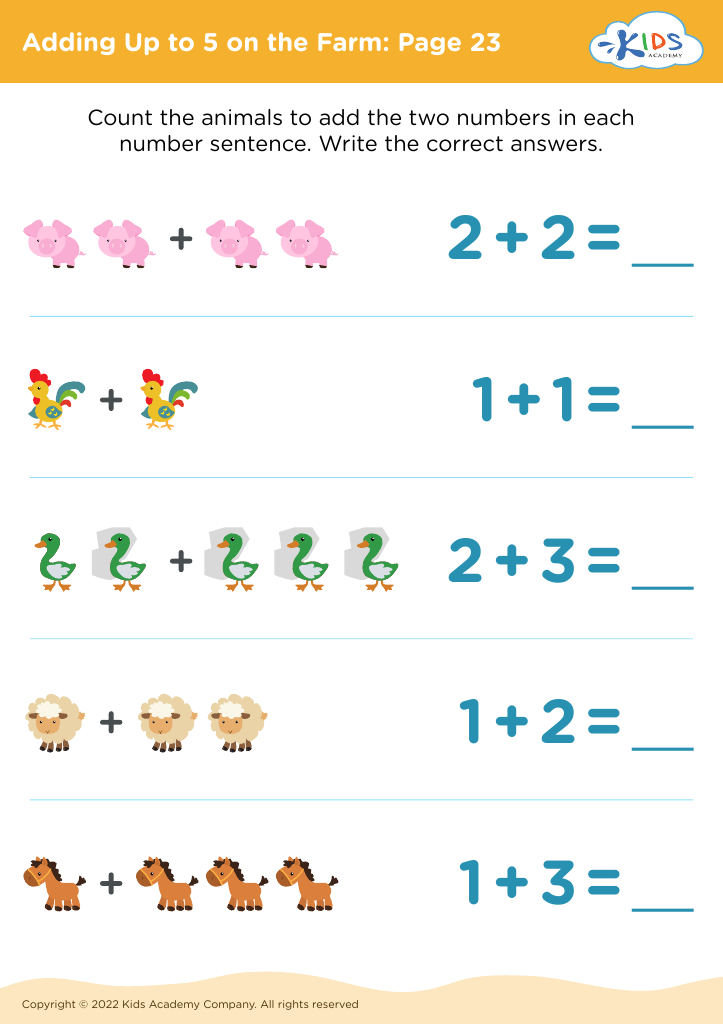
Adding Up to 5 on the Farm: Page 23
Worksheet
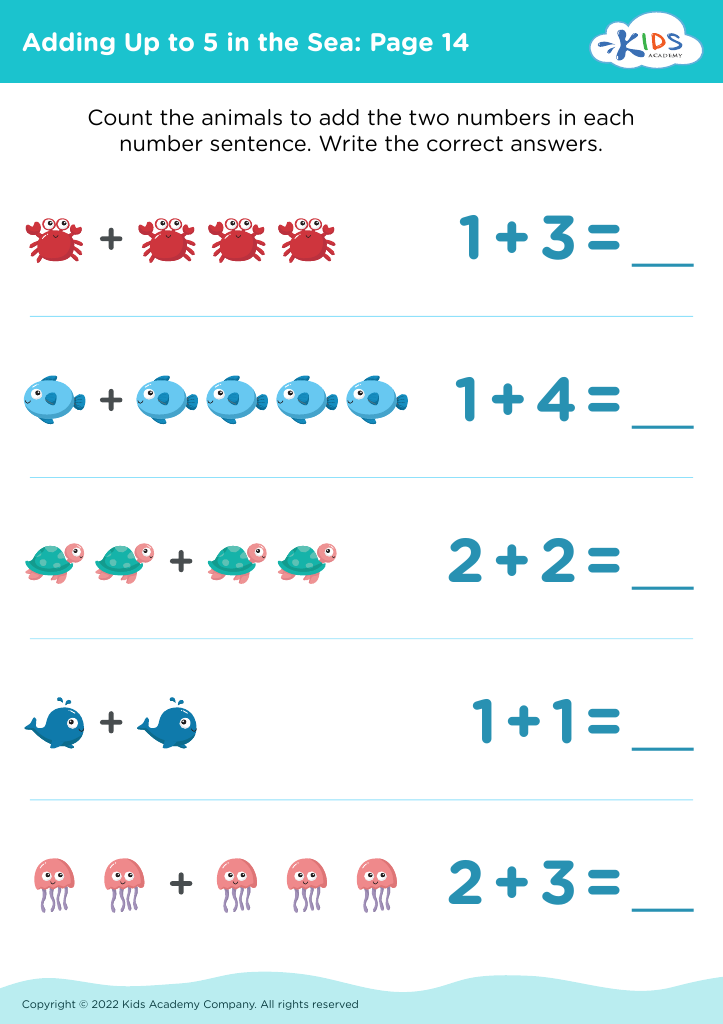
Adding Up to 5 in the Sea: Page 14
Worksheet
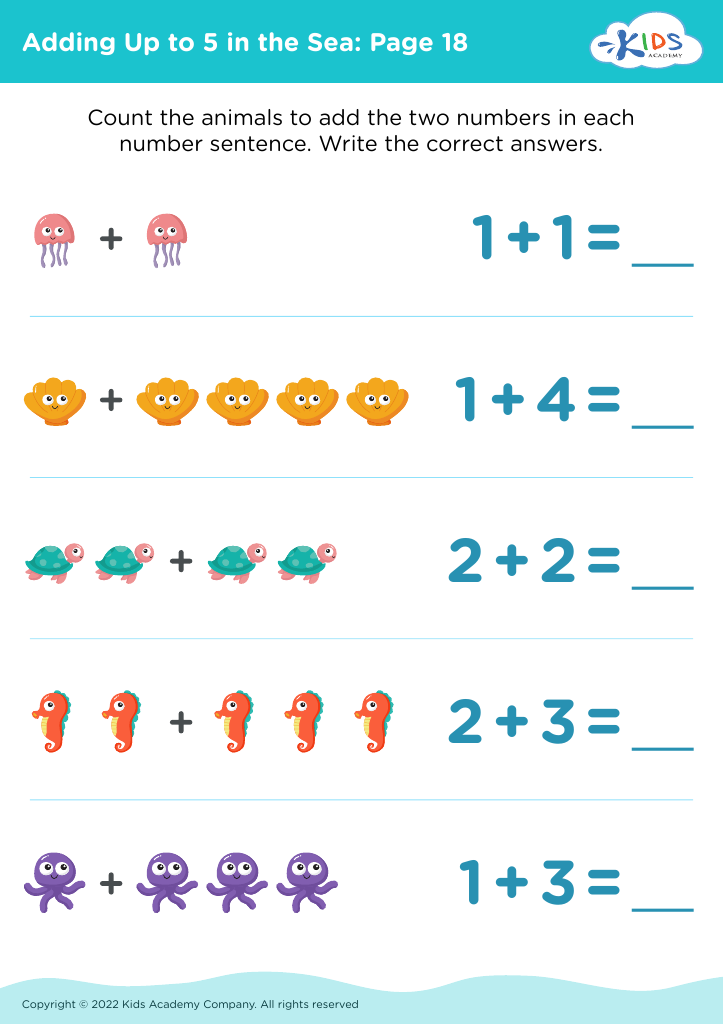
Adding Up to 5 in the Sea: Page 18
Worksheet
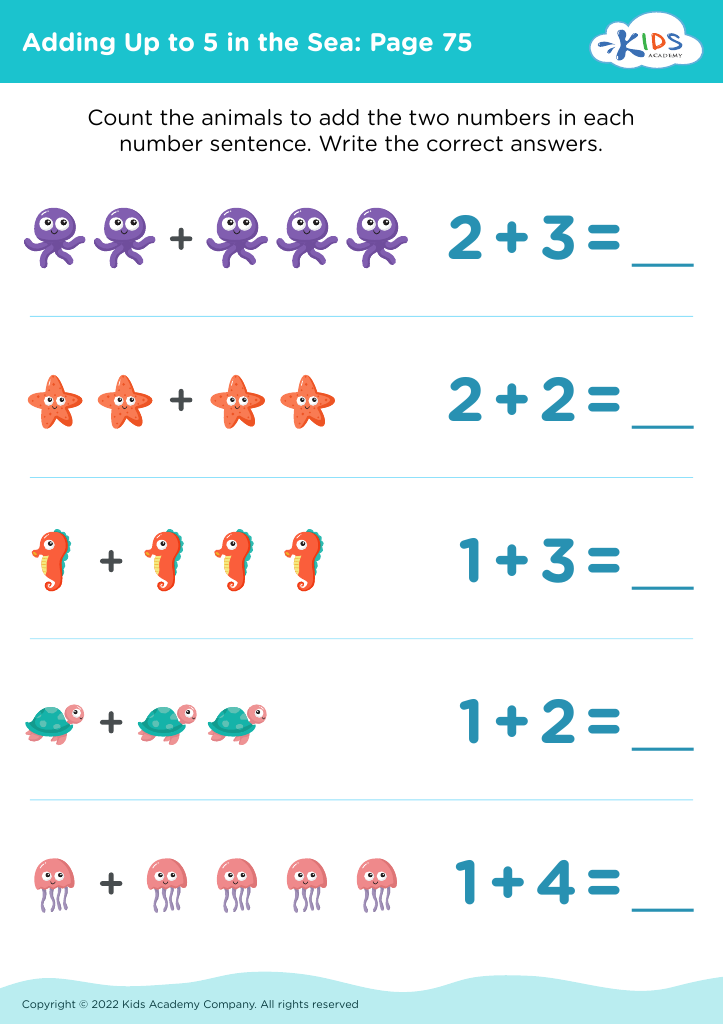
Adding Up to 5 in the Sea: Page 75
Worksheet
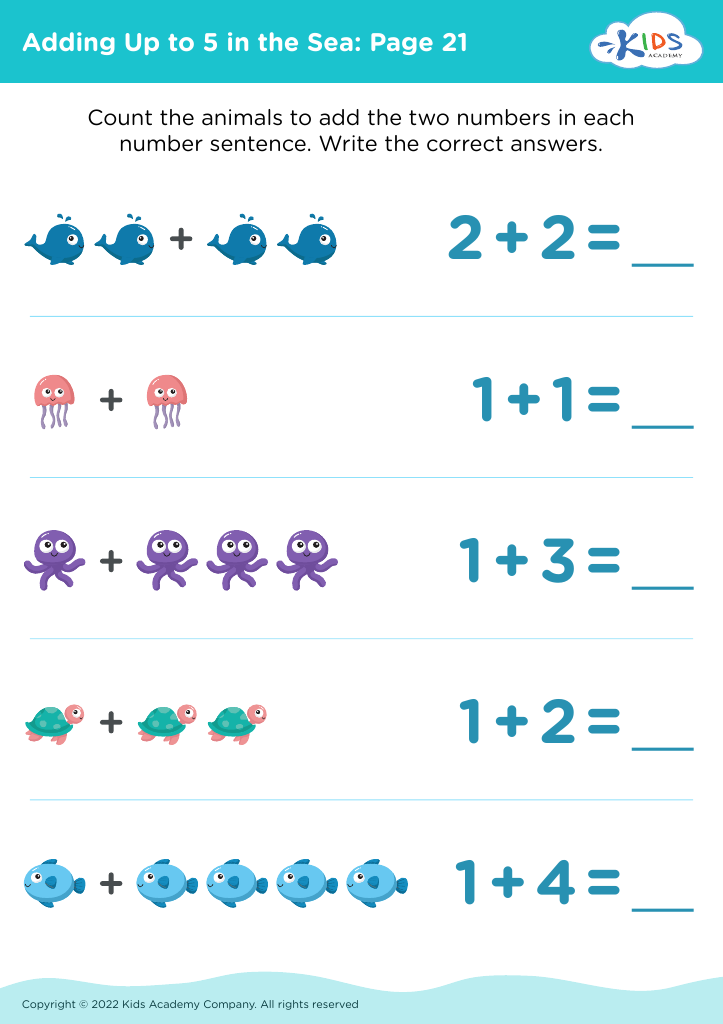
Adding Up to 5 in the Sea: Page 21
Worksheet
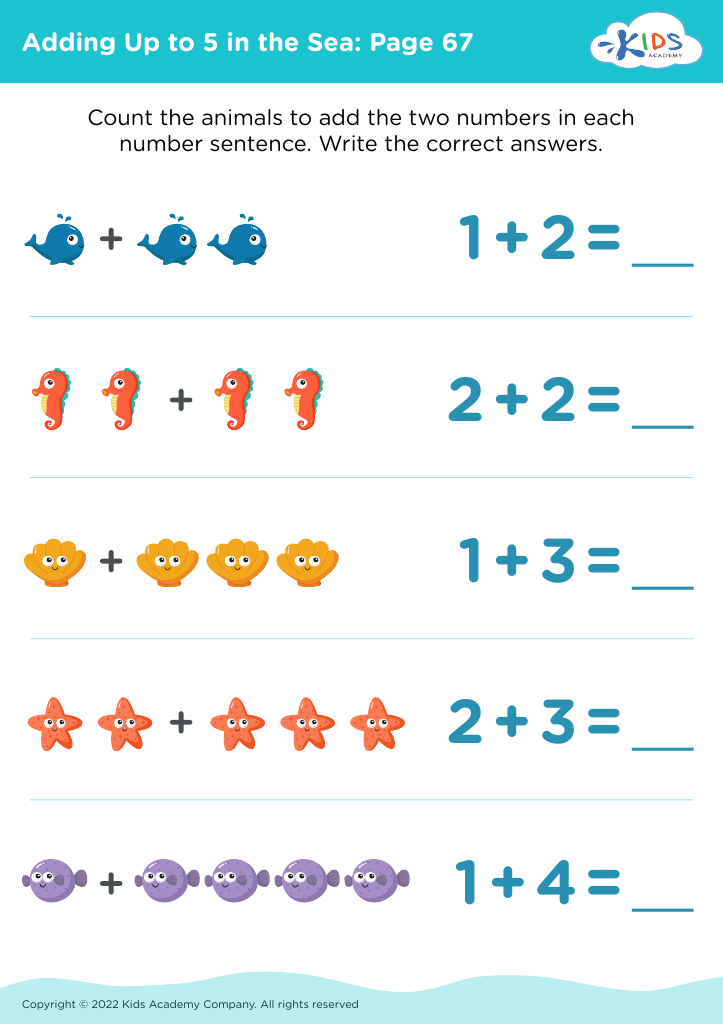
Adding Up to 5 in the Sea: Page 67
Worksheet
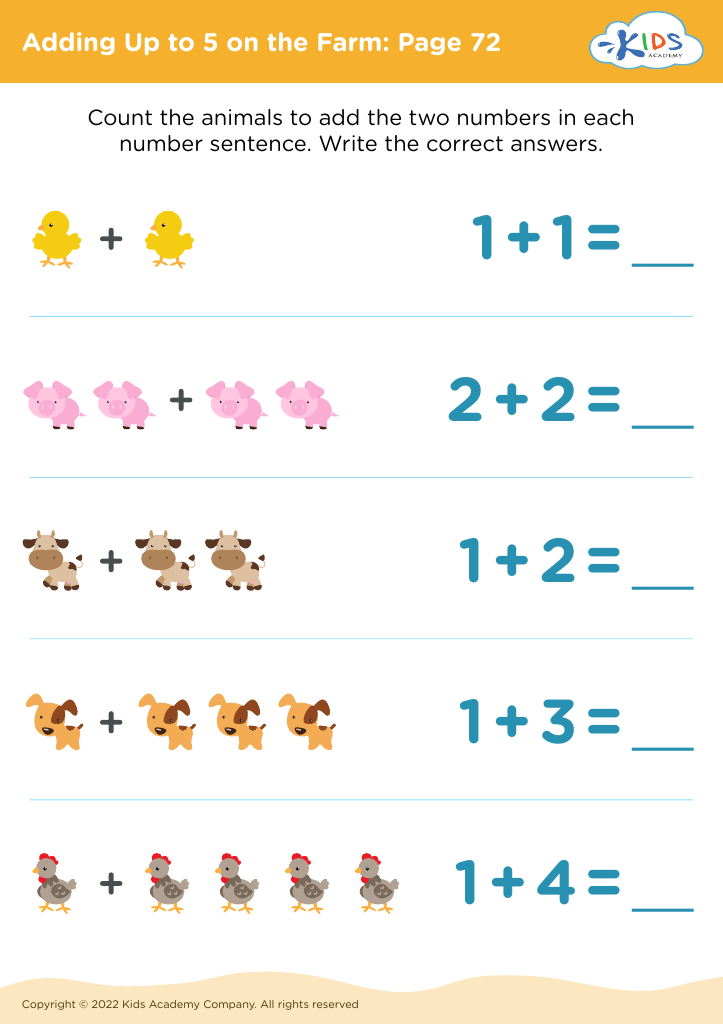
Adding Up to 5 on the Farm: Page 72
Worksheet
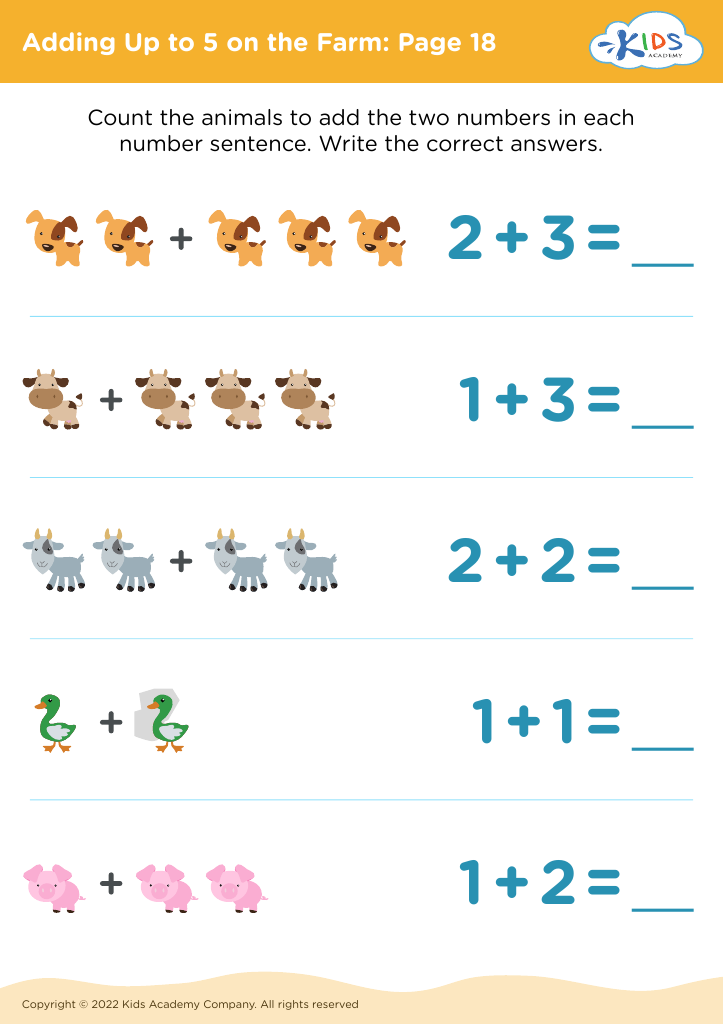
Adding Up to 5 on the Farm: Page 18
Worksheet
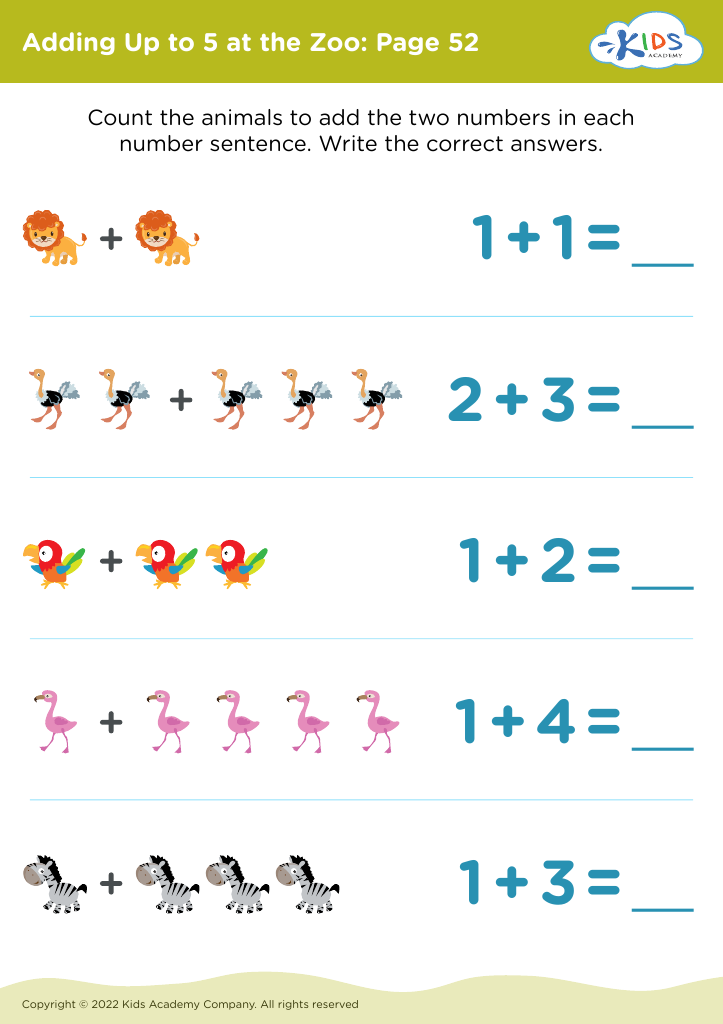
Adding Up to 5 at the Zoo: Page 52
Worksheet
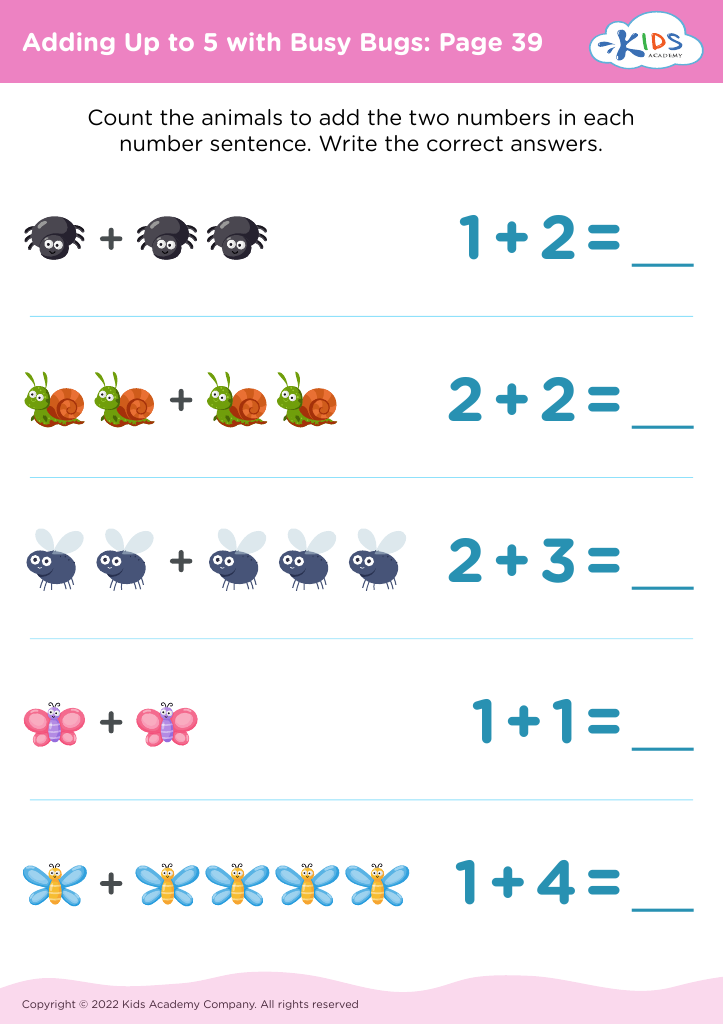
Adding Up to 5 with Busy Bugs: Page 39
Worksheet
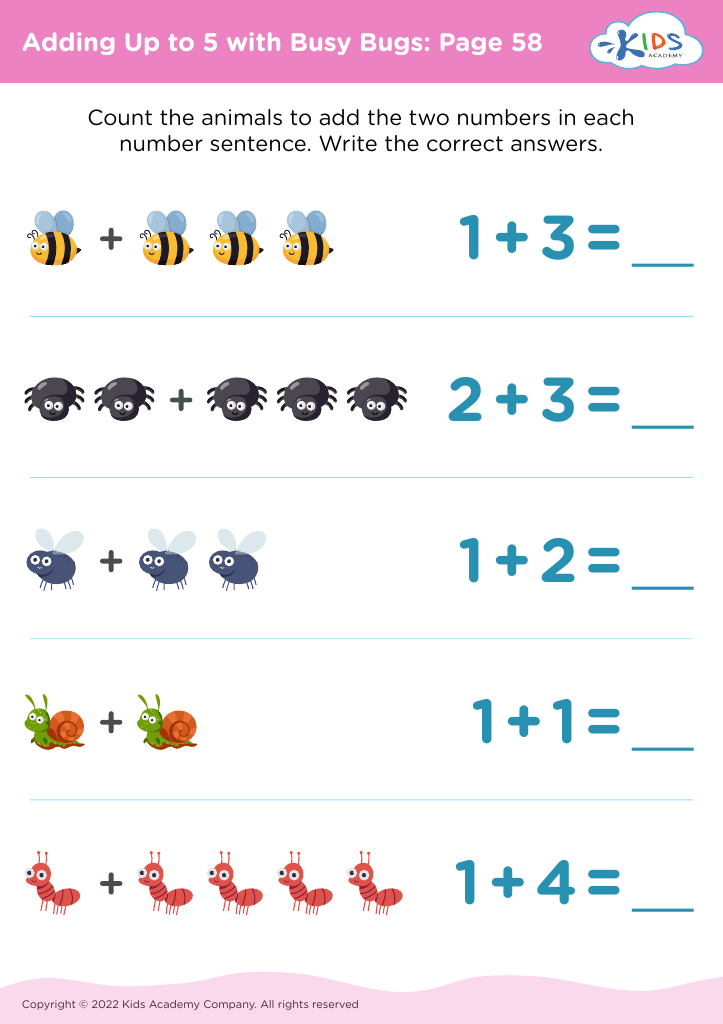
Adding Up to 5 with Busy Bugs: Page 58
Worksheet
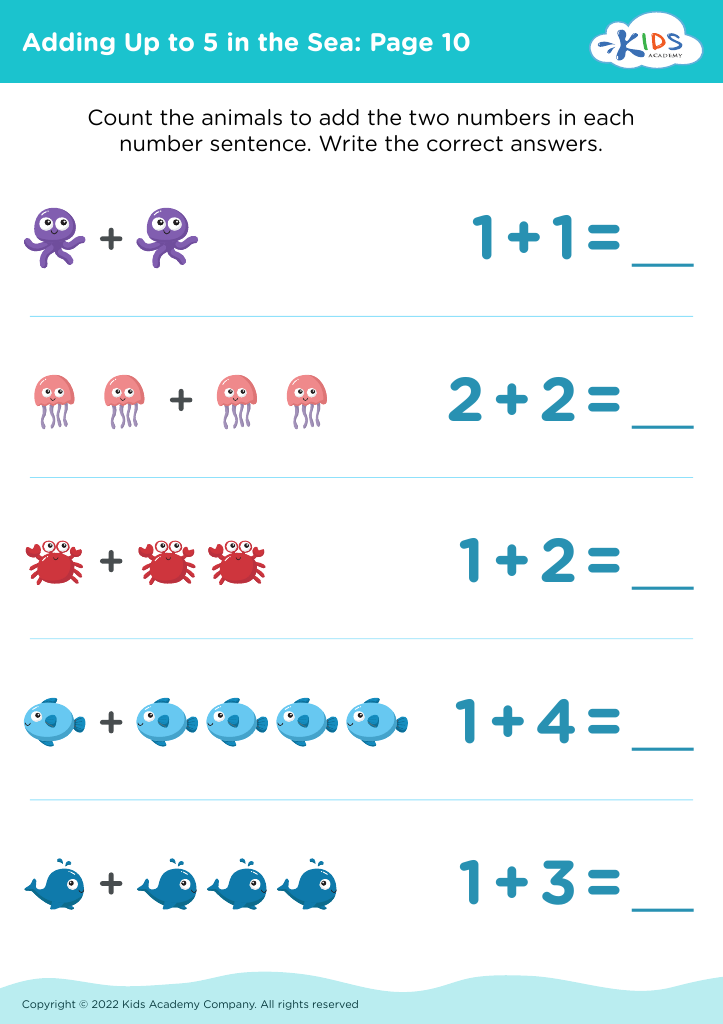
Adding Up to 5 in the Sea: Page 10
Worksheet
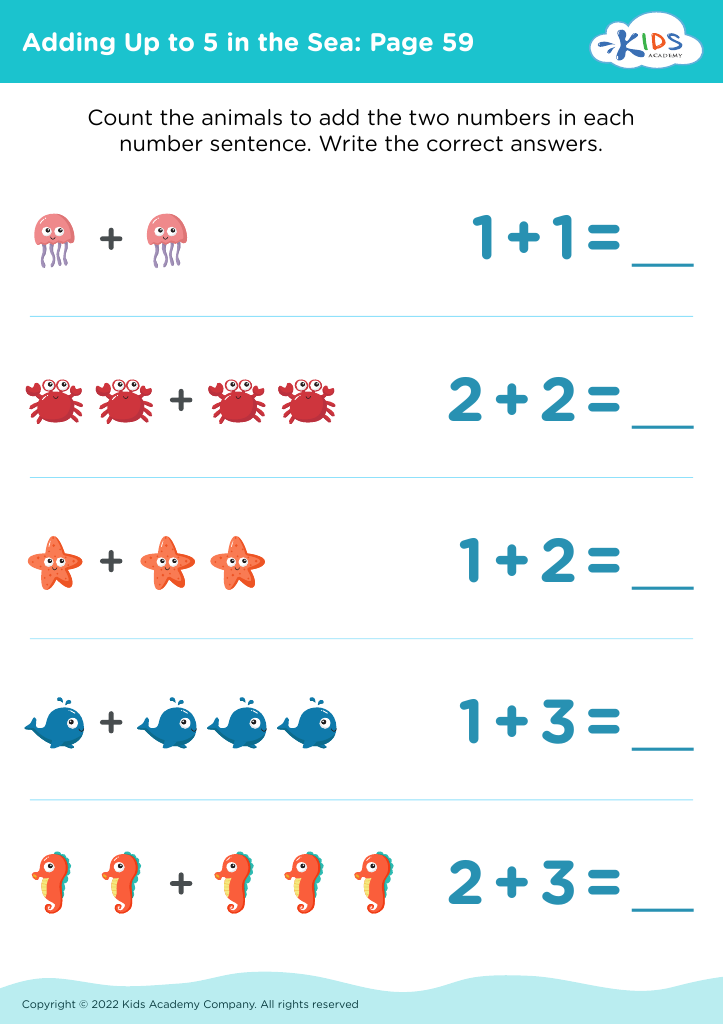
Adding Up to 5 in the Sea: Page 59
Worksheet
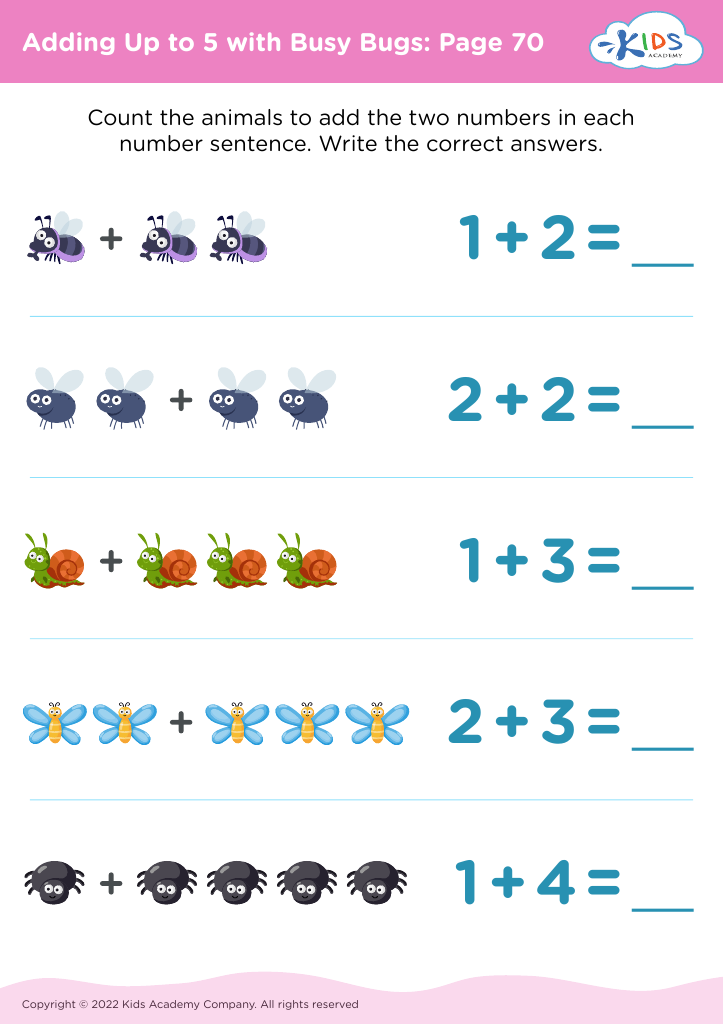
Adding Up to 5 with Busy Bugs: Page 70
Worksheet
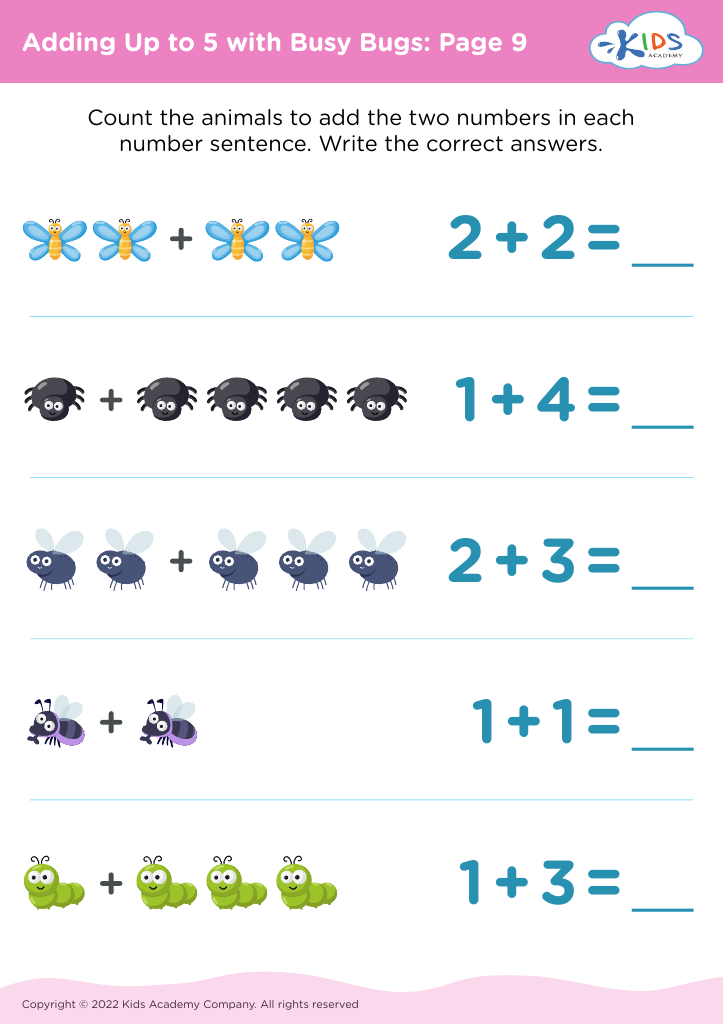
Adding Up to 5 with Busy Bugs: Page 9
Worksheet


Visual learning is a crucial component of early education, especially when teaching fundamental concepts like addition and subtraction to 5-year-olds. Children at this age are naturally curious and often learn best through visual aids and hands-on experiences. Using engaging visuals, such as colorful counters, number lines, or illustrated story problems, can capture their attention and make abstract mathematical concepts more concrete.

For parents and teachers, emphasizing visual learning in math helps cultivate a deeper understanding and greater retention of key skills. By using visual tools, children can better grasp the principles of quantity, grouping, and basic operations, which sets a solid foundation for future mathematical learning. It fosters critical thinking and problem-solving skills, as children learn to translate real-world scenarios into mathematical representations.

Moreover, incorporating visual strategies can also cater to different learning styles. Some children may find it challenging to memorize facts, but when they can see and manipulate objects, they tend to engage more actively in the learning process. This approach can boost confidence and motivation, making math enjoyable rather than intimidating. In essence, caring about the visual learning of addition and subtraction equips young learners with essential skills for lifelong success in academics and everyday problem-solving.