Animal recognition Addition Worksheets for 5-Year-Olds
94 filtered results
-
From - To
Introducing our Animal Recognition Addition Worksheets for 5-year-olds! Designed to make learning fun and engaging, these worksheets combine essential math skills with adorable animal illustrations. Children will not only practice basic addition but also enhance their ability to recognize and name various animals. Each worksheet features colorful imagery and simple math problems, allowing young learners to develop their counting and problem-solving skills. Perfect for homeschool, classroom, or extra practice at home, these activities help build a strong foundation in mathematics while sparking an interest in the animal kingdom. Get ready for a roar-some learning adventure that’s both educational and exciting!
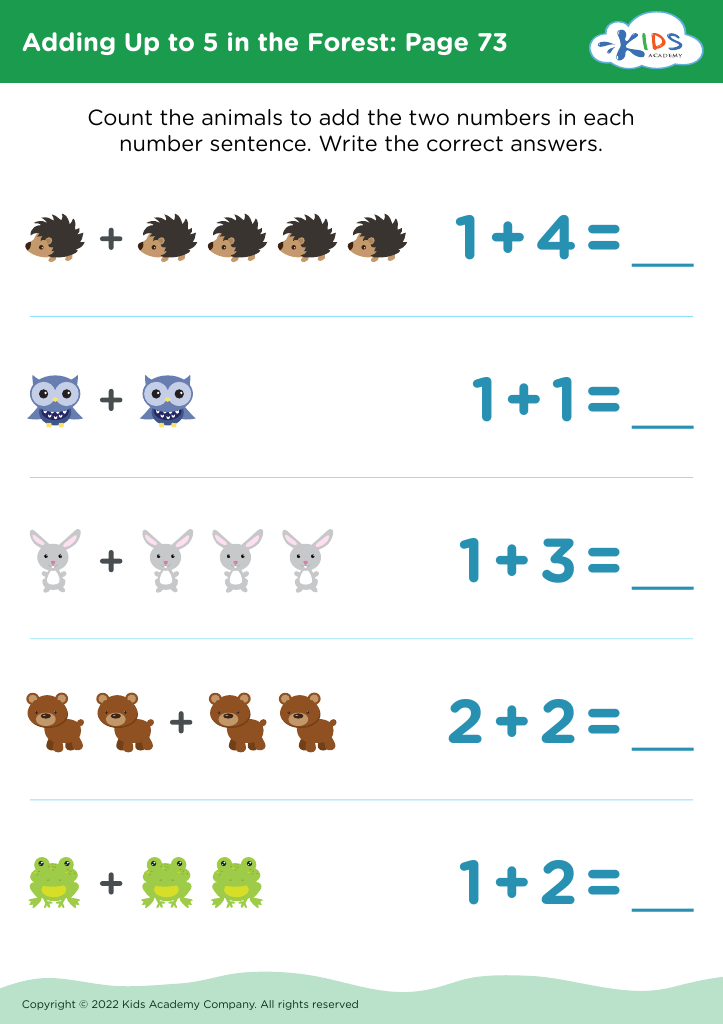
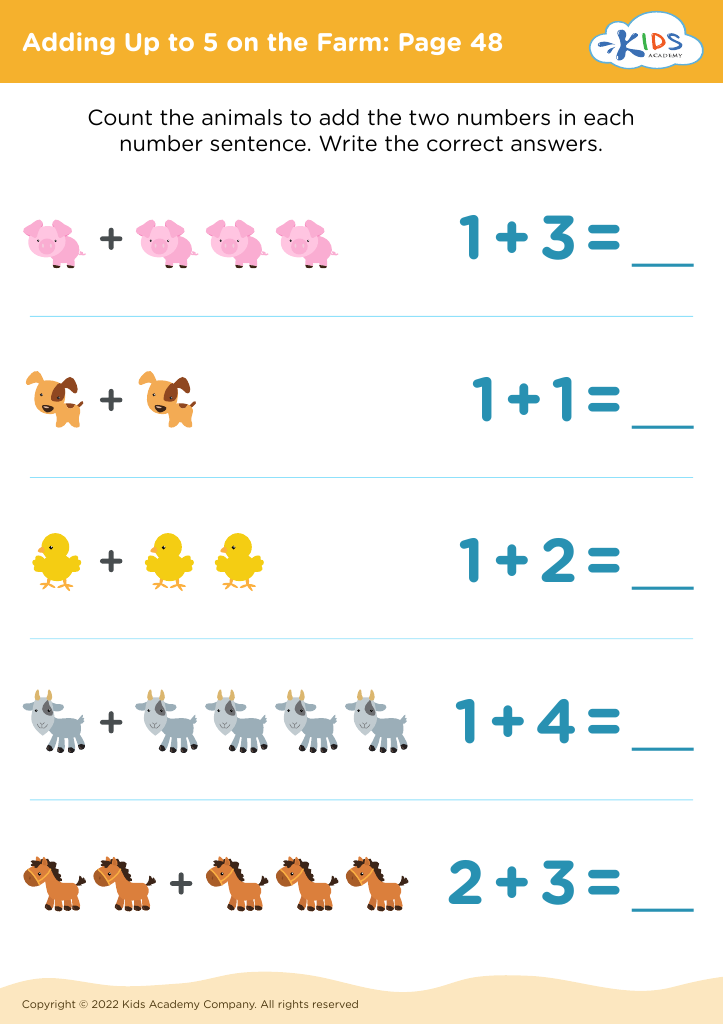
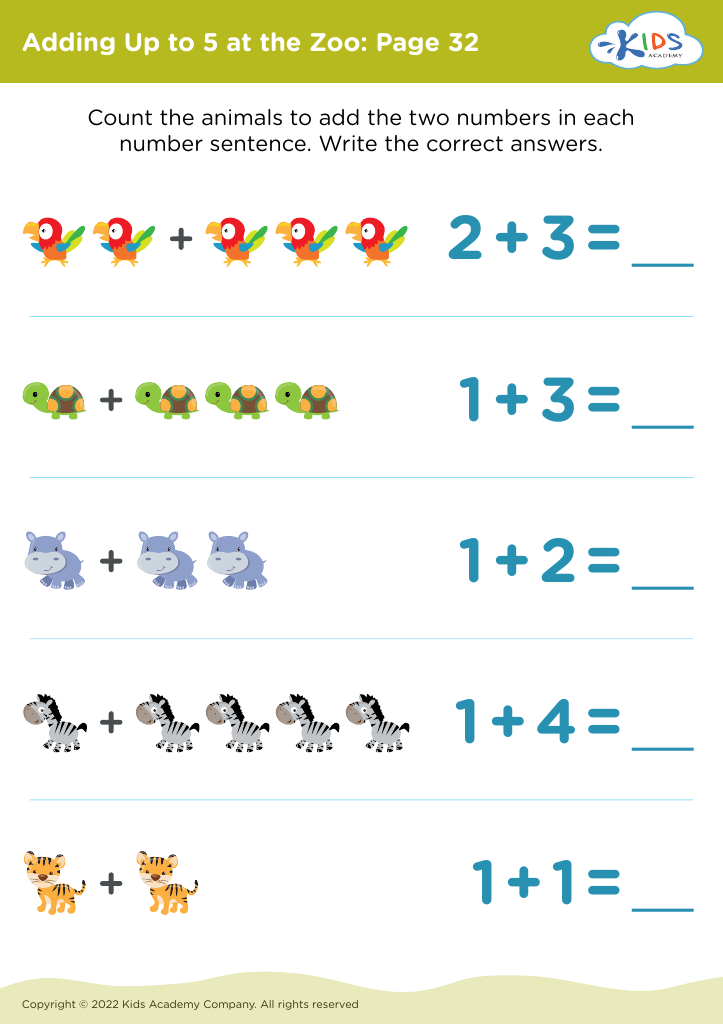
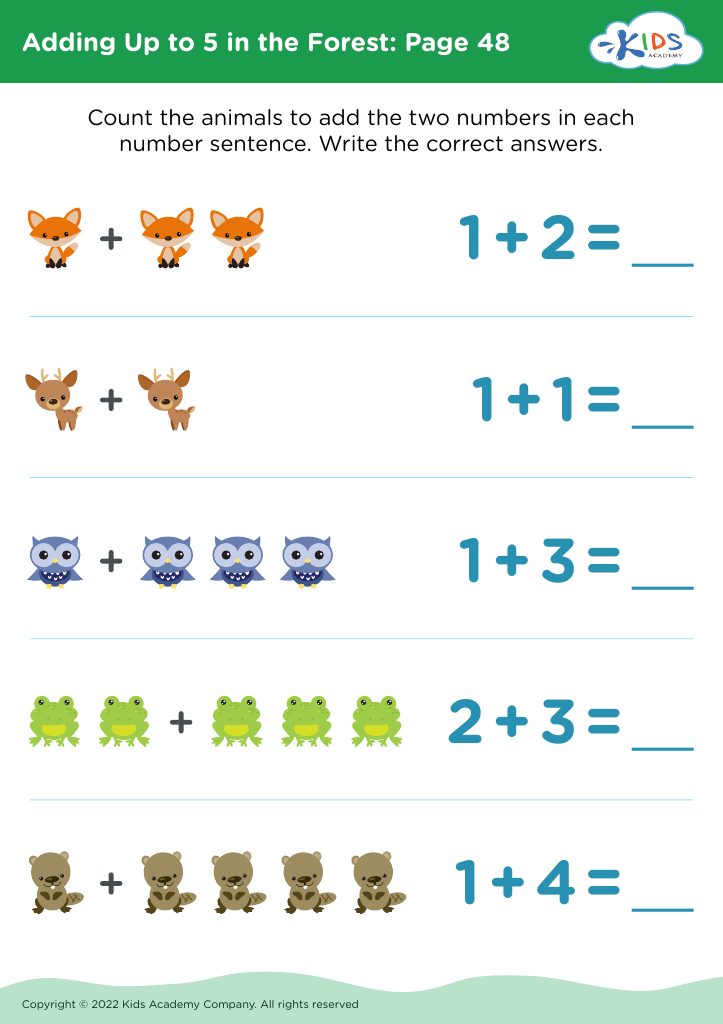
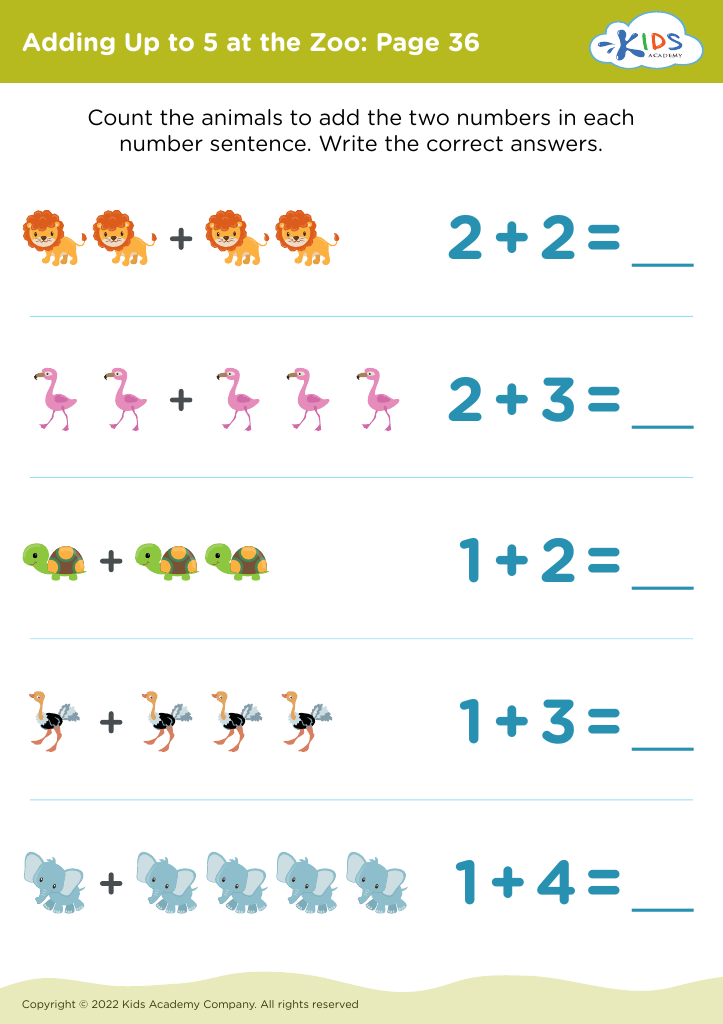
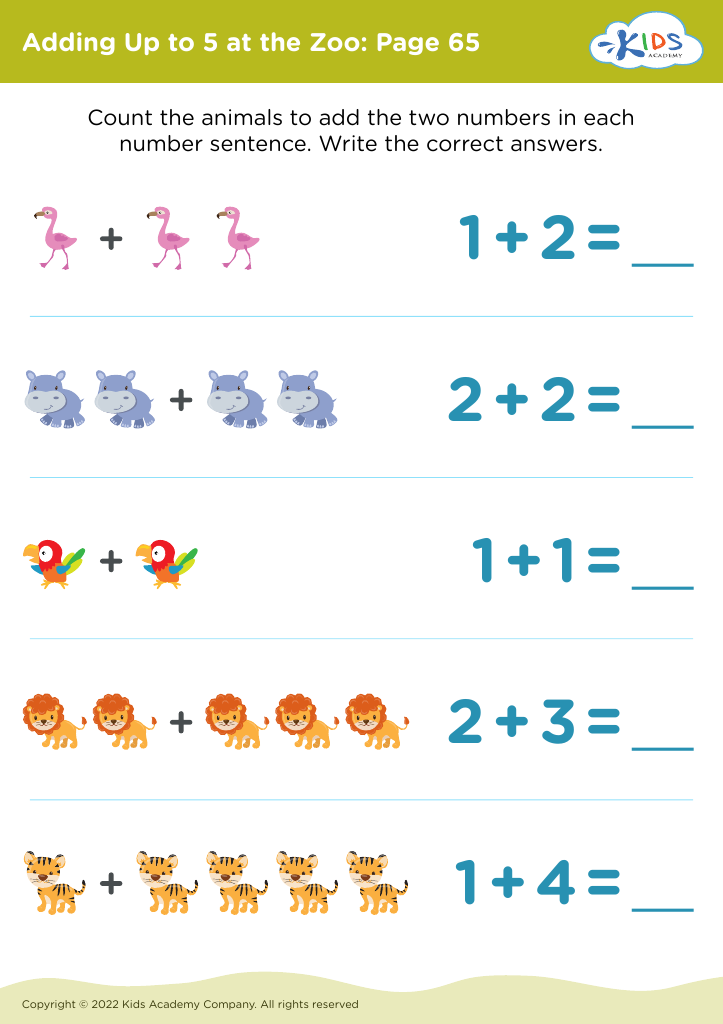
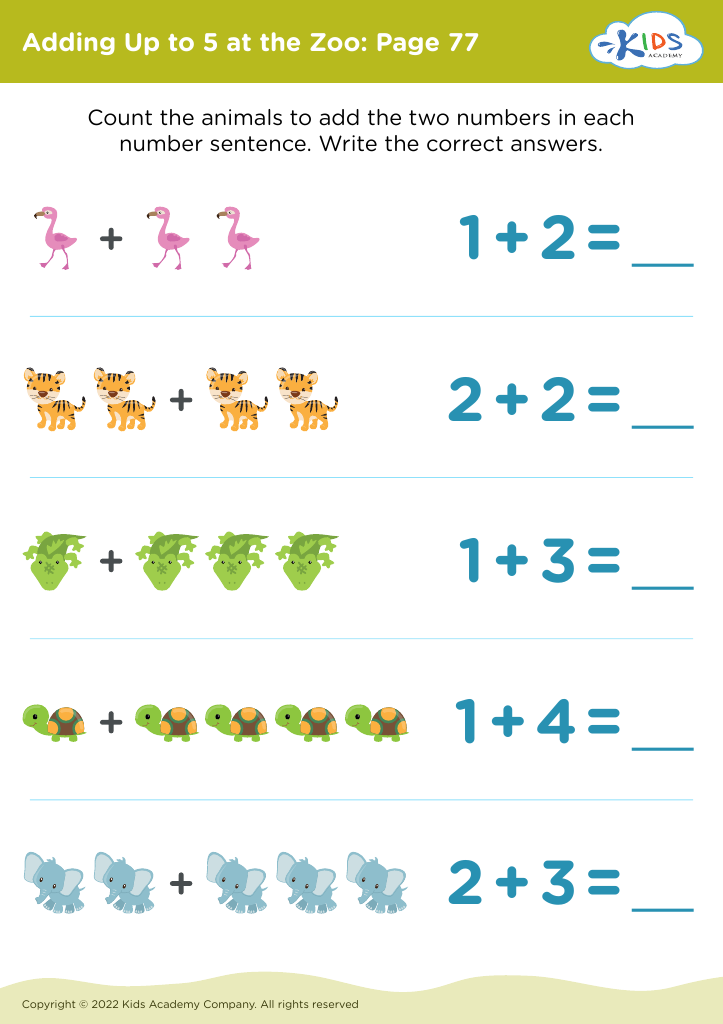
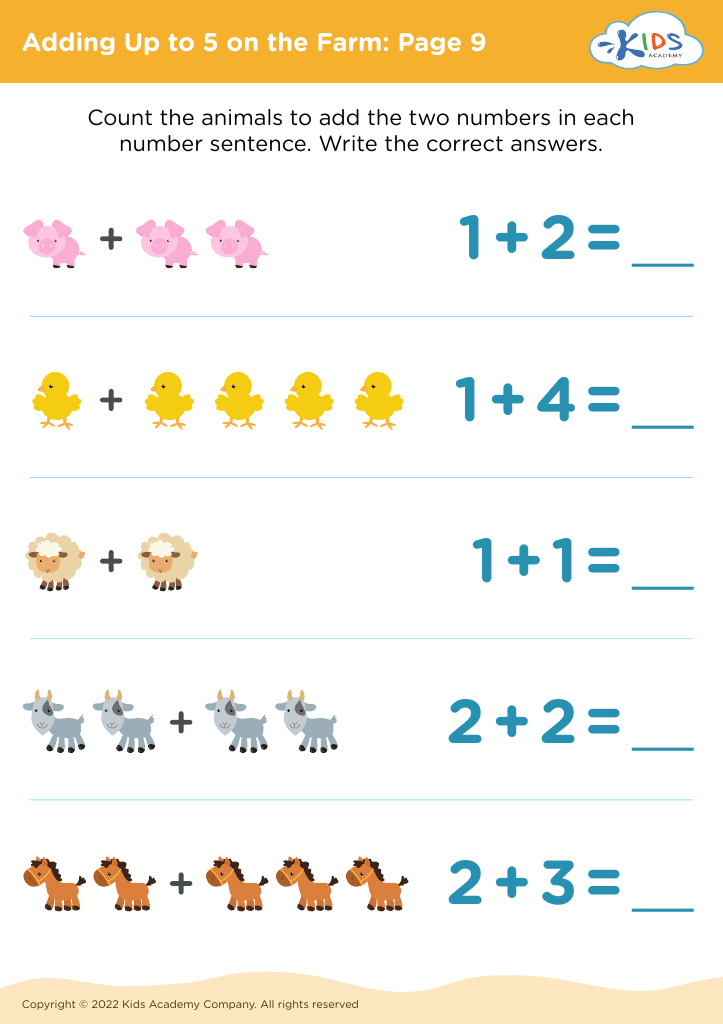
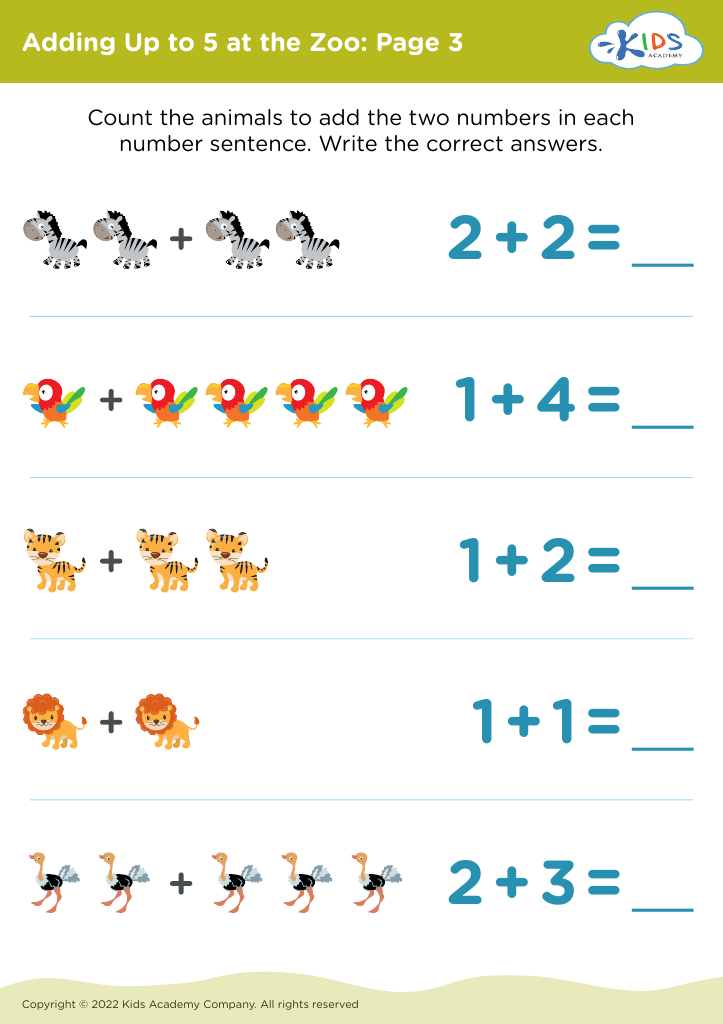
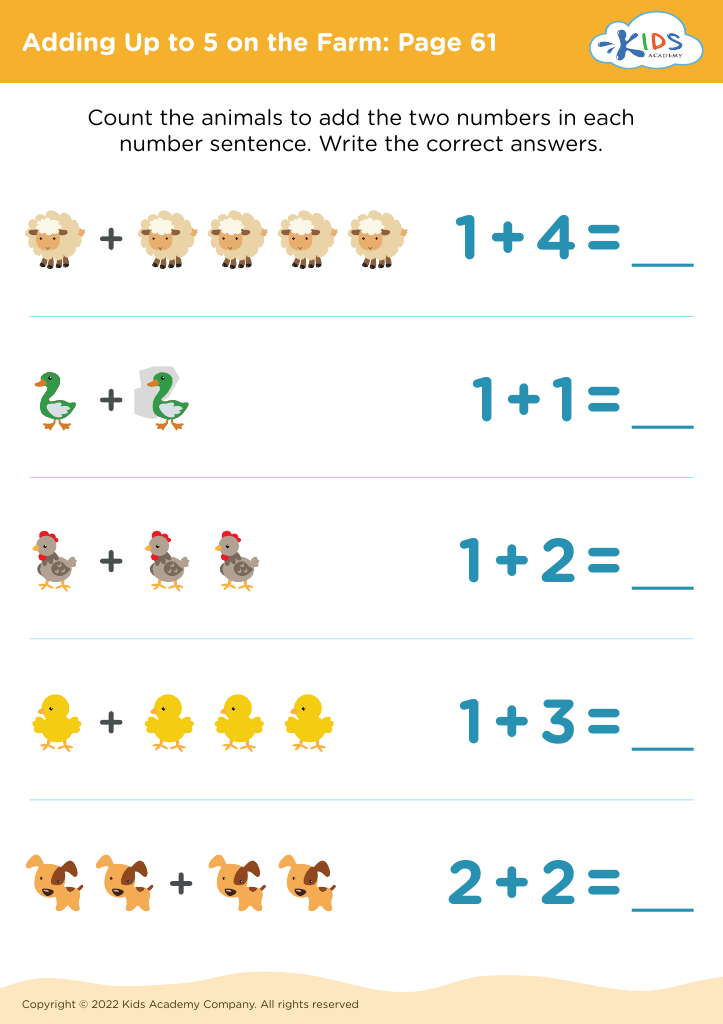
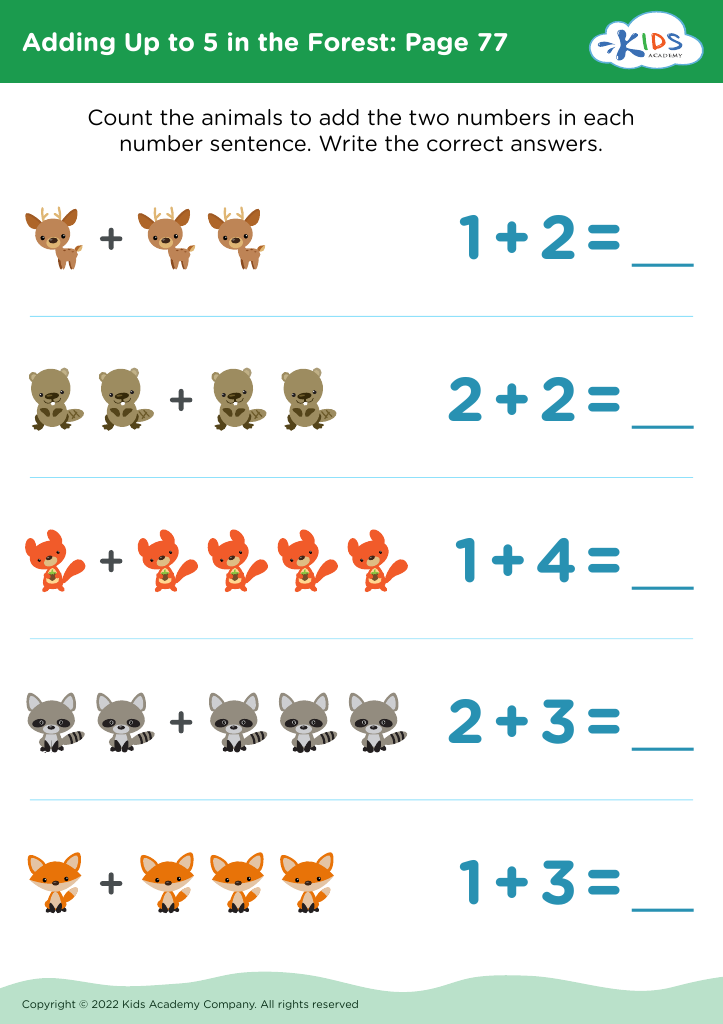
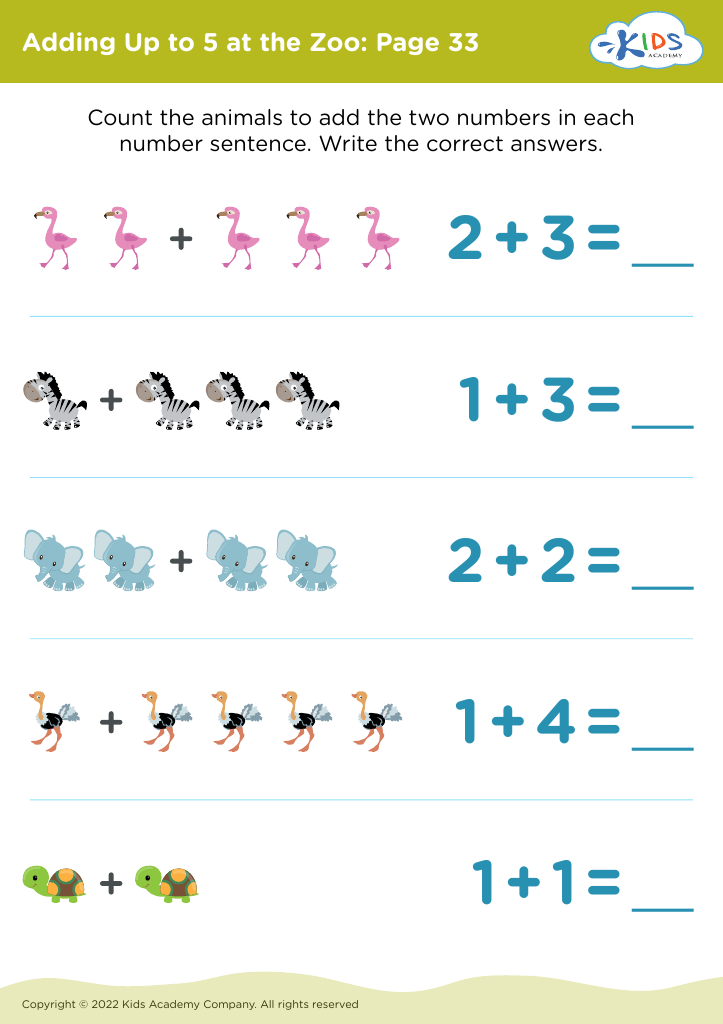
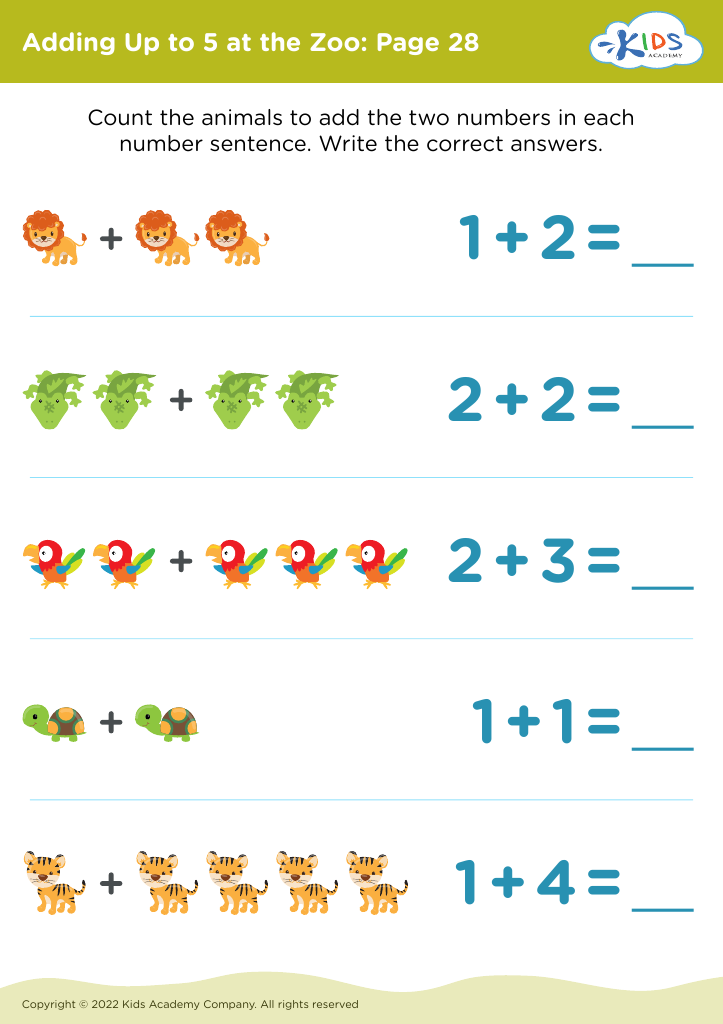
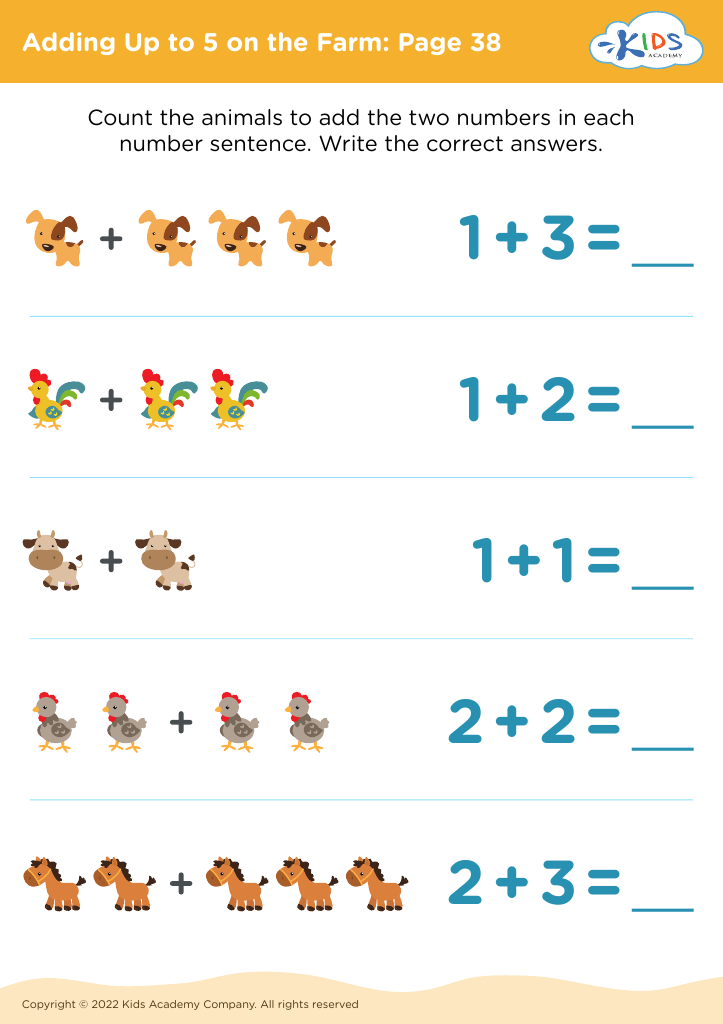
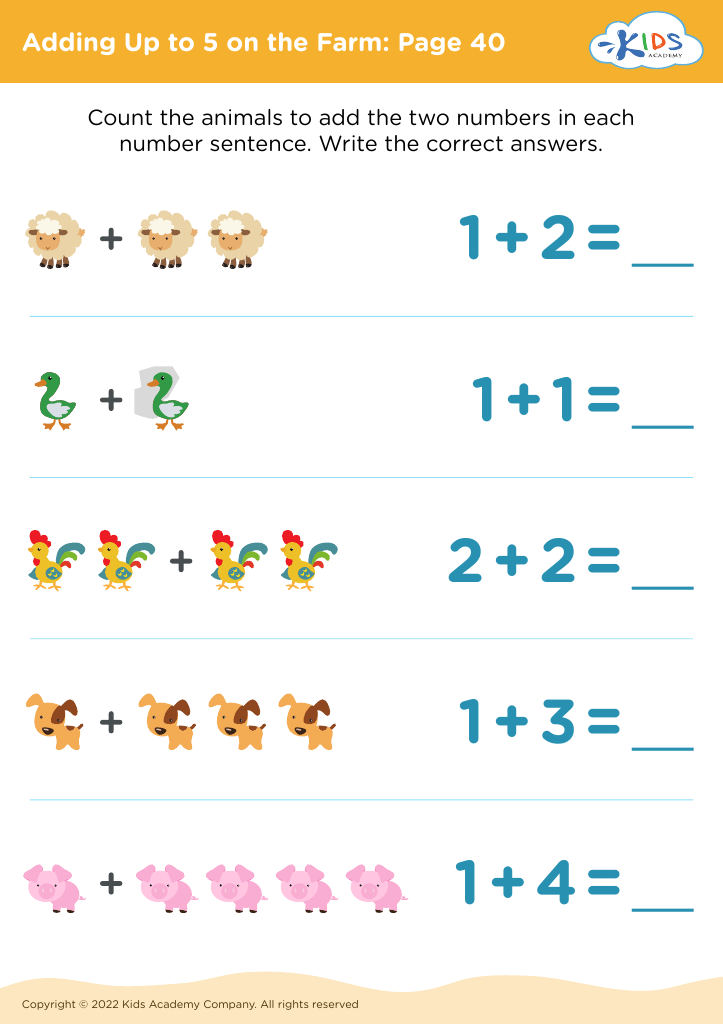
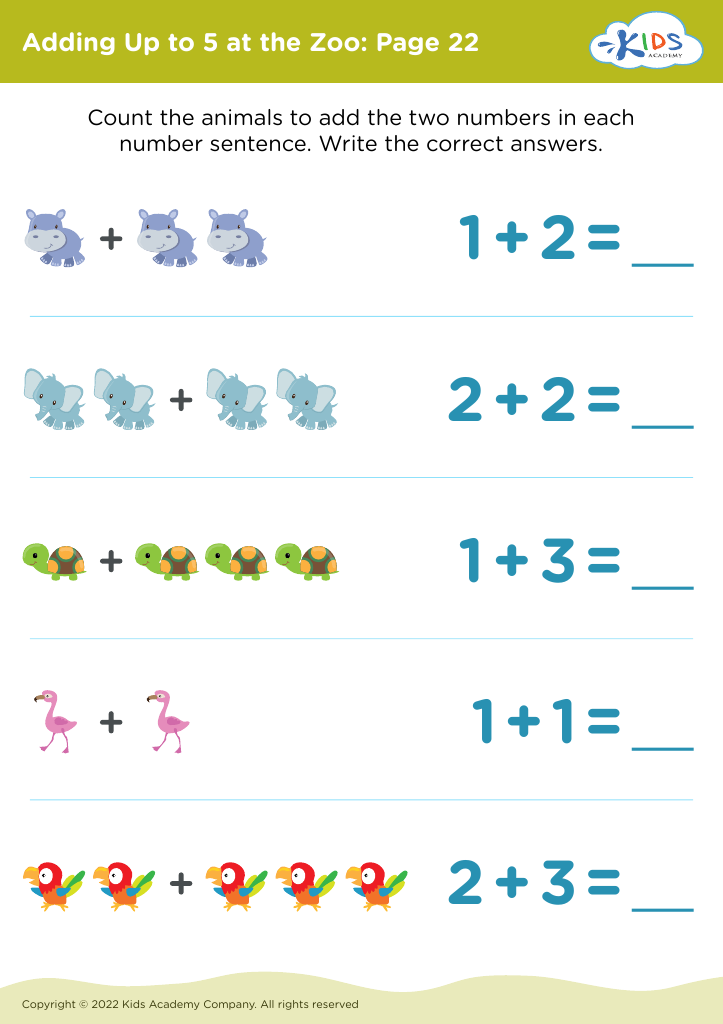
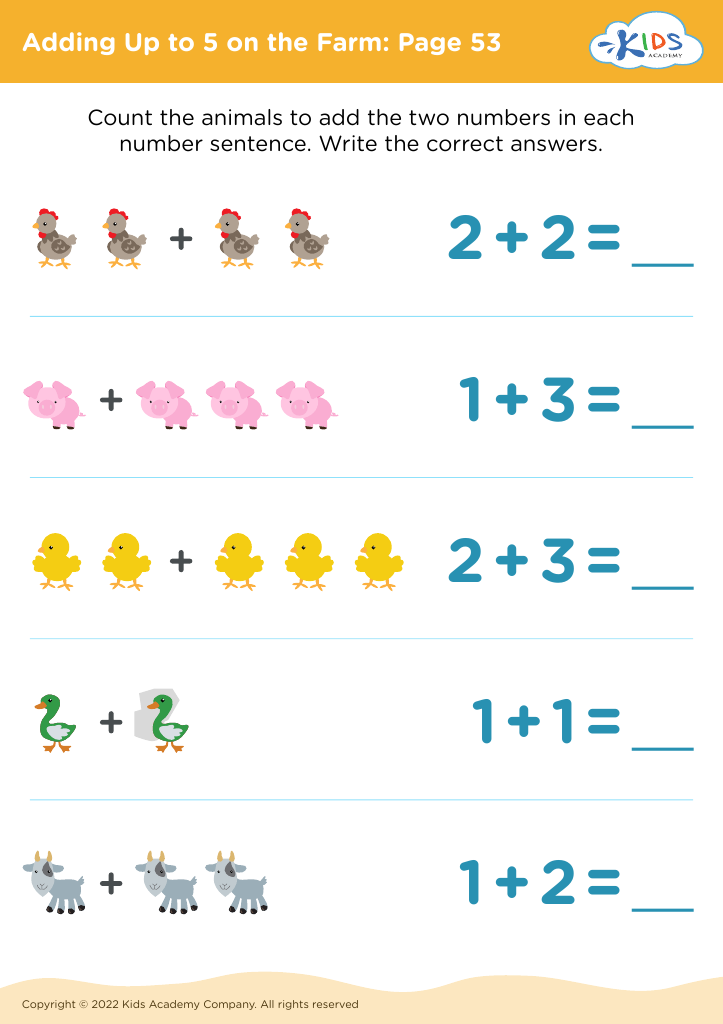
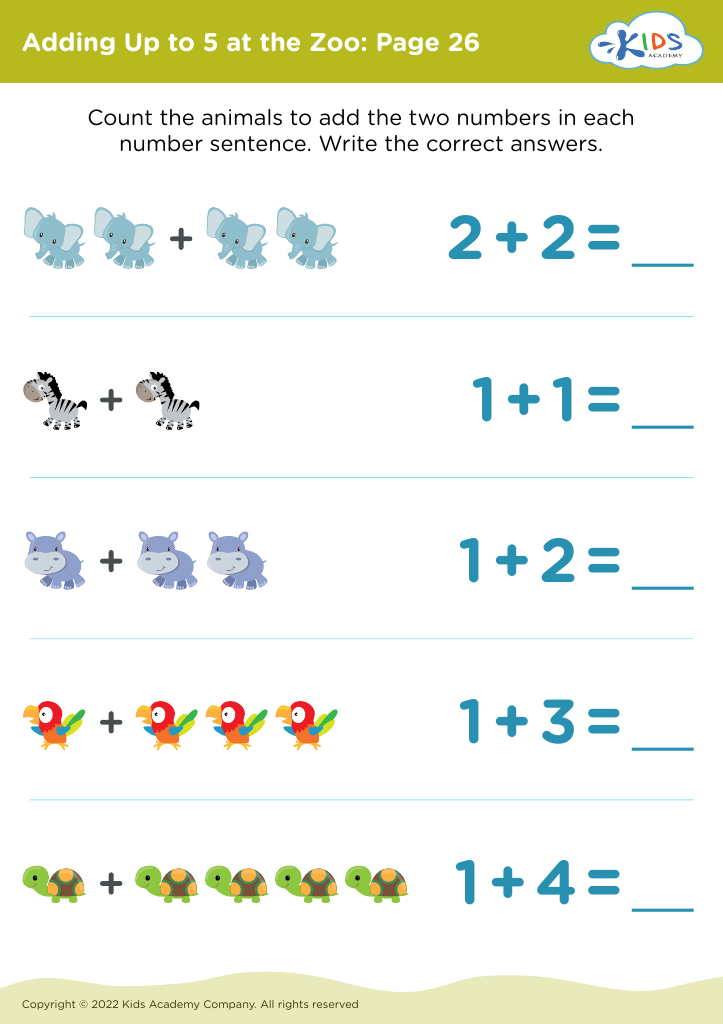
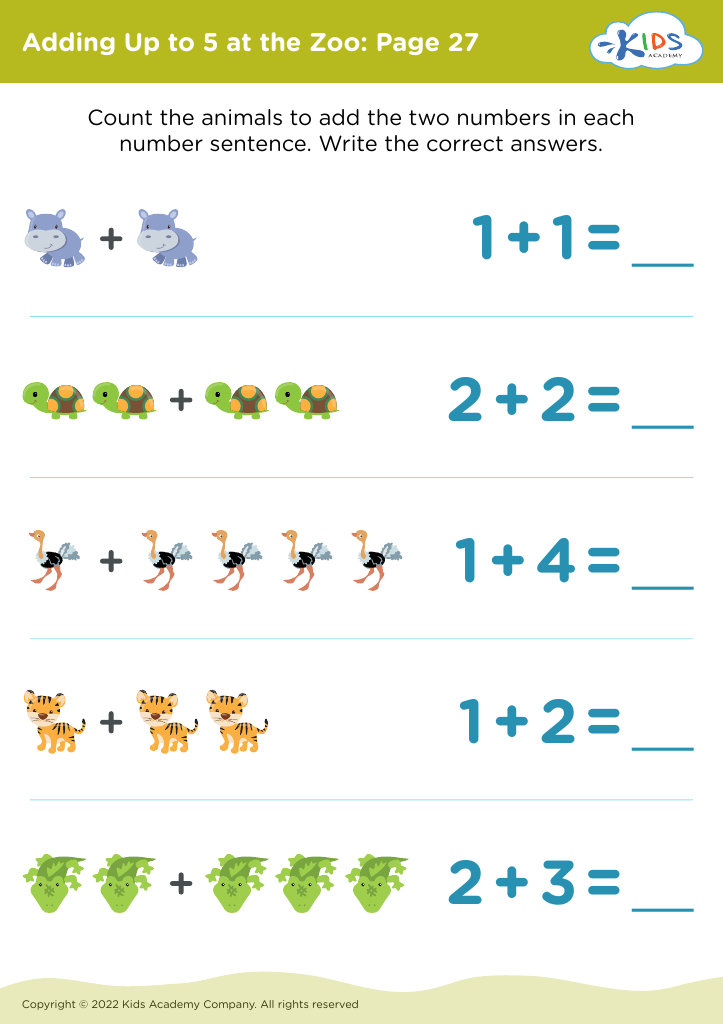
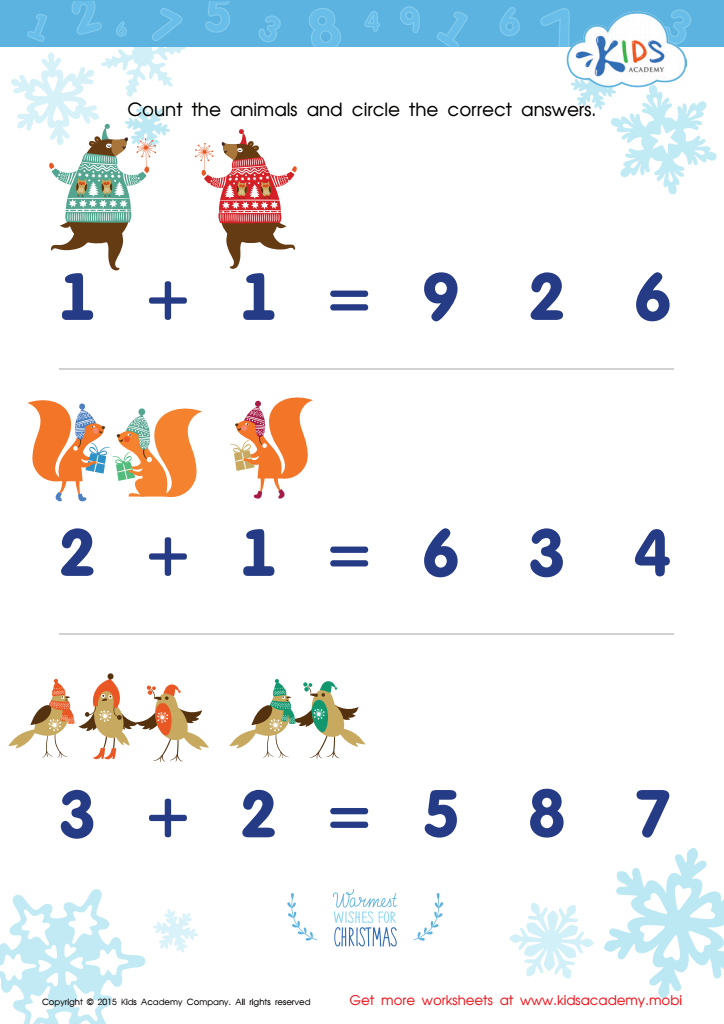
Count Funny Animals Worksheet
 Assign to My Students
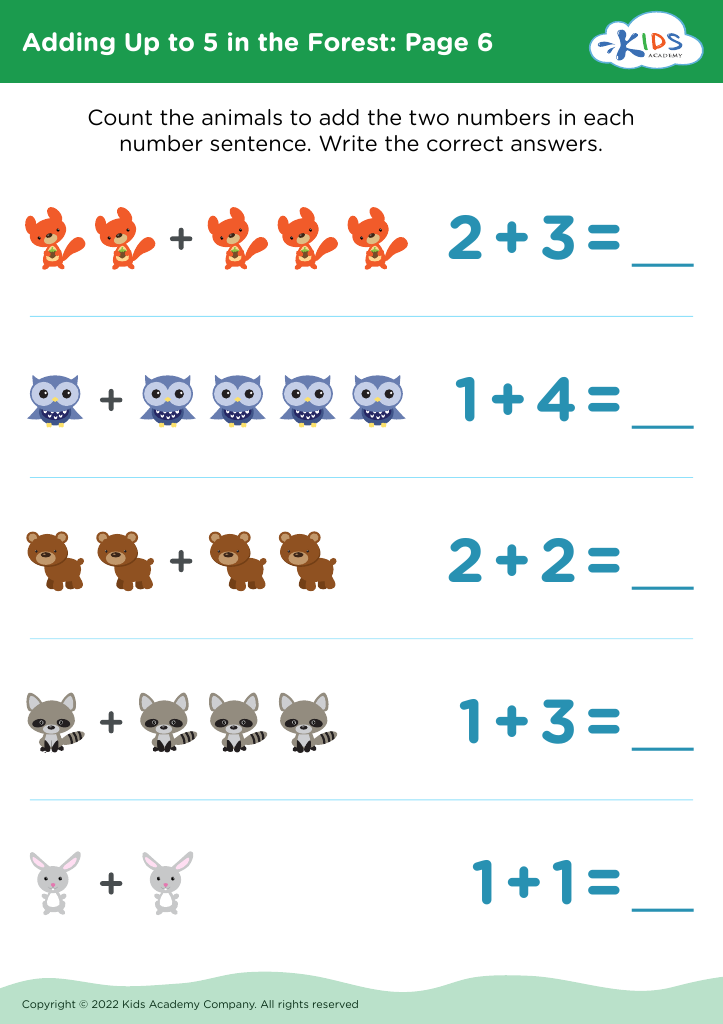
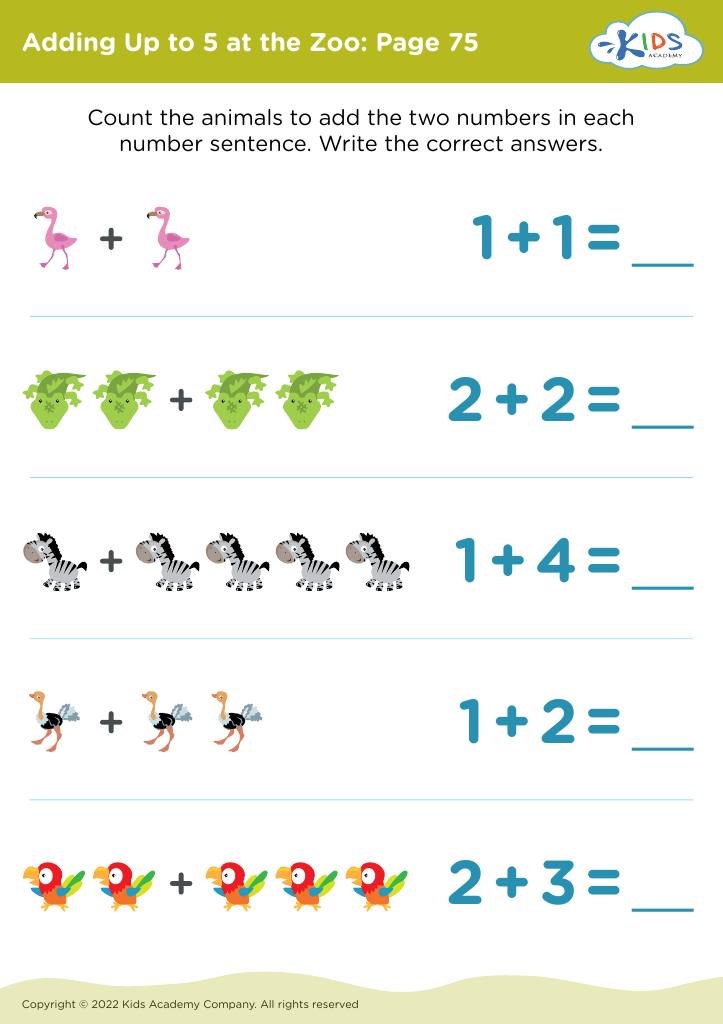
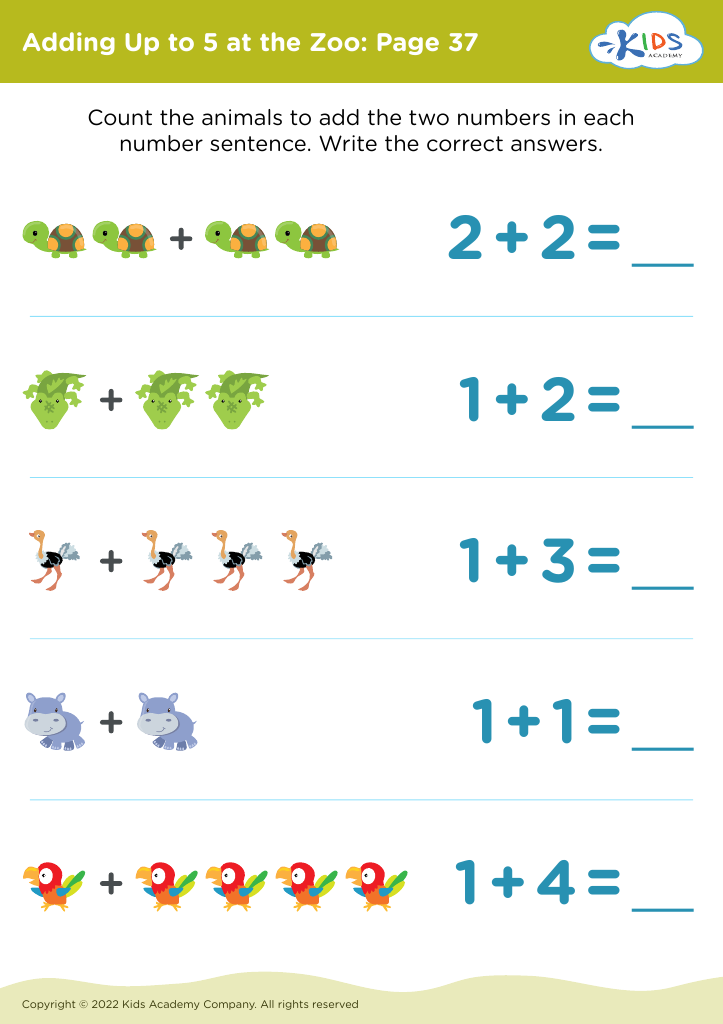
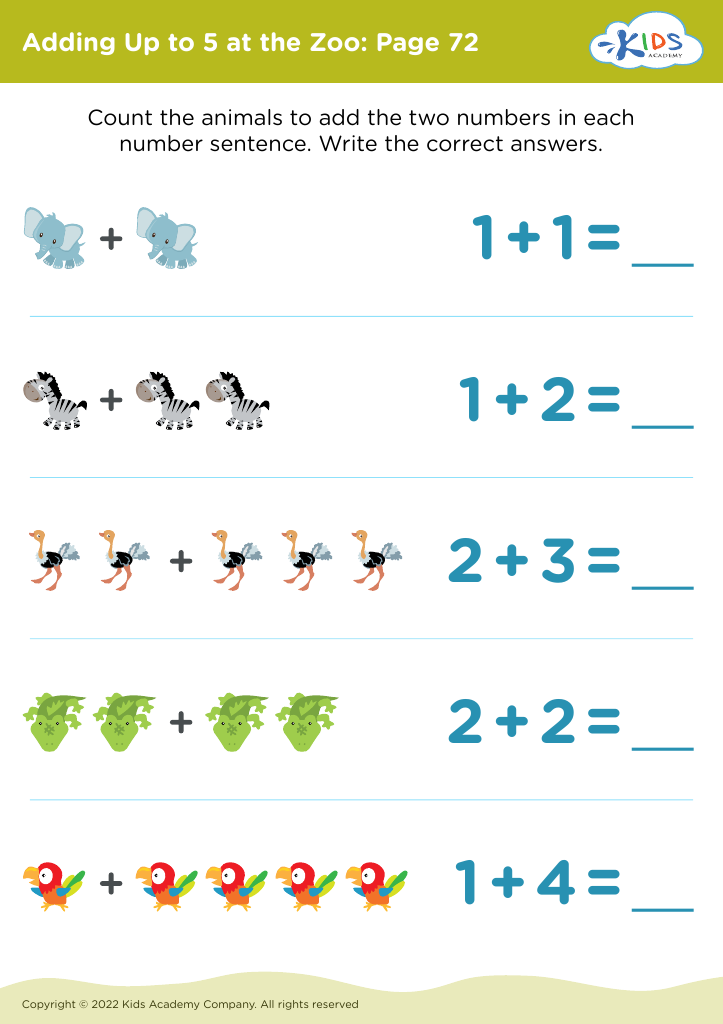







Animal recognition addition is a valuable learning tool for 5-year-olds that combines two important concepts: mathematics and animal awareness. Parents and teachers should care about this method for several reasons. First, it captures children's interest by using familiar and often beloved subjects—animals. Engaging children through topics they are passionate about can enhance their motivation to learn and makes mathematics feel less intimidating.
Moreover, integrating animals into addition exercises allows for a multisensory learning experience. Children can use visual aids, such as pictures or toys, helping them to better grasp abstract mathematical concepts. This hands-on approach supports different learning styles and fosters a deeper understanding, as kids are often more likely to remember what they actively engage with.
Additionally, animal recognition addition promotes not only math skills but also cognitive development, as it encourages critical thinking when sorting, categorizing, and counting animals. This dual focus on animals and numeracy enhances language development as children learn to describe animals and their characteristics.
Ultimately, using animal-themed activities in math fosters a holistic educational environment, where learning is fun, interactive, and connected to the natural world around them. By caring about such methods, parents and teachers can help build a solid foundation for children's lifelong learning.








