Counting proficiency Addition Worksheets for 5-Year-Olds
11 filtered results
-
From - To
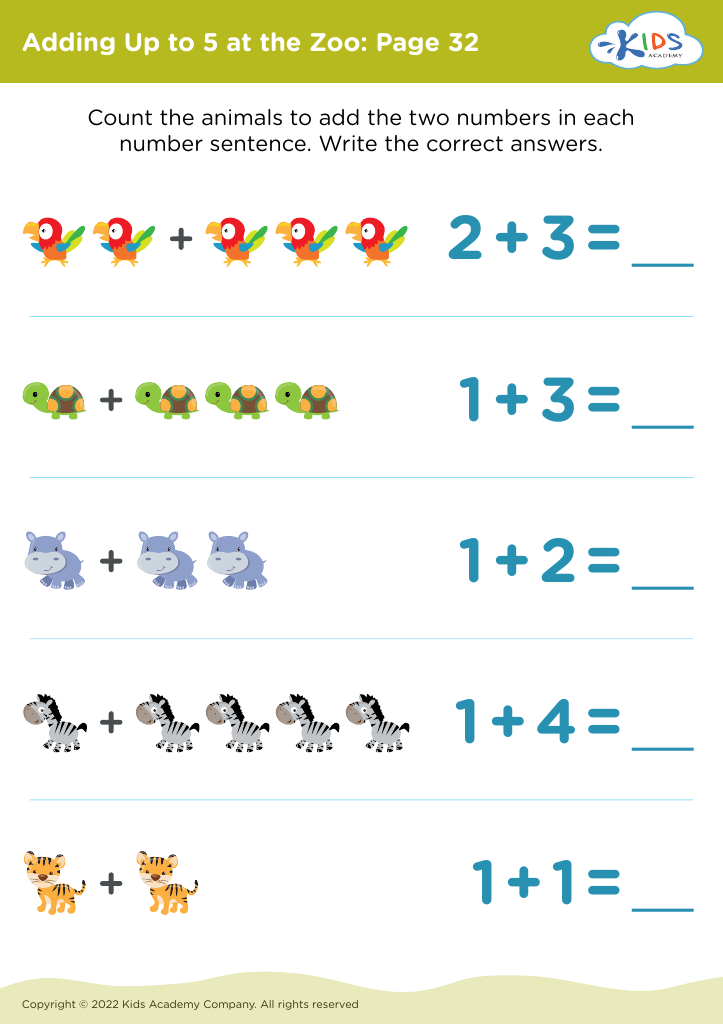
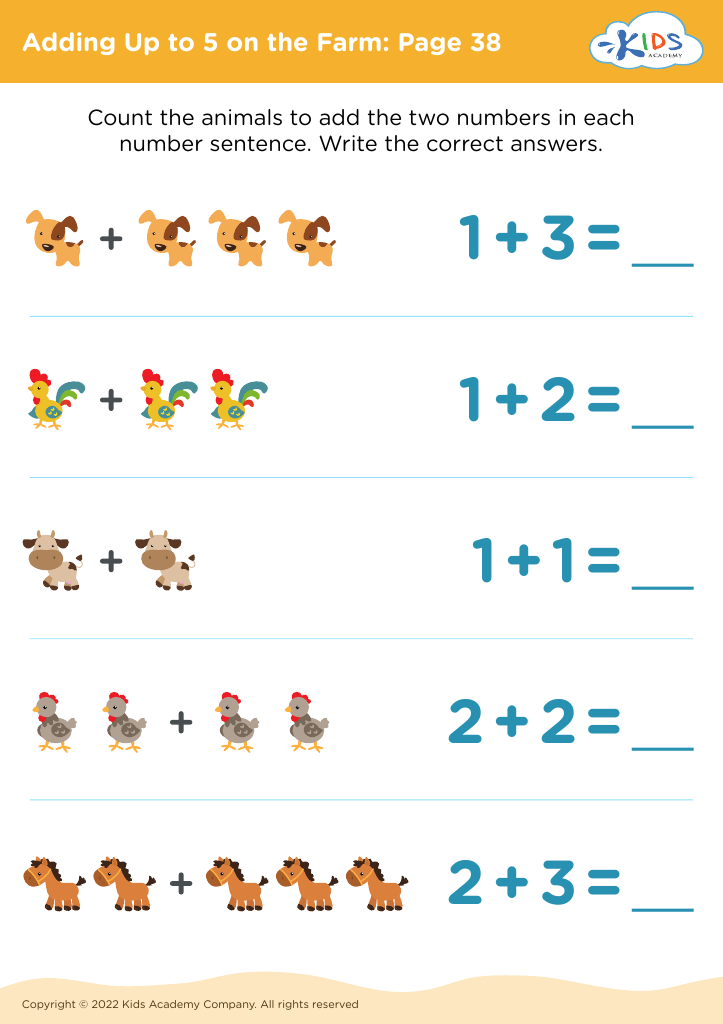
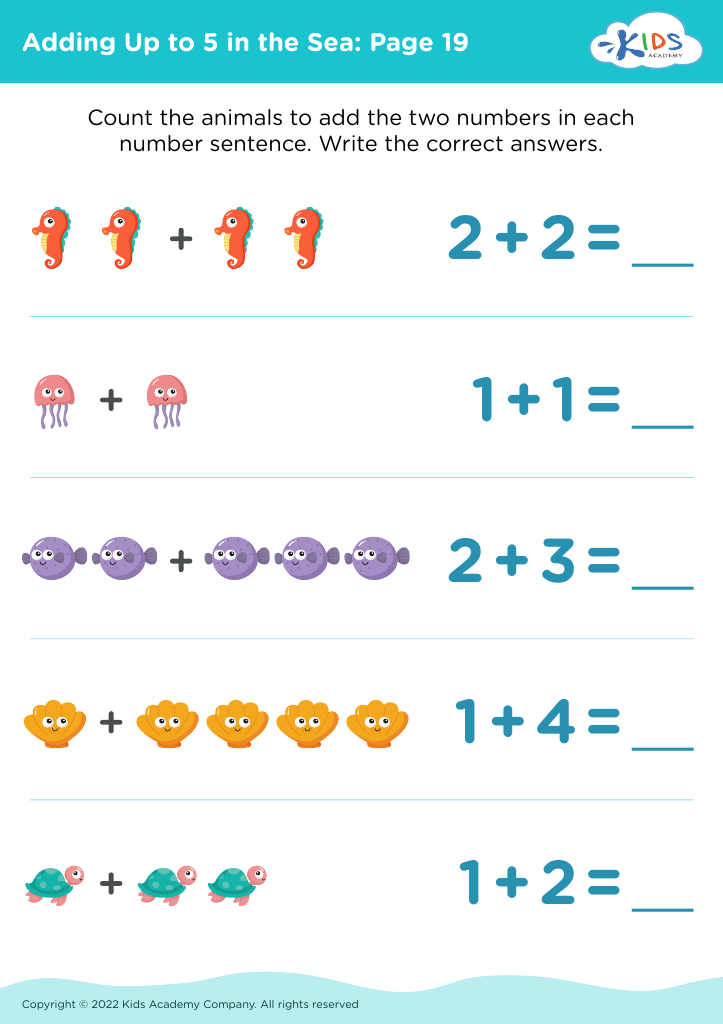
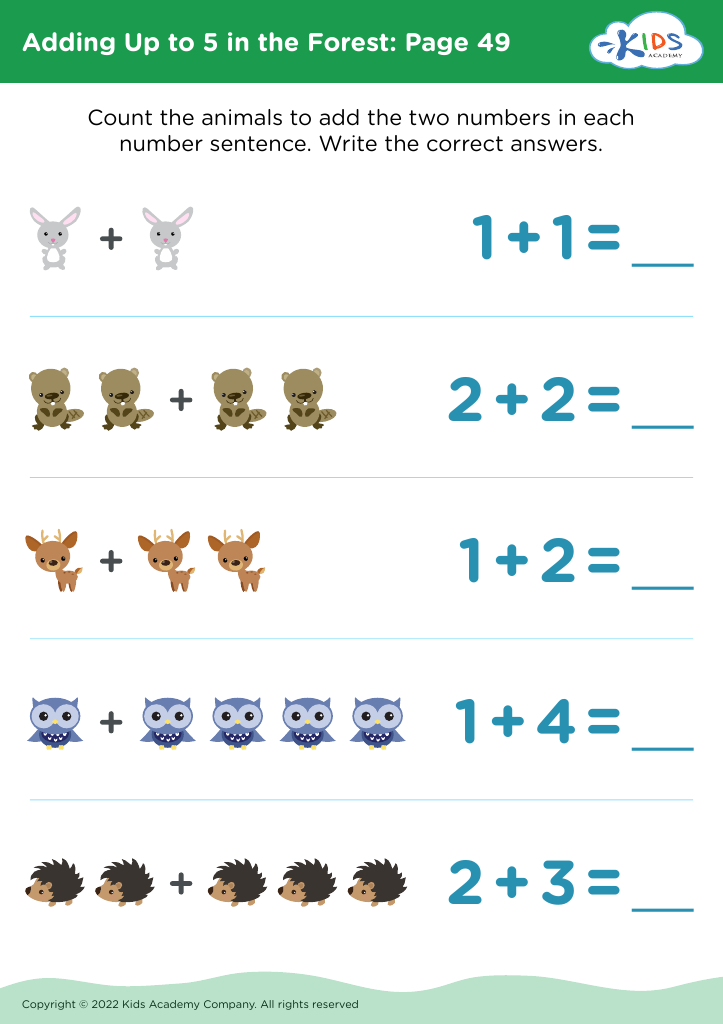
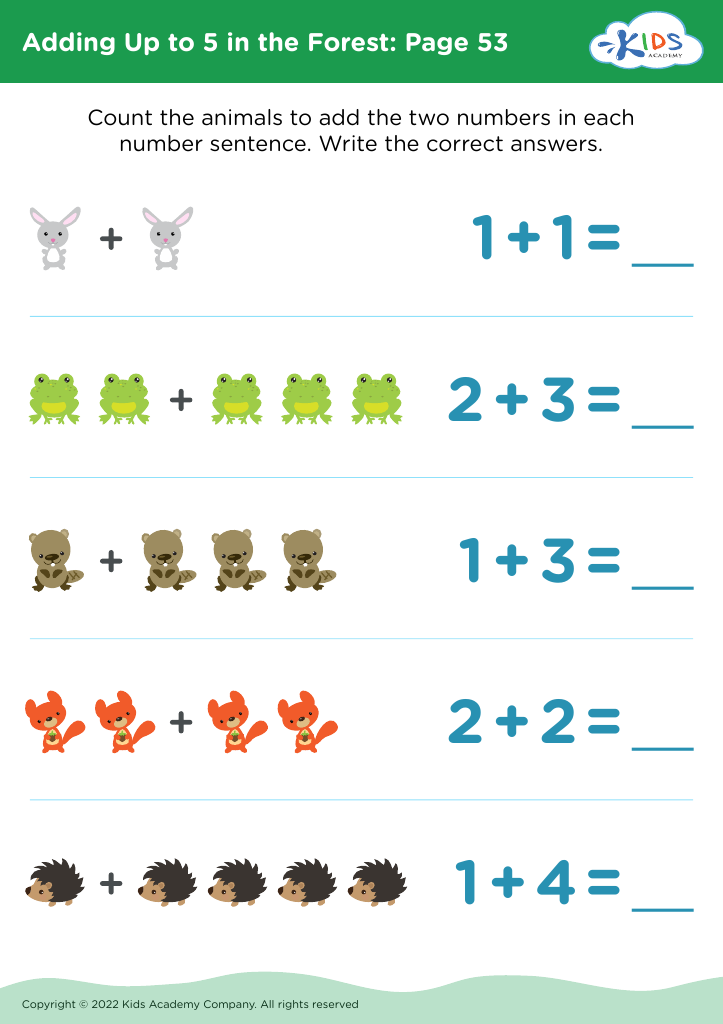
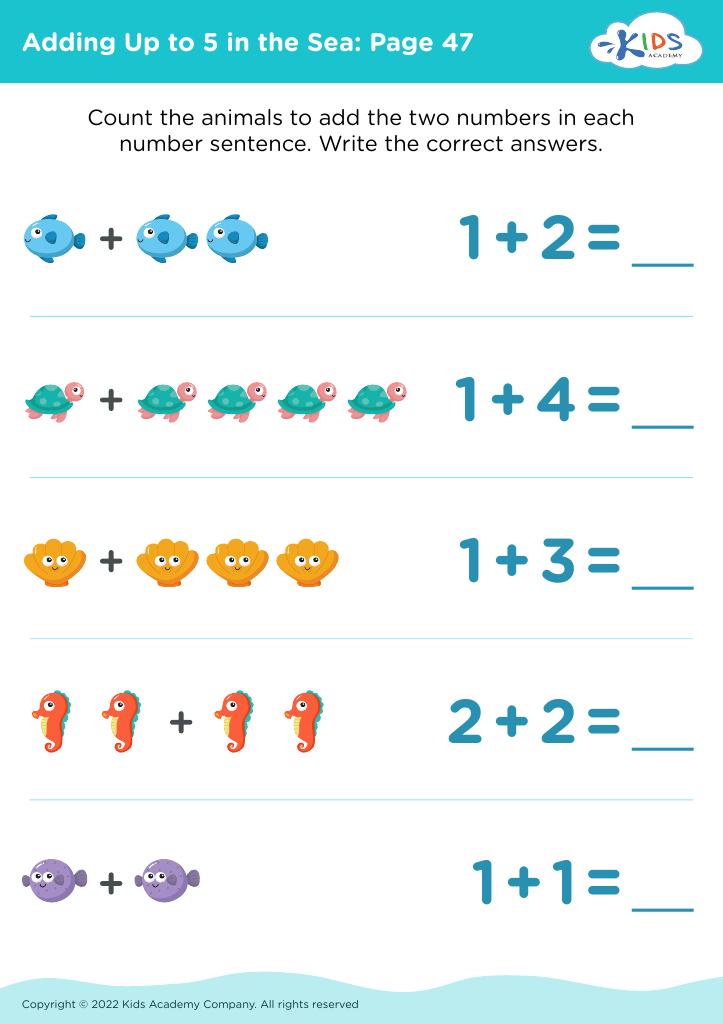
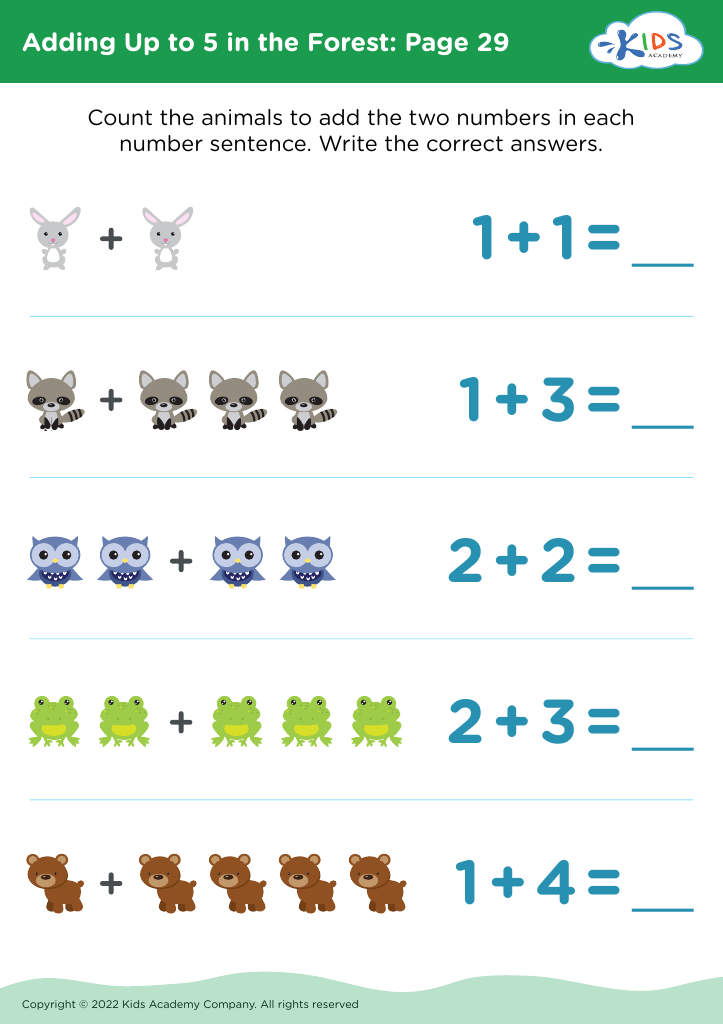
Enhance your child's counting skills with our specially designed "Counting Proficiency Addition Worksheets for 5-Year-Olds"! These fun and engaging worksheets are tailored to help your child build a strong foundation in basic addition through colorful and innovative activities. With a focus on developing counting proficiency, children will effortlessly learn to add numbers as they enjoy playful exercises that hold their interest. Perfect for parents and teachers, these printable worksheets make learning math an exciting and rewarding adventure for young learners. Foster a love for numbers and boost your 5-year-old's confidence in math today!
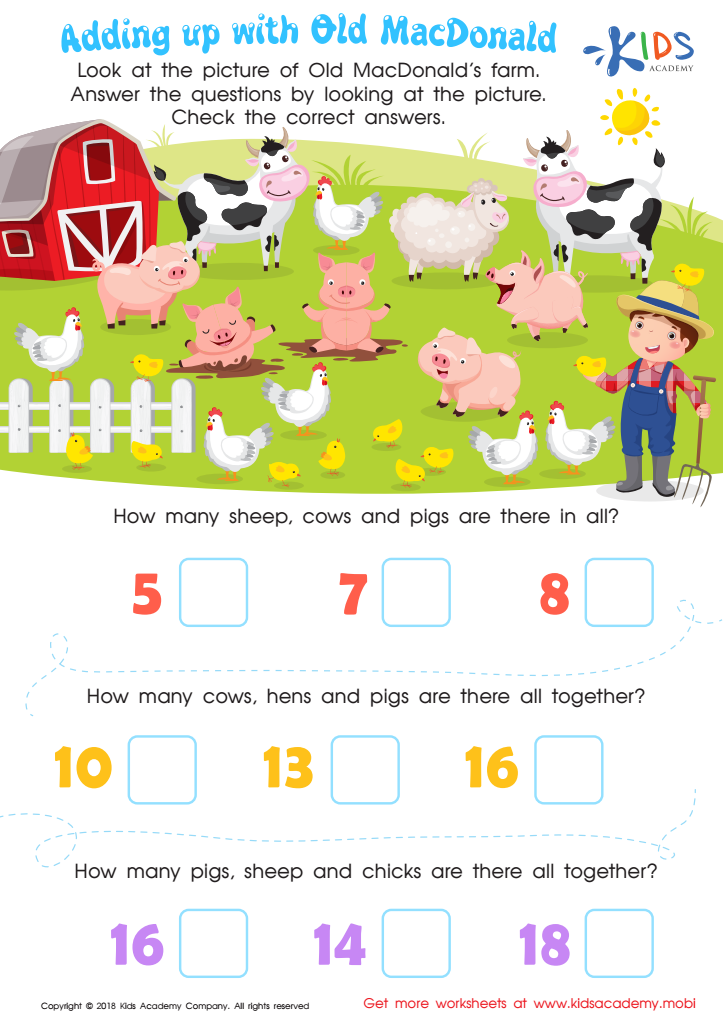
Adding Up with Old MacDonald Worksheet
 Assign to My Students
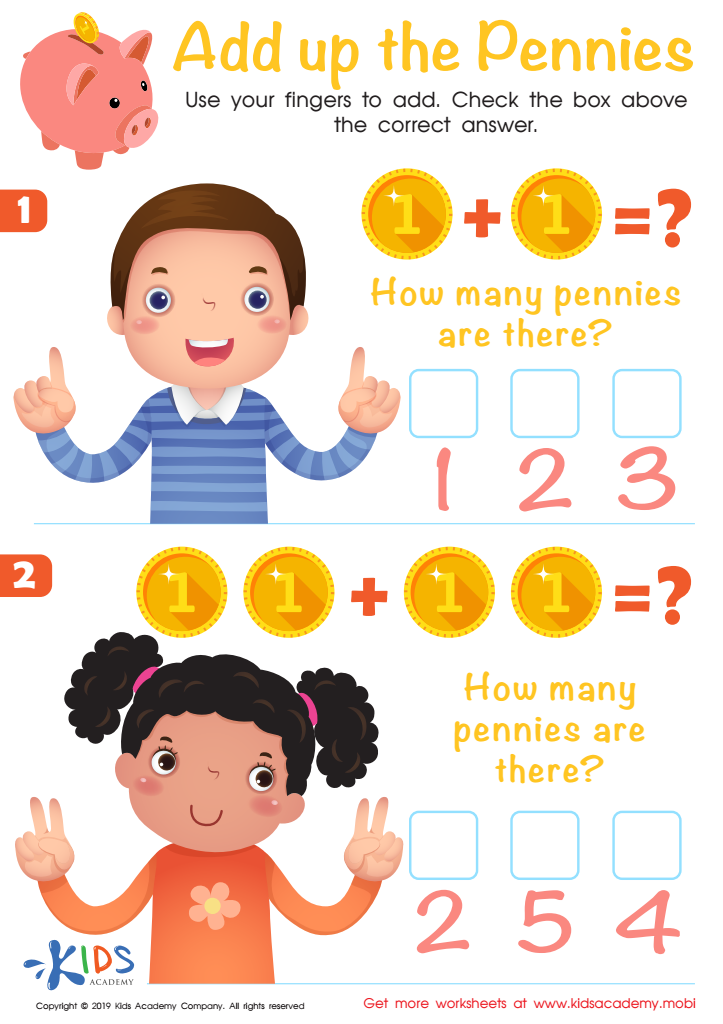
Add up the Pennies Worksheet
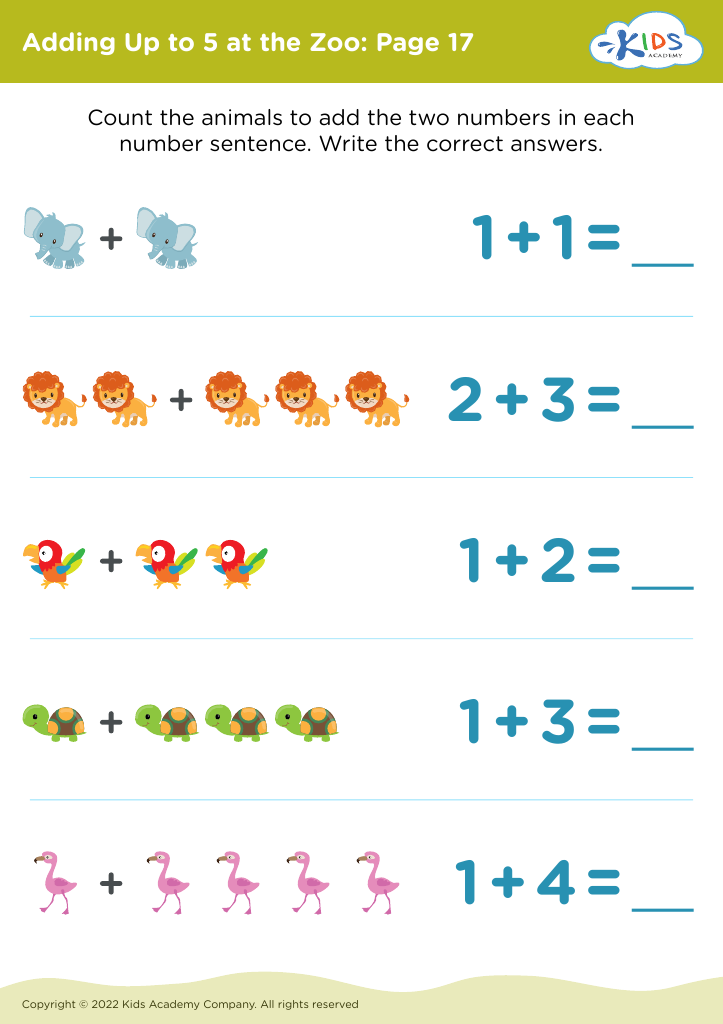
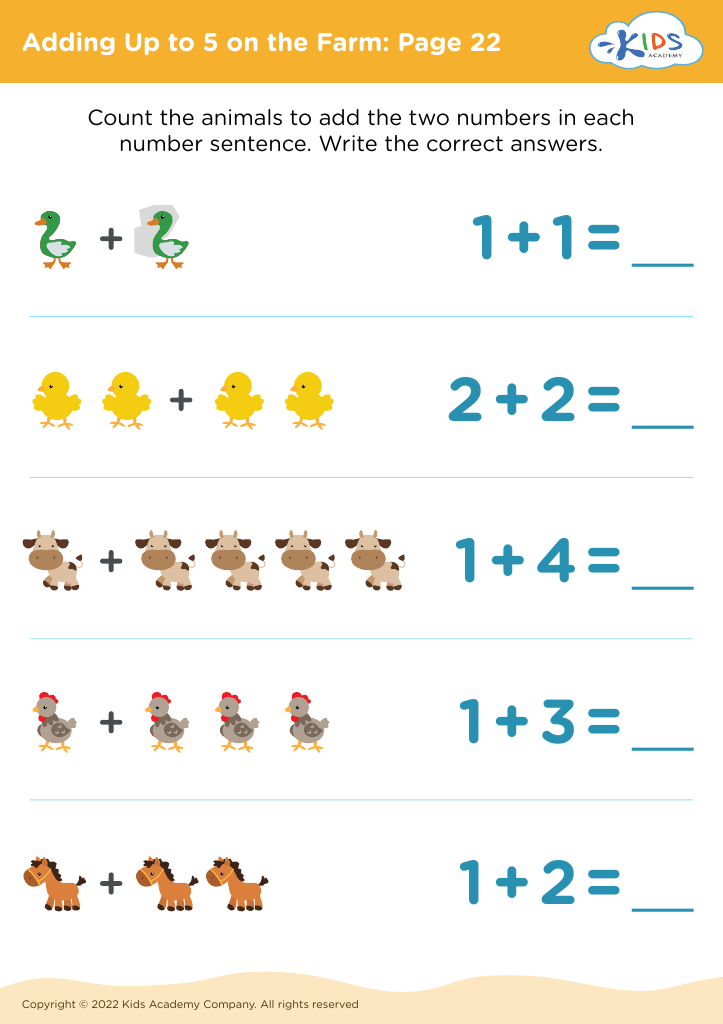








Counting proficiency and addition skills are crucial for 5-year-olds because they lay the groundwork for future mathematical learning and cognitive development. At this developmental stage, children's brains are exceptionally receptive to new information. Proficiency in counting helps them grasp core concepts of numeracy, such as number recognition, order, and quantity, which are fundamental for more complex mathematical operations.
Parents and teachers should prioritize these skills because early math abilities are strong predictors of later academic achievement across subjects, not just in math. Counting and addition activities foster problem-solving abilities and analytical thinking, which are transferable to everyday situations and academic challenges. Enhancing these skills helps children develop confidence and a positive attitude towards learning.
Moreover, engaging in counting and basic addition exercises supports fine motor skills (when using physical manipulatives), language development (via number-related vocabulary), and social skills (when incorporated into group activities). These skills create a holistic foundation, as early numeracy influences literacy skills due to the logic and structure common to both areas.
In summary, prioritizing counting proficiency and addition for 5-year-olds is vital for their academic, cognitive, and social-emotional development, greatly influencing their overall educational trajectory and lifelong learning abilities.








