Problem-Solving Skills Addition Worksheets for 5-Year-Olds - Page 3
54 filtered results
-
From - To
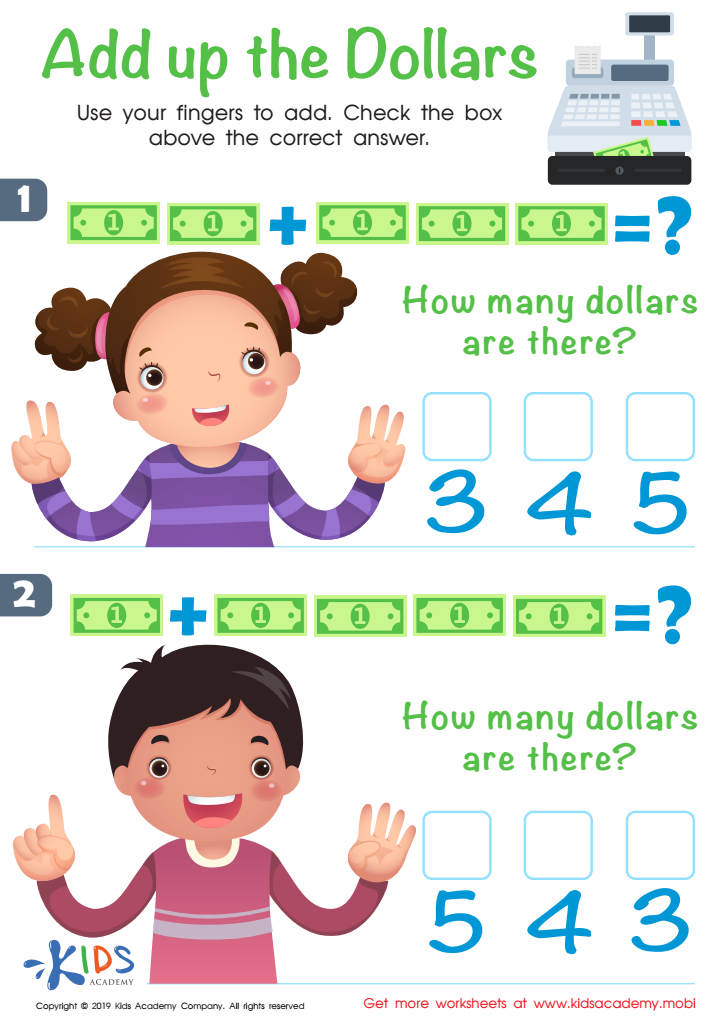
Add up the Dollars Worksheet
 Assign to My Students
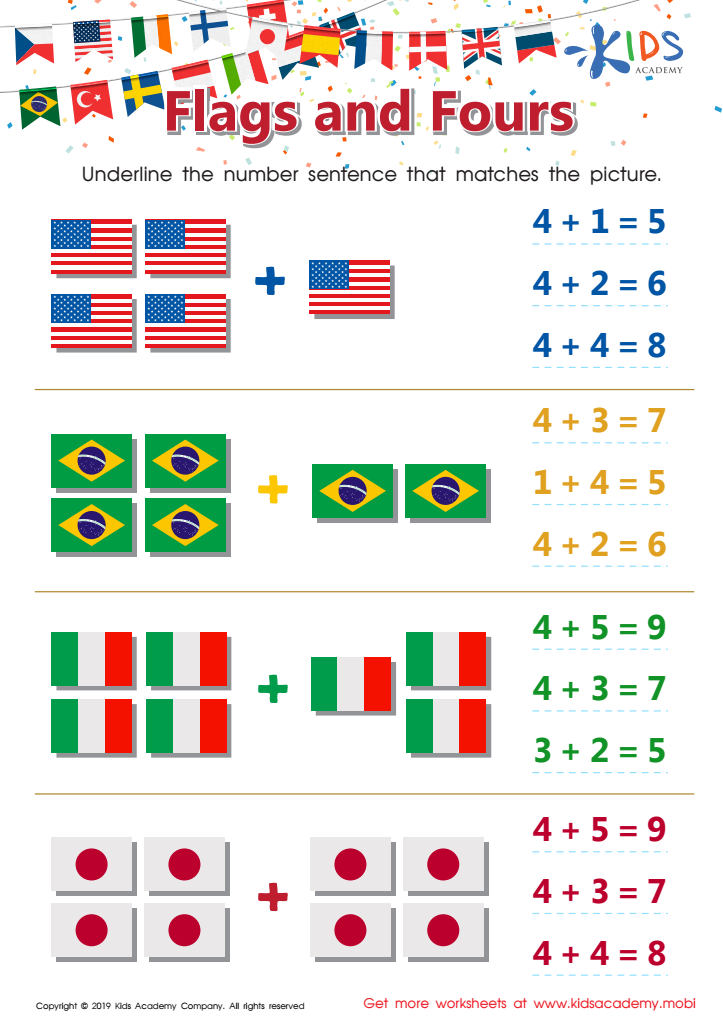
Flags and Fours Worksheet








Problem-solving skills are essential for 5-year-olds as they foster critical thinking, creativity, and independence, which are vital for lifelong success. At this age, children's brains are highly adaptable. By engaging them in problem-solving activities, either through playful challenges or simple addition problems, we help enhance their cognitive development. These activities teach children to identify, analyze, and find solutions to various situations—skills that are transferable to more complex academic subjects and real-life situations.
Moreover, early problem-solving skills build a child’s confidence and resilience. When a child successfully solves a problem, it boosts their self-esteem and encourages a growth mindset—the belief that abilities can develop through dedication and hard work. This positive self-perception is crucial for perseverance and motivation in facing future challenges.
For parents and teachers, promoting problem-solving through addition exercises equips children with practical skills like counting, logical reasoning, and the ability to understand and manipulate numbers. These foundational math skills are crucial not only in academic achievement but also in everyday tasks, from budgeting to cooking. Encouraging problem-solving at a young age sets children on a path towards becoming resourceful, adaptable, and capable individuals, prepared to tackle both academic and personal challenges throughout their lives.








