
Improving concentration Geometry Worksheets for 5-Year-Olds
3 filtered results
Difficulty Level
Grade
Age
-
From - To
Subject
Activity
Standards
Enhance your child's focus and spatial understanding with our "Improving Concentration Geometry Worksheets for 5-Year-Olds." Designed specifically for young learners, these engaging worksheets combine fun activities with essential geometry concepts. Each colorful page encourages kids to identify shapes, complete patterns, and solve puzzles, all while boosting their concentration skills. Our resources cater to various learning styles, ensuring every child finds joy in learning geometry. By using these interactive worksheets, your child will develop critical thinking and fine motor skills, laying a strong foundation for future math success. Start cultivating concentration and a love for learning with our thoughtfully crafted geometry activities today!
Favorites
With answer key
Interactive
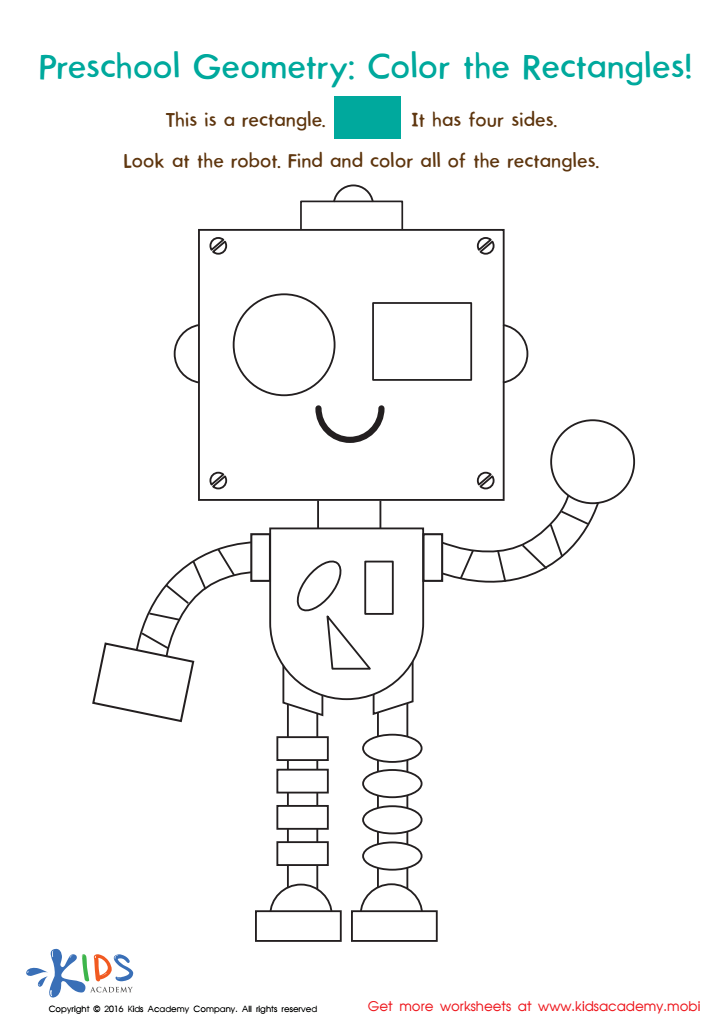
Geometry Worksheet
Geometry can be fun for kids! They explore shapes that create their favorite pics and objects. This preschool worksheet explains that rectangles have four sides, then kids color rectangles on a funny robot!
Geometry Worksheet
Worksheet











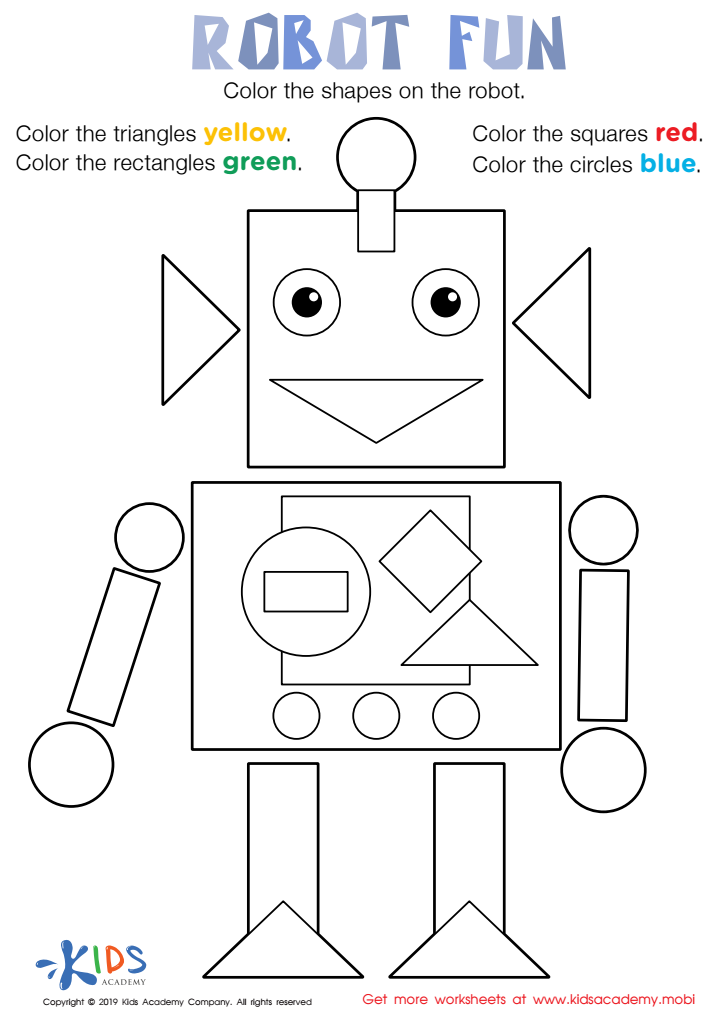
Robot Fun Worksheet
Help your child learn about basic shapes with this fun robot worksheet! Kids practice identifying circles, squares, rectangles and triangles, then color each shape according to directions. Make math practice enjoyable with this coloring page that teaches all four basic shapes - it's an important math skill!
Download (PDF)
 Assign to My Students
Assign to My Students
Robot Fun Worksheet
Worksheet
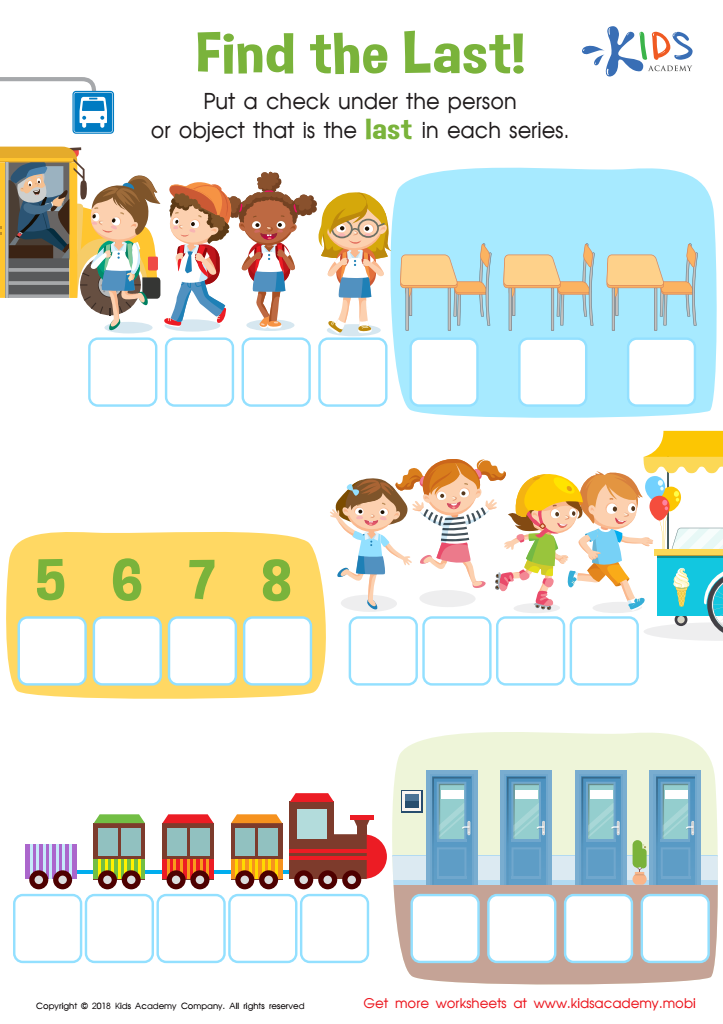
Find the Last! Worksheet
Teach young students about sequence words with this free worksheet. Have them look at sets of people or objects and choose the one that is last. Engage them further by having them describe or act out their day, and what happens last? Enjoy this printout and have fun!
Find the Last! Worksheet
Worksheet
Join Kids Academy for Free
Who is primarily going to use this learning content?








Improving concentration in geometry for 5-year-olds is vital for several reasons. Firstly, early childhood is a critical period for cognitive development, where foundational skills in spatial awareness and problem-solving are established. By engaging young learners in geometry-focused activities, parents and teachers can help cultivate their ability to concentrate, which is closely linked to overall academic success later in life.
Secondly, geometry encourages children to think critically about shapes, spaces, and relationships between objects. This type of thinking fosters not only mathematical skills but also enhances creativity and imaginative play. When children concentrate on geometric tasks, they learn to observe detail, categorize information, and make connections — skills that are essential in all learning areas.
Additionally, improving concentration in geometry can enhance fine motor skills through hands-on activities such as drawing shapes or building structures. These activities often promote teamwork and social interaction, aiding emotional development.
Ultimately, investing in concentration and geometry at this stage will ensure that children build a solid foundation for future learning challenges, making them more confident and capable as they progress through their educational journey. Parents and teachers play a crucial role in nurturing these skills, setting the stage for lifelong learning and success.








