Counting practice Numbers Worksheets for 5-Year-Olds - Page 2
28 filtered results
-
From - To
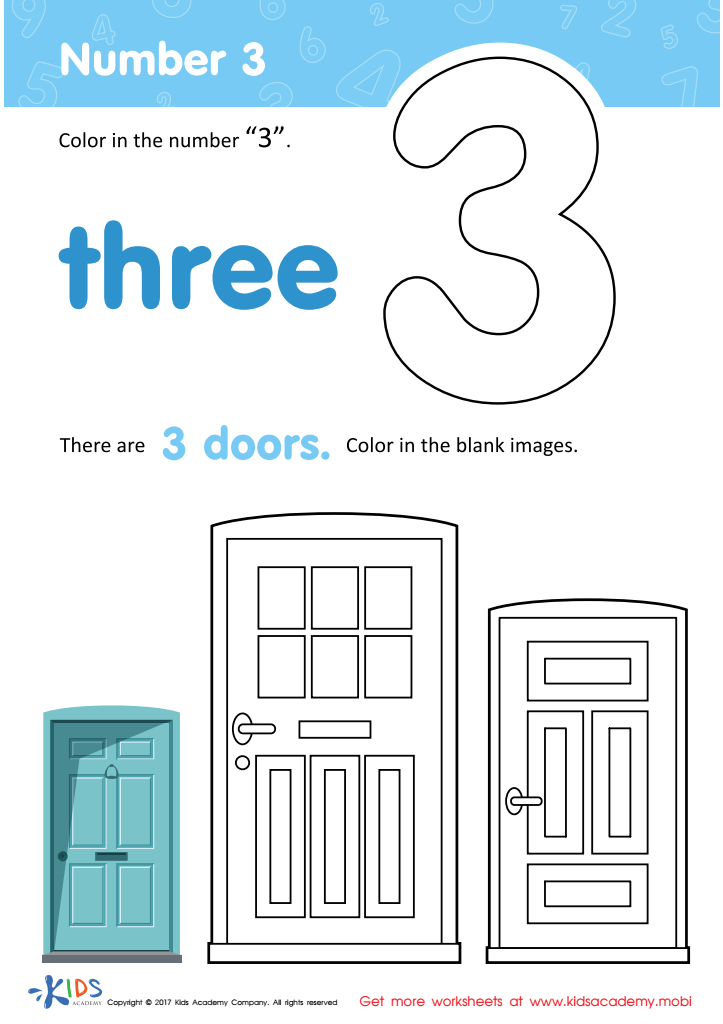
Number 3 Worksheet
 Assign to My Students
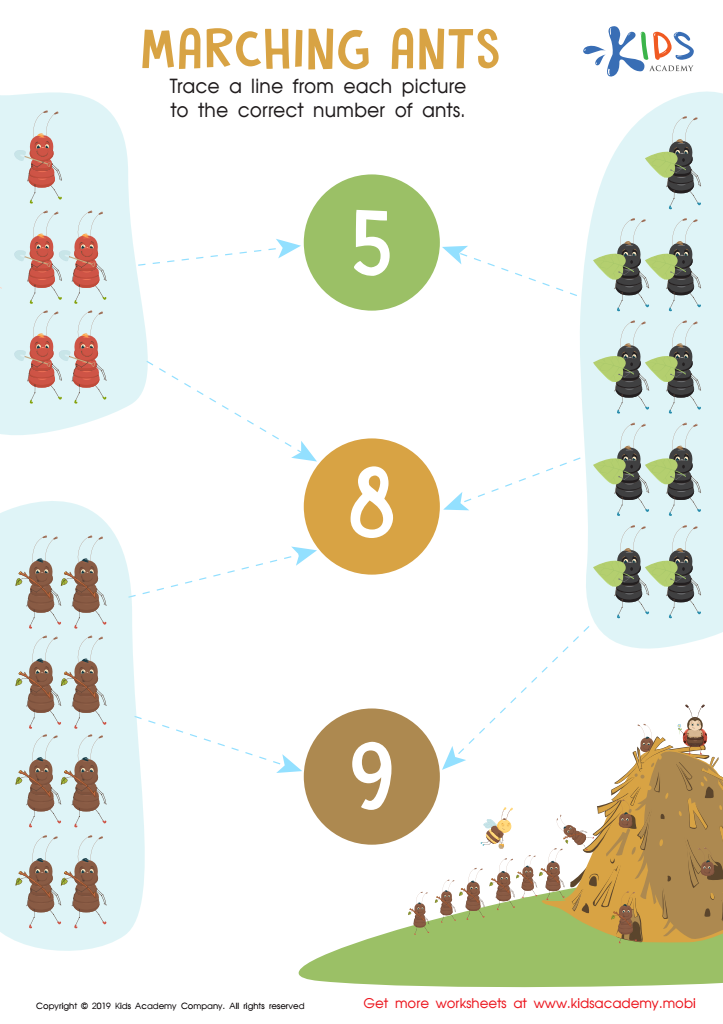
Marching Ants Worksheet
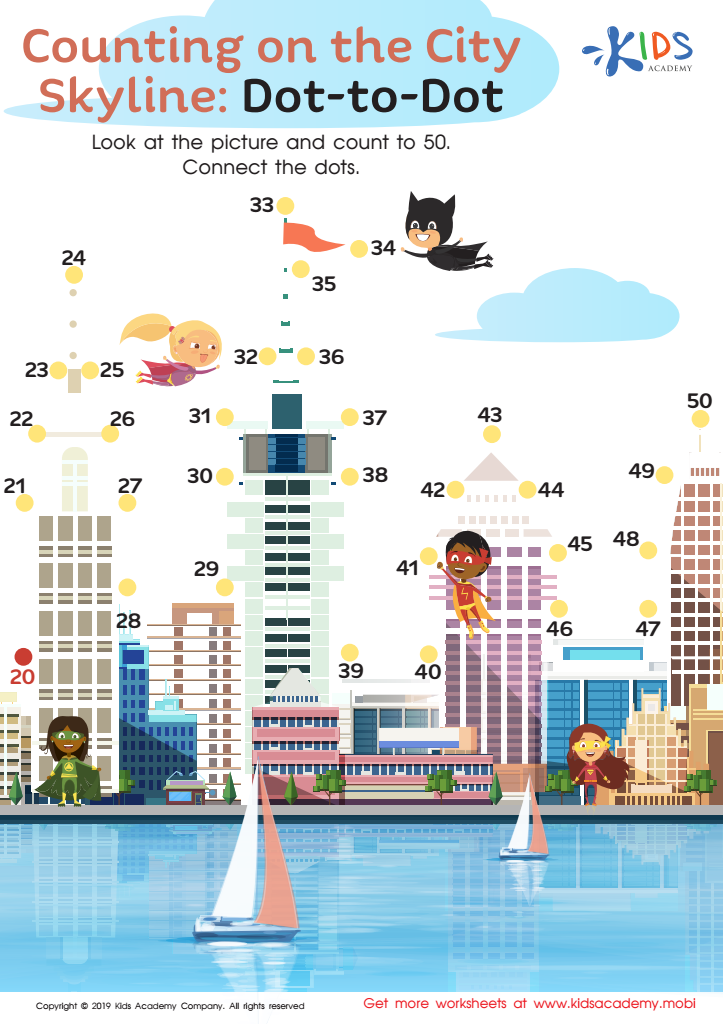
Counting on the City Skyline: Dot-to-Dot Worksheet
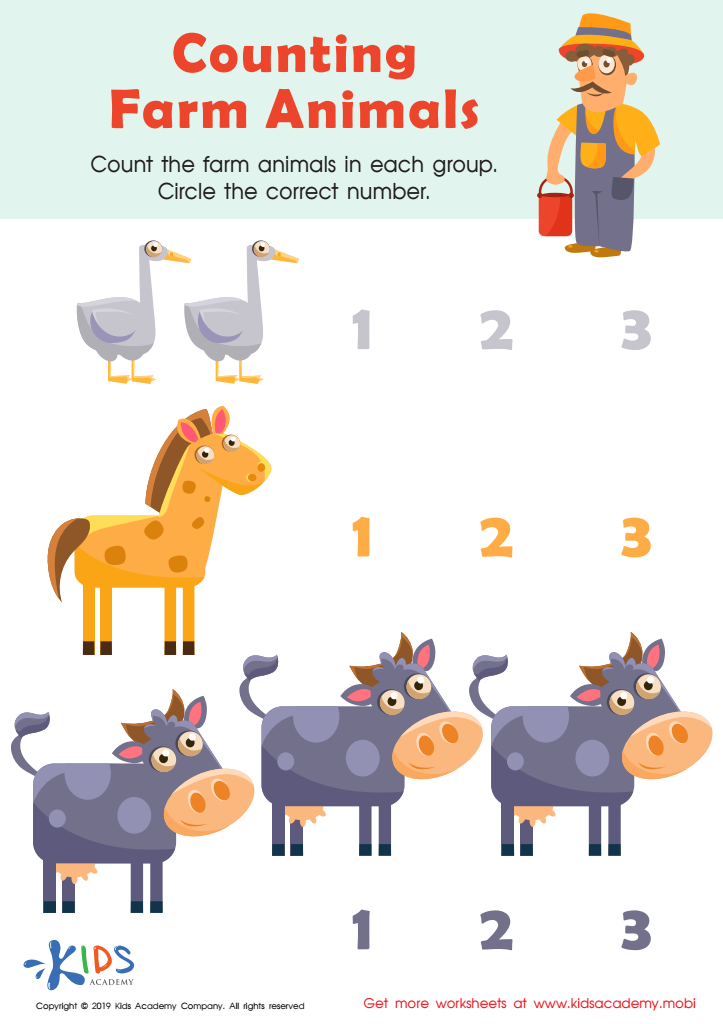
Counting Farm Animals Worksheet








Counting practice is essential for 5-year-olds as it lays the foundation for their mathematical skills and cognitive development. At this age, children are naturally curious and eager to explore numbers, making it the perfect time to engage them in counting activities. By practicing counting, children not only learn to recognize numbers but also develop critical thinking and problem-solving skills.
Moreover, counting helps improve their fine motor skills, particularly when they engage in hands-on activities like using counting blocks or tallying objects. This tactile experience reinforces their learning and makes abstract concepts more concrete. Counting practice also builds their vocabulary; as they learn number names and associated terms (like "more," "less," "total"), they expand their ability to communicate mathematically.
Furthermore, counting is linked to important life skills, such as budgeting, cooking, and managing time. By instilling a strong counting foundation, parents and teachers can set children up for success in future math concepts and everyday situations. Overall, counting is more than just a numeric exercise; it's a vital component of early education that fosters growth, confidence, and a lifelong appreciation for learning. Thus, prioritizing counting practice in young learners is crucial for their overall development.








