
Matching numbers Numbers Worksheets for 5-Year-Olds
10 filtered results
Difficulty Level
Grade
Age
-
From - To
Subject
Activity
Standards
Discover our engaging Matching Numbers Worksheets specially designed for 5-year-olds! These fun and interactive worksheets help young learners develop essential number recognition and association skills. Each activity encourages children to connect numbers with corresponding objects, enhancing their counting abilities and understanding of numerals. With vibrant illustrations and age-appropriate challenges, our worksheets make learning exciting and effective. Parents and teachers can find a variety of matching activities tailored to support early math education. Empower your child's learning journey and watch their confidence soar as they master numbers in a playful way! Explore our resources and bring math fun into your home or classroom today!
Favorites
With answer key
Interactive
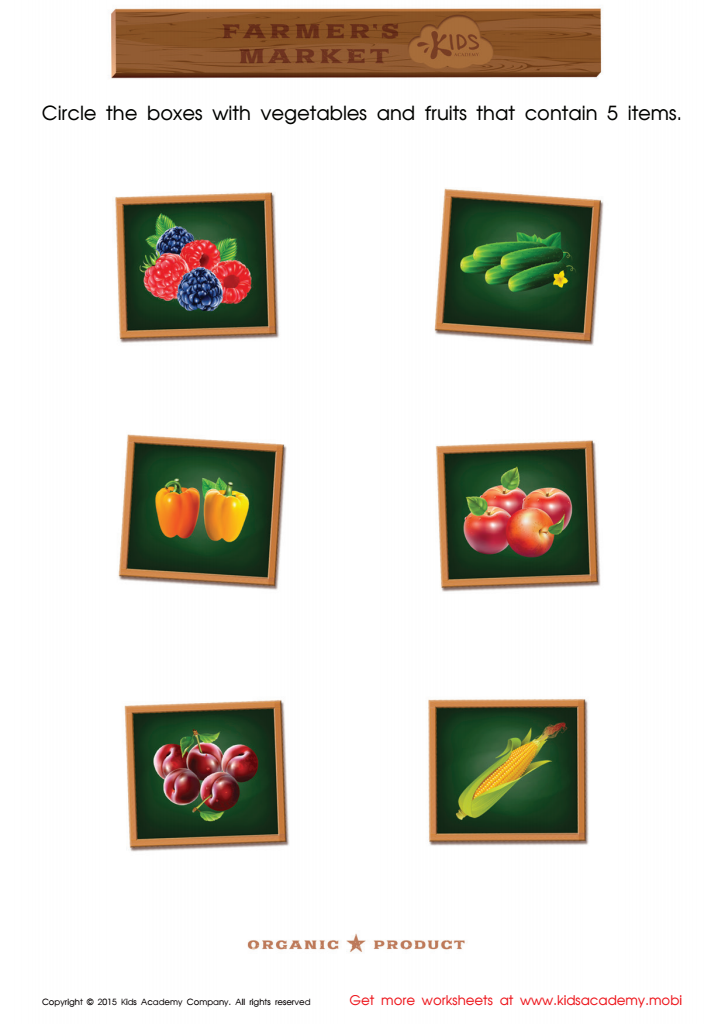
Count and Match Vegetables 1 – 7 Math Worksheet
Print this bright math worksheet from Kids Academy and give your child a fun way to enhance their counting skills. Based on Singapore Math, the colourful pictures make it easy for children to comprehend math. Get additional free worksheets here!
 Assign to My Students
Count and Match Vegetables 1 – 7 Math Worksheet
Worksheet
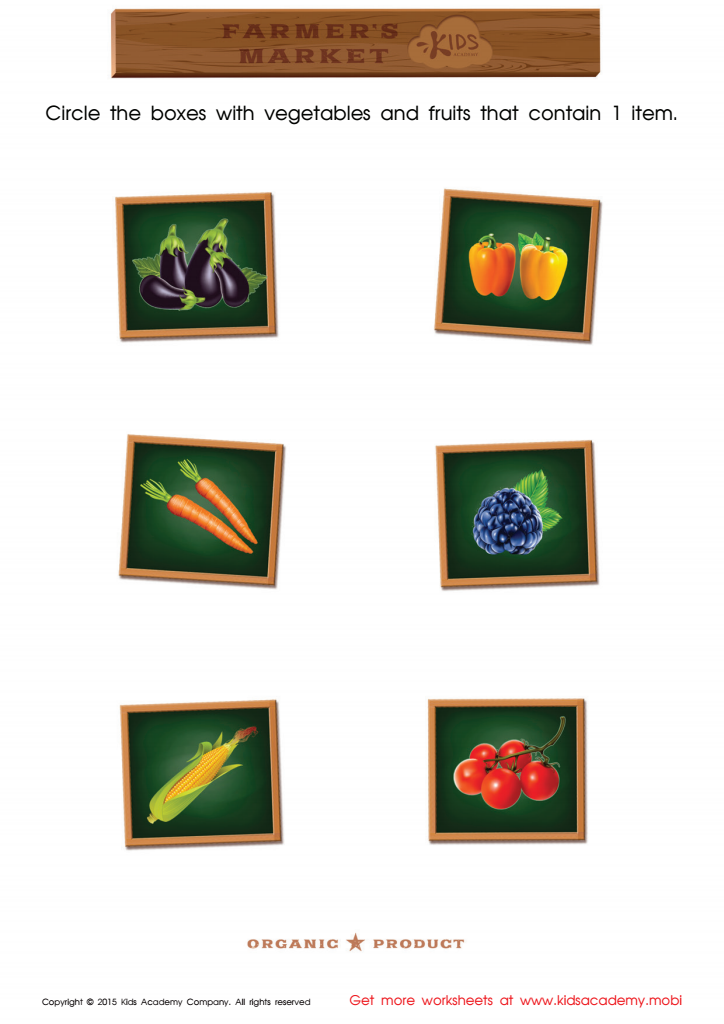
Count and Match Boxes with Vegetables
Print one and help your kid sharp his counting skills. With a variety of veggies to count, such as raspberries and eggplants, your little mathematician will have lots of fun.
Count and Match Boxes with Vegetables
Worksheet
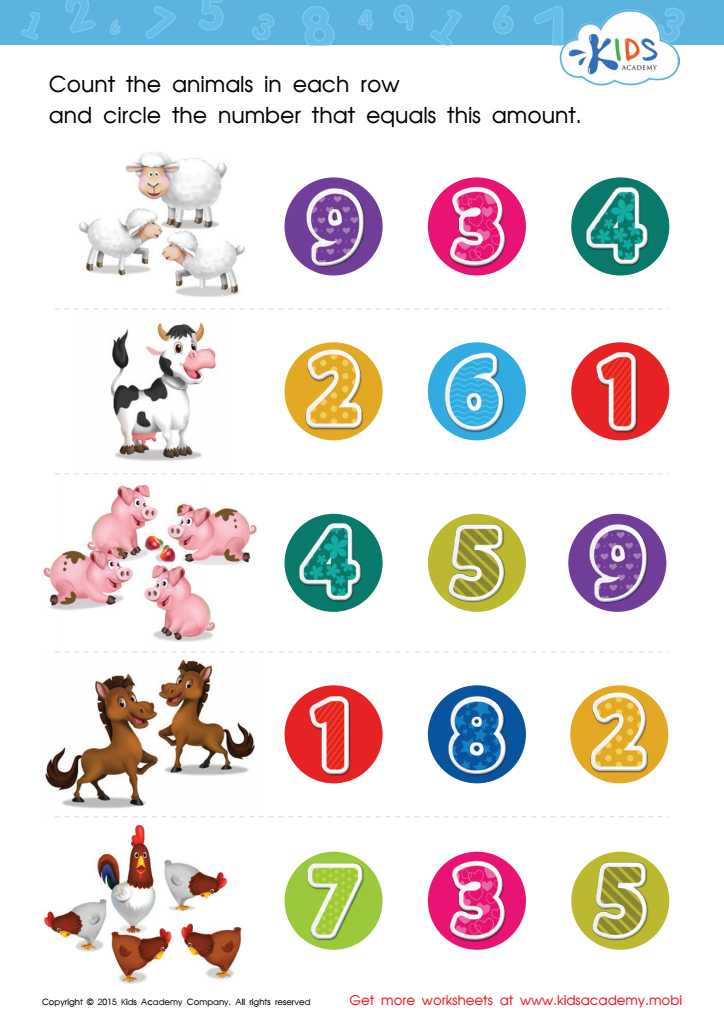
Count and Match 1 – 5 Math Worksheet
Find the colorful worksheet aimed to help your little learner develop their math skills. Count the cute animals and identify the correct numbers based on the Singapore Math method. This worksheet is a fantastic way to start your kid on their mathematical journey.
Count and Match 1 – 5 Math Worksheet
Worksheet
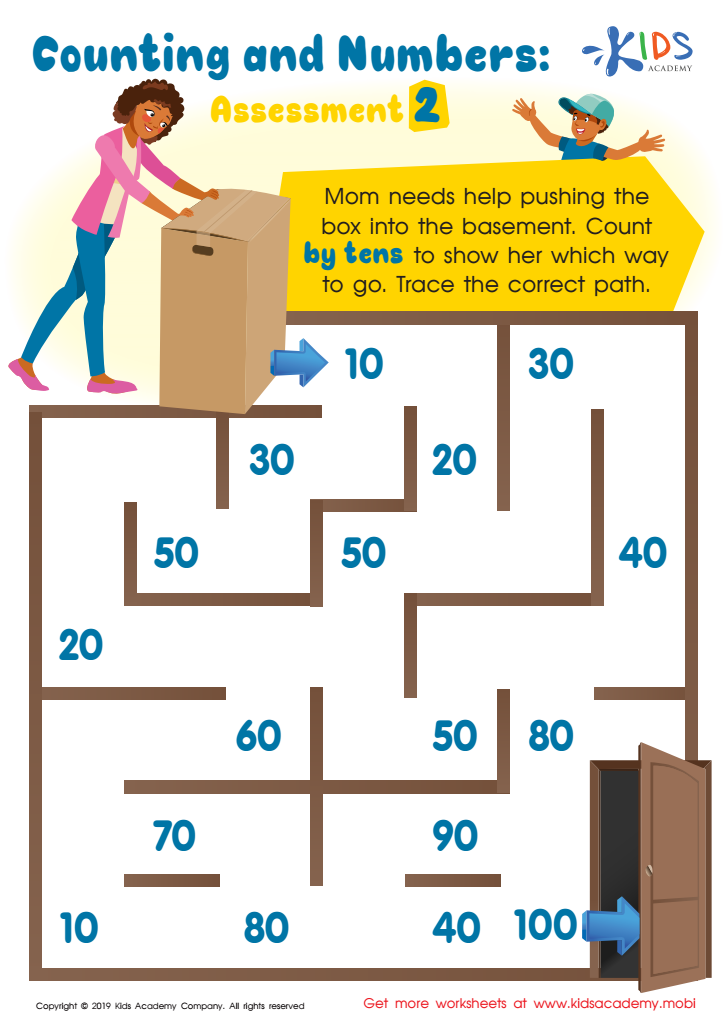
Counting and Numbers: Assessment 2 Worksheet
Kids love mazes and this free assessment worksheet helps them master counting by 10s. As they navigate the path, they'll improve their math skills and reach 100! It's a fun way to check your child's understanding of counting and chunking, and you'll quickly know their skill level.
Counting and Numbers: Assessment 2 Worksheet
Worksheet
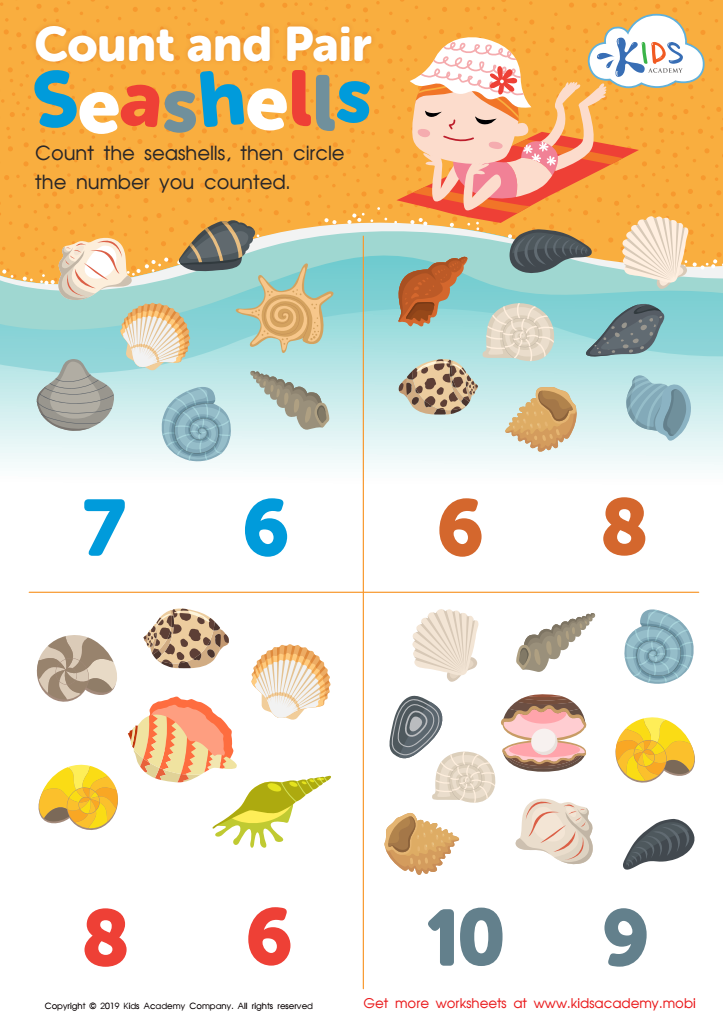
Count and Pair Seashells Worksheet
Kids love trips to the beach. Ask them to count the shells in the four sets of seashells in this printout - then circle the correct number beneath each set. Let them recall the happy memories of the beach and make this worksheet fun.
Count and Pair Seashells Worksheet
Worksheet
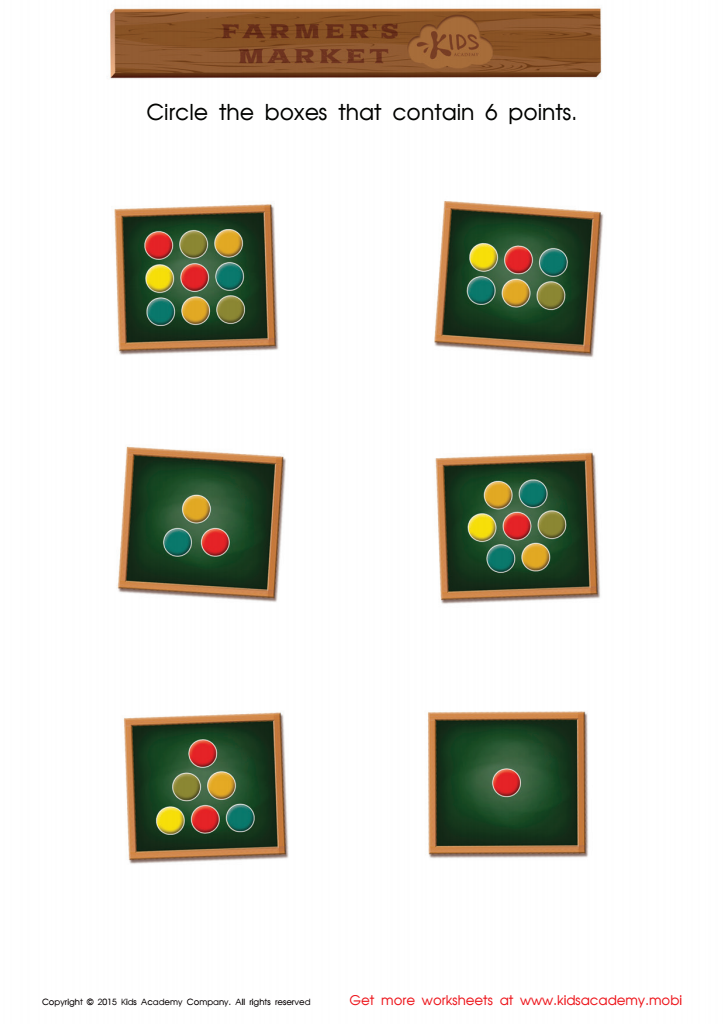
Count and Match Points 6 Math Worksheet
Help your child with mathematics by guiding them with this fun printable worksheet. They will practice counting numbers by looking at all the boxes and circling the ones containing 6 dots. Together you will gain a better understanding of mathematics.
Count and Match Points 6 Math Worksheet
Worksheet
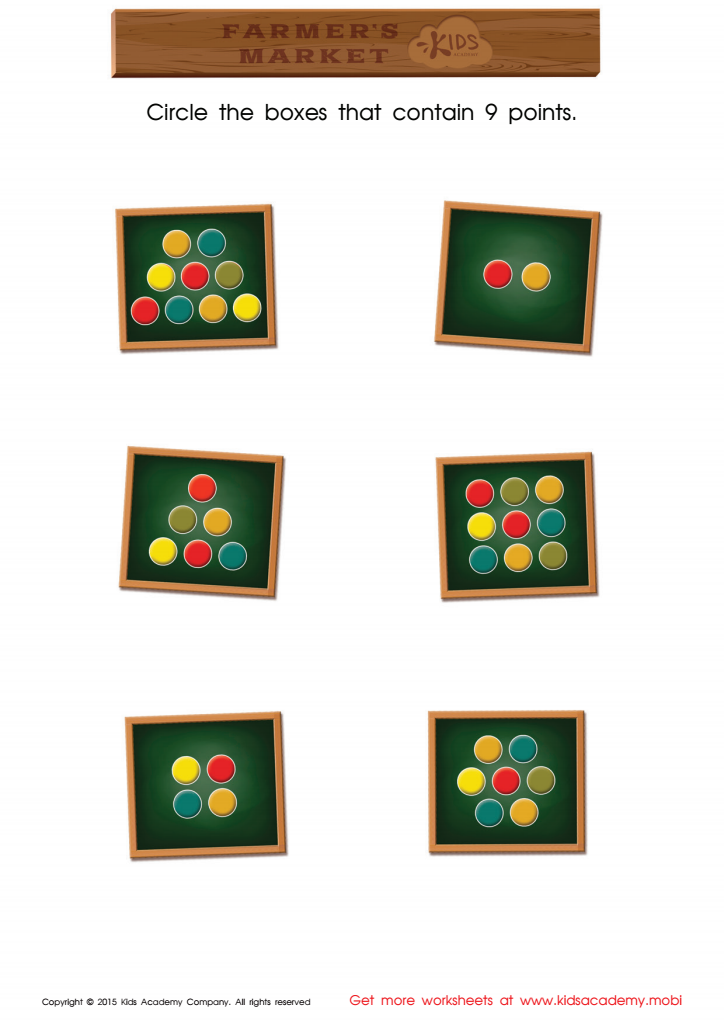
Count and Match Points 9 Math Worksheet
Circle the boxes with 9 points. Examine and count the colorful points in each of the 6 boxes. It's not easy as points are not arranged similarly, so have your child think hard and count carefully.
Count and Match Points 9 Math Worksheet
Worksheet
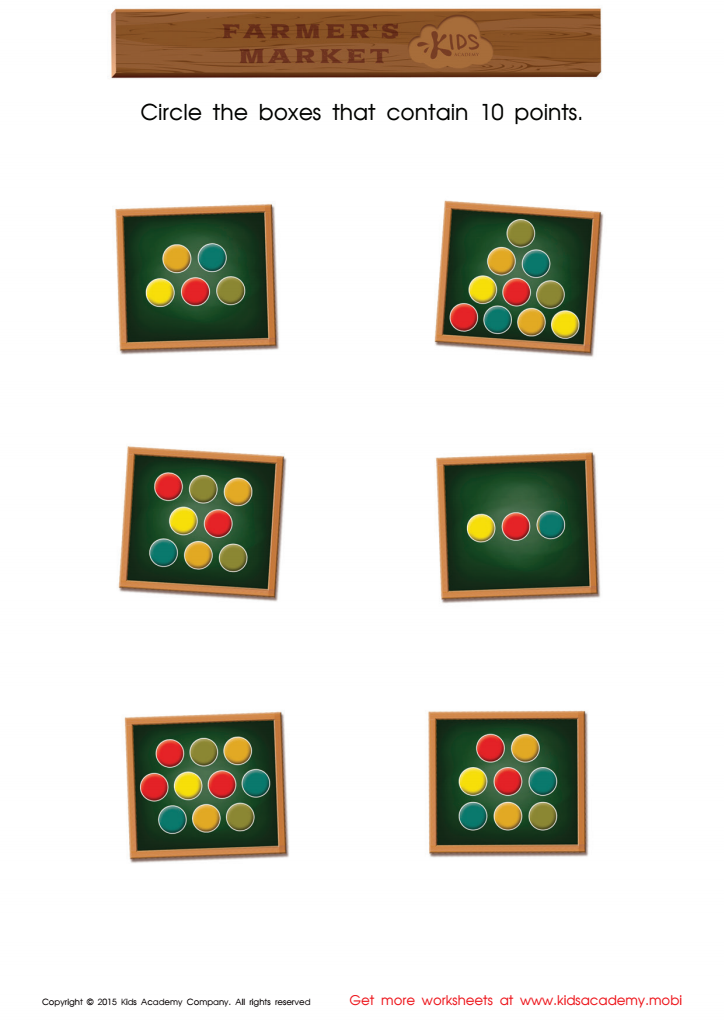
Count and Match Points 10 Math Worksheet
Help your youngster practice counting with this worksheet. Count the points in each box and circle any with up to 10 points. It will improve their counting and matching ability. Forget about addition and subtraction; it's time for a fun exercise for you both!
Count and Match Points 10 Math Worksheet
Worksheet
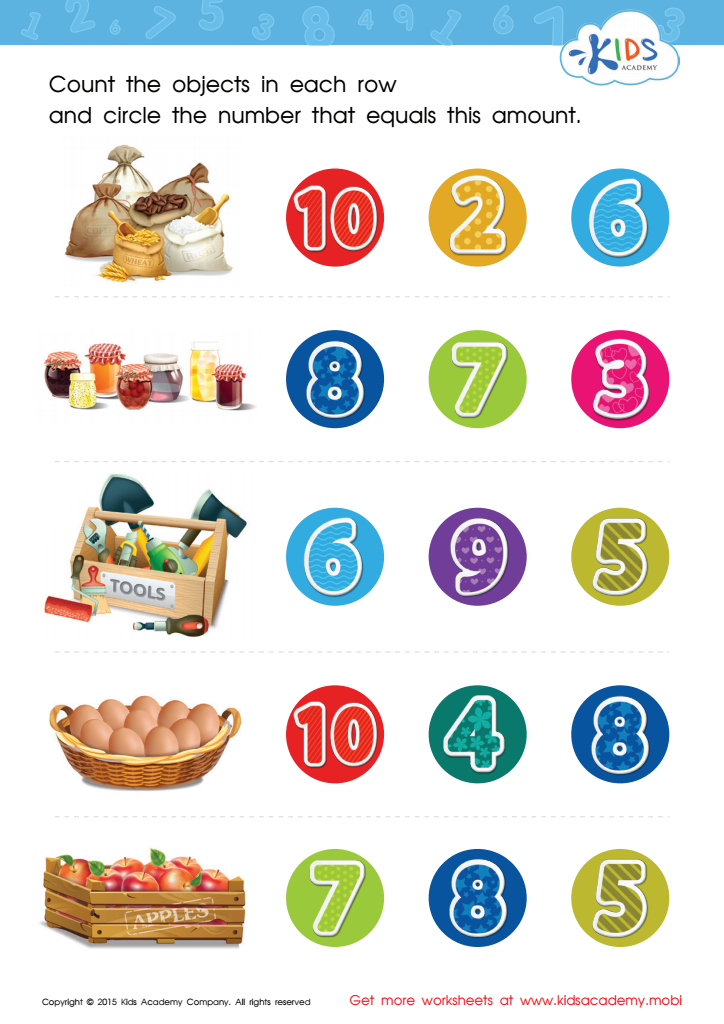
Count and Match 6 – 10 Math Worksheet
Print this fun math worksheet for your kindergartener and help them practice counting up to ten! They'll draw a line from the objects to the correct numbers, visualizing the problem and having fun at the same time. Kids Academy offers more free printable worksheets. Get them now!
Count and Match 6 – 10 Math Worksheet
Worksheet
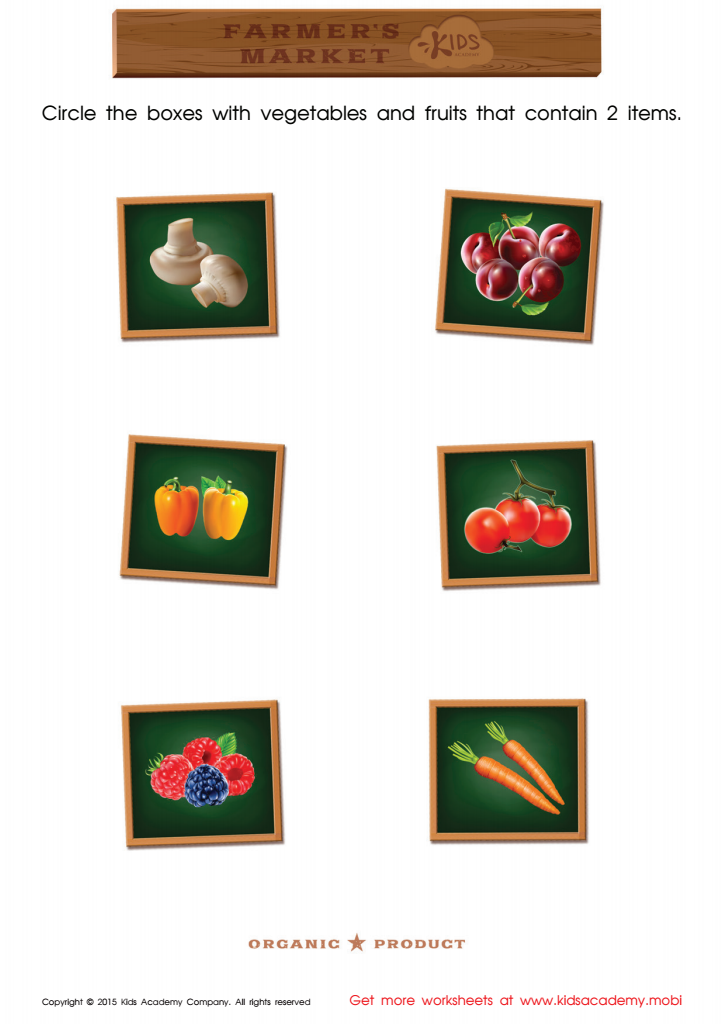
Count and Match Vegetables and Points Math Worksheet
Make your kids excited about math with this free printable kindergarten worksheet! Kids will count up to seven and match boxes with the same number of vegetables. Visualizing the task with this worksheet layout will entertain them while they practice math. Download additional worksheets by topic on Kids Academy.
Count and Match Vegetables and Points Math Worksheet
Worksheet
Join Kids Academy for Free
Who is primarily going to use this learning content?








Matching numbers is a fundamental skill that provides a strong foundation for mathematical development in young children. For parents and teachers, understanding the importance of this skill can significantly influence a child's confidence and competence in math.
First, matching numbers enhances number recognition and counting skills, both of which are crucial at this early stage of development. When children match numbers with corresponding visuals—such as counters or dots—they not only learn the numerals themselves but also grasp the concept of quantity. This ability fosters an understanding of one-to-one correspondence, which is vital for future arithmetic operations.
Additionally, engaging in matching activities encourages critical thinking and problem-solving skills. Children learn to analyze and make connections, which are applicable in various areas of learning, not just mathematics. It also promotes fine motor skills when they physically match numbers with items or drawings.
Furthermore, these activities support social development. They often involve collaborative play, helping children practice turn-taking and communication with peers. Lastly, ensuring that children develop strong foundational skills in math lays the groundwork for their success in higher-level math in later grades, making it imperative for adults to prioritize these activities in early education.








