Sorting skills Numbers Worksheets for 5-Year-Olds
5 filtered results
-
From - To
Enhance your child's learning journey with our engaging Sorting Skills Numbers Worksheets designed for 5-year-olds! These fun and interactive worksheets help young learners develop essential sorting skills by categorizing numbers based on various attributes. Perfect for pre-K and kindergarten students, these activities not only solidify number recognition but also encourage logical thinking and problem-solving. Featuring colorful visuals and age-appropriate tasks, our worksheets make learning enjoyable and effective. Whether used in the classroom or at home, these sorting activities are an excellent resource for building a strong mathematical foundation. Start sorting and watch your child's confidence soar!
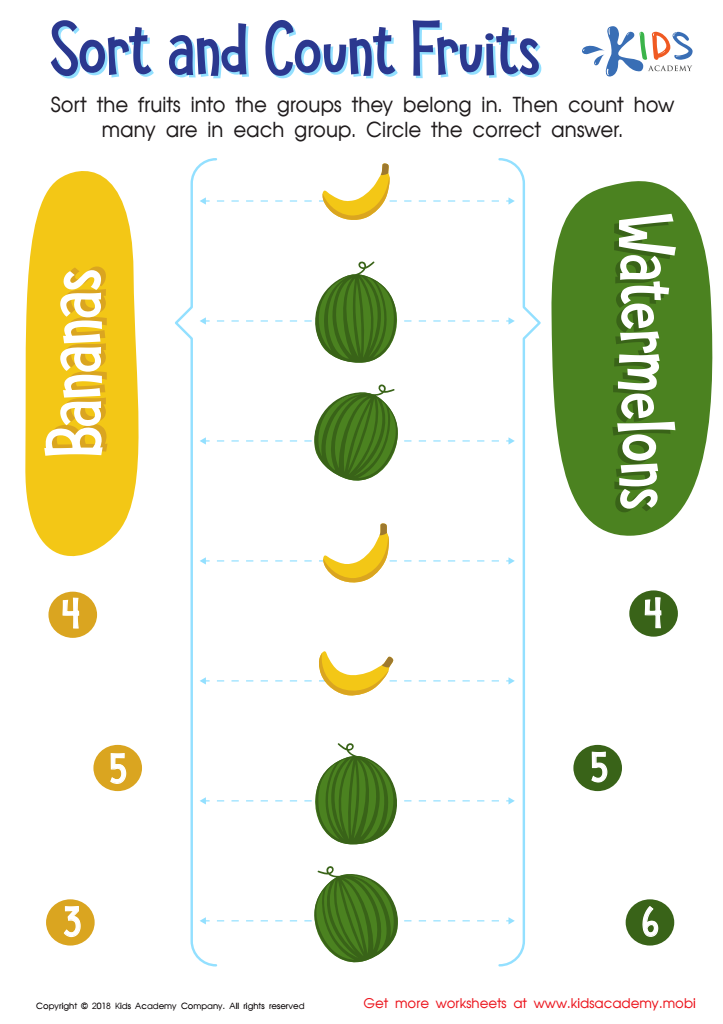
Sort and Count Fruits Worksheet
 Assign to My Students
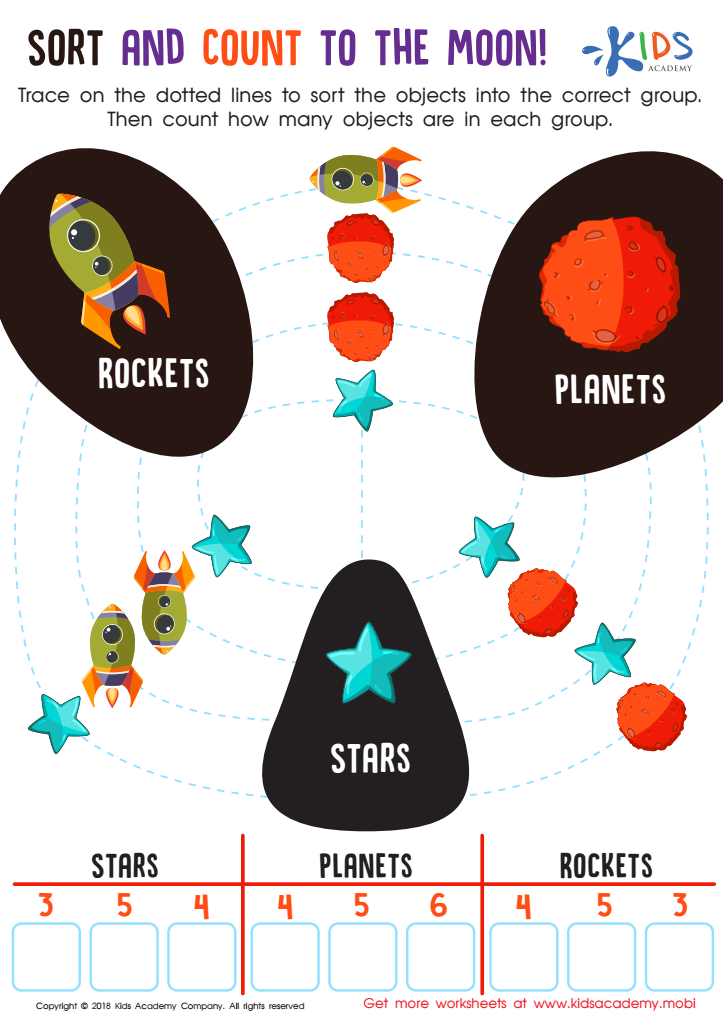
Sort and Count to the Moon Worksheet
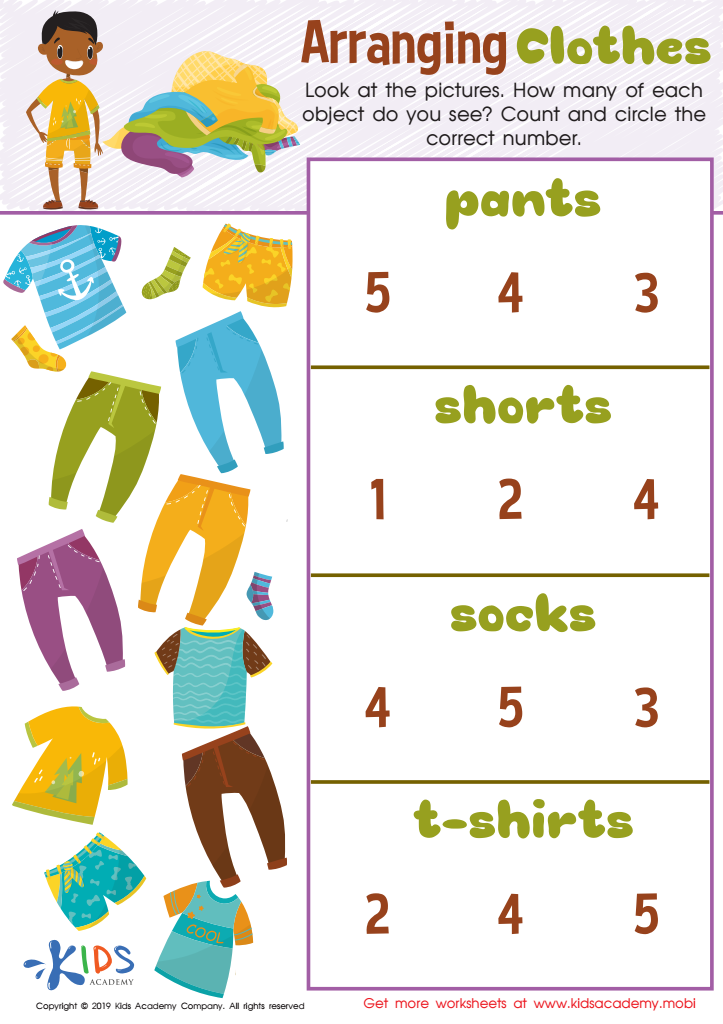
Arranging Clothes Worksheet
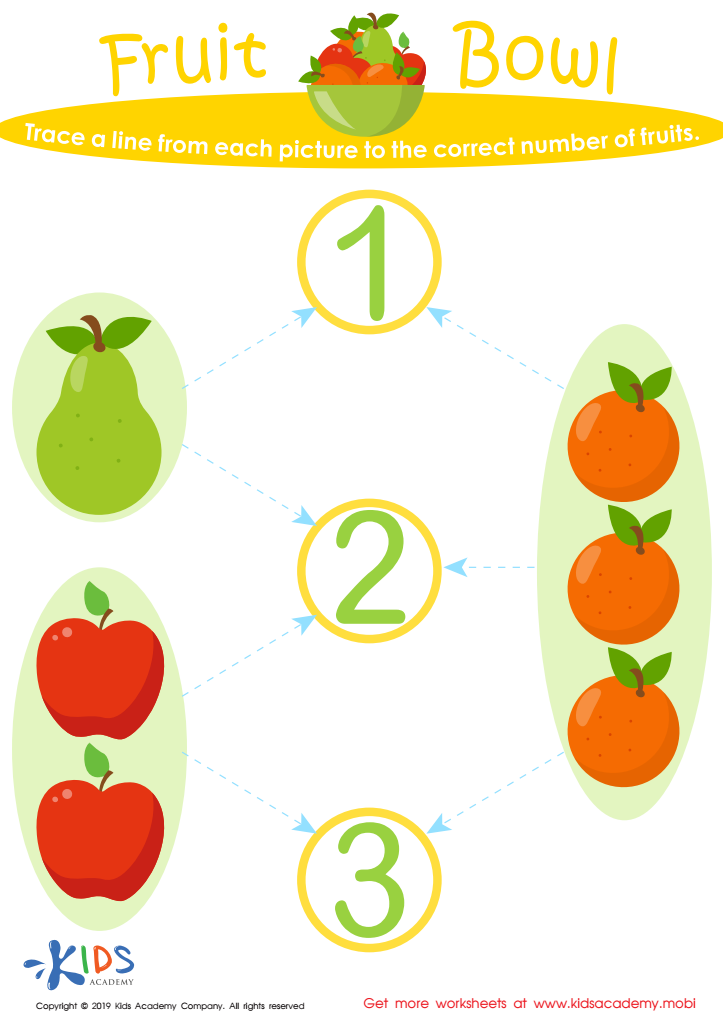
Fruit Bowl Worksheet
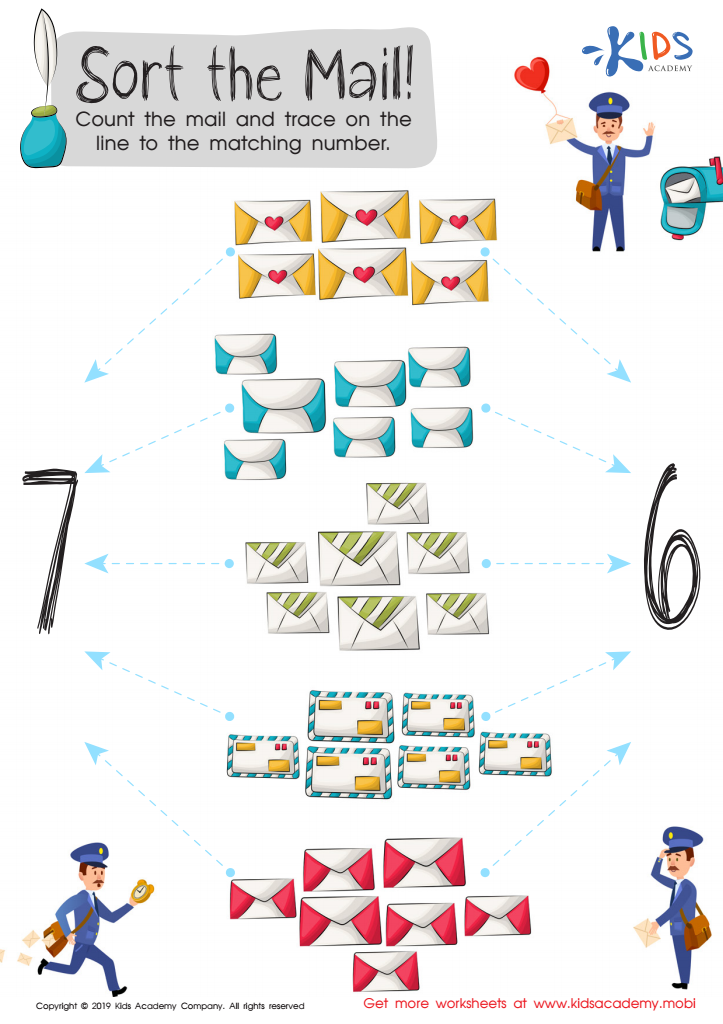
Sort the Mail Worksheet








Sorting skills are crucial for 5-year-olds as they lay the foundation for early math and cognitive development. At this age, children begin to explore and make sense of the world around them, and sorting helps them understand categories, characteristics, and relationships. When children sort objects—whether by color, shape, or size—they learn to identify similarities and differences, enhancing their critical thinking abilities.
Moreover, sorting provides opportunities for early number sense. Recognizing that certain groups of items share specific attributes helps children grasp basic concepts of classification and develop foundational organizational skills. This understanding is essential when they later tackle more complex mathematical concepts, such as grouping and counting.
Parents and teachers should prioritize sorting activities because they promote interactive learning environments. Engaging children in playful sorting games fosters their social and communication skills as they share and discuss their thought processes. Through sorting, children also enhance their fine motor skills as they manipulate various objects.
By nurturing sorting skills early on, adults can help build confidence and a positive attitude toward learning, ensuring children are better equipped for future academic challenges and lifelong problem-solving opportunities. Thus, sorting is both a pivotal educational tool and a captivating way for young learners to explore their world.








