Animal identification Math Worksheets for 5-Year-Olds - Page 2
31 filtered results
-
From - To
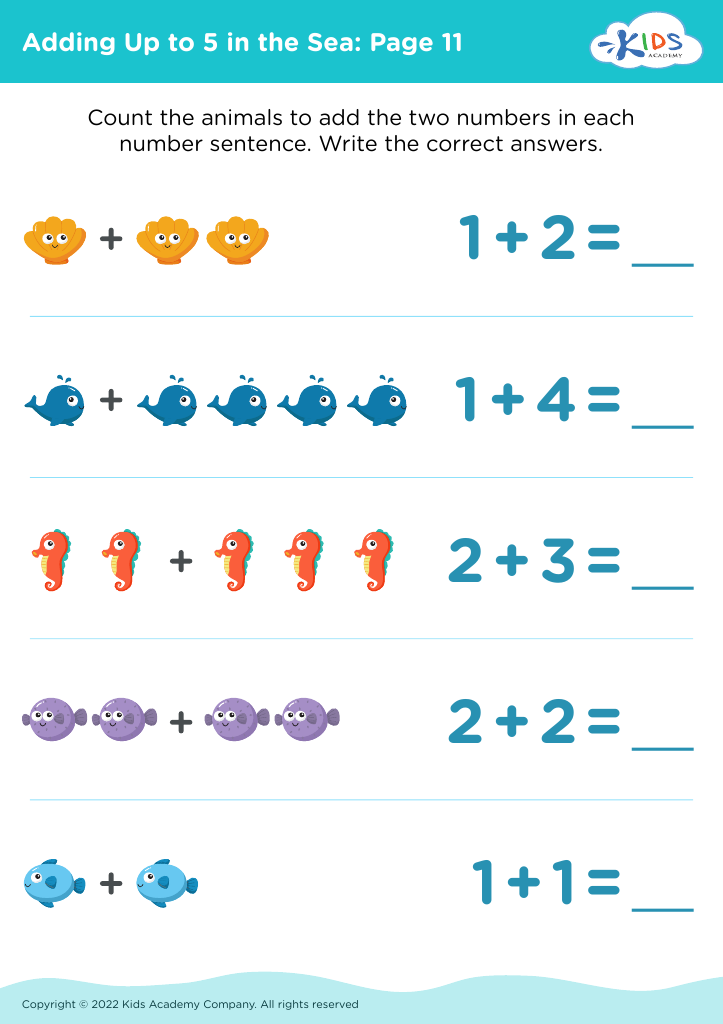
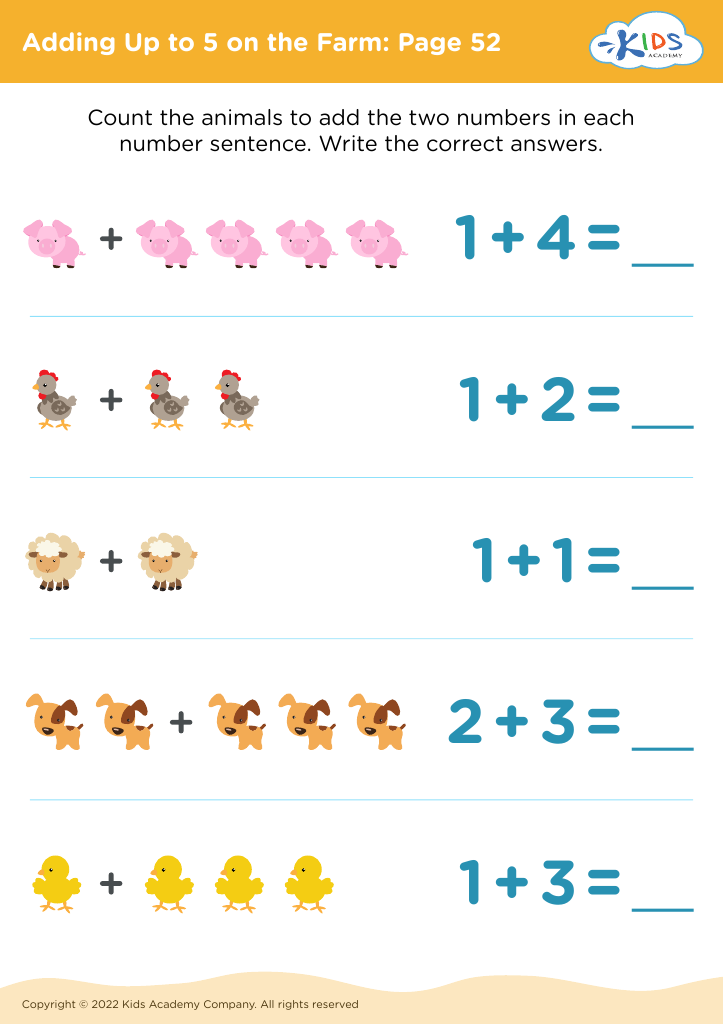
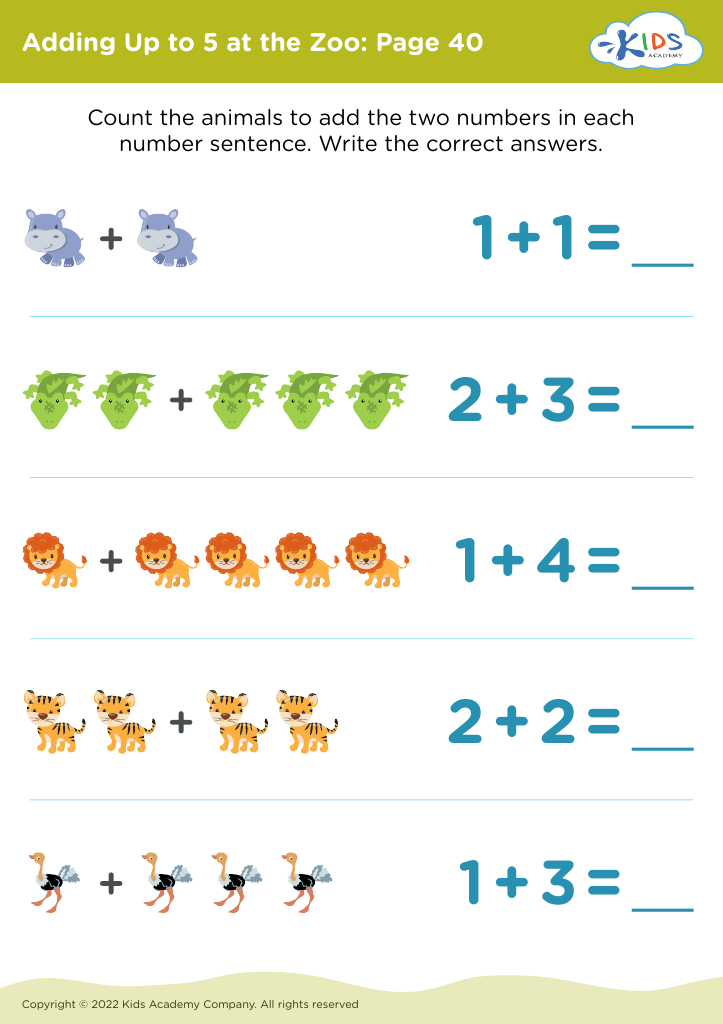
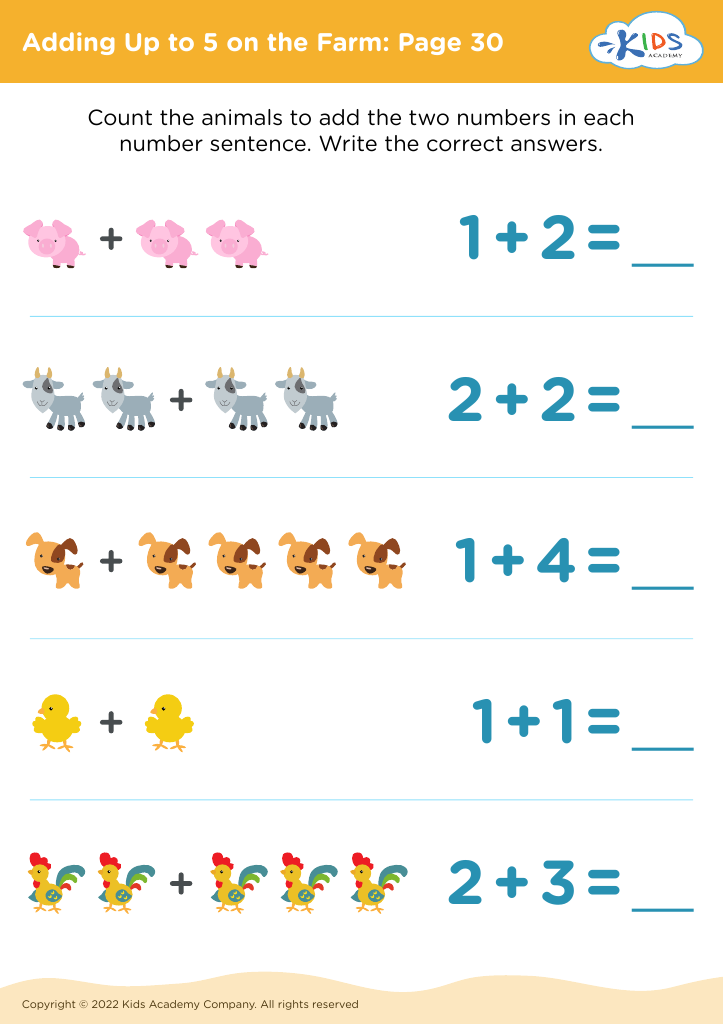
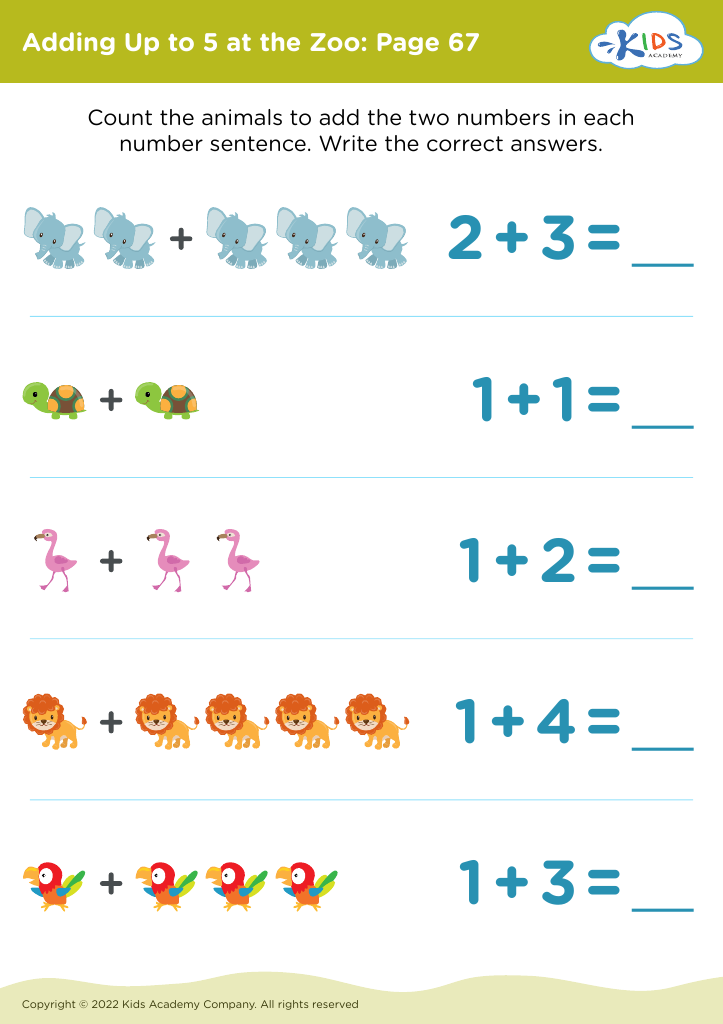
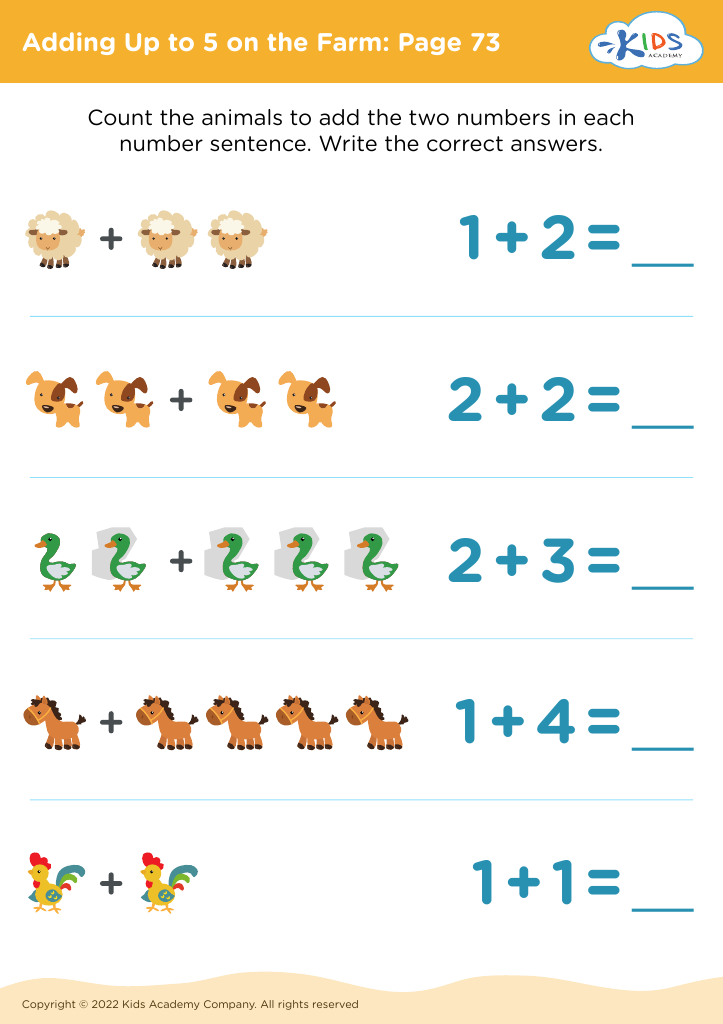
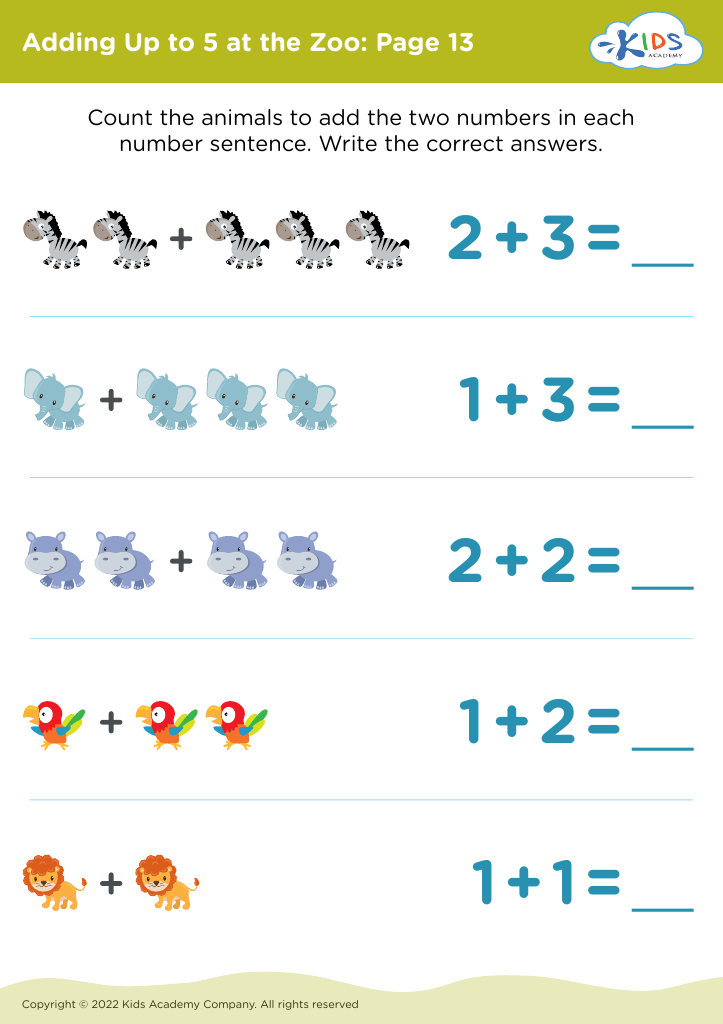








Animal identification math activities for 5-year-olds bridge the love for animals and introductory mathematics, offering a powerful learning tool. Here’s why parents and teachers should value these activities:
-
Engagement: Children are naturally fascinated by animals. Incorporating animals into math lessons can heighten their interest and attentiveness, making them more eager to learn.
-
Cognitive Development: Identifying animals alongside learning their quantities fosters memory and recognition, critical cognitive skills. For example, counting spots on a ladybug or stripes on a zebra blends numerical understanding with animal characteristics, enhancing memory retention.
-
Language Skills: Describing animals while counting their features aids vocabulary building and language development. Terms like “tusk,” “fin,” and “mane” expand their language repertoire.
-
Real-world Connections: Graphic representation of animals connecting numbers demonstrates practical math usage. Highlighting 3 elephants underlines the concept of ‘three’ with tangible examples.
-
Cross-curricular Learning: Integrating animal facts with numbers encourages interdisciplinary learning. Kids learn about nature/science while grasping fundamental math concepts like addition, pattern recognition, and sets.
-
Social Skills: Group activities involving animal identification foster collaboration as they discuss observations with peers.
Caring about animal identification math empowers children with well-rounded skillsets, making learning comprehensive, engaging, and contextually rich, paving the way for advanced learning stages.








