Color differentiation Math Worksheets for 5-Year-Olds
3 filtered results
-
From - To
Enhance your 5-year-old's learning experience with our engaging Color Differentiation Math Worksheets! Designed to make learning fun, these worksheets focus on helping young learners identify and differentiate colors through exciting math activities. Each worksheet combines vibrant visuals with simple math problems, fostering both color recognition and foundational math skills. Children will develop their cognitive abilities while practicing counting, sorting, and problem-solving in a colorful context. Our resources are perfect for parents and teachers alike, promoting hands-on learning that captures children's attention. Explore our collection today and watch your little one thrive in their math journey while exploring the world of colors!
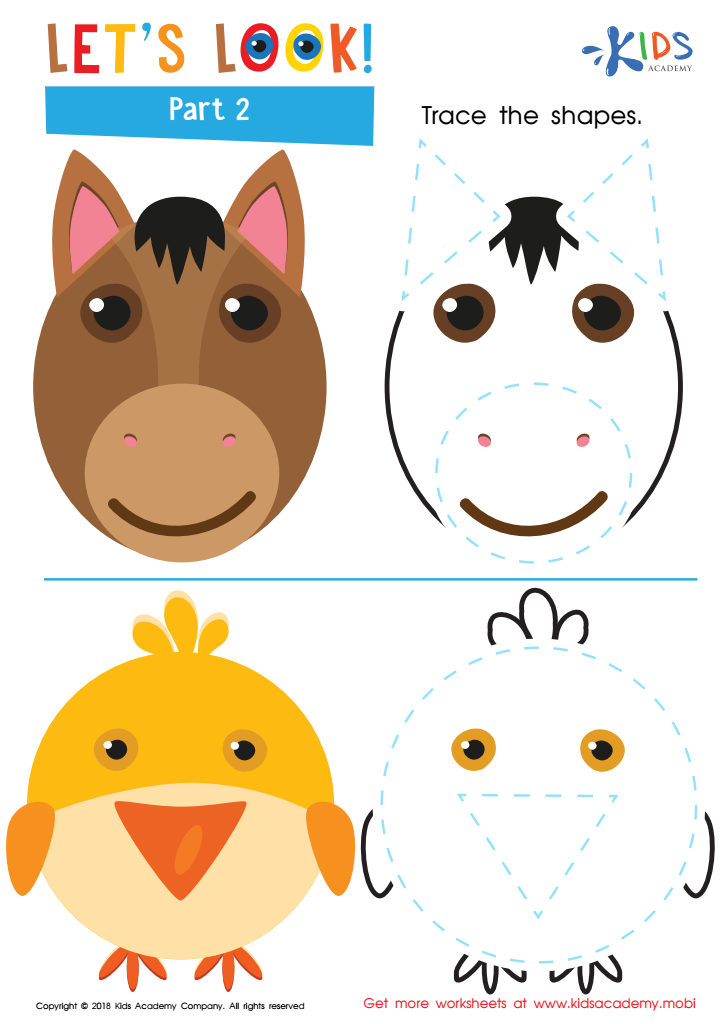
Let's Look! Part 2 Worksheet
 Assign to My Students
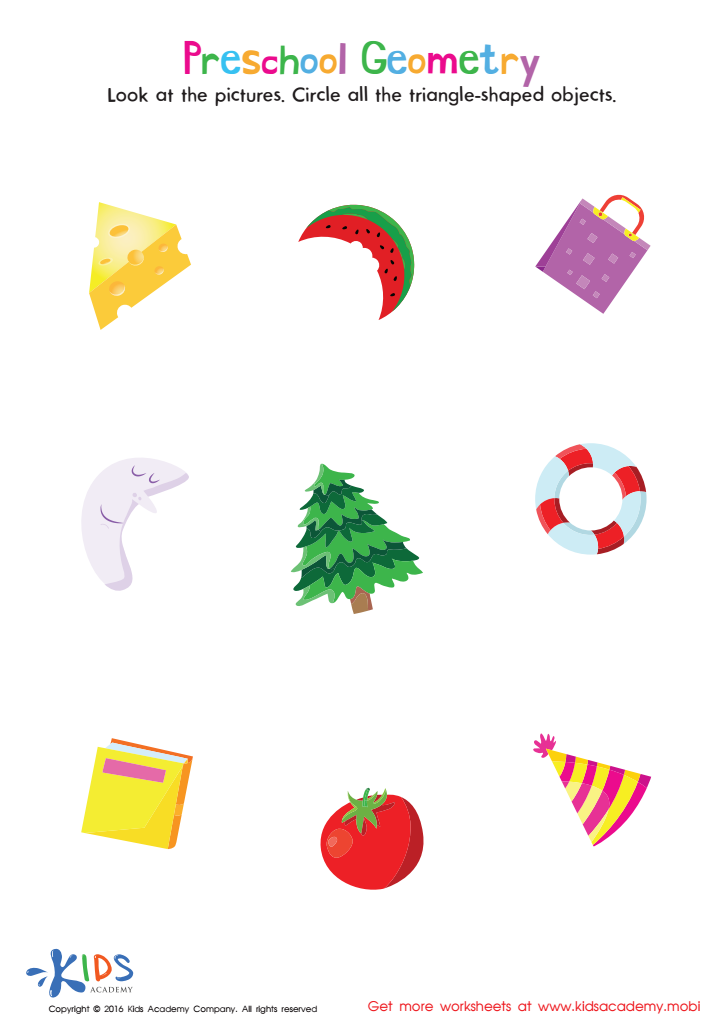
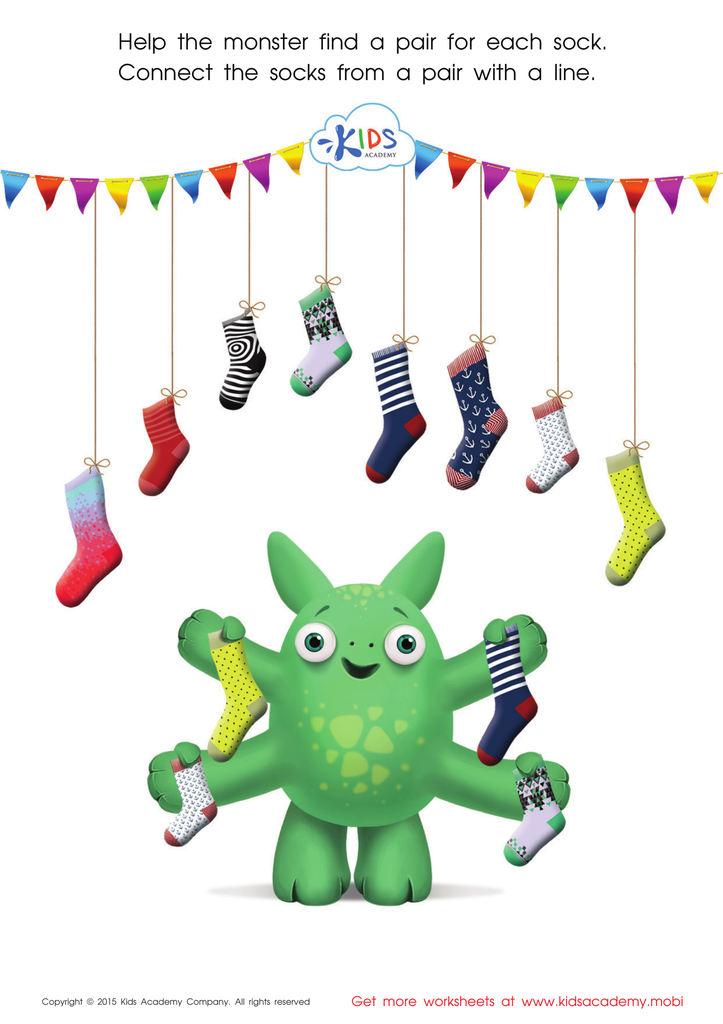
Math Matching Pairs Game: Monsterв's Socks Worksheet








Color differentiation in math for 5-year-olds is crucial for several reasons. First, it taps into children's natural affinity for colors, making learning more engaging and enjoyable. When math concepts are visually represented using different colors, young learners are more likely to grasp abstract ideas, such as counting, patterns, and shapes.
Additionally, color differentiation helps in the development of cognitive skills. It encourages children to categorize and sort objects, which is fundamental to early math understanding. Associating colors with specific numbers or quantities can also enhance memory retention, allowing kids to recall information more easily in the future.
Incorporating color into math lessons also supports inclusion and addresses diverse learning styles. Children who might struggle with traditional methods can benefit from colorful visuals and hands-on activities that stimulate their creativity and critical thinking.
Lastly, engaging with math through colors fosters a positive attitude toward the subject. When parents and teachers prioritize color differentiation, they create a supportive learning environment that instills confidence and curiosity in young learners, setting a strong foundation for future mathematical success. Thus, both parents and teachers should actively incorporate this approach in their strategies to equip children with essential skills while making learning fun.








