Comparing objects Math Worksheets for 5-Year-Olds
6 filtered results
-
From - To
Unlock your child's potential with our engaging Comparing Objects Math Worksheets for 5-Year-Olds! Designed specifically for young learners, these printable worksheets make learning fun and interactive. Kids will explore essential math concepts, such as greater than, less than, and equal to, using vibrant illustrations and hands-on activities. Our worksheets encourage children to compare objects based on size, number, and other attributes, reinforcing their critical thinking and early math skills. Perfect for home or classroom use, these worksheets provide a solid foundation in math while fostering a love for learning. Boost your child's confidence and skills today!
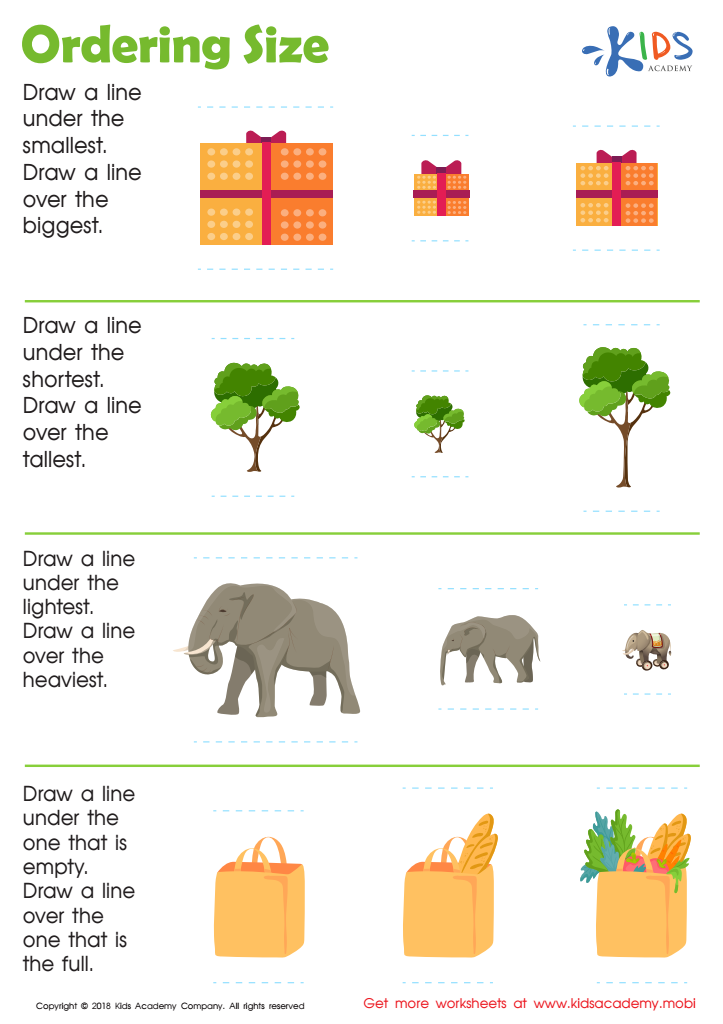
Ordering Size Worksheet
 Assign to My Students
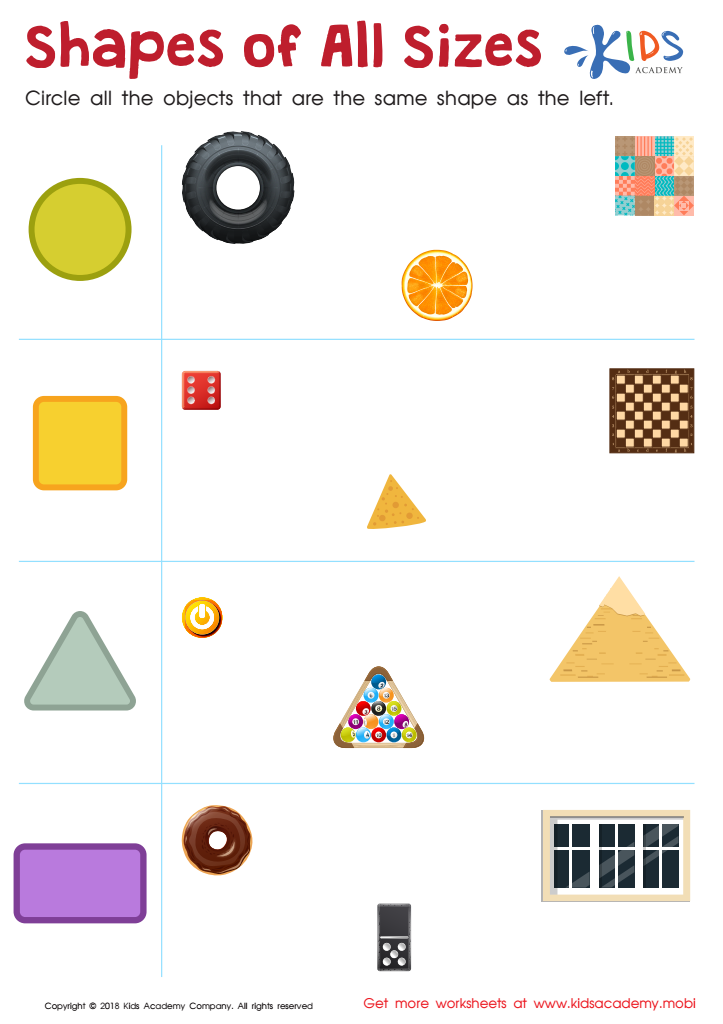
Shapes of All Sizes Worksheet
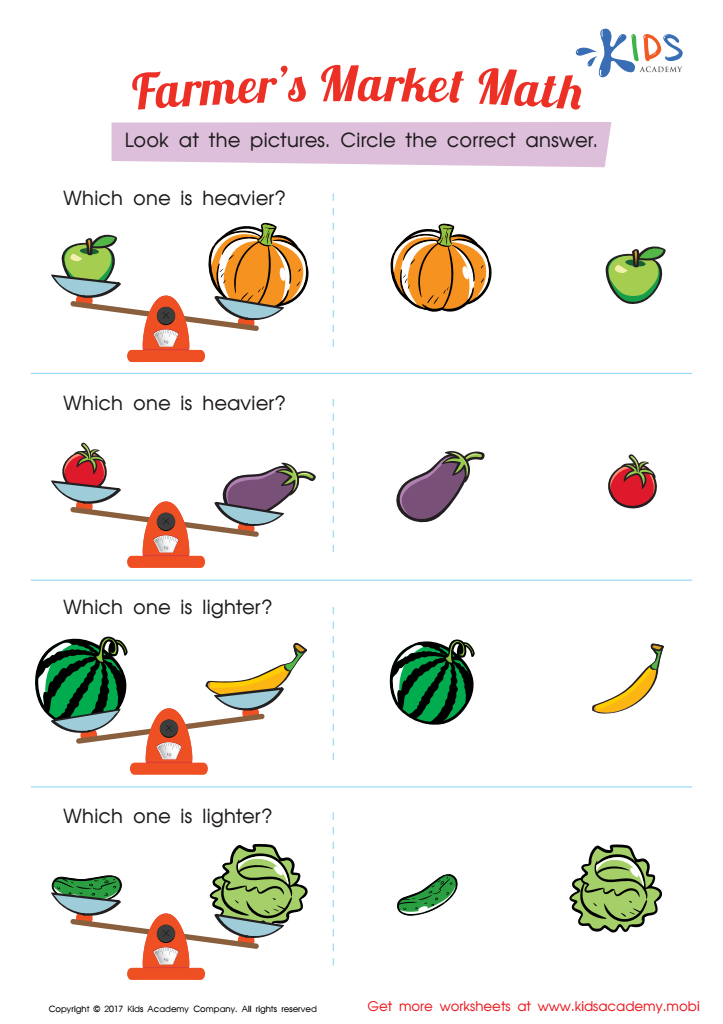
Which One Is Heavier Worksheet
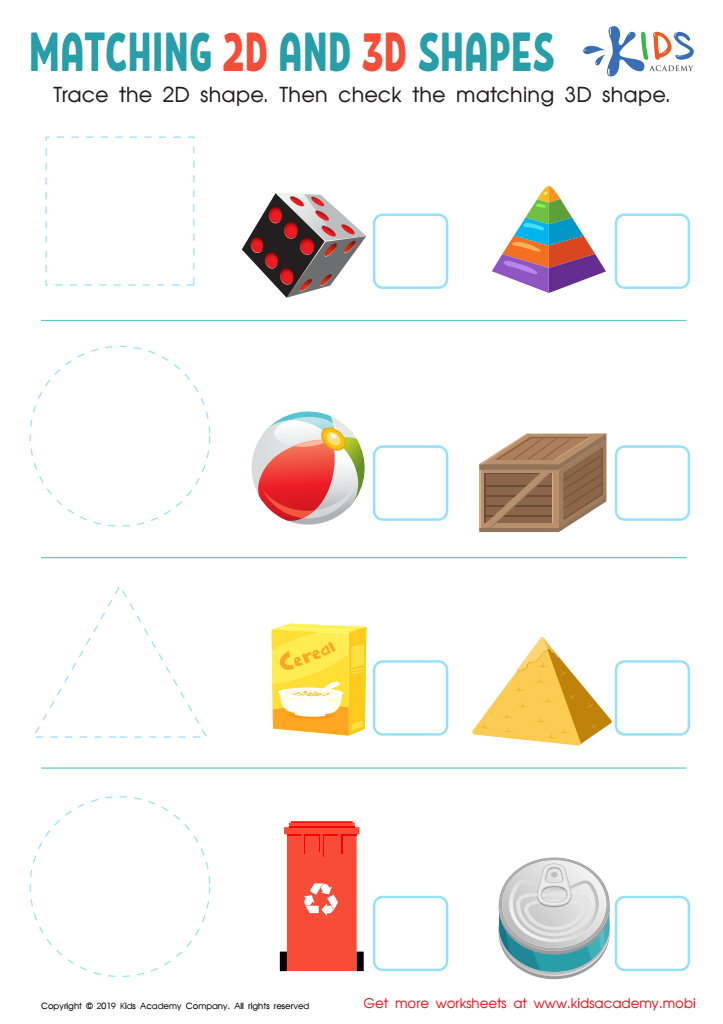
Matching 2D and 3D Shapes Worksheet
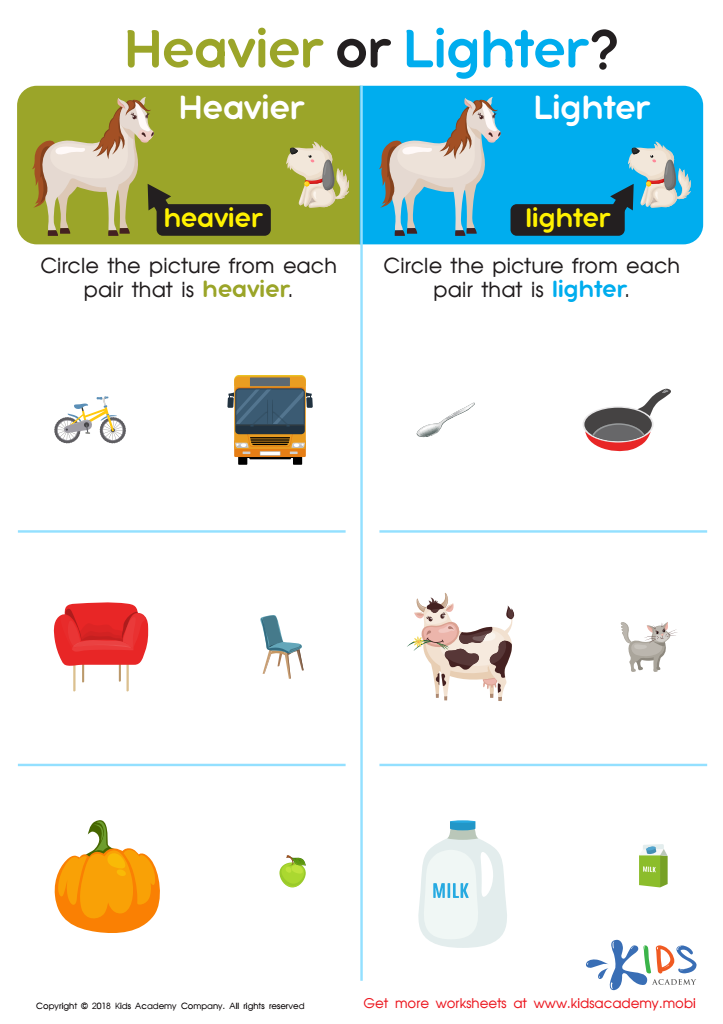
Heavier or Lighter? Worksheet
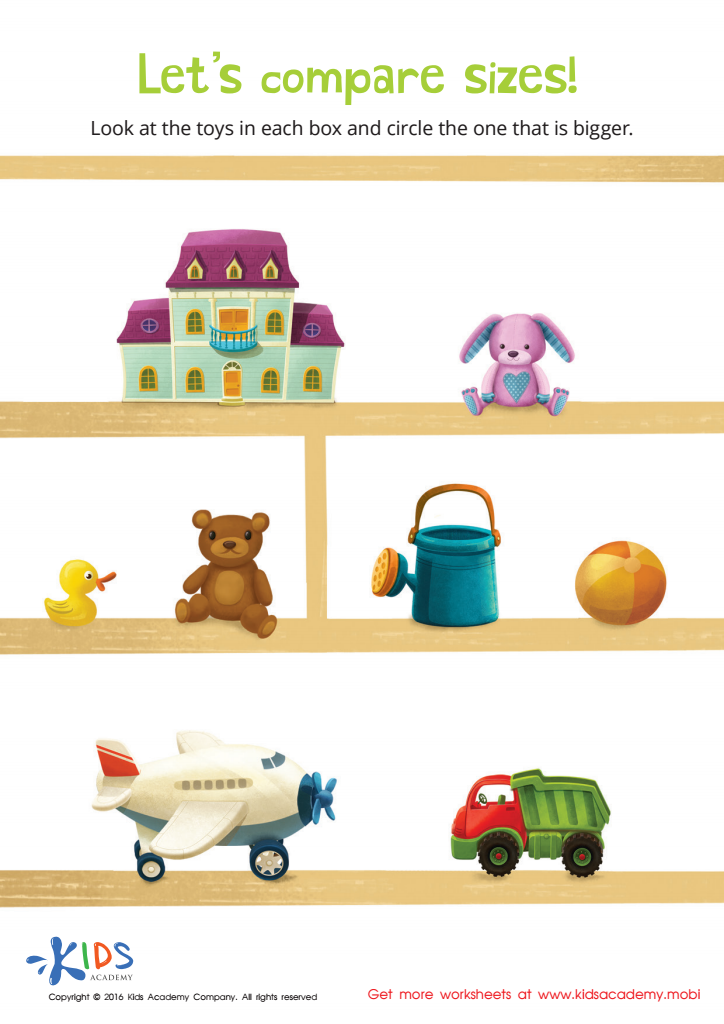
Classifying by Size Sorting Worksheet






Comparing objects in math for 5-year-olds is a crucial building block for early mathematical understanding and lifelong learning. Engaging young children in comparing objects helps them develop critical thinking and problem-solving skills. When children compare sizes, quantities, or shapes, they learn to identify similarities and differences, which enhances their observational skills and attention to detail.
Furthermore, comparing objects fosters a foundational understanding of concepts like more, less, bigger, and smaller. This early exposure prepares children for more complex mathematical operations in the future, facilitating their confidence and competence in math. Parents and teachers should also recognize that these skills are interconnected with language development; discussing comparisons enriches vocabulary and encourages articulation of thoughts.
Moreover, the process of comparing can be made interactive and fun, using everyday items, which encourages active learning and engagement. By participating in activities that involve comparison—such as sorting toys, measuring ingredients, or counting snacks—children naturally practice these skills in a context that is relatable and enjoyable.
Ultimately, caring about comparing objects sets children on a positive trajectory in mathematics, aiding in their overall cognitive and social development. Supporting this skill at an early age empowers children to become critical thinkers, preparing them for future academic success.








