Understanding opposites Math Worksheets for 5-Year-Olds
4 filtered results
-
From - To
Unlock the joy of learning with our "Understanding Opposites: Math Worksheets for 5-Year-Olds." These engaging activities are designed to help your child grasp fundamental math concepts through the playful theme of opposites. With colorful illustrations and easy-to-follow exercises, your little one will develop critical thinking and problem-solving skills. Our expertly crafted worksheets make learning fun and interactive, fostering a strong foundation in math while introducing the concept of opposites. Ideal for both classroom and at-home learning, these worksheets are perfect for sparking curiosity and encouraging young minds to explore the world of math.
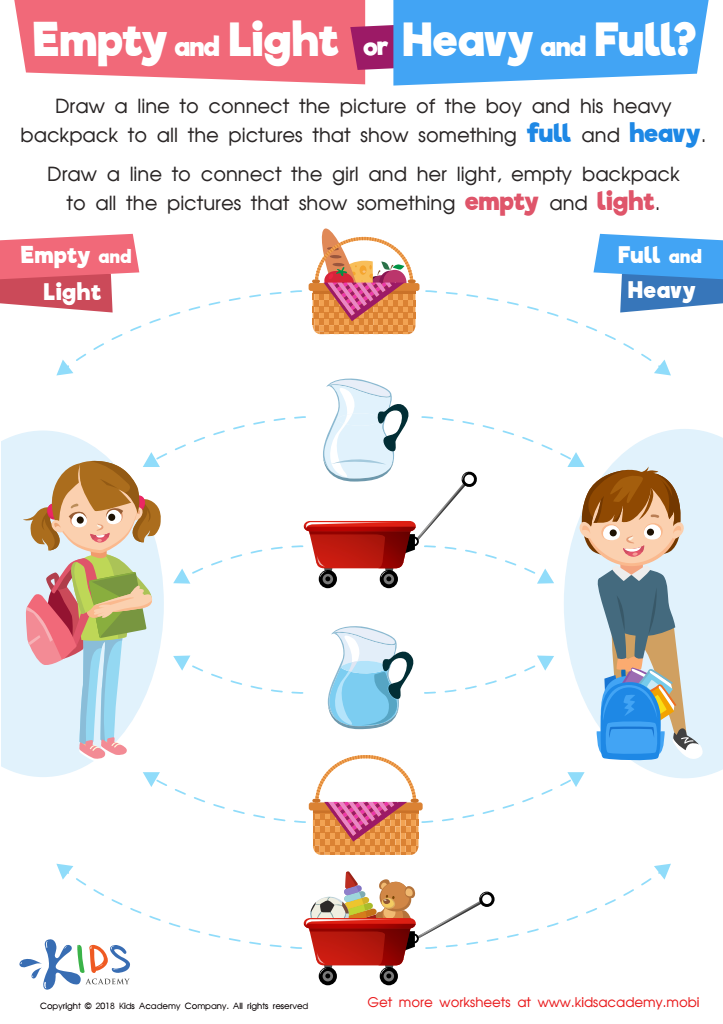
Empty and Light or Heavy and Full? Worksheet
 Assign to My Students
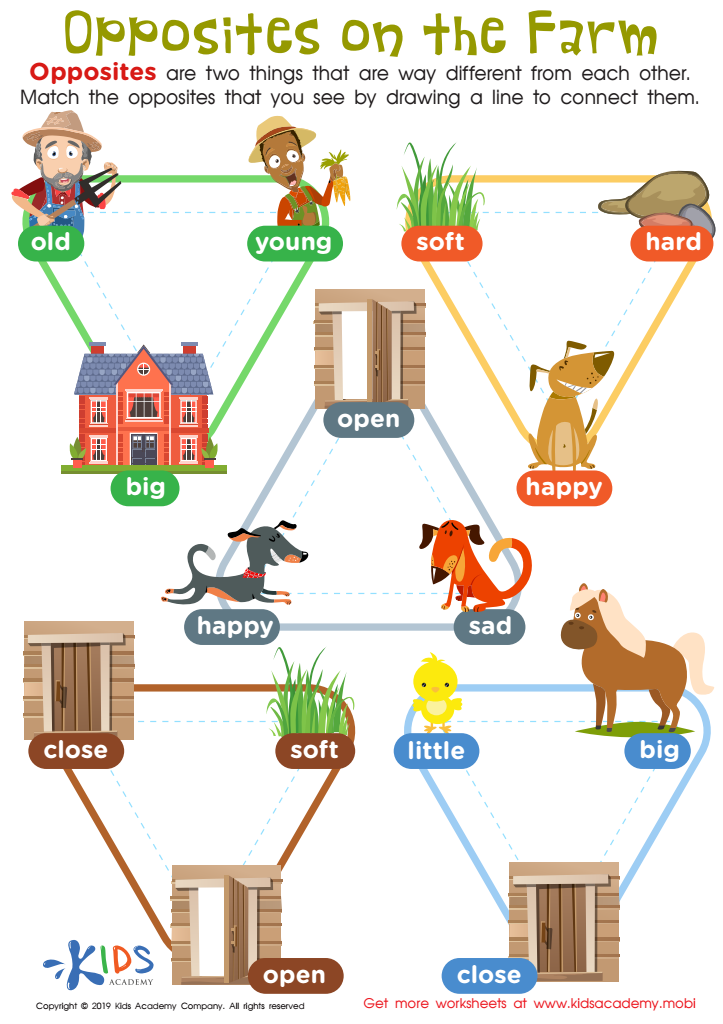
Opposites on the Farm Worksheet
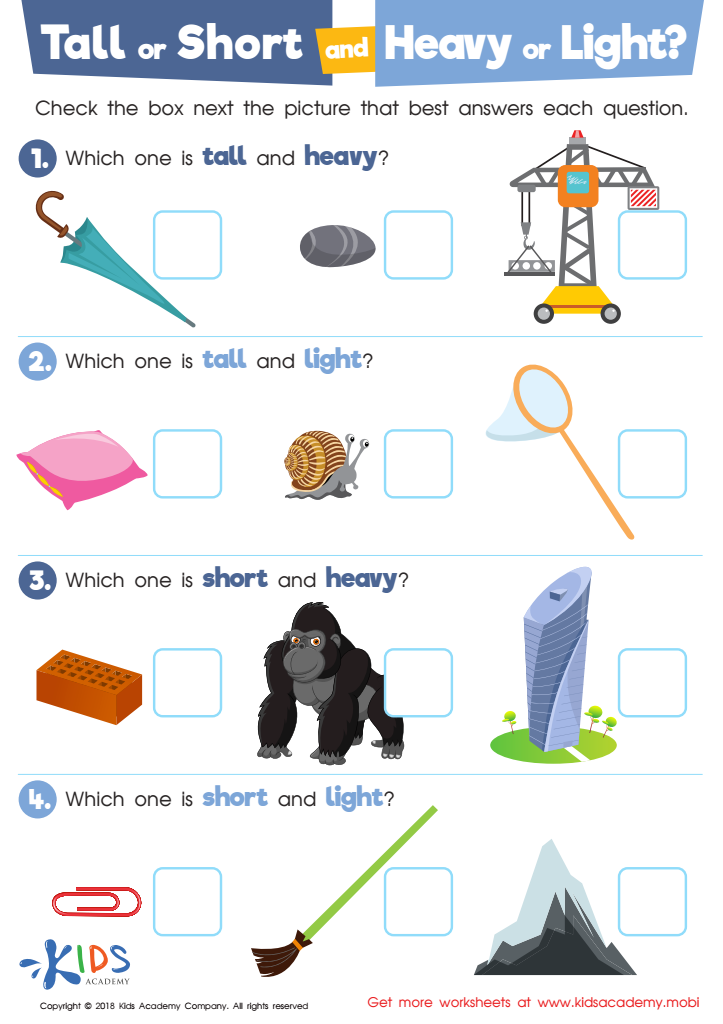
Tall or Short and Heavy or Light? Worksheet
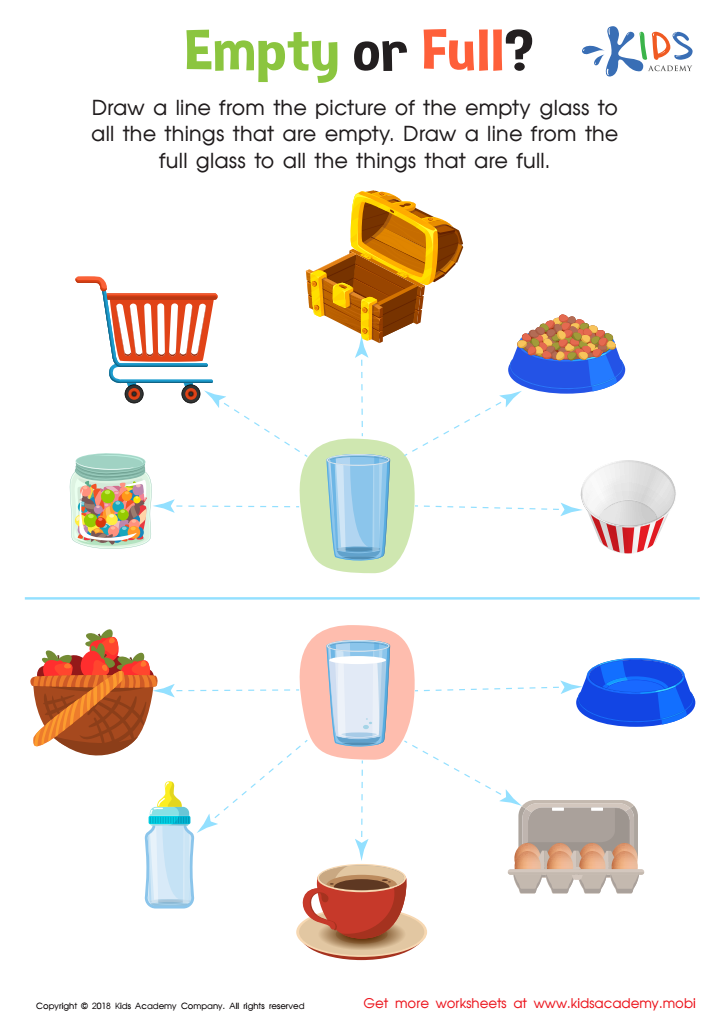
Empty or Full? Worksheet






Understanding opposites in math, such as "big and small" or "long and short," provides foundational skills for 5-year-olds and is crucial for several reasons. Firstly, it nurtures cognitive development by encouraging children to compare and contrast, enhancing their analytical abilities and making abstract concepts more tangible. Grasping opposites also supports language development: vocabularies are expanded as children constantly engage in discussions about differences and similarities.
For parents and teachers, emphasizing this concept can accelerate early critical thinking. It enriches the child's problem-solving skills by allowing them to make sense of the world through comparisons. For instance, understanding "more or less" aids in developing number sense, an essential skill for future math learning. Emotionally, children can strengthen self-esteem by mastering a concept and confidently applying it in various scenarios.
Moreover, recognizing opposites promotes better motor skills. Activities like sorting objects by size or height, enhance fine and gross motor coordination. This concept is integrated into many everyday activities, helping children comprehend their environment more deeply, from identifying objects in nature to managing resources like time and space.
In the bigger picture, learning about opposites equips children with a broader toolset, making their transition into more complex mathematical ideas smoother and setting a robust foundation for lifelong learning and problem-solving.








