
Color Identification Matching Worksheets for 5-Year-Olds
3 filtered results
Difficulty Level
Grade
Age
-
From - To
Subject
Activity
Standards
Discover our engaging Color Identification Matching Worksheets designed specifically for 5-year-olds! These playful and educational resources help young learners develop essential color recognition skills while enjoying a fun matching game. Each worksheet features vibrant illustrations of various objects, allowing children to identify and match colors with ease. Perfect for preschool, kindergarten, or at-home learning, our worksheets promote cognitive development and fine motor skills. Encourage creativity and boost your child's confidence as they explore the colorful world around them! Download our printable sheets today and watch your little ones flourish in their color identification journey. Perfect for interactive and hands-on learning experiences!
Favorites
With answer key
Interactive
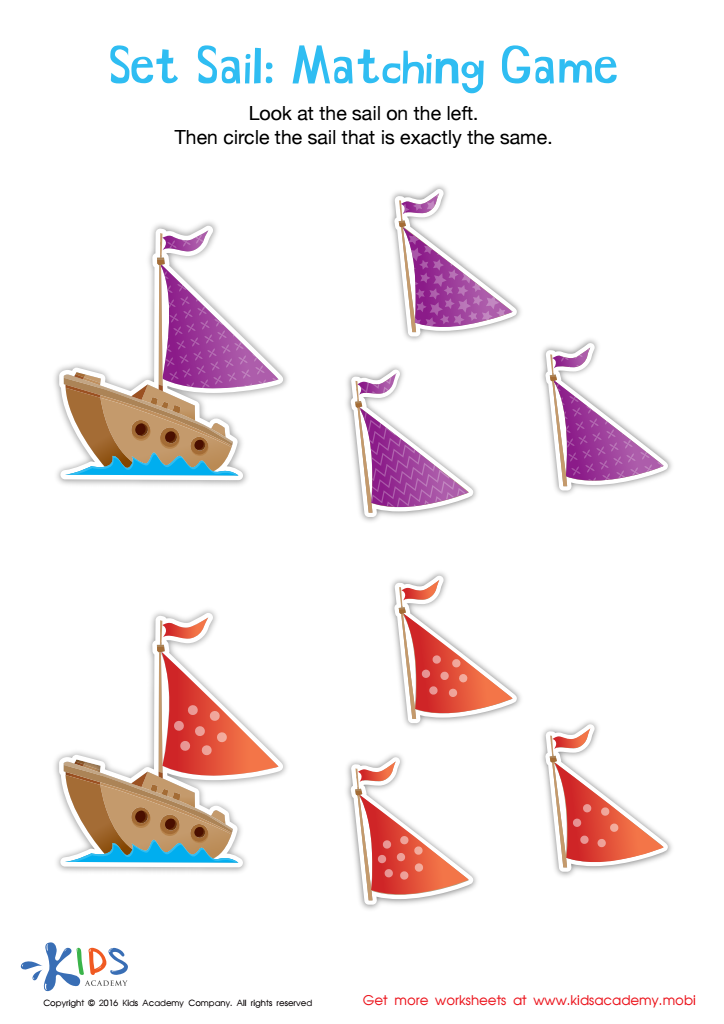
Set Sail Worksheet
Set sail with this fun matching game for toddlers! Kids will love finding the same pattern on the sails, improving their problem-solving and counting skills. Enjoy this bright and engaging worksheet!
 Assign to My Students
Set Sail Worksheet
Worksheet
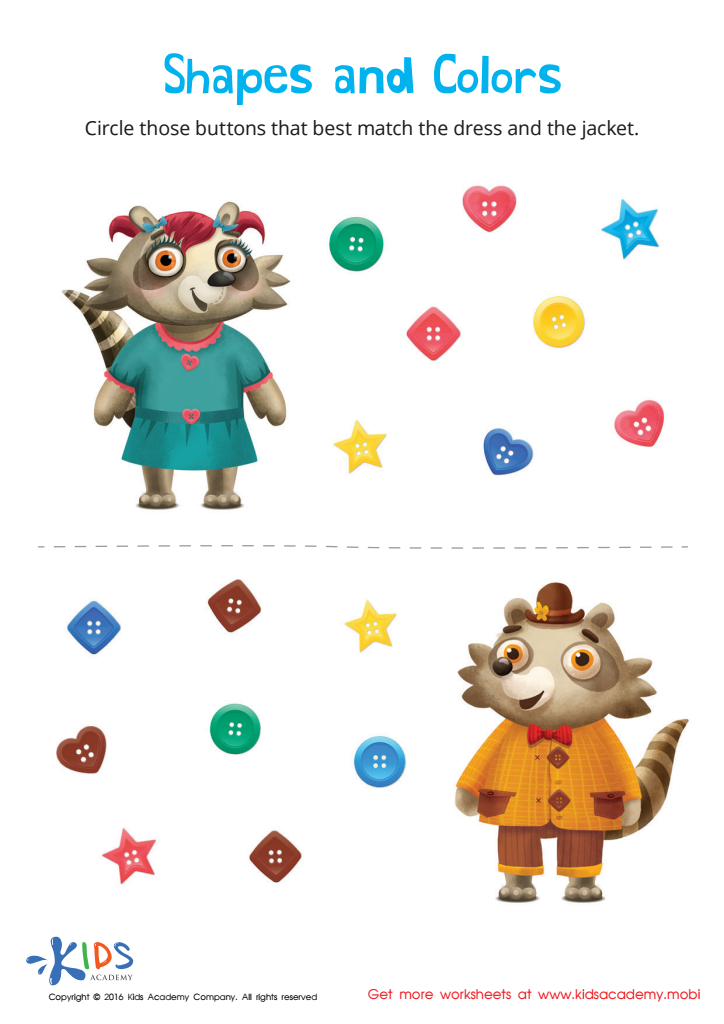
Matching: Shapes and Colors Worksheet
Help Mr. and Mrs. Raccoon find the right buttons to match their shirts! Kids will identify shapes and colors and learn to match them correctly.
Matching: Shapes and Colors Worksheet
Worksheet
Join Kids Academy for Free
Who is primarily going to use this learning content?






Color identification and matching is a fundamental skill for 5-year-olds that goes beyond simply recognizing colors. Parents and teachers should care about this skill for several reasons. Firstly, it fosters cognitive development. Identifying colors enhances children's abilities to categorize and distinguish objects, laying the groundwork for critical thinking and problem-solving skills.
Secondly, color matching is an early literacy tool. It supports language development as children learn to describe and name colors, contributing to their vocabulary expansion. This is particularly important as children begin reading and writing, as many words are color-related.
Moreover, engaging in color identification activities can enhance fine motor skills. Handling colorful objects or using art materials promotes hand-eye coordination, which is vital for writing and other tasks as the child grows.
Additionally, color identification can enrich social interactions. Kids often play games that involve colors, and developing this skill allows them to participate more fully, fostering friendships and cooperative play.
Lastly, understanding colors can have emotional benefits. Colors can evoke different feelings, and expressing these can aid in emotional development. Overall, prioritizing color identification matching sets the stage for well-rounded growth in young children.








