
Basic Addition Reading Worksheets for 5-Year-Olds
4 filtered results
Difficulty Level
Grade
Age
-
From - To
Subject
Activity
Standards
Discover our engaging Basic Addition Reading Worksheets for 5-Year-Olds, designed to make learning math fun! These worksheets introduce children to the fundamentals of addition through vibrant illustrations and relatable scenarios. Each activity promotes early literacy and numeracy skills, helping young learners connect numbers with real-life situations. Students will practice counting, adding items, and reading simple addition sentences. Perfect for home or classroom use, these worksheets foster independent thinking while building confidence in math. Turn learning into an enjoyable experience with our thoughtfully crafted resources that support early childhood development. Get started today and watch your child's learning journey flourish!
Favorites
With answer key
Interactive
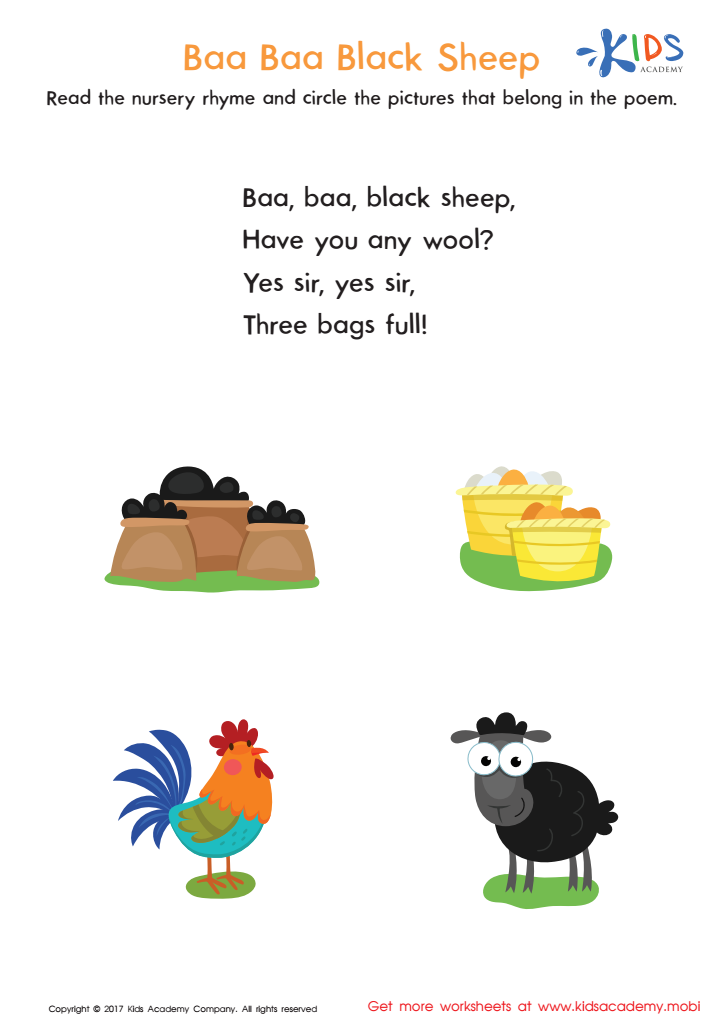
Baa Baa Black Sheep Printable
Jumpstart your child's reading skills with this printable Baa Baa Black Sheep worksheet! Recite the lines with them, then have them select the pictures associated with the poem to test comprehension. Fun and educational!
 Assign to My Students
Baa Baa Black Sheep Printable
Worksheet
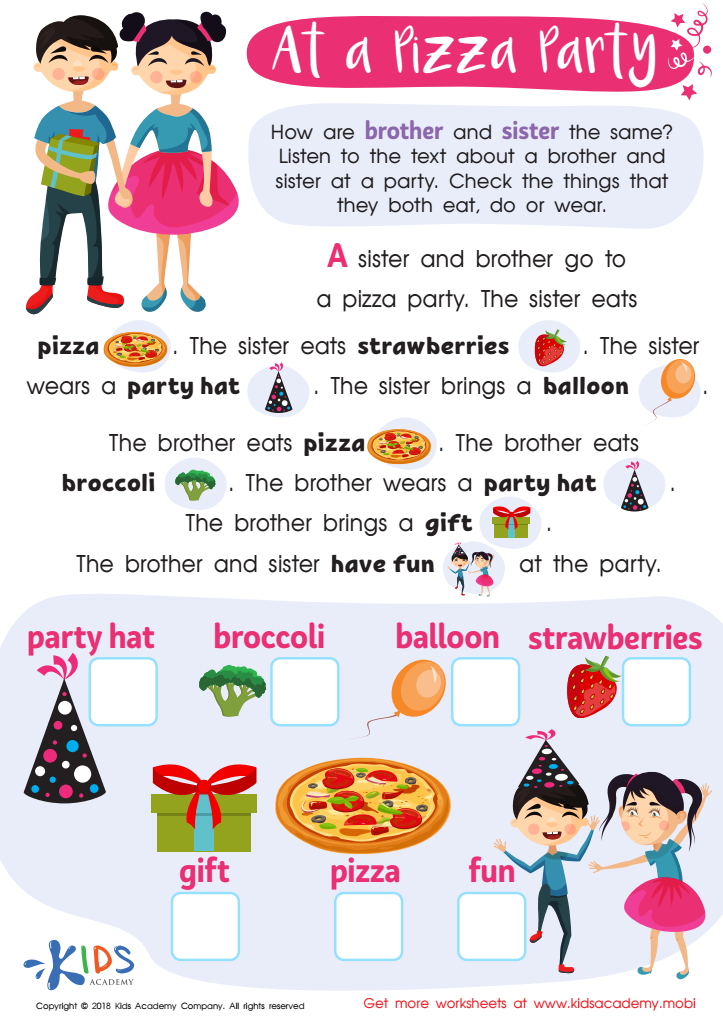
At a Pizza Party Worksheet
Parties are the best! Eating, playing, singing, dancing and gift-exchange - what's your child's fave part? In this worksheet, a brother and sister are eager to enjoy their party. Read the text to them and help them check what they do, eat, and wear. 80 words.
At a Pizza Party Worksheet
Worksheet
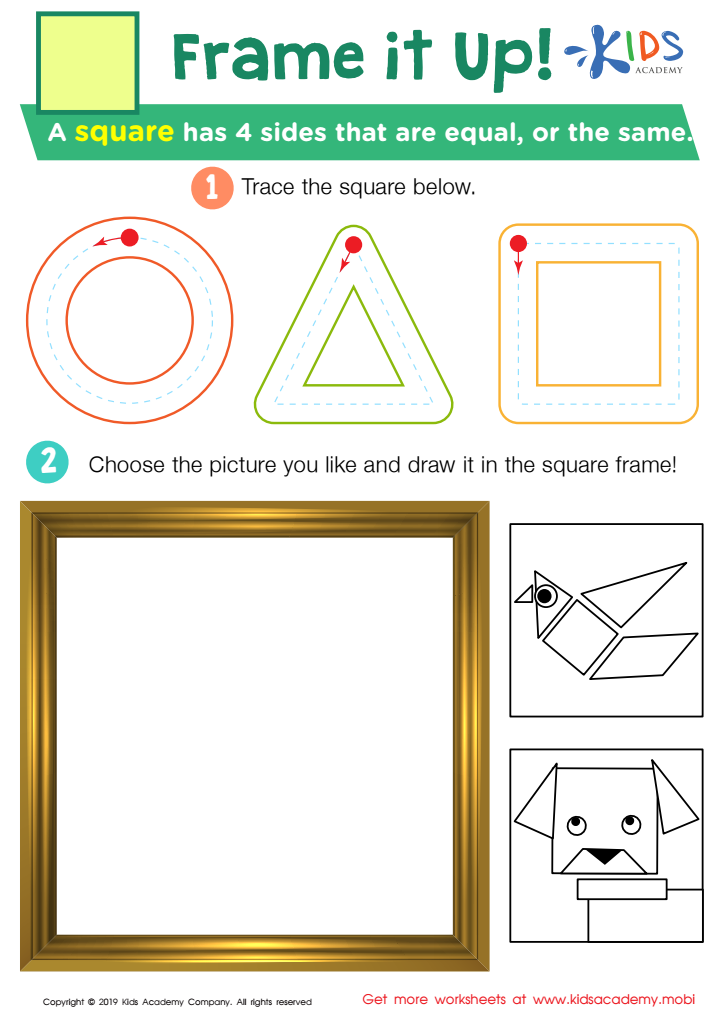
Frame it Up Worksheet
This worksheet helps kids learn the difference between squares and other shapes. It guides them to trace a square and draw a picture inside it. Examples of shapes-based drawings are included. Kids will have fun and clear up any confusion about squares.
Frame it Up Worksheet
Worksheet
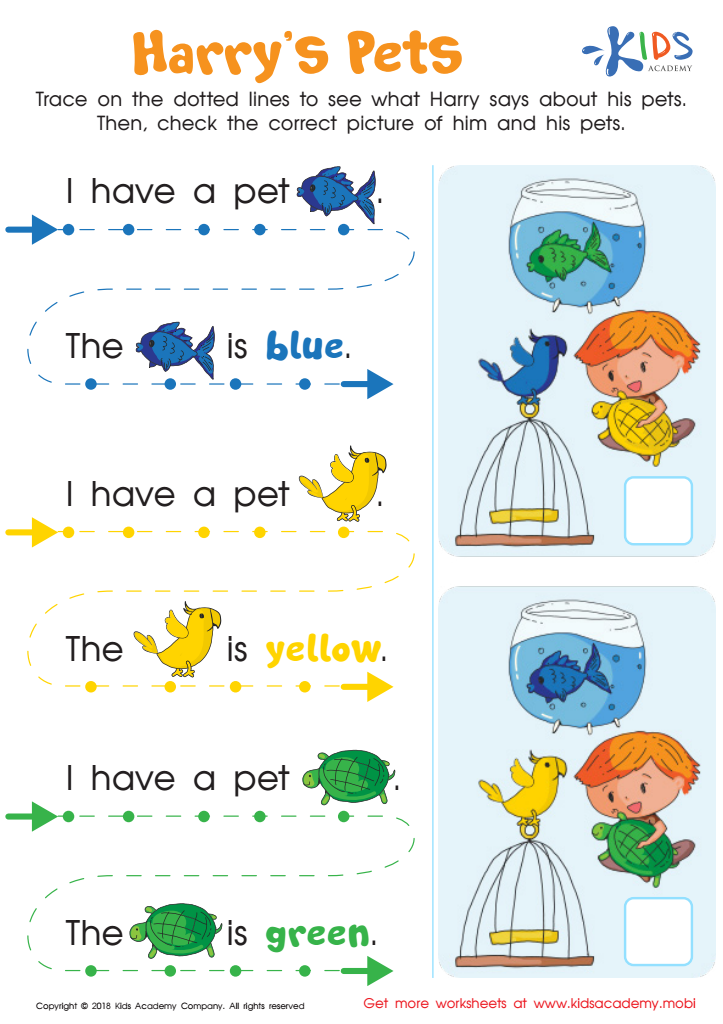
Read from Left to Right: Harry's Pets Worksheet
Help your child read the sentences on this tracing sheet about Harry and his pets. Point to the dotted lines and follow the sentences to the correct picture. Ask your child to identify which animal corresponds to which color. Check the picture to ensure accuracy. 80 words.
Read from Left to Right: Harry's Pets Worksheet
Worksheet
Join Kids Academy for Free
Who is primarily going to use this learning content?








Basic addition reading is crucial for 5-year-olds as it lays the foundation for their mathematical understanding and overall cognitive development. At this tender age, children are naturally curious and eager to learn, making it an ideal time for introducing fundamental math concepts. Understanding basic addition not only enhances number recognition but also develops critical thinking and problem-solving skills.
Parents and teachers should care about teaching basic addition reading because it fosters a positive attitude towards mathematics, helping to alleviate any anxiety or fear surrounding the subject. Engaging young learners with fun and interactive activities, such as counting objects, using visual aids, or playing math games, can make learning enjoyable and effective. Furthermore, reinforcing these skills at home and in the classroom can improve children's numerical literacy, enhancing their ability to tackle more complex math concepts later on.
Additionally, strong foundational skills in addition can assist children in other academic areas, promoting overall confidence and success in their educational journey. By investing time and effort in teaching basic addition reading, parents and teachers equip children with essential tools that will not only support their daily lives but also set the stage for lifelong learning and curiosity in mathematics.








