Rhyming skills development Reading Worksheets for 5-Year-Olds
3 filtered results
-
From - To
Boost your child’s early literacy with our Rhyming Skills Development Reading Worksheets for 5-Year-Olds. Designed by educational experts, these engaging worksheets help kids recognize and produce rhyming words, an essential skill for reading readiness. Each fun and interactive activity builds phonemic awareness and hones their ability to hear and create rhymes. Ideal for both classroom and home learning, these worksheets foster a love for reading through playful, age-appropriate exercises. Empower your child with the foundational skills they need by making rhyming practice a delightful adventure. Visit us now to explore our collection and get started today!
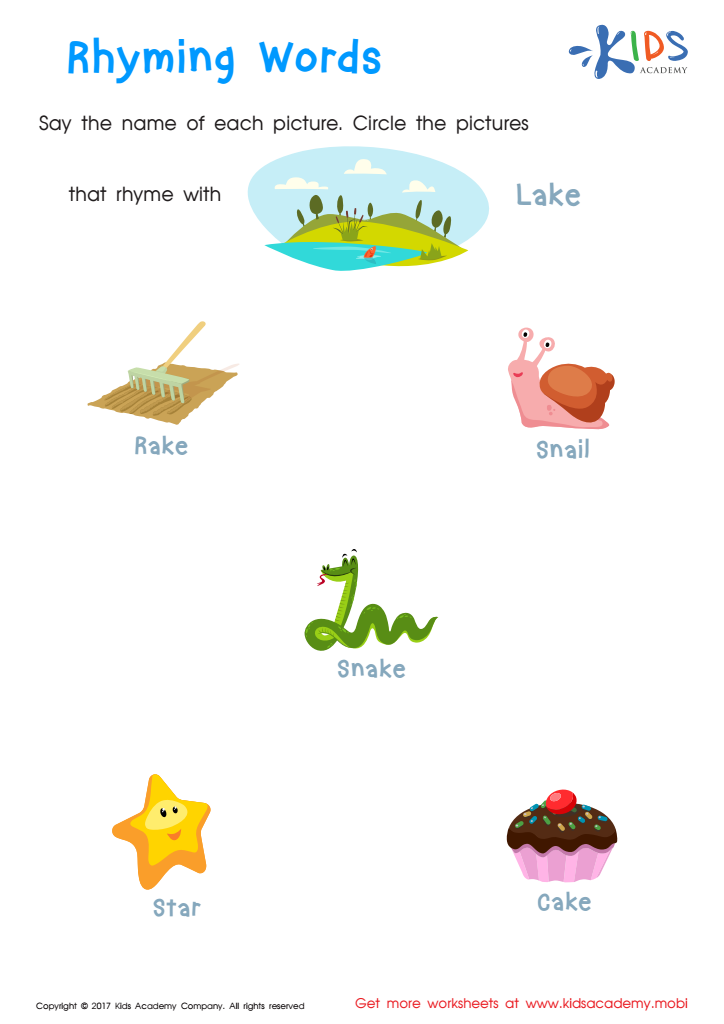
Rhyming Words Rhyming Worksheet
 Assign to My Students
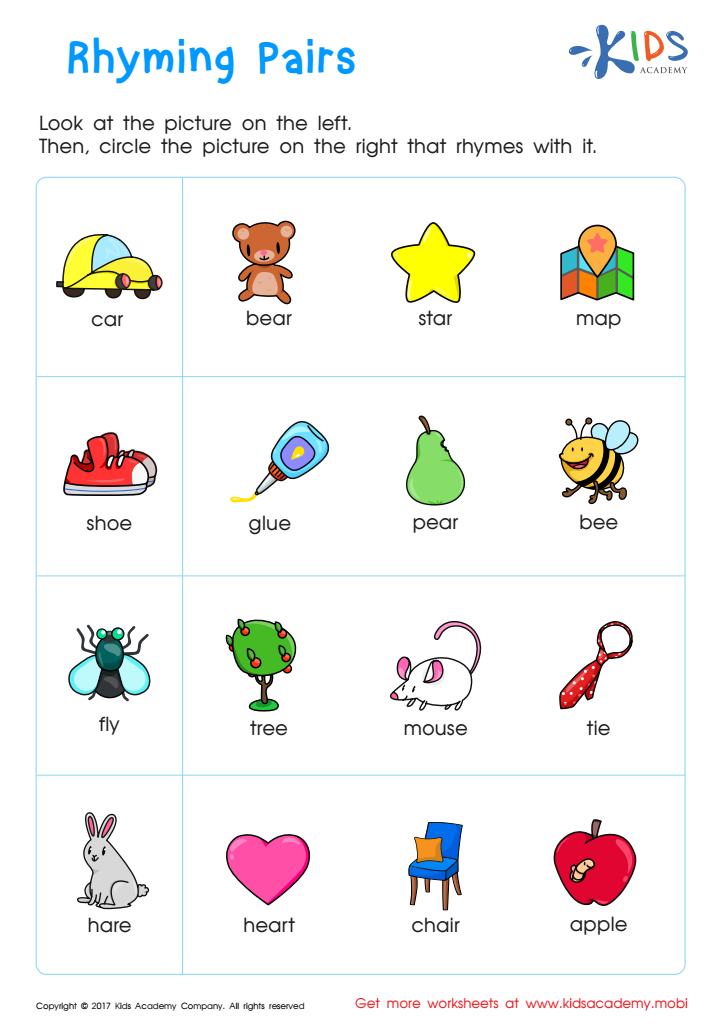
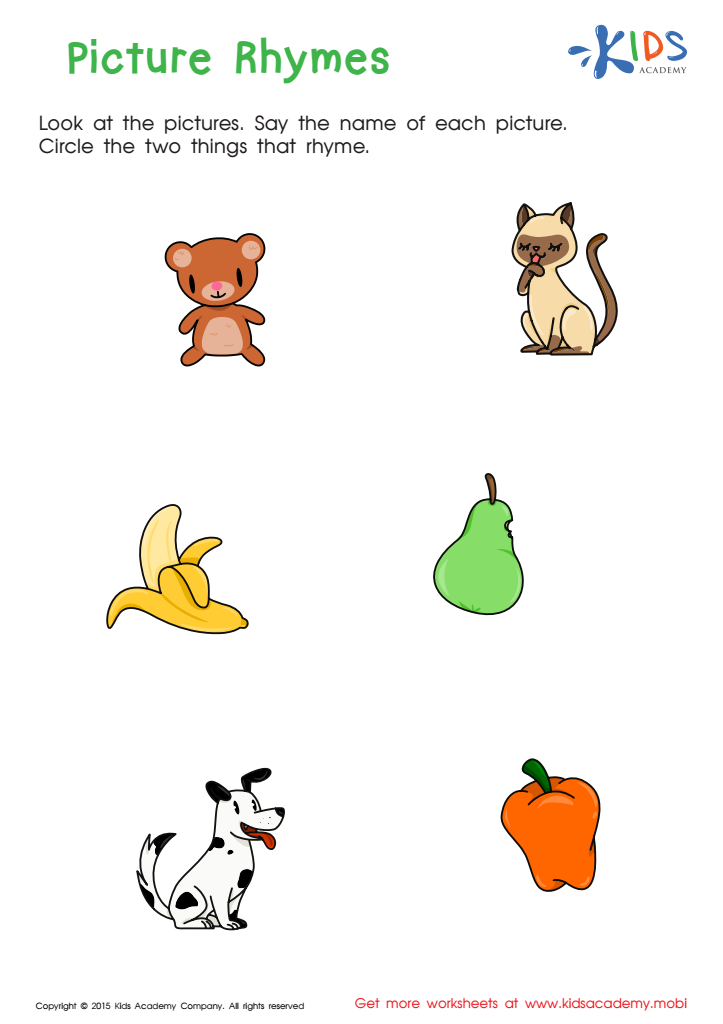
First Words: Picture Rhymes Worksheet








Rhyming skills are crucial for early literacy and reading development in 5-year-olds. When parents and teachers focus on these skills, they lay the foundation for essential language abilities. Firstly, recognizing rhyming patterns helps children understand phonemic awareness – the ability to hear, identify, and manipulate individual sounds in words. This awareness is a critical precursor to reading and spelling.
Secondly, rhyming enhances vocabulary. By listening to and identifying rhyming words, children learn new words and their meanings in an engaging way. Rhyming also aids memory retention; catchy rhymes ensure that new vocabulary and concepts stick. Through nursery rhymes and songs, children enjoy a fun and interactive learning experience, fostering a positive attitude toward reading.
Moreover, rhyming promotes cognitive development by encouraging predictive thinking. As children become familiar with rhyme schemes, they start to anticipate the next word in a sequence, honing their reasoning skills. This predictive ability translates to better reading comprehension later on.
Lastly, fostering rhyming skills strengthens emotional bonding. Sharing nursery rhymes and rhyming stories creates special moments between parents, teachers, and children, making learning a more personal and enjoyable journey. Prioritizing rhyming skills ultimately equips children with the foundational tools they need for successful, confident reading and lifelong learning.








