Vocabulary expansion Reading Worksheets for 5-Year-Olds - Page 2
26 filtered results
-
From - To
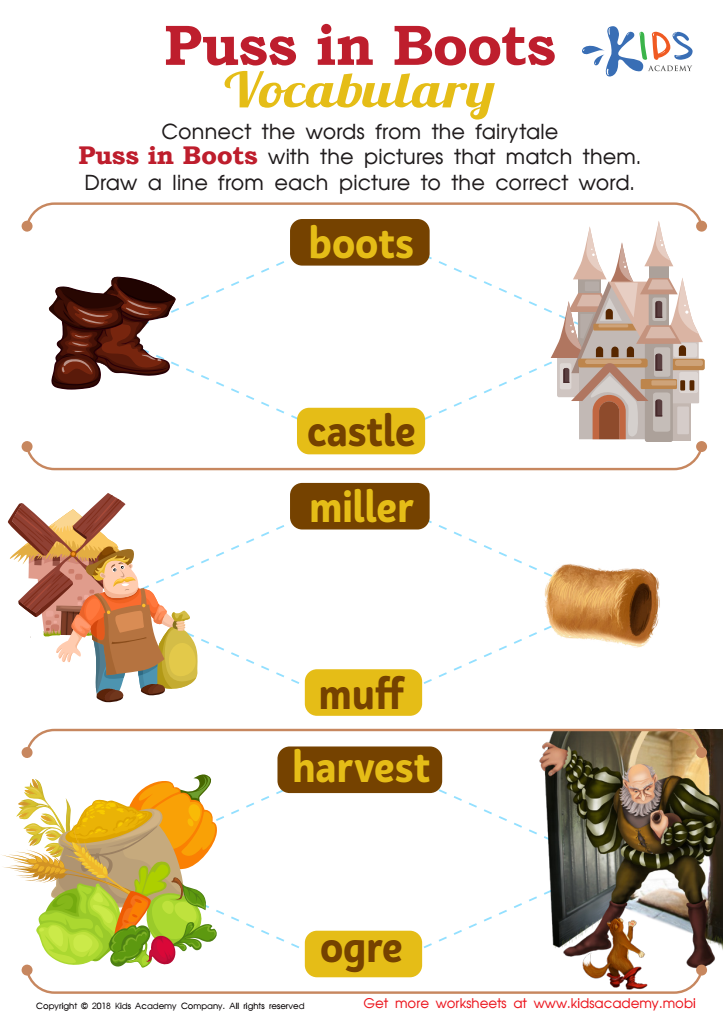
Puss in Boots Vocabulary Worksheet
 Assign to My Students
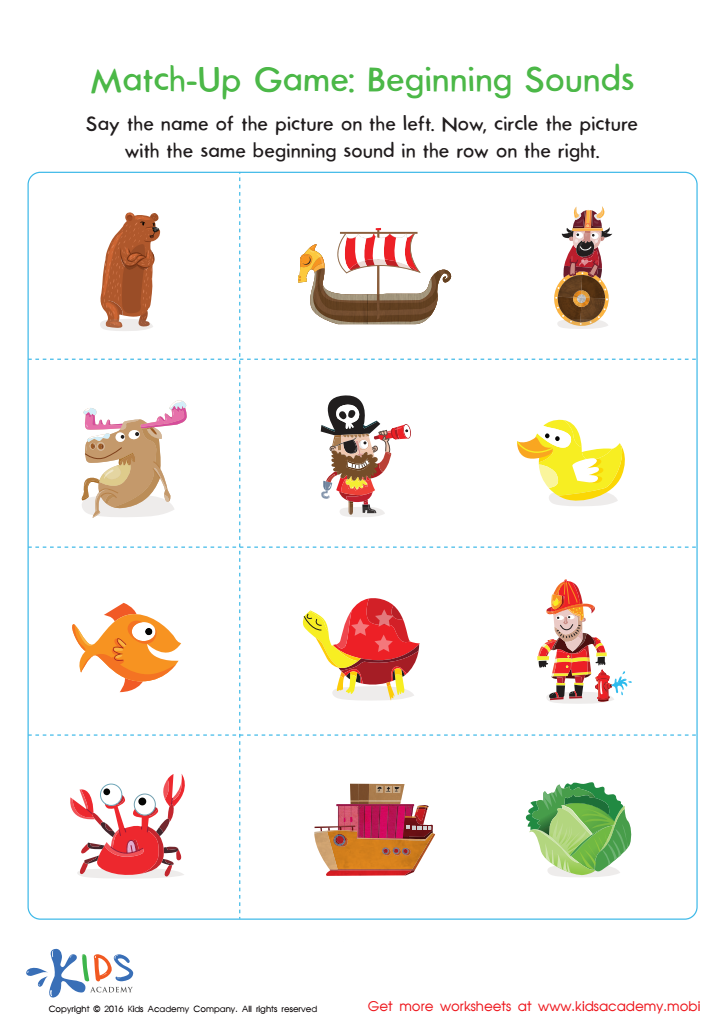
Match–Up Game: Beginning Sounds Worksheet








Vocabulary expansion during the early years is crucial for children's cognitive development and academic success. For 5-year-olds, a rich vocabulary lays the foundation for effective communication and enhances comprehension skills. When parents and teachers engage in vocabulary-expanding reading with young children, they provide exposure to new words and concepts. This exposure helps children make connections, fostering critical thinking and creativity.
Moreover, developing a robust vocabulary at an early age supports literacy skills, making it easier for children to decode words and understand texts later on. Reading to 5-year-olds not only introduces them to new vocabulary but also encourages listening skills, attention span, and a love for literature. When children can articulate their thoughts and feelings more clearly, it boosts their confidence and ability to engage socially.
Interactive reading, where adults ask questions and encourage discussions about the story, also deepens understanding and reinforces new vocabulary. Encouraging a print-rich environment, with labels, books, and conversations centered around words, further solidifies learning. Simply put, investing time in vocabulary expansion through reading nurtures lifelong learners, giving them essential tools for future successes academically and socially. Thus, prioritizing vocabulary growth should be a mission for parents and educators alike.








