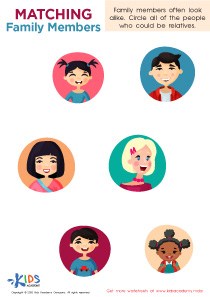
Visual recognition Social Studies Worksheets for 5-Year-Olds
4 filtered results
-
From - To
Explore our engaging Visual Recognition Social Studies Worksheets designed specifically for 5-year-olds! These worksheets provide fun and interactive activities that help young learners develop essential visual recognition skills while exploring the world around them. With colorful illustrations and relatable scenarios, children will practice identifying various social contexts, community helpers, and cultural elements. Each worksheet encourages critical thinking and enhances observation skills, laying a solid foundation for future social studies learning. Perfect for homeschooling or classroom use, our resources support early education and make learning enjoyable. Foster curiosity and awareness in your child while building vital cognitive skills—download your worksheets today!
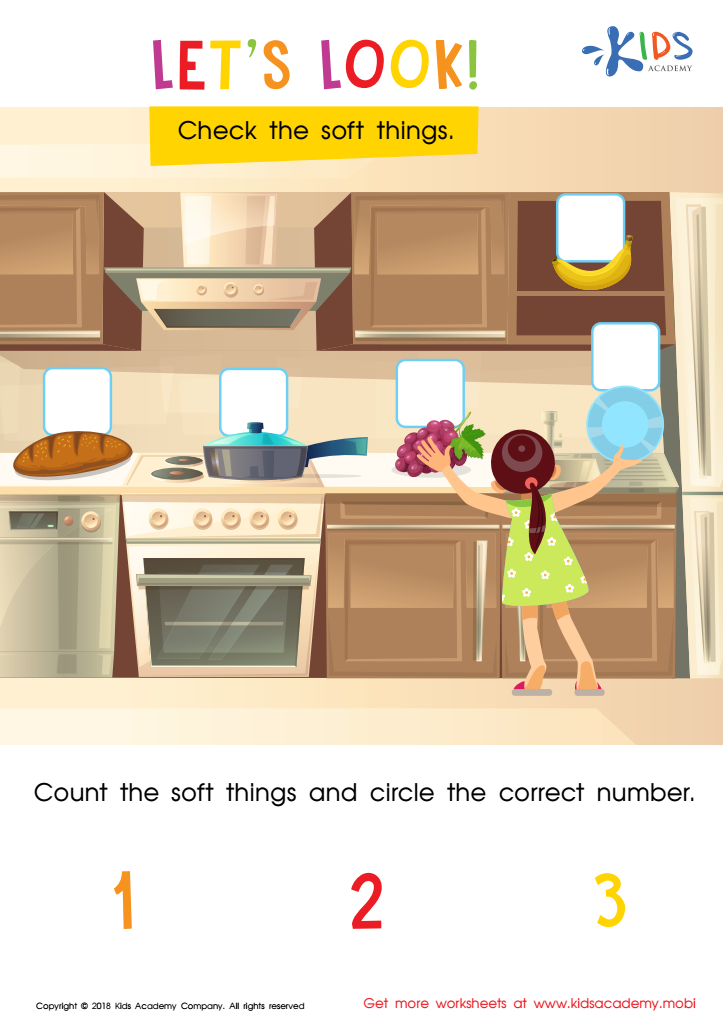
Let's Look! Assessment Worksheet
 Assign to My Students
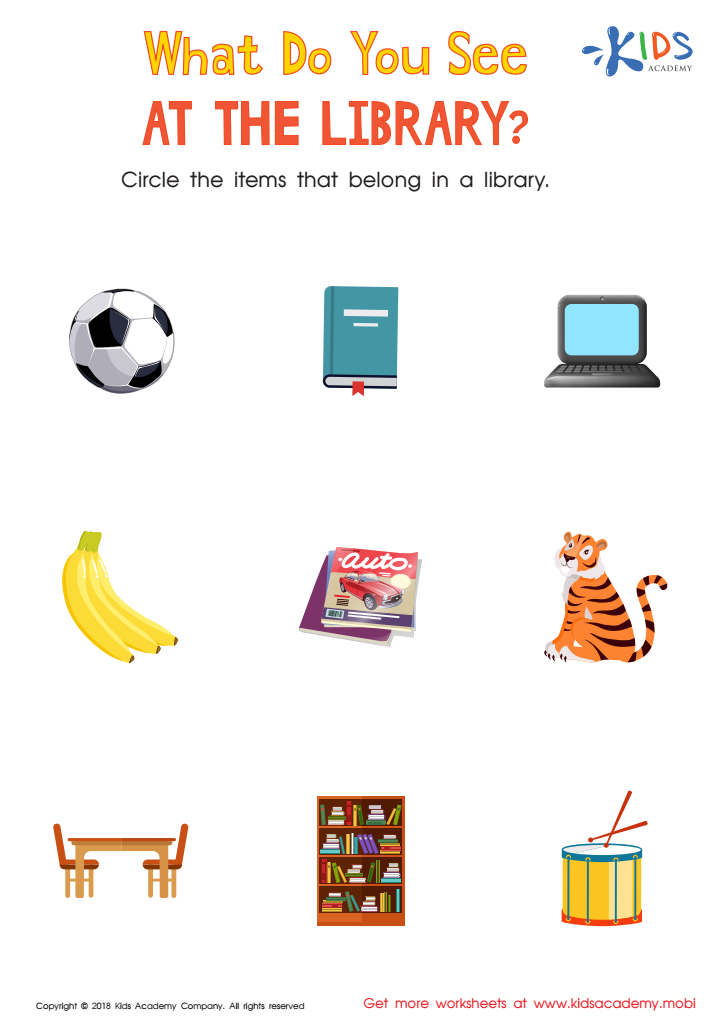
What Do you See at the Library? Worksheet
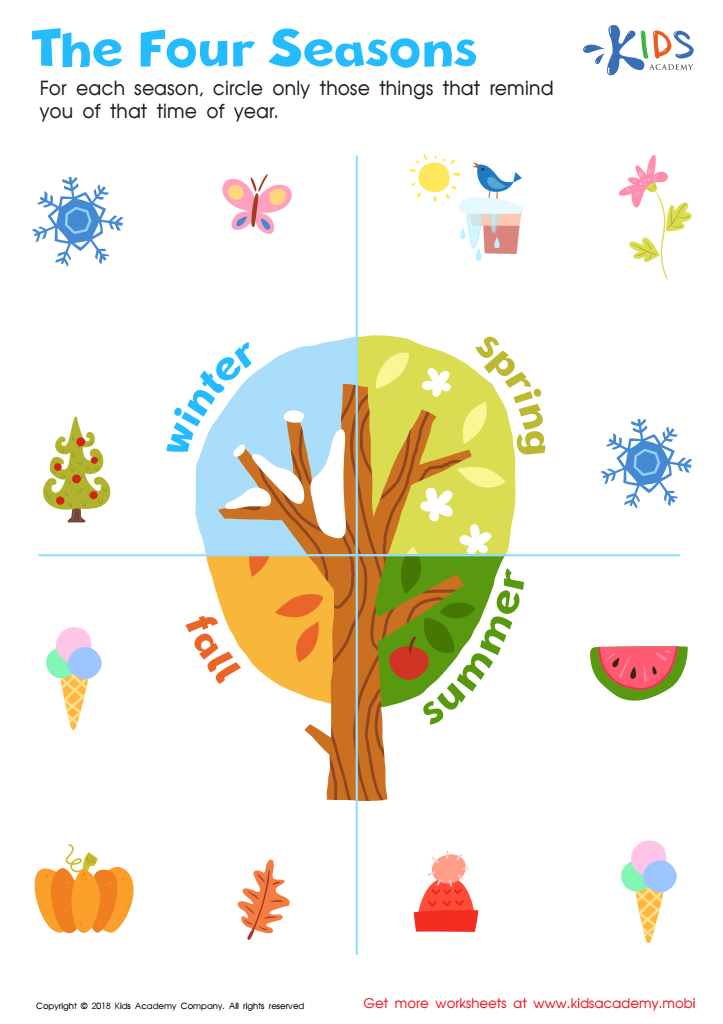
The Four Seasons Worksheet
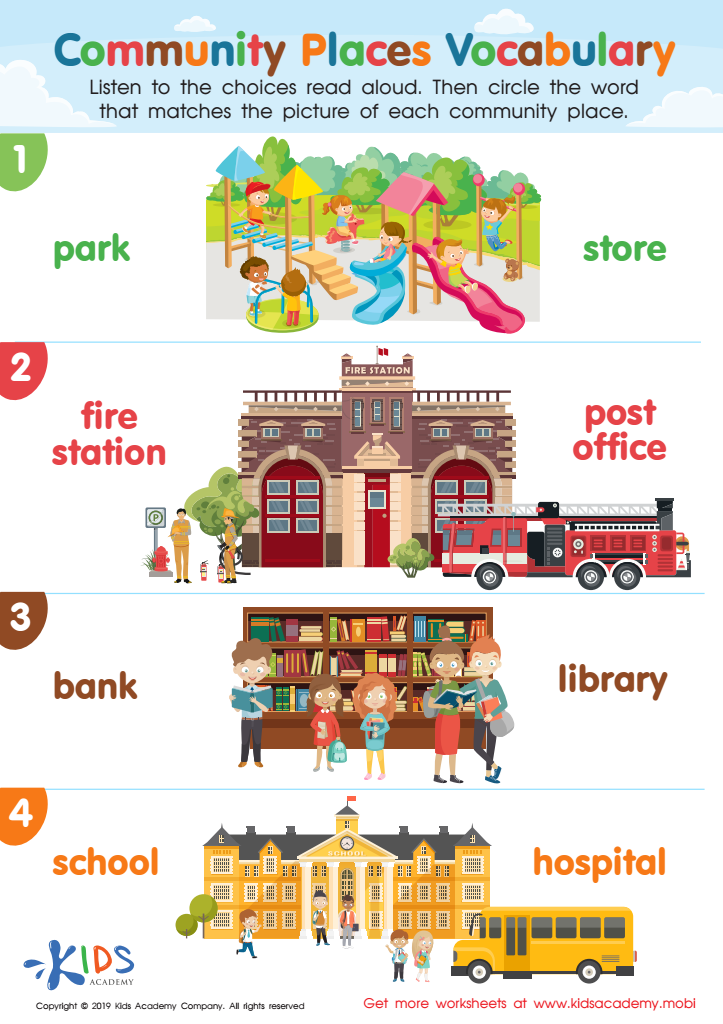
Community Places Vocabulary Worksheet







Visual recognition in Social Studies for 5-year-olds is crucial for several reasons. Firstly, at this developmental stage, children are naturally inclined to learn through images and visual stimuli. Teaching Social Studies utilizing visual recognition helps them understand complex concepts about community, culture, and history in an engaging way. Children learn to differentiate between various buildings, symbols, and occupations that are integral to their social environment, fostering a sense of belonging.
Secondly, visual recognition enhances cognitive development. It promotes critical thinking, allowing children to make connections between what they see and their personal experiences. Recognizing different cultural symbols, family structures, and societal roles lays a foundation for empathy and inclusivity.
Furthermore, visual literacy supports language development. As children learn to identify and label visual elements, they expand their vocabulary and communication skills, which are essential for effective interaction in their communities.
In sum, incorporating visual recognition into Social Studies builds essential skills, captures children's interest, and prepares them to be informed and active citizens. For parents and teachers, understanding its importance is key to cultivating a well-rounded education that fosters not only knowledge but also social awareness and emotional intelligence.