Alphabet Recognition ABC Coloring Pages Worksheets for Ages 6-7
16 filtered results
Difficulty Level
Grade
Age
-
From - To
Subject
Activity
Standards
Introduce your child to the fun world of ABCs with our Alphabet Recognition ABC Coloring Pages Worksheets, designed specifically for ages 6-7! These engaging worksheets combine learning with creativity, allowing children to recognize and familiarize themselves with each letter of the alphabet while enjoying vibrant coloring activities. Each page features eye-catching illustrations and a letter to color, promoting fine motor skills and enhancing visual recognition. Ideal for preschool and early elementary education, our worksheets not only make learning enjoyable but also help reinforce letter identification and sound association—essential skills for reading readiness. Bring learning to life with our fun ABC coloring pages today!
Favorites
With answer key
Interactive
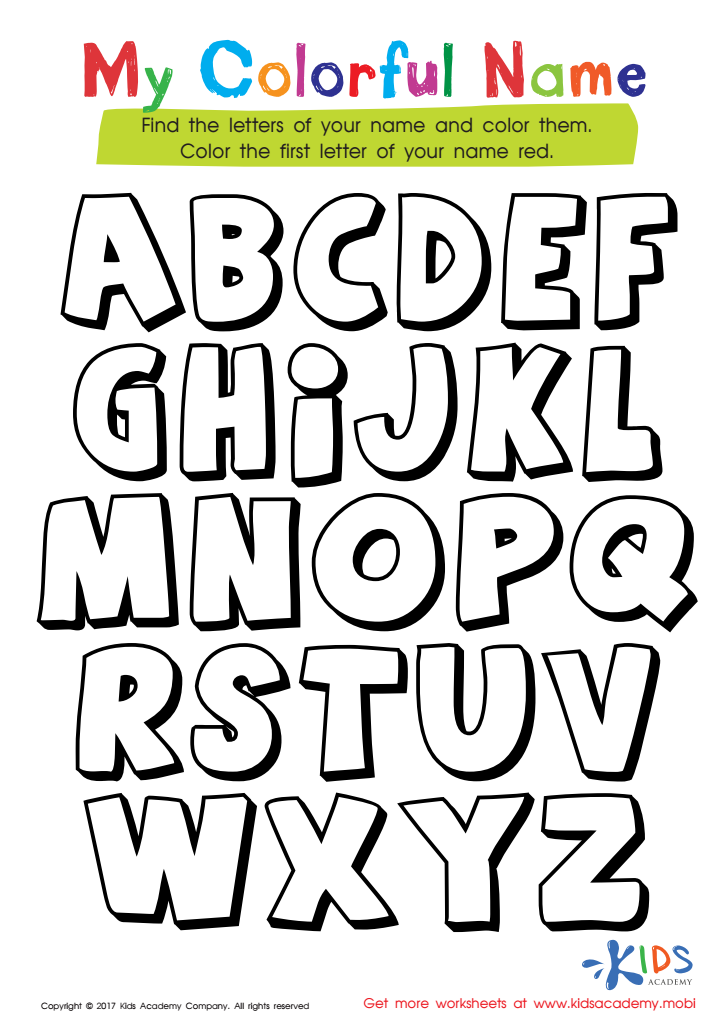
My Colorful Name Worksheet
Writing their names is a milestone for children. With this worksheet, they recall the letters in their name and color the letters one at a time. Spelling and alphabet order are reinforced as they find each letter. Use this fun printable to help kids learn to write their names!
Download (PDF)
 Assign to My Students
Assign to My Students
My Colorful Name Worksheet
Worksheet
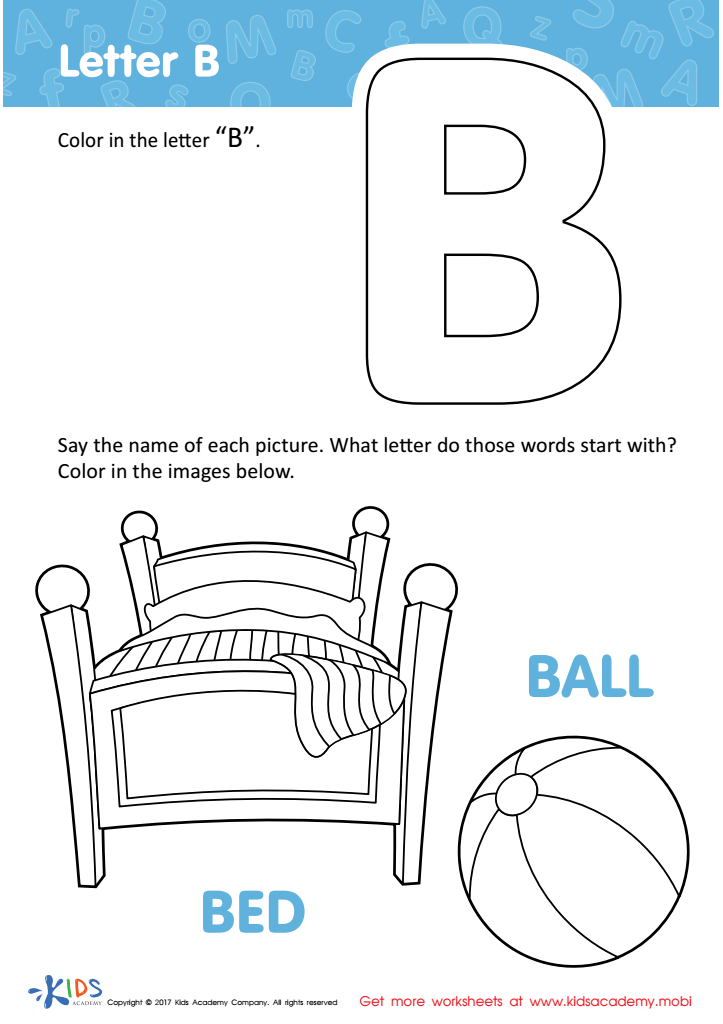
Letter B Coloring Sheet
Kids will love coloring this page that features things they like - balls, bubbles, bugs and bedtime - all words starting with "B"! It's a great way to introduce the alphabet and increase their exposure to letters and sounds. Let them have fun and learn at the same time!
Download (PDF)
Assign to My Students
Assign to My Students
Letter B Coloring Sheet
Worksheet
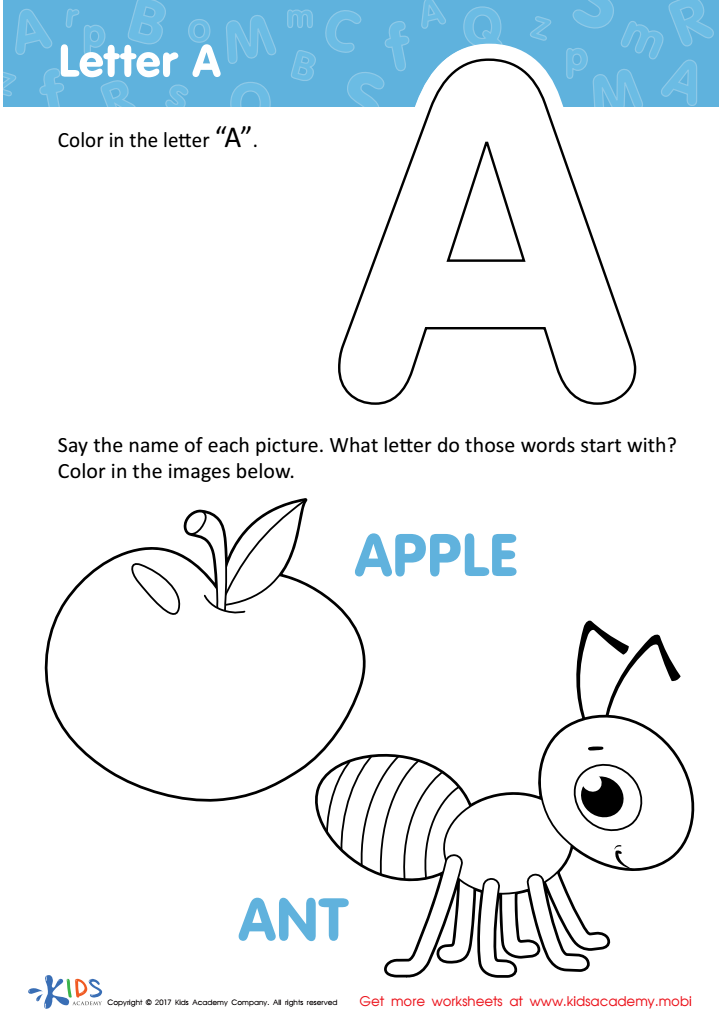
Letter A Coloring Sheet
This letter "A" coloring page is great for introducing kids to the alphabet! Let them exercise their creativity while they learn to recognize letters and sounds - it's a fun and easy way to help them get started.
Download (PDF)
Assign to My Students
Assign to My Students
Letter A Coloring Sheet
Worksheet
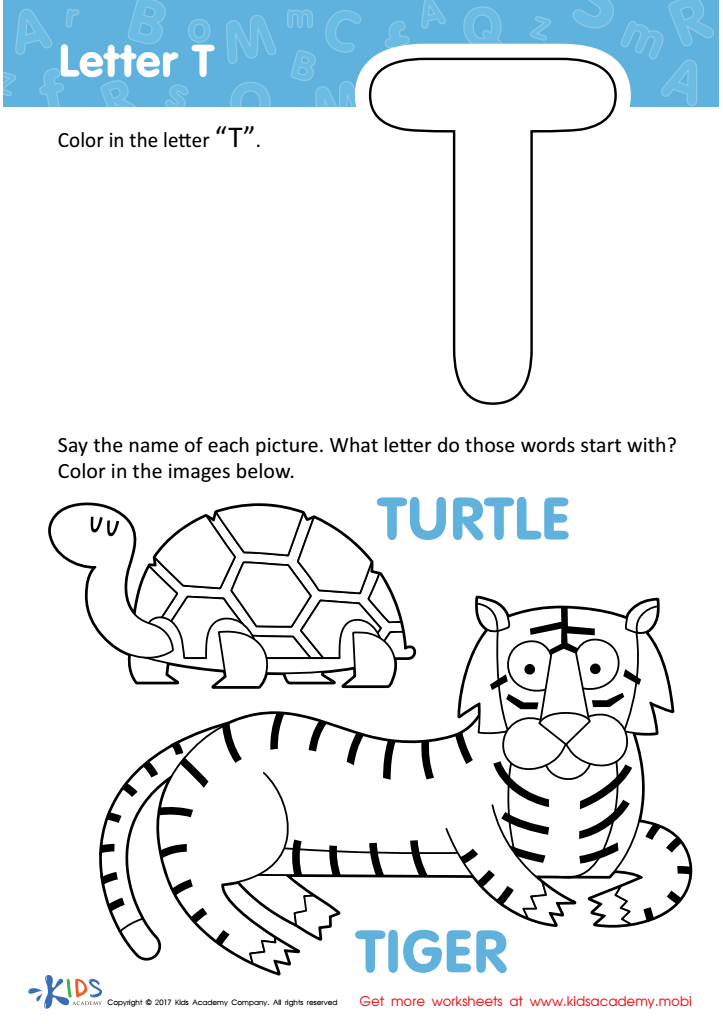
Letter T Coloring Sheet
Introduce your child to the letter "T" and its animals – turtles and tigers! With this coloring page, you can stimulate your child's imagination and creativity, while helping them recognize the letter "T". Have fun with your child and get coloring!
Download (PDF)
Assign to My Students
Assign to My Students
Letter T Coloring Sheet
Worksheet
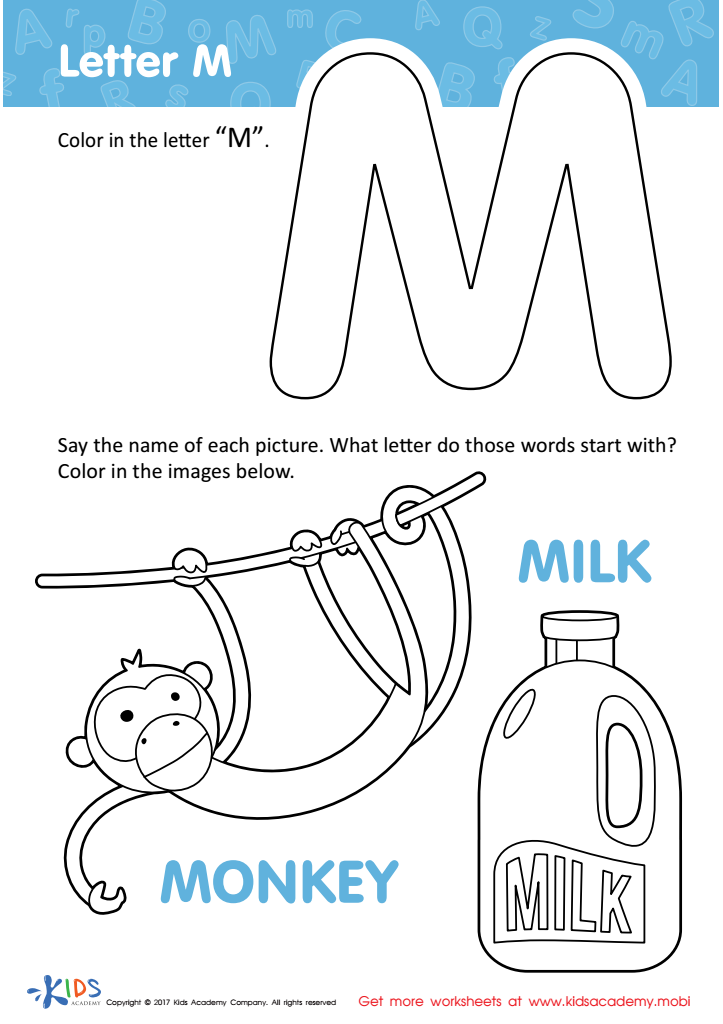
Letter M Coloring Sheet
Coloring this "M" page is fun and educational! Kids will enjoy the funny monkey and milk jug images, while learning to recognize the letter and all the words it makes.
Download (PDF)
Assign to My Students
Assign to My Students
Letter M Coloring Sheet
Worksheet
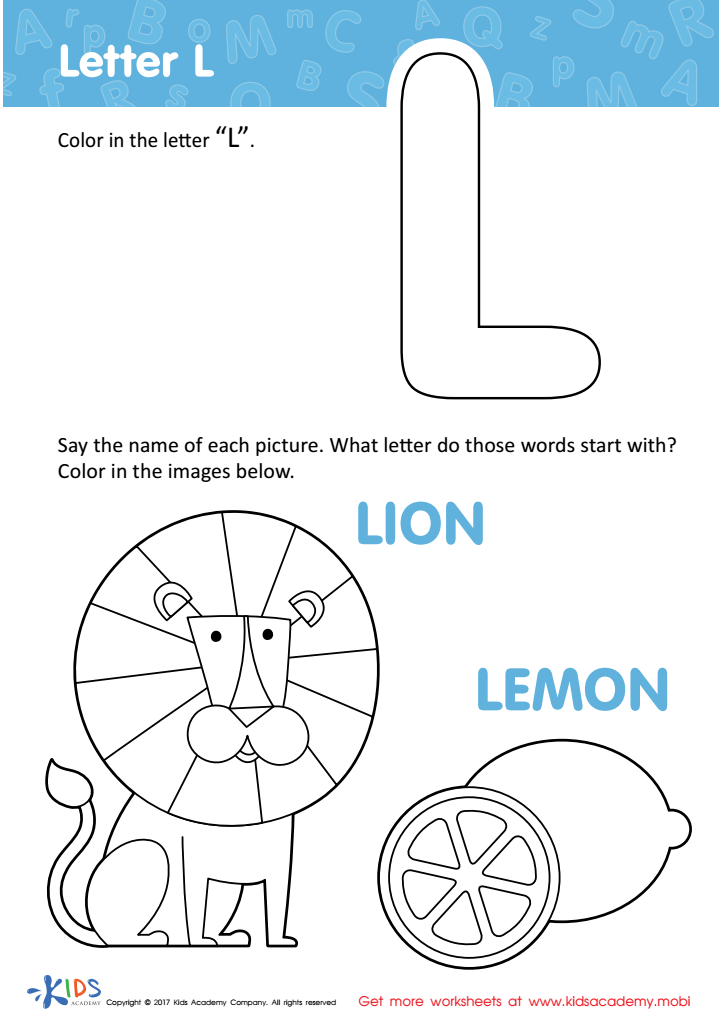
Letter L Coloring Sheet
Kids often struggle to say "L" and love it because so many things they love start with it! This coloring page combines the letter and fun images like a lemon and lion to teach and entertain!
Download (PDF)
Assign to My Students
Assign to My Students
Letter L Coloring Sheet
Worksheet
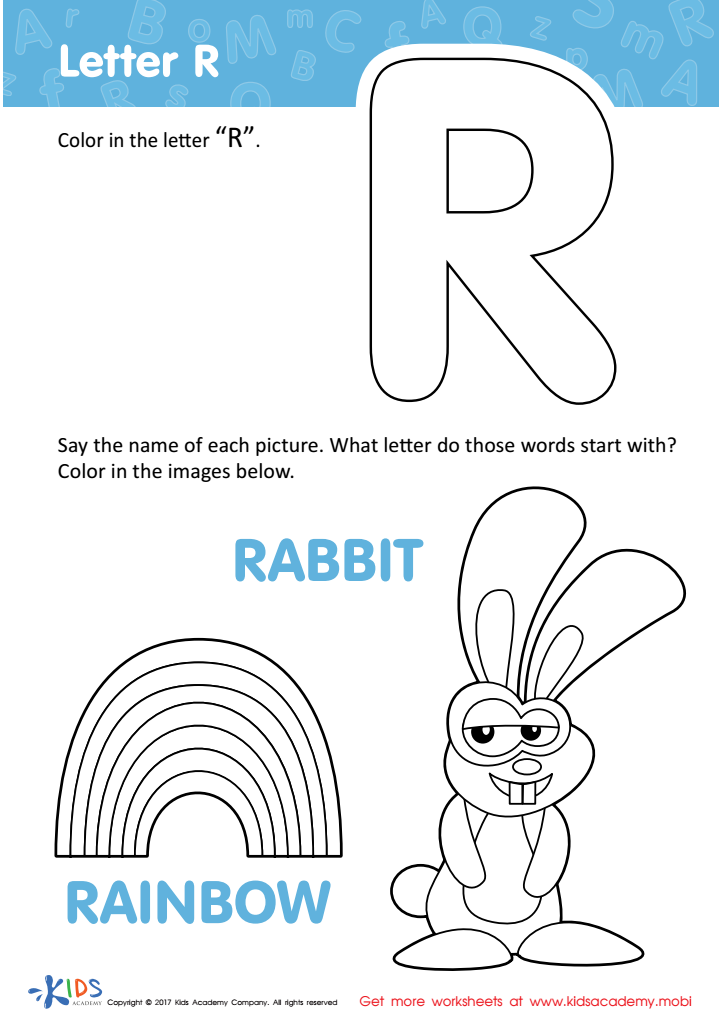
Letter R Coloring Sheet
Let your child explore the rainbow with this fun letter "R" coloring page! They can learn to recognize the letter and make connections to words, all while having fun! Make alphabet learning enjoyable with joyful coloring pages.
Download (PDF)
Assign to My Students
Assign to My Students
Letter R Coloring Sheet
Worksheet
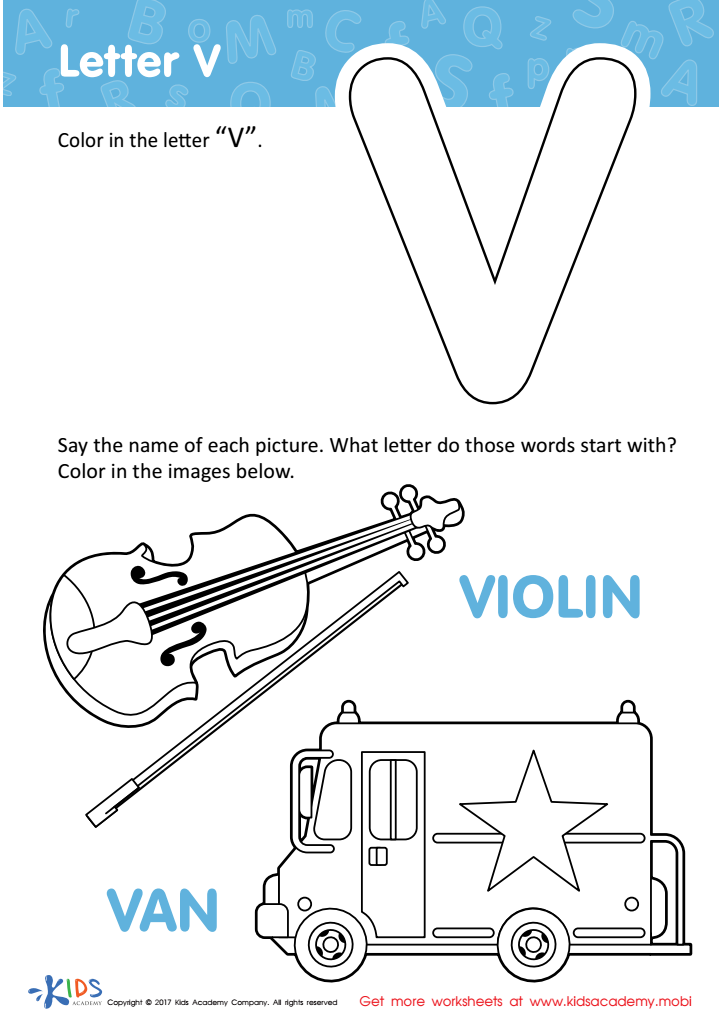
Letter V Coloring Sheet
This fun letter V coloring page can boost your child's knowledge of the letter "V" and its sound. Help them pronounce it correctly, too!
Download (PDF)
Assign to My Students
Assign to My Students
Letter V Coloring Sheet
Worksheet
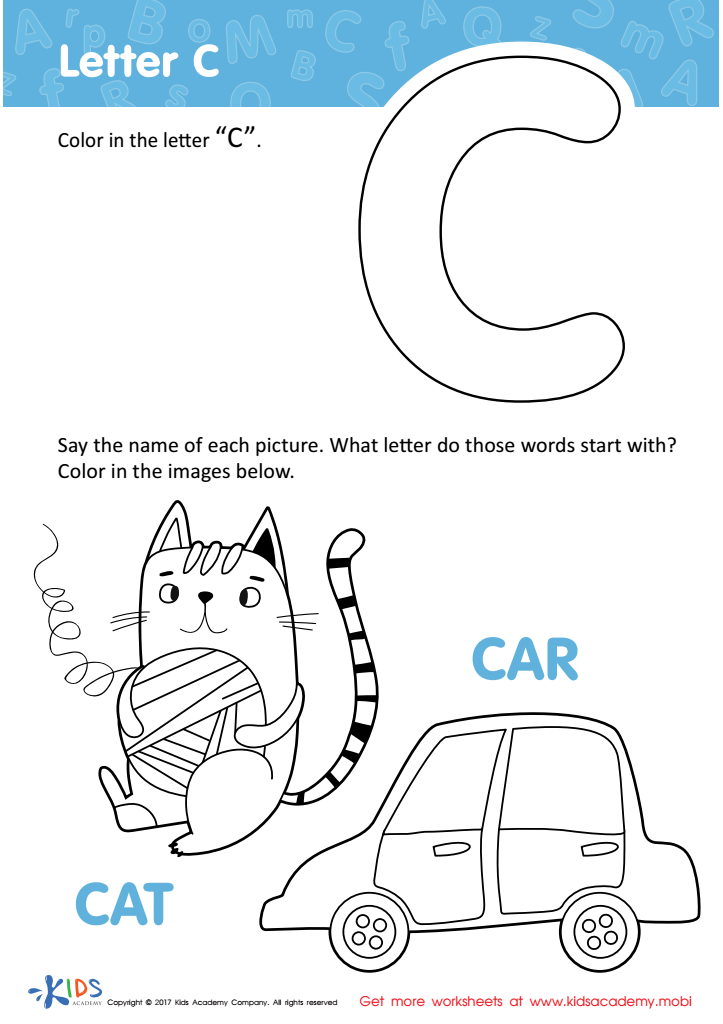
Letter C Coloring Sheet
Introduce kids to the letter 'C' with this fun coloring page! Exposing little ones to letters, words, and sounds helps them learn long before they can read. Start with simple words like 'cat' and 'car' - these are great first sight words for young children.
Download (PDF)
Assign to My Students
Assign to My Students
Letter C Coloring Sheet
Worksheet
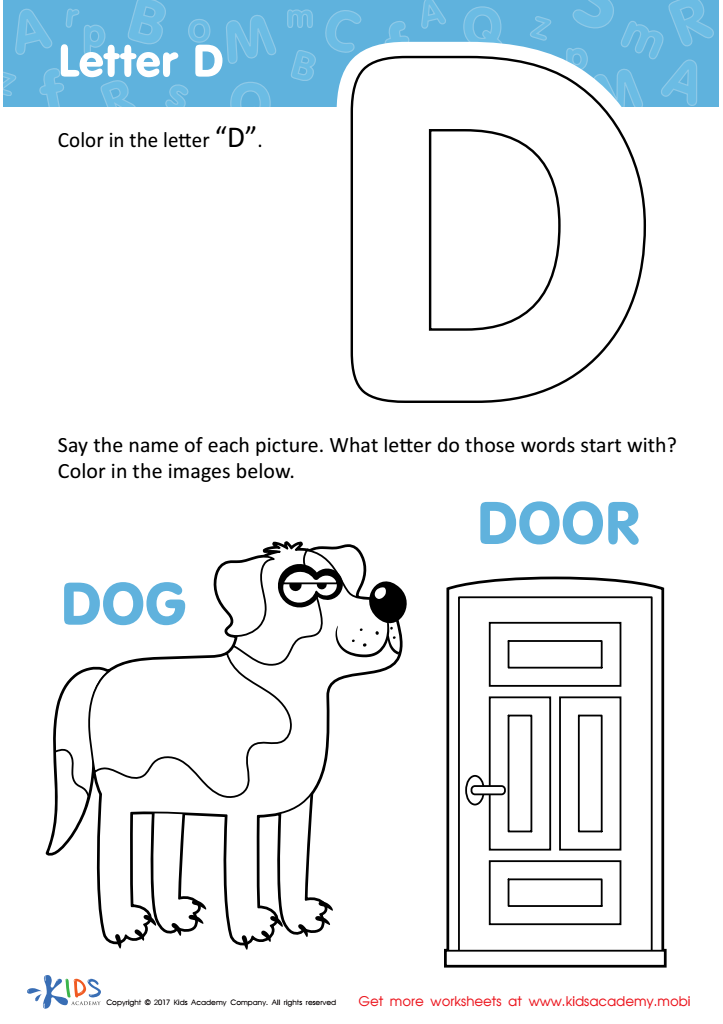
Letter D Coloring Sheet
Coloring with this letter "D" page is a great way to encourage your child's creativity while they learn the letter "D" and its sound. It's a fun activity to stimulate their imagination!
Download (PDF)
Assign to My Students
Assign to My Students
Letter D Coloring Sheet
Worksheet
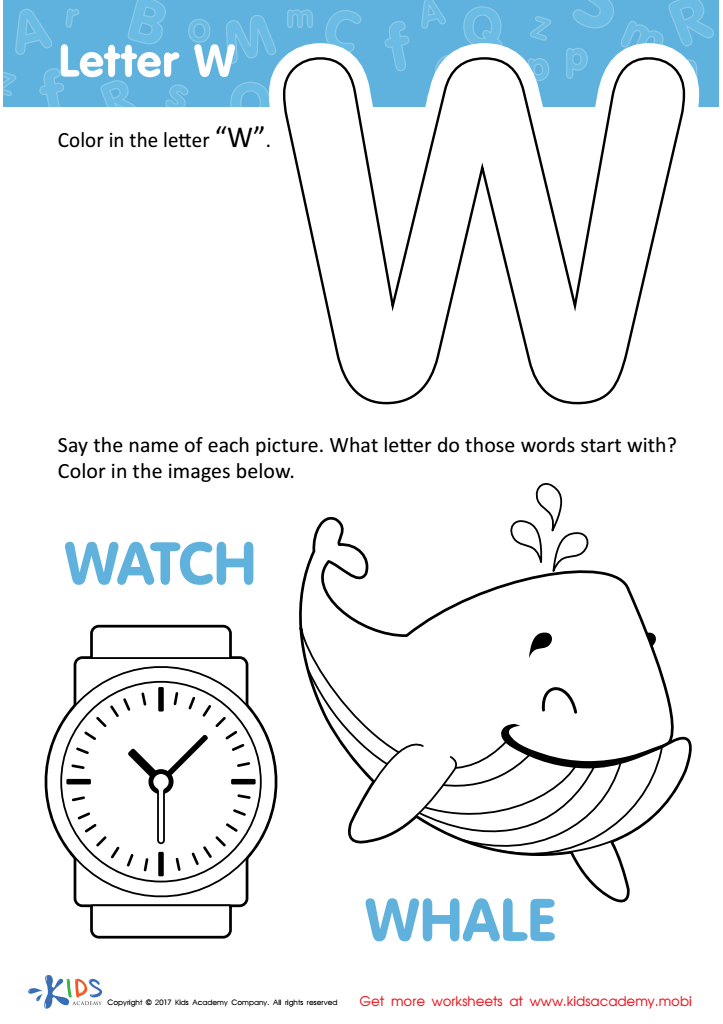
Letter W Coloring Sheet
Let your child have fun with this letter "W" coloring page! They can use their imagination to color the whale and discover the letter and its sound. Give them a helping hand to make it a whale of a time!
Download (PDF)
Assign to My Students
Assign to My Students
Letter W Coloring Sheet
Worksheet
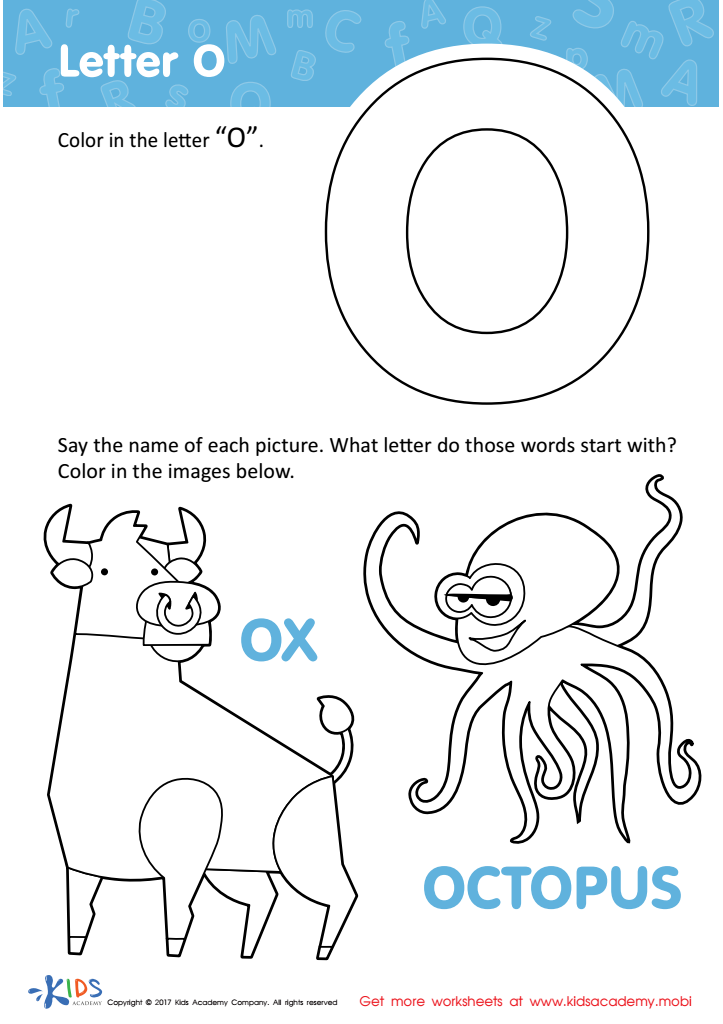
Letter O Coloring Sheet
Oh my! The letter "O" is so much fun. Coloring in the octopus and ox on this delightful letter "O" coloring page can help your child have fun while strengthening their recognition of the letter and sound.
Download (PDF)
Assign to My Students
Assign to My Students
Letter O Coloring Sheet
Worksheet
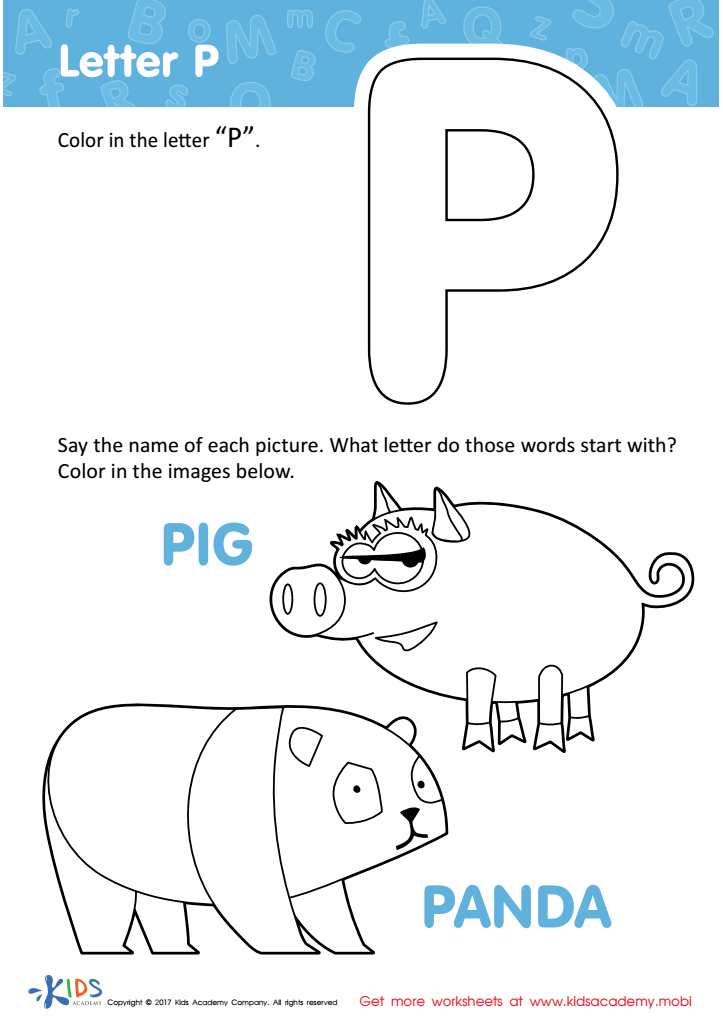
Letter P Coloring Sheet
Encourage your child's creativity and letter recognition with this "P" coloring page! Through coloring animals such as pigs and pandas, your little one will get to know the sound of the letter "P" and have fun too!
Download (PDF)
Assign to My Students
Assign to My Students
Letter P Coloring Sheet
Worksheet
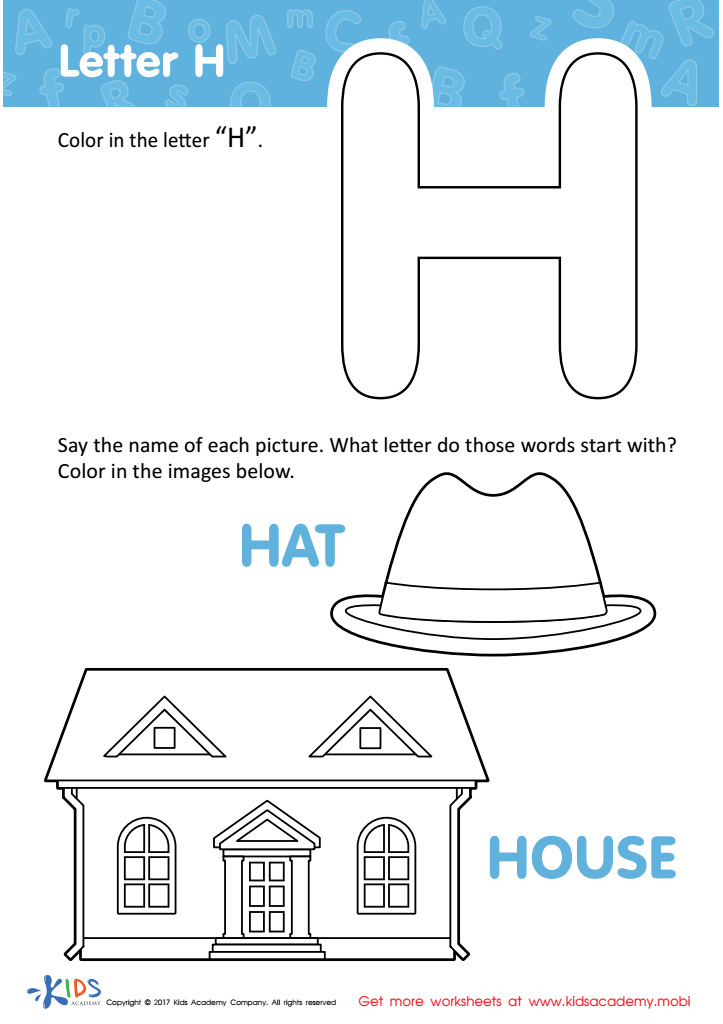
Letter H Coloring Sheet
This fun "H" coloring page will help your child recognize the letter and sound of "H"! With a hat and house to color, your little learner will have a blast picking colors and creating designs, all while learning about the letter "H"!
Download (PDF)
Assign to My Students
Assign to My Students
Letter H Coloring Sheet
Worksheet
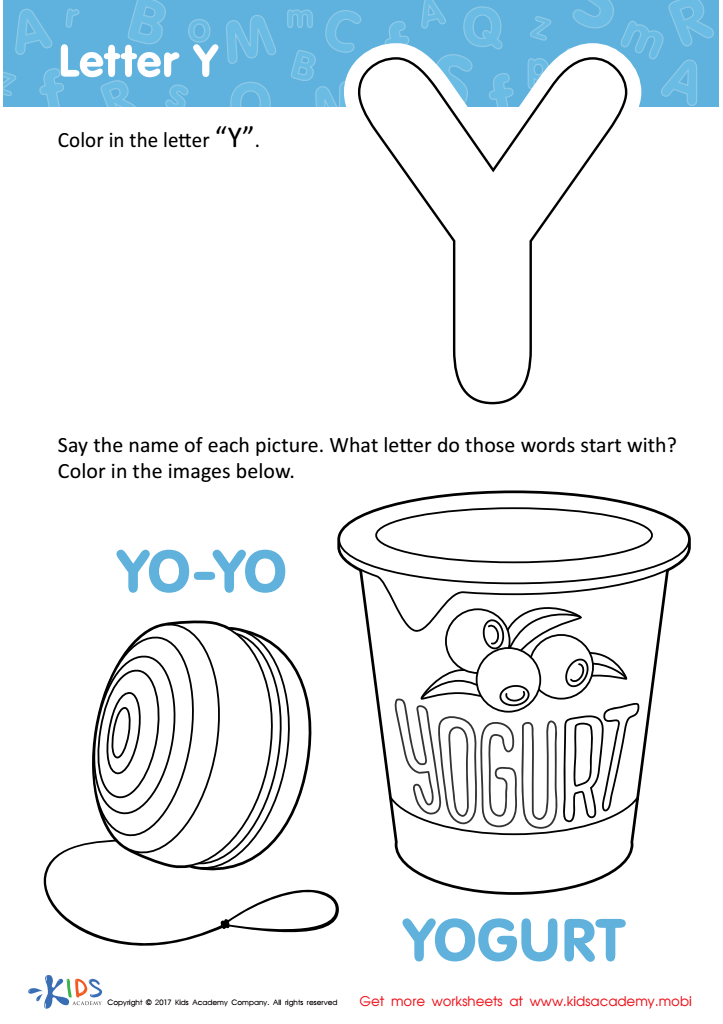
Letter Y Coloring Sheet
Let's celebrate letter "Y"! Here's a fun coloring page that'll help your child learn this end-of-the alphabet letter. It's packed with familiar objects that'll help build their art and literacy skills. So let's say "Yay"!
Download (PDF)
Assign to My Students
Assign to My Students
Letter Y Coloring Sheet
Worksheet
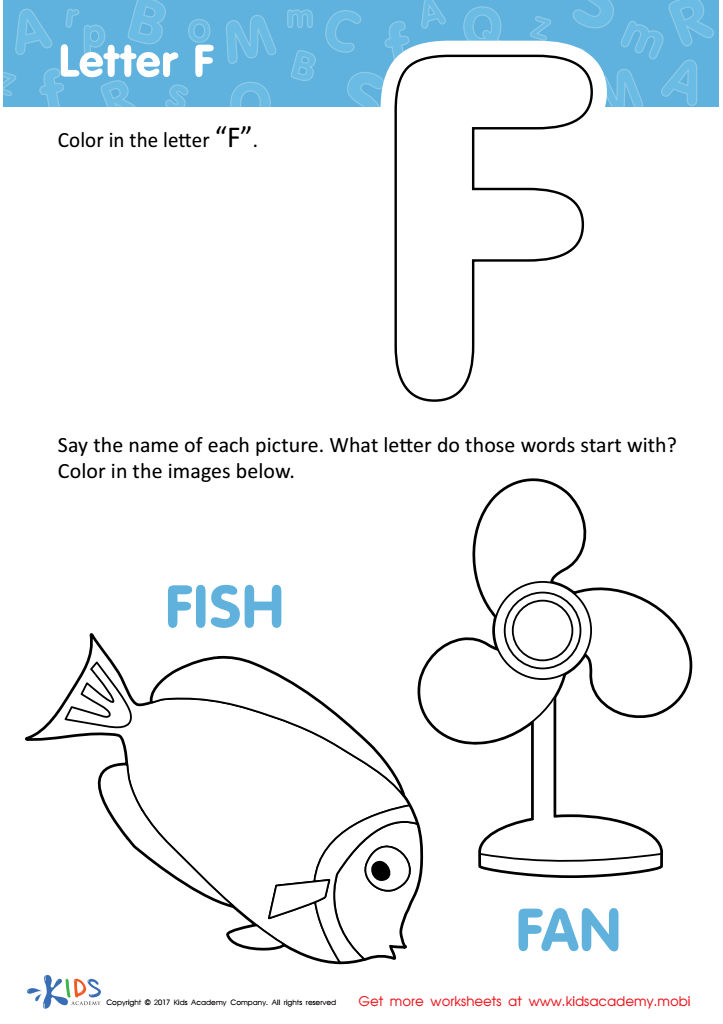
Letter F Coloring Sheet
Coloring pages help kids learn to recognize letters and sounds. Our "F" page has kids color a fish and a fan. It's a great way to introduce them to the letter "F" using words they already know.
Download (PDF)
Assign to My Students
Assign to My Students
Letter F Coloring Sheet
Worksheet
Join Kids Academy for Free
Who is primarily going to use this learning content?



Alphabet recognition is a fundamental skill for early literacy development, making ABC coloring pages an invaluable resource for parents and teachers alike. For children aged 6-7, mastering the alphabet lays the groundwork for reading and writing proficiency, which are essential for academic success. Coloring pages specifically designed for this age group combine learning with creativity, making the process engaging and enjoyable.
These coloring sheets not only promote letter identification but also enhance fine motor skills as children practice coloring within the lines. As they familiarize themselves with each letter, they are also introduced to phonetic sounds and words that begin with those letters, further reinforcing their understanding.
Moreover, using ABC coloring pages allows for interactive learning experiences. Parents and teachers can facilitate discussions about the letters, encouraging children to identify and name various items associated with each letter, thereby promoting vocabulary expansion.
In summary, incorporating ABC coloring pages into early education enriches the learning experience, fosters a love for learning, and equips children with the essential skills they need for their academic journey. By prioritizing alphabet recognition through creative methods, we can significantly impact young learners' readiness for future challenges.