
Sound Association Consonants Worksheets for Ages 6-7
3 filtered results
Difficulty Level
Grade
Age
-
From - To
Subject
Activity
Standards
Enhance your child's reading skills with our Sound Association Consonants Worksheets tailored for ages 6-7. These engaging and educational worksheets help young learners associate consonant sounds with corresponding images and words, promoting phonemic awareness and early literacy. Each worksheet is thoughtfully designed to captivate children’s interest while reinforcing fundamental reading skills through interactive exercises. Perfect for home or classroom use, these tools ensure children have fun while learning critical consonant sound recognition and application. Equip your kids with the confidence to excel in reading with our expertly crafted sound association worksheets! Download and start learning today.
Favorites
With answer key
Interactive
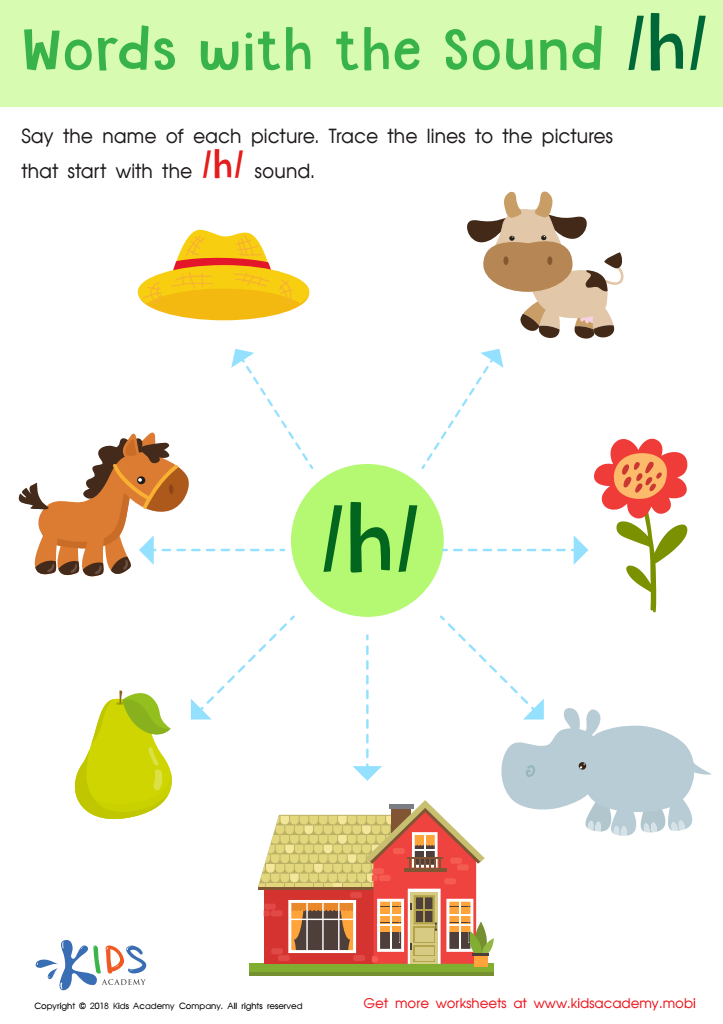
Words with sound h Reading Worksheet
The letter H can often be heard in words! Check your child's knowledge with an engaging worksheet from Kids Academy. Ask them to go around a circle and name each image aloud. Listen for the starting sound and trace the line from the middle letter to the images with the sound. This is a great way to practice phonics!
 Assign to My Students
Words with sound h Reading Worksheet
Worksheet
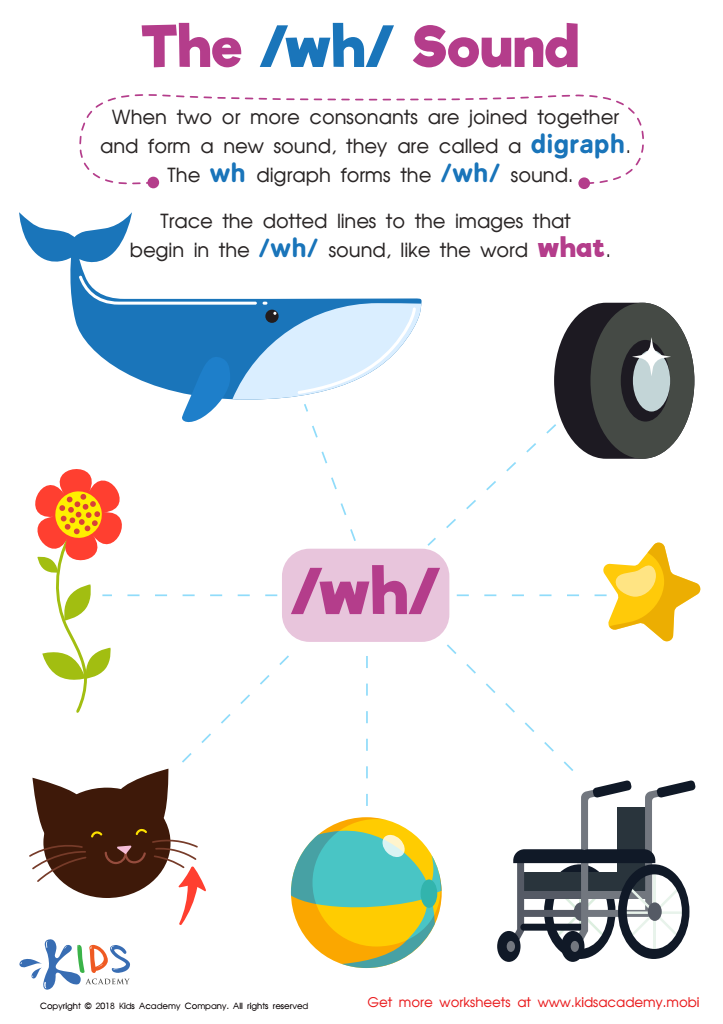
The /wh/ Sound Worksheet
Digraphs join two consonants to make a new sound, like /wh/. Give examples, like "whale", "when" and "why". Ask kids to name pictures in a worksheet and trace dotted lines to images beginning with the /wh/ sound; "what" is one example.
The /wh/ Sound Worksheet
Worksheet
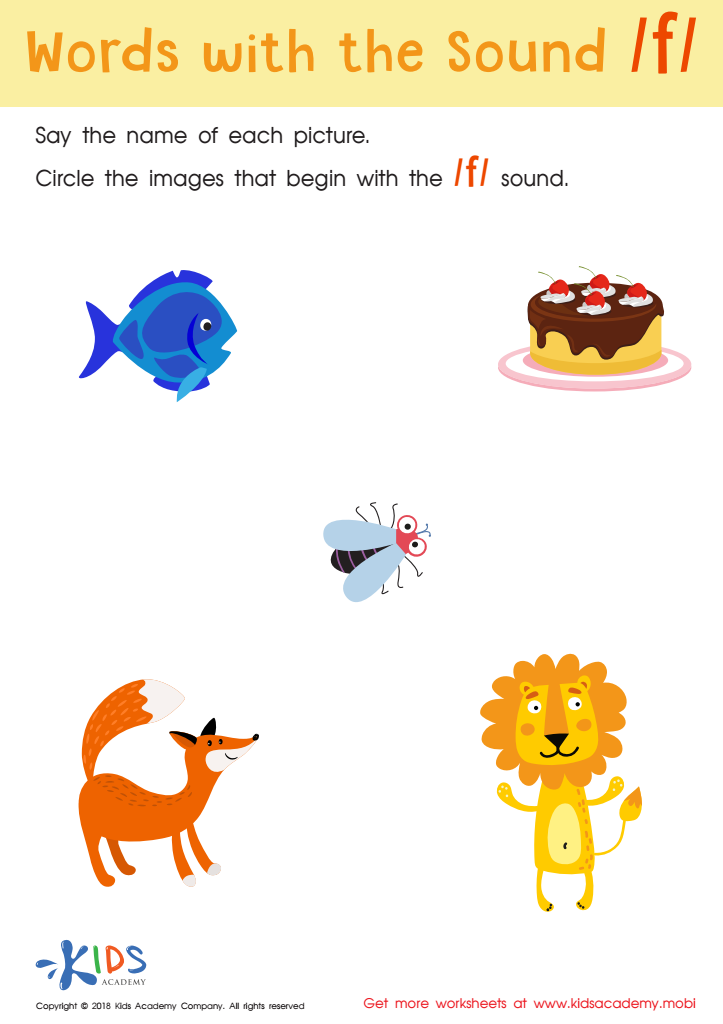
Words with sound f Reading Worksheet
This illustrated phonics worksheet is ideal for preschool or kindergarten. It helps boost learners' literacy skills with a focus on the letter "f". Ask your child to name all the pictures, listening for that sound. Examples are fish, fox, lion, bug. When they can identify which words start with "f", have them circle the images. Congratulate them on a job well done!
Words with sound f Reading Worksheet
Worksheet
Join Kids Academy for Free
Who is primarily going to use this learning content?



Sound association with consonants is essential for children aged 6-7 as it forms the foundation for their reading and writing skills. At this developmental stage, kids are learning to connect sounds (phonemes) with letters (graphemes), an integral part of phonics. This crucial skill helps children decode words, improving their ability to read fluently and comprehend text.
When parents and teachers emphasize sound association, they foster children's phonemic awareness, which is vital for recognizing patterns in words. For example, understanding that the letter "b" makes the /b/ sound helps children spell and read words like "ball" or "bat." Competence in this area also boosts children's self-esteem and motivation as they experience success in their reading endeavors.
Moreover, strong phonics skills contribute to overall academic performance. They not only make reading enjoyable but also support clearer writing and better verbal communication. Early intervention ensures children are not struggling silently, which can have long-term benefits for their educational journey.
Incorporating practices like phonics games, storytelling, and repetitive reading can enhance sound association. This not only makes learning interactive and fun but also reinforces these essential skills regularly. Parents and teachers act as pivotal guides in this process, making a lasting impact on children's literacy development.







