Phonics Skills Elementary Phonics Worksheets for Ages 6-7
4 filtered results
-
From - To
Boost your child’s reading and language skills with our engaging Phonics Skills worksheets designed specifically for ages 6-7. These interactive printable resources focus on essential phonics concepts, helping young learners master the relationship between letters and sounds. Our worksheets cover various phonetic patterns, blending and decoding activities that promote reading fluency and comprehension. With colorful illustrations and fun exercises, children will stay motivated while developing foundational literacy skills. Ideal for both classrooms and at-home learning, our phonics worksheets make learning enjoyable and effective. Empower your child’s literacy journey today with our proven phonics resources, tailored for young learners’ unique needs!
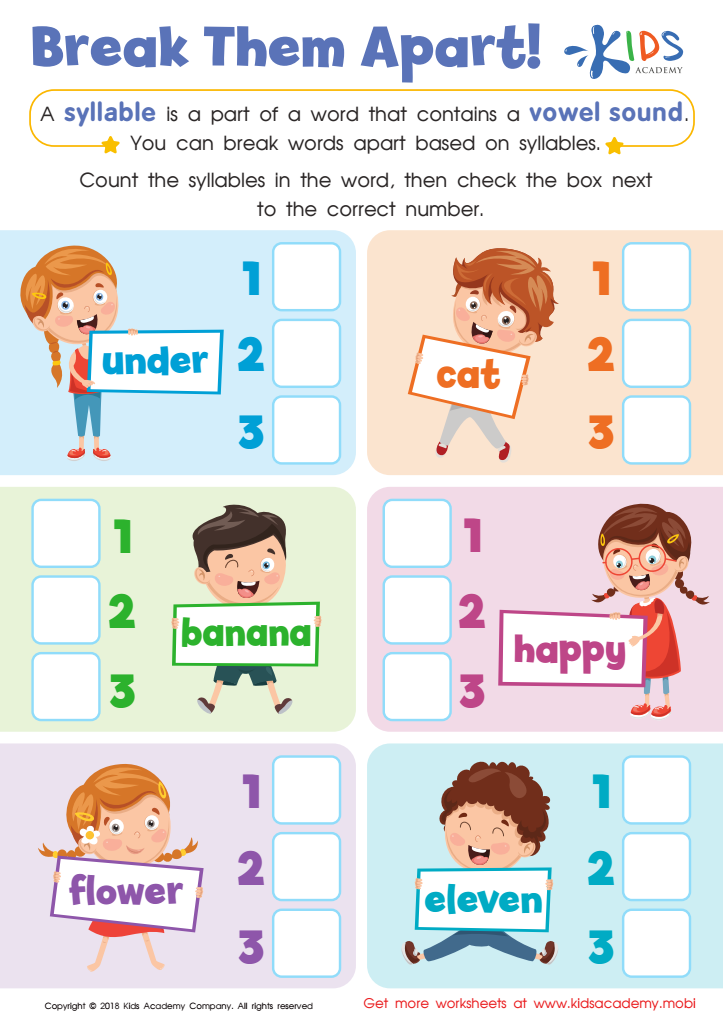
Reading: Break Them Apart Worksheet
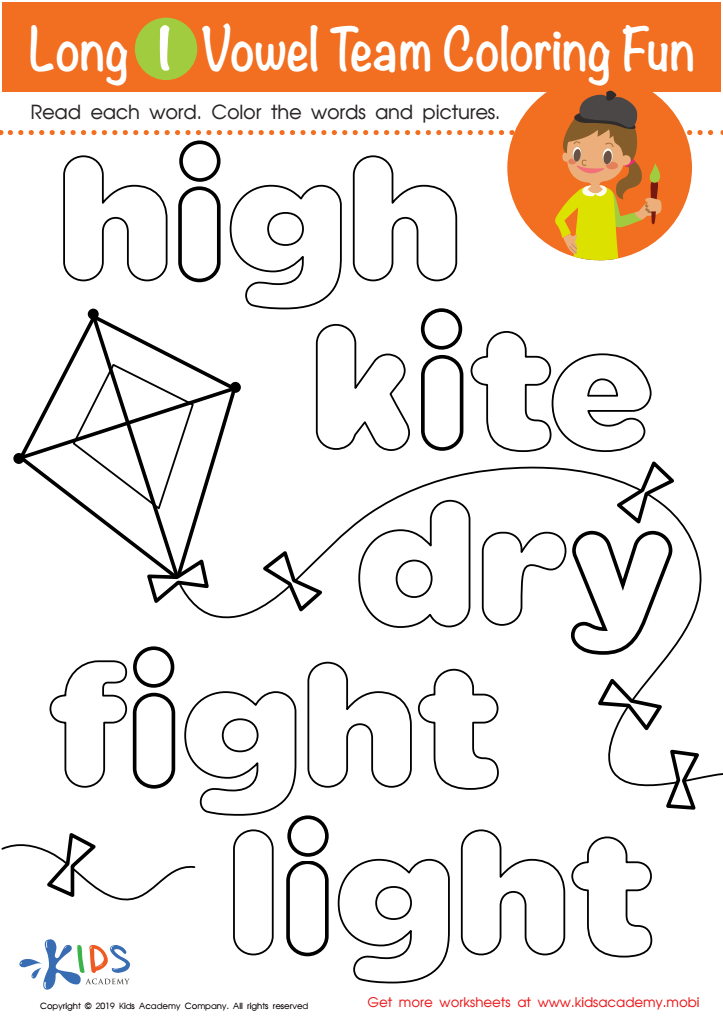
Long I Vowel Team Coloring Worksheet
 Assign to My Students
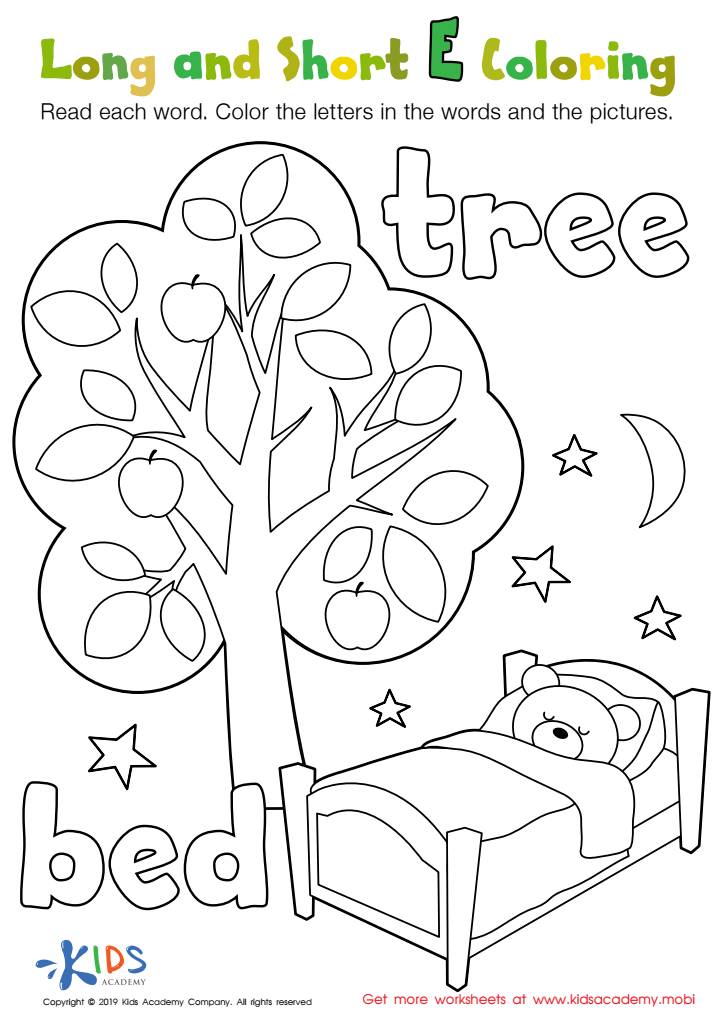
Long and Short E Worksheet
Assign to My Students
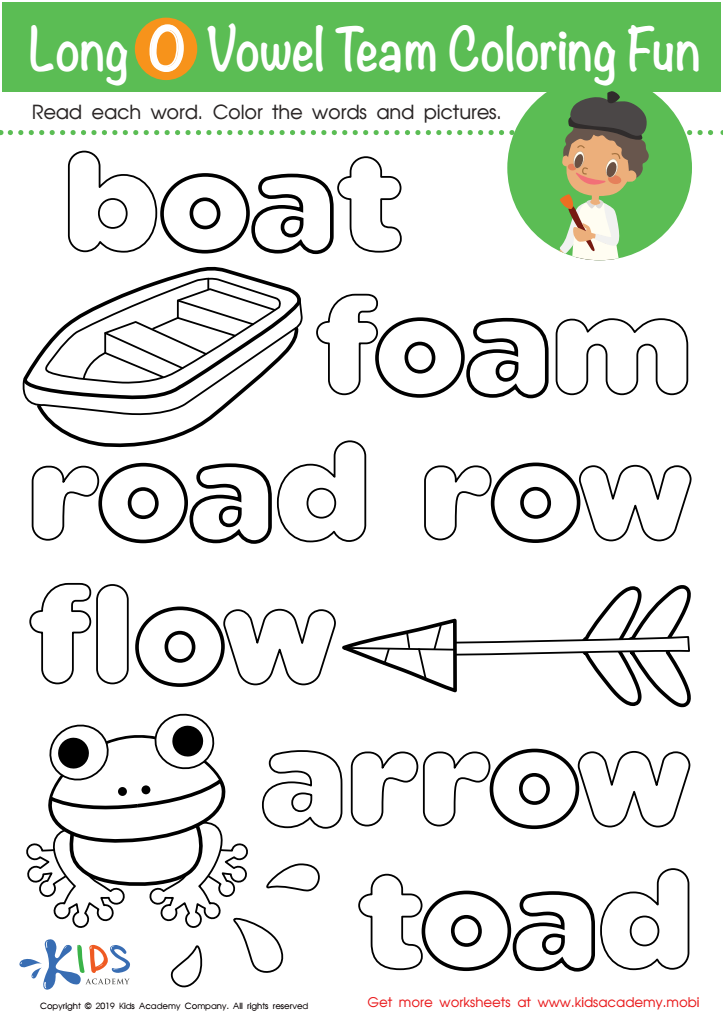
Long O Vowel Team Coloring Worksheet
Assign to My Students




Phonics skills are foundational for young learners, especially for children aged 6-7. At this crucial stage, developing strong phonics abilities is essential for fostering successful reading and writing skills. Firstly, phonics teaches children how sounds are linked to letters and combinations of letters, helping them decode new words. This understanding builds confidence as they tackle increasingly complex texts.
Moreover, phonics directly supports vocabulary development. As children learn to sound out words, they can comprehend them better, which is vital for reading fluency and comprehension. Strong phonics skills also enhance spelling abilities; as children learn sound-letter relationships, they can begin to apply this knowledge in their writing.
For parents and teachers, emphasizing phonics can lead to positive long-term outcomes. Children with solid phonics skills tend to perform better academically, which is linked to increased motivation and a lifelong love of reading. Additionally, investing time in phonics now can significantly reduce the likelihood of future reading difficulties, helping children keep pace with their peers.
In summary, supporting phonics skills in early education is key to enabling children to become proficient and confident readers and writers, laying a solid foundation for all future learning.







