
Fine motor skills development Alphabet Worksheets for Ages 6-7
6 filtered results
Difficulty Level
Grade
Age
-
From - To
Subject
Activity
Standards
Enhance your child's fine motor skills with our engaging Alphabet Worksheets designed for ages 6-7! These interactive worksheets combine fun activities with educational content, helping young learners refine their handwriting, tracing, and letter recognition abilities. From tracing letters to coloring and small motor challenges, our resources encourage children to develop coordination and precision essential for handwriting improvement. Ideal for home or classroom use, these printable worksheets make learning exciting while building foundational skills. Perfect for encouraging playful learning experiences, our Alphabet Worksheets will keep kids motivated and engaged as they master the alphabet. Get started on your child’s fine motor skills journey today!
Favorites
With answer key
Interactive
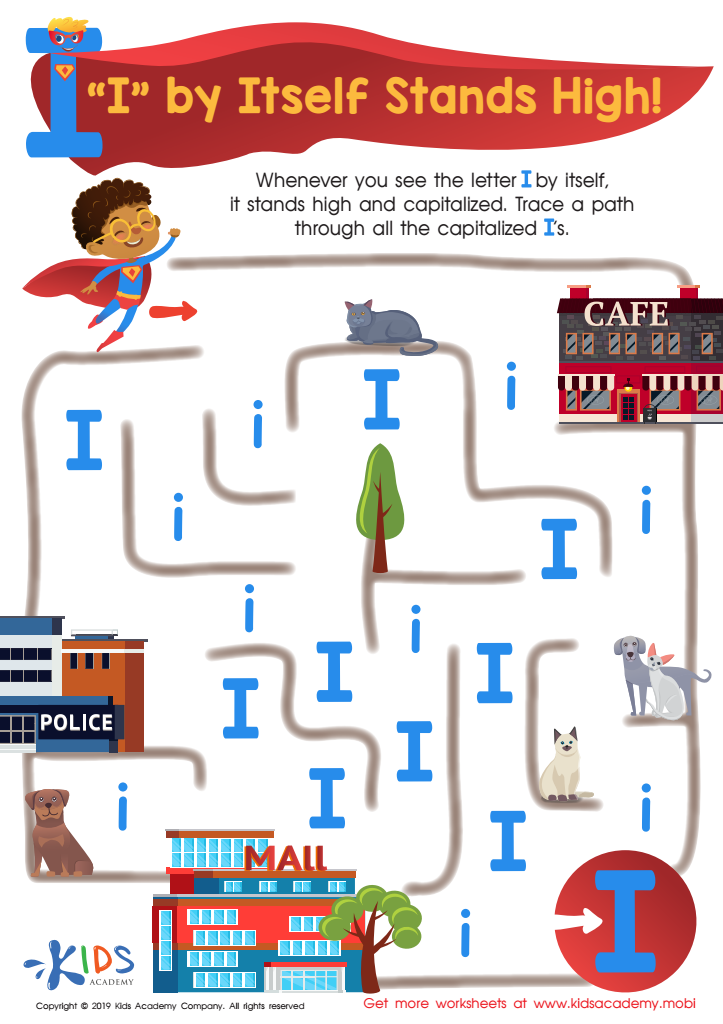
I Stands High Worksheet
Kids can use their imagination to help a superhero find the uppercase 'I's on the 'I By Itself Stands High' worksheet. This helps children learn capitalization, and they can join the superhero in flying over a city of cats, dogs and buildings to locate the needed letters.
I Stands High Worksheet
Worksheet
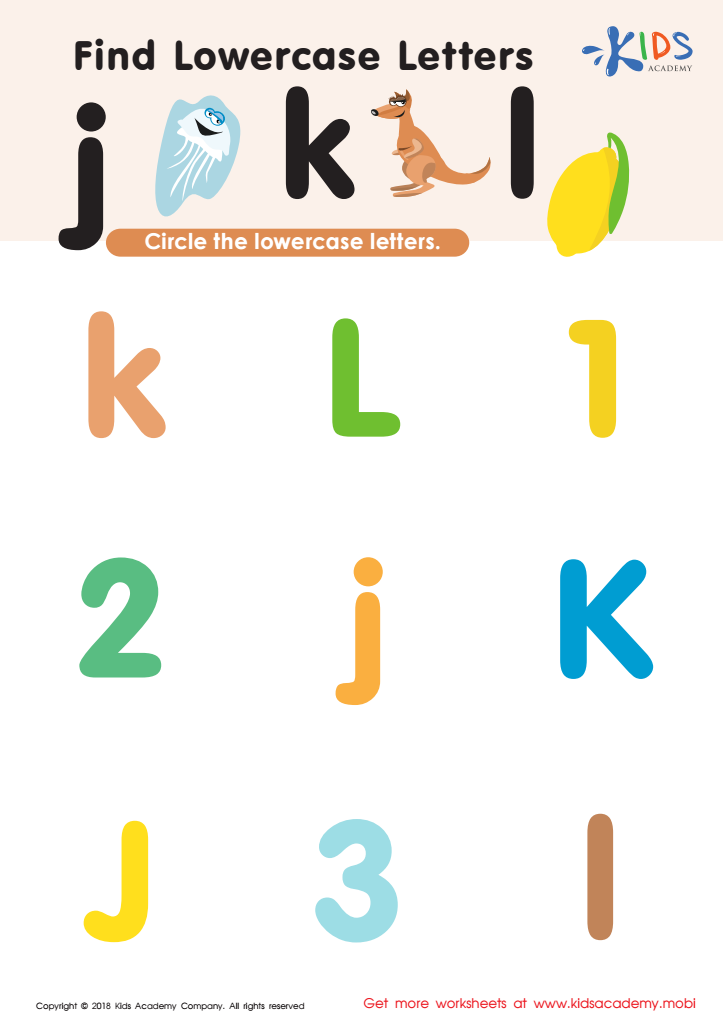
Find Lowercase Letters j k l Worksheet
Help your child's brain develop and have fun at the same time! Find and circle the lowercase letters jkl in the worksheet full of uppercase letters and numbers. Colorful drawings and bright colors make this an engaging learning activity.
Find Lowercase Letters j k l Worksheet
Worksheet
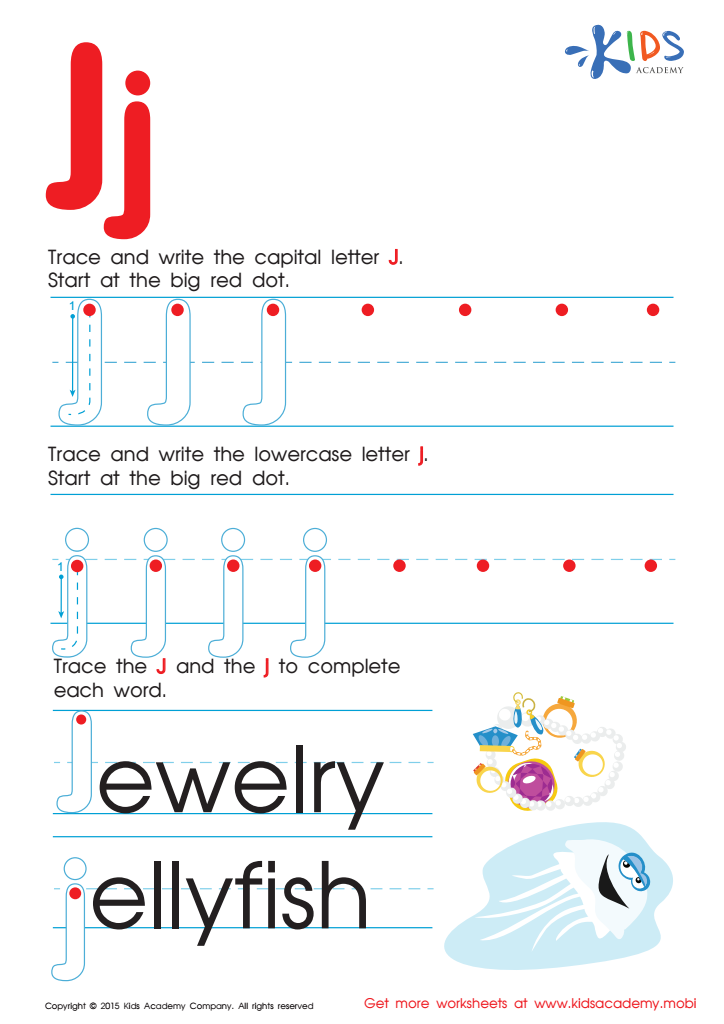
Letter J Tracing Page
Trace and write the letter "J" with our ABC worksheet - start at the big red dot! Have fun completing words like jewelry, jellyfish and more. Check out our kindergarten activities for more alphabet practice.
Letter J Tracing Page
Worksheet
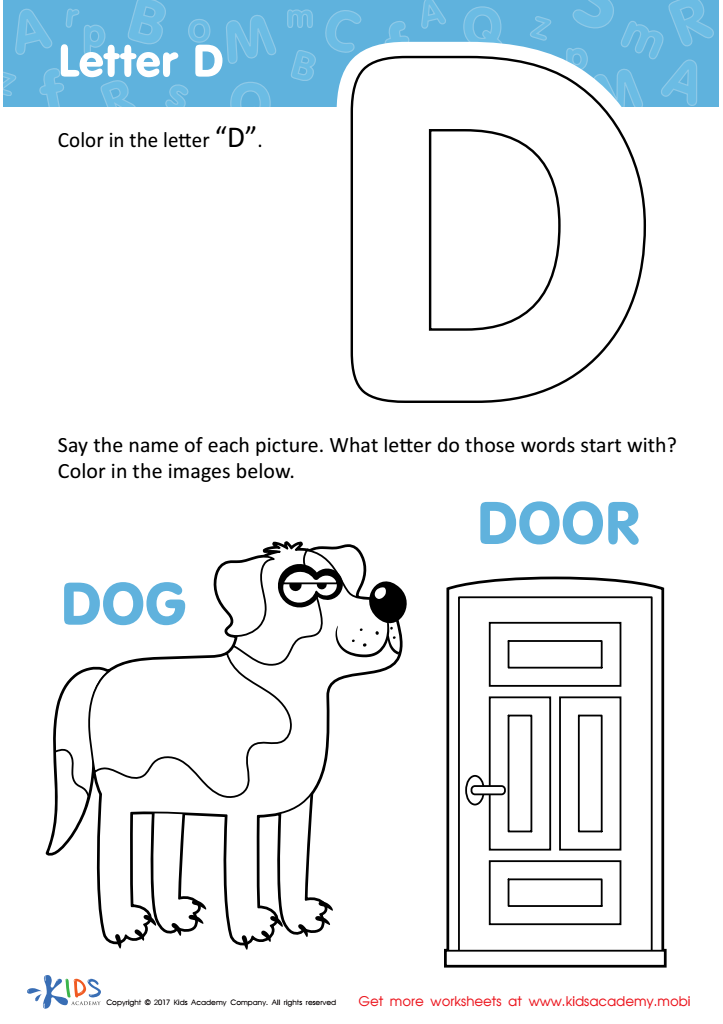
Letter D Coloring Sheet
Coloring with this letter "D" page is a great way to encourage your child's creativity while they learn the letter "D" and its sound. It's a fun activity to stimulate their imagination!
Download (PDF)
 Assign to My Students
Assign to My Students
Letter D Coloring Sheet
Worksheet
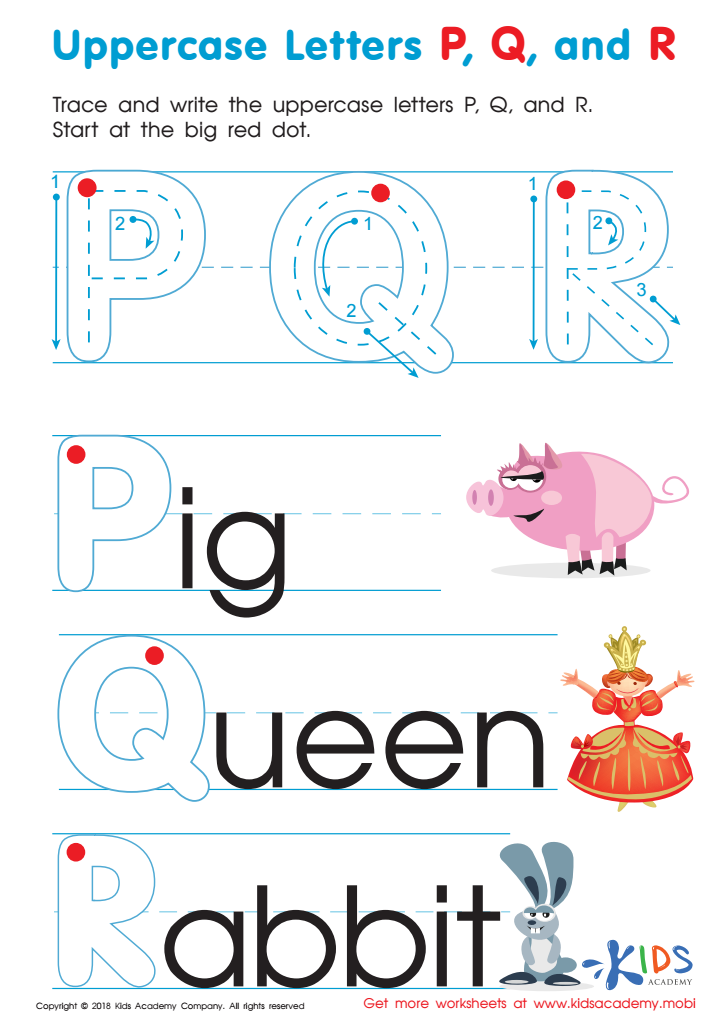
Uppercase Letters P, Q, and R Worksheet
Cute images of a pig, queen and rabbit make it fun to learn letter sounds. Follow the arrows to learn the strokes, then trace each letter from the big red dot. Perfect for kids to learn how to read and write P, Q, and R!
Uppercase Letters P, Q, and R Worksheet
Worksheet
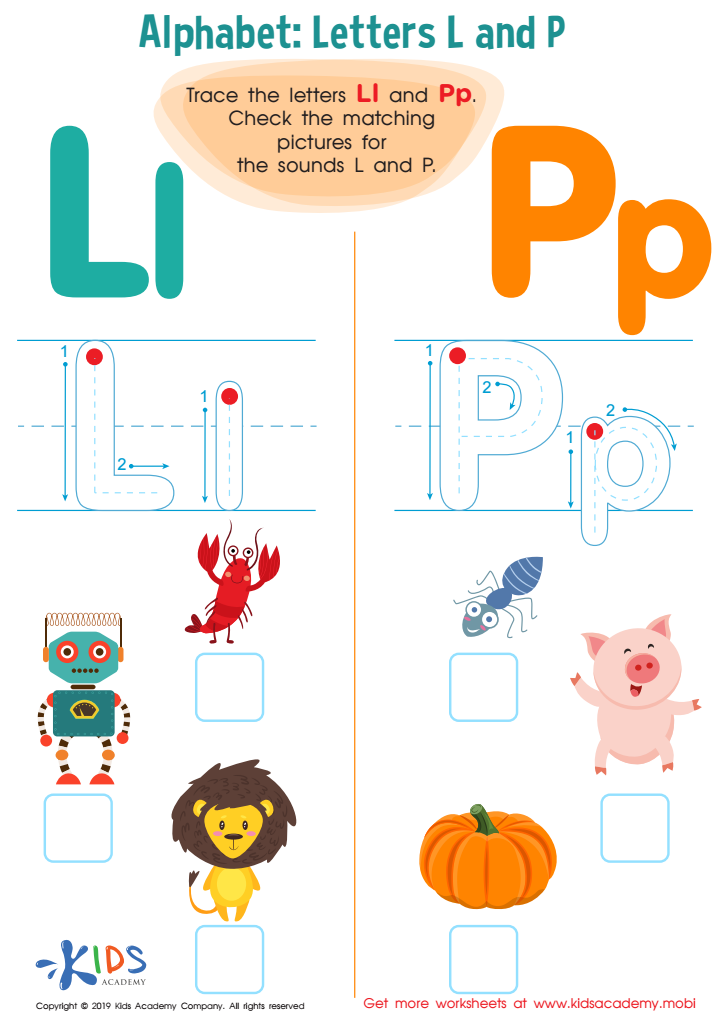
Letter L and P Tracing Worksheet
This traceable worksheet can motivate your students to learn and practice core skills. They'll trace the letters 'L' and 'P' and identify the pictures next to them. With this exercise, they'll unlock their learning abilities and excel in the subject!
Letter L and P Tracing Worksheet
Worksheet
Join Kids Academy for Free
Who is primarily going to use this learning content?








Fine motor skills are crucial for children aged 6-7, as they lay the foundation for essential tasks involved in everyday life and academic success. At this age, children are perfecting skills such as writing, cutting, drawing, and manipulating small objects. Mastery of fine motor skills facilitates not only handwriting but also improves overall cognitive development, promotes independence, and fosters self-esteem.
For parents and teachers, nurturing these skills is vital. Strong fine motor abilities enable children to engage more effectively in classroom activities, follow directions accurately, and complete tasks with confidence. Developing fine motor skills during this formative period also often correlates with enhanced academic performance, particularly in literacy and math.
Moreover, the progression of fine motor skills influences a child's ability to thrive socially. It helps them participate in group activities, and games, and perform in communal settings, establishing positive peer interactions.
Investing time in fine motor skills development through playful activities—like arts and crafts, puzzles, and writing exercises—will benefit their physical dexterity and ignite a passion for learning. These skills serve as not just a building block for academic achievement, but also for practical life skills that will benefit children throughout their lives. Thus, it is imperative for caregivers to prioritize fine motor skill development at this crucial stage.







