Rhyme recognition Alphabet Worksheets for Ages 6-7
3 filtered results
-
From - To
Enhance your child's literacy skills with our Rhyme Recognition Alphabet Worksheets for ages 6-7! Designed to make learning fun, these worksheets help young learners identify and understand rhyming words while reinforcing their knowledge of the alphabet. Through engaging activities and colorful illustrations, children will cultivate critical phonemic awareness crucial for reading success. Rhyme recognition aids in vocabulary development and strengthens spelling abilities, all while keeping kids entertained. Perfect for homeschoolers and classroom use, these worksheets provide a valuable resource for educators and parents aiming to support their child's educational journey. Start exploring the magic of rhymes and unlock the joys of reading today!
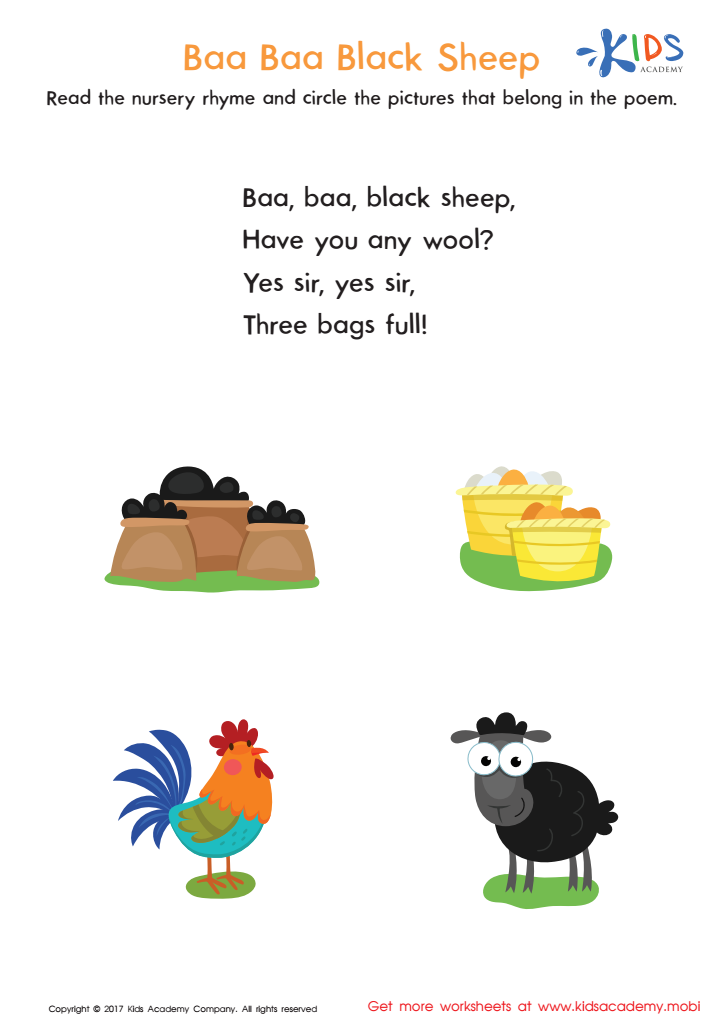
Baa Baa Black Sheep Printable
 Assign to My Students
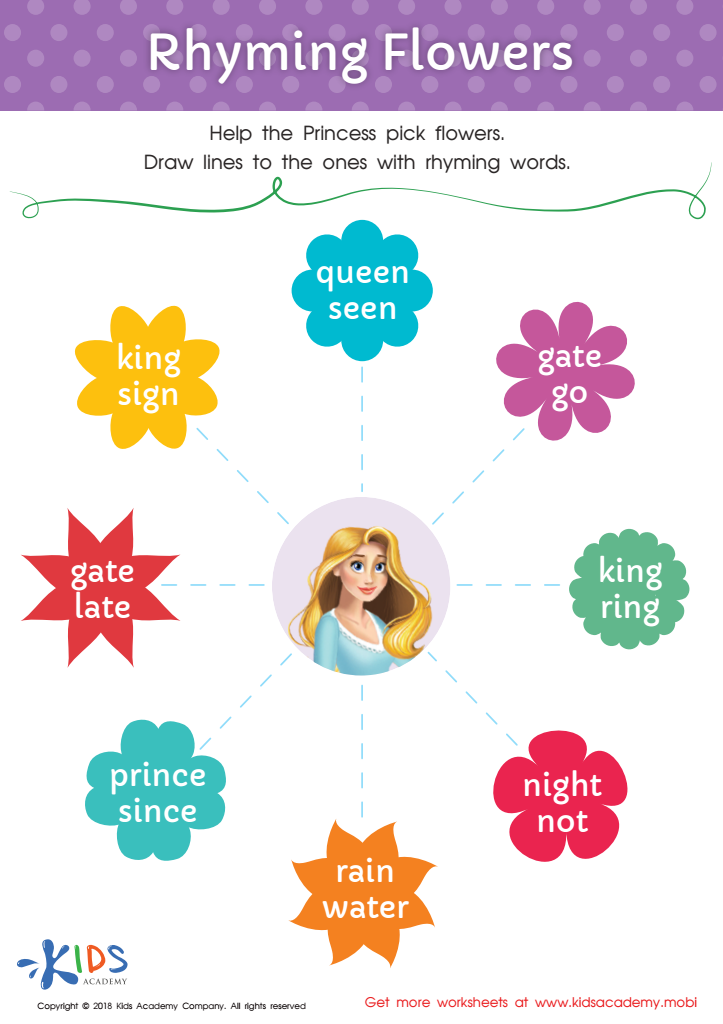
Rhyming Flowers Worksheet
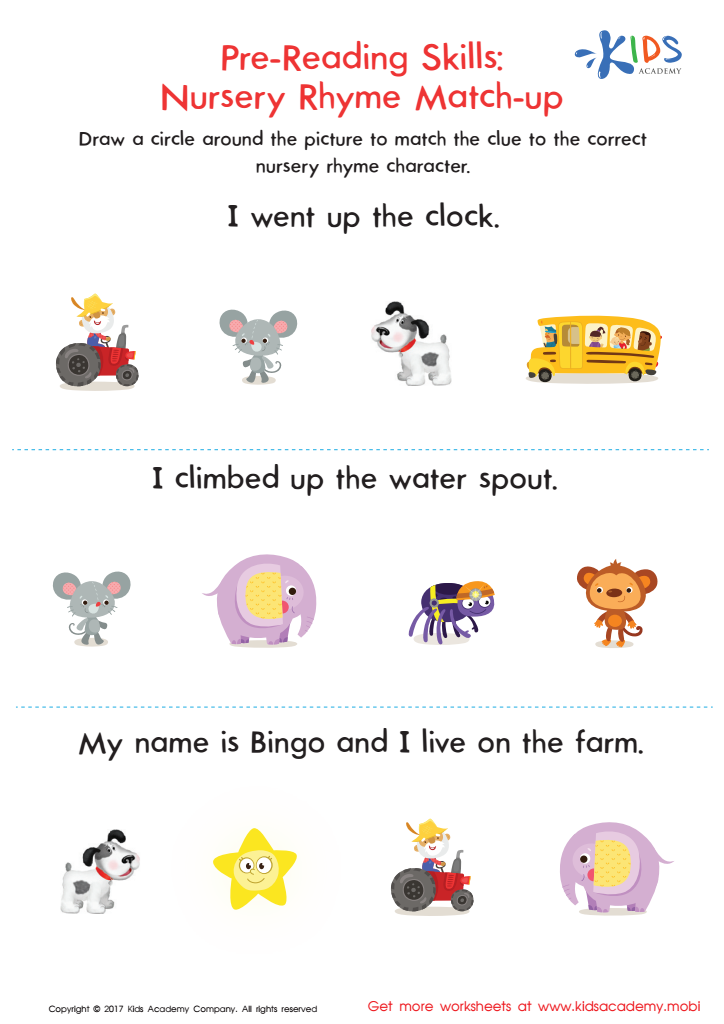
Nursery Rhyme Match–Up Worksheet







.jpg)
Rhyme recognition in early literacy, especially for children aged 6-7, is crucial for several reasons. First, it enhances phonemic awareness, which is essential for reading development. Understanding rhymes helps children recognize sounds in words, making it easier for them to decode unfamiliar words as they encounter them in their reading.
Moreover, rhyme recognition is foundational for developing vocabulary and comprehension skills. Children who engage with rhymes are often introduced to new words in a playful context, which helps broaden their language abilities. This playful interaction can enhance a child’s love for language, making reading a more enjoyable and engaging experience.
Furthermore, rhyming activities can strengthen memory retention skills. When children learn through rhythm and rhyme, they tend to remember words and spelling patterns more easily. This practice not only aids in shorter-term learning but also lays a groundwork for longer-term literacy success.
In summary, recognizing and enjoying rhyme holds significant educational value. It cultivates critical language and reading skills while promoting a love for literature, all contributing to a child’s overall success in literacy as they transition into more complex reading tasks. Therefore, incorporating rhyme recognition into daily activities should be a priority for parents and teachers alike.







