
Rhyming skills Alphabet Worksheets for Ages 6-7
3 filtered results
Difficulty Level
Grade
Age
-
From - To
Subject
Activity
Standards
Enhance your child's literacy journey with our "Rhyming Skills Alphabet Worksheets for Ages 6-7". These expertly designed worksheets focus on helping young learners recognize rhyming patterns within the alphabet. By engaging kids in fun, interactive activities, they’ll develop phonemic awareness and word-recognition skills critical for reading fluency. Each worksheet incorporates creative illustrations and exercises that make learning enjoyable and effective. Perfect for classroom use or at-home practice, these worksheets ensure that children build a strong foundational understanding of rhyming words, ultimately boosting their confidence and enjoyment of reading. Start your child on the path to literary success today!
Favorites
With answer key
Interactive
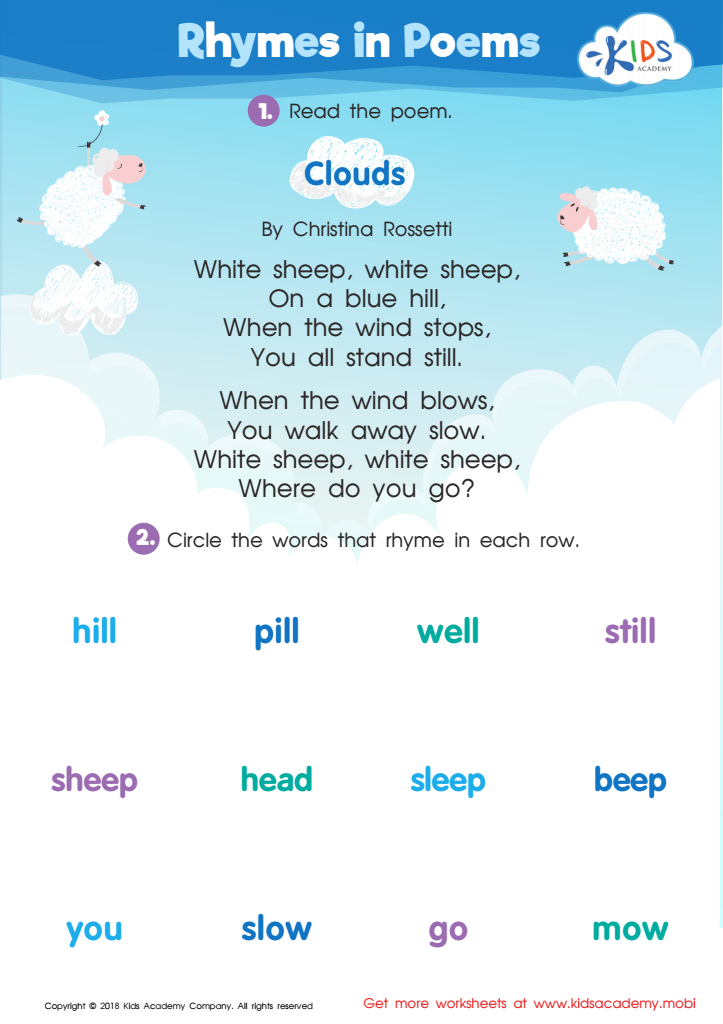
Rhymes in Poems Worksheet
Poems are lovely works of literature; some with rhymes, and some without. This poem for kids is full of rhymes and tells the tale of a sheep. Read it aloud to your kids, then help them circle the rhyming words.
 Assign to My Students
Rhymes in Poems Worksheet
Worksheet
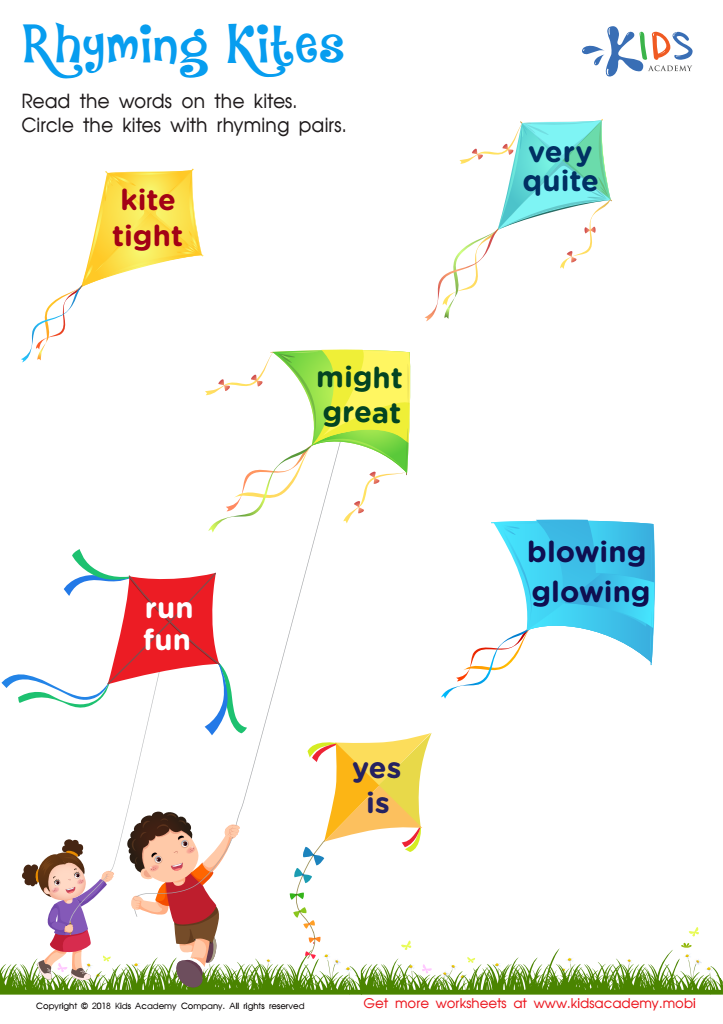
Rhyming Kites Worksheet
On a spring day, fly a kite! Kids Academy has a rhyming worksheet to boost your child's skills. Read the pairs of words aloud. Circle the kites if they rhyme, leave them blank if they don't. Listen carefully and find all the rhyming word pairs to complete this sheet!
Rhyming Kites Worksheet
Worksheet
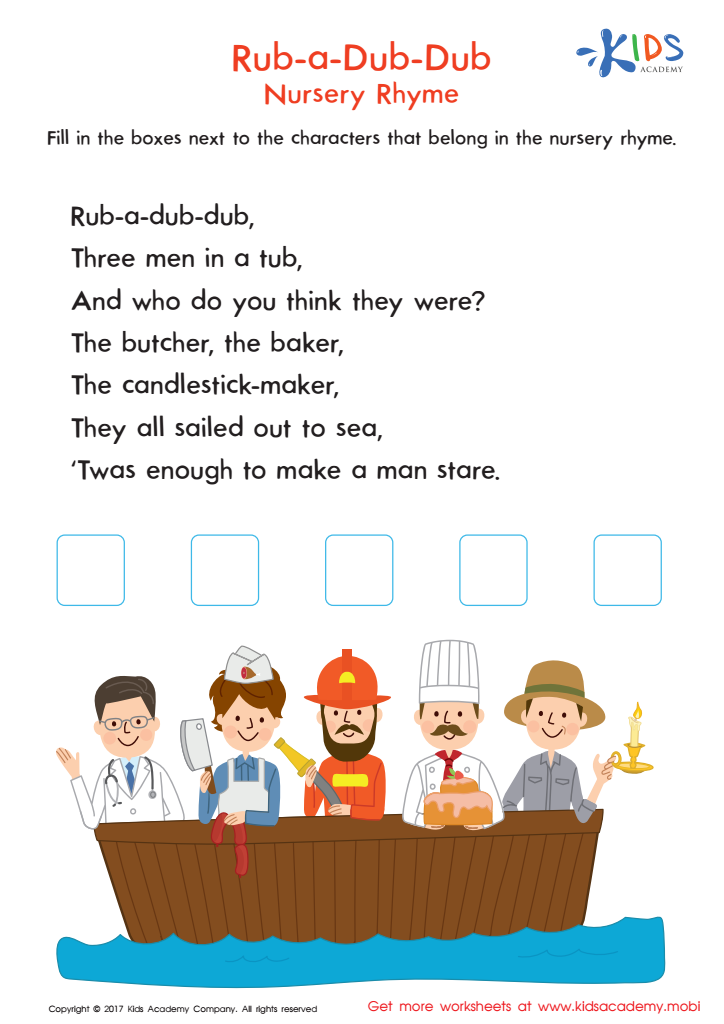
Rub a Dub Dub Printable
Delight your child and foster early reading skills with this printable nursery rhyme, Rub a Dub Dub! Let your little reader select the three men in the tub and practice important reading comprehension skills.
Rub a Dub Dub Printable
Worksheet
Join Kids Academy for Free
Who is primarily going to use this learning content?






Rhyming skills and familiarity with the alphabet form the cornerstone of early literacy, making them crucial for children ages 6-7. Parents and teachers should care about these foundational skills because they significantly influence reading and writing development. When children recognize rhyming patterns, they enhance their phonemic awareness, which is vital for decoding words. Rhyming allows children to understand sound structures and develop an ear for language, making it easier for them to predict how words form—a critical skill for fluent reading.
Mastery over the alphabet is equally important. Knowing letter names and sounds enables children to connect written symbols with spoken sounds. This understanding is the basis for word recognition, spelling, and reading. Additionally, familiarity with letters and their arrangements facilitates vocabulary expansion as children discern word patterns and create meaningful connections between words and their definitions.
Together, rhyming and alphabet knowledge bolster confidence and enthusiasm for reading. Engaging in activities that promote these skills, such as rhyming games and alphabet puzzles, can make learning enjoyable, helping children associate literacy with positive experiences. This early investment not only fosters academic success but also nurtures a lifelong love for reading and learning, positioning children for future educational and personal achievements.







