Visual discrimination skills Alphabet Worksheets for Ages 6-7
5 filtered results
-
From - To
Enhance your child's visual discrimination skills with our engaging Alphabet Worksheets designed for ages 6-7! These printable resources promote careful observation and sharp recognition of letters and their unique features. Children will enjoy identifying, comparing, and sorting letters through a variety of fun activities and exercises, laying a solid foundation for reading and writing proficiency. Each worksheet encourages young learners to develop critical thinking and attention to detail while making learning enjoyable. Perfect for home or classroom use, our Alphabet Worksheets are a fantastic tool to support early literacy and enhance visual skills in an interactive and playful way. Start boosting your child's learning journey today!
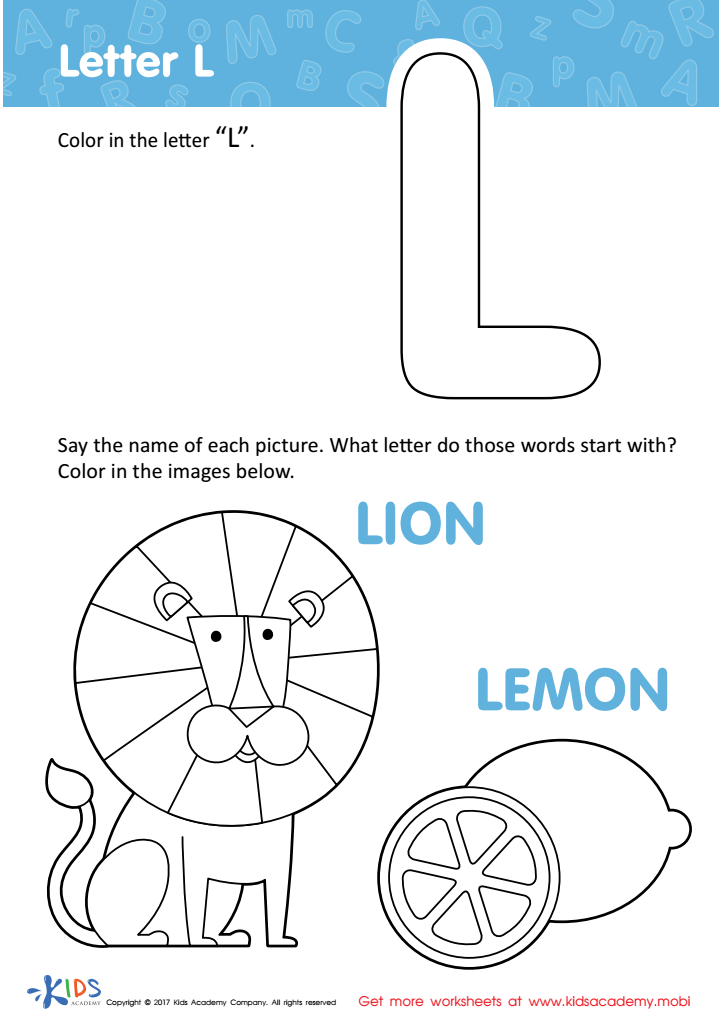
Letter L Coloring Sheet
 Assign to My Students
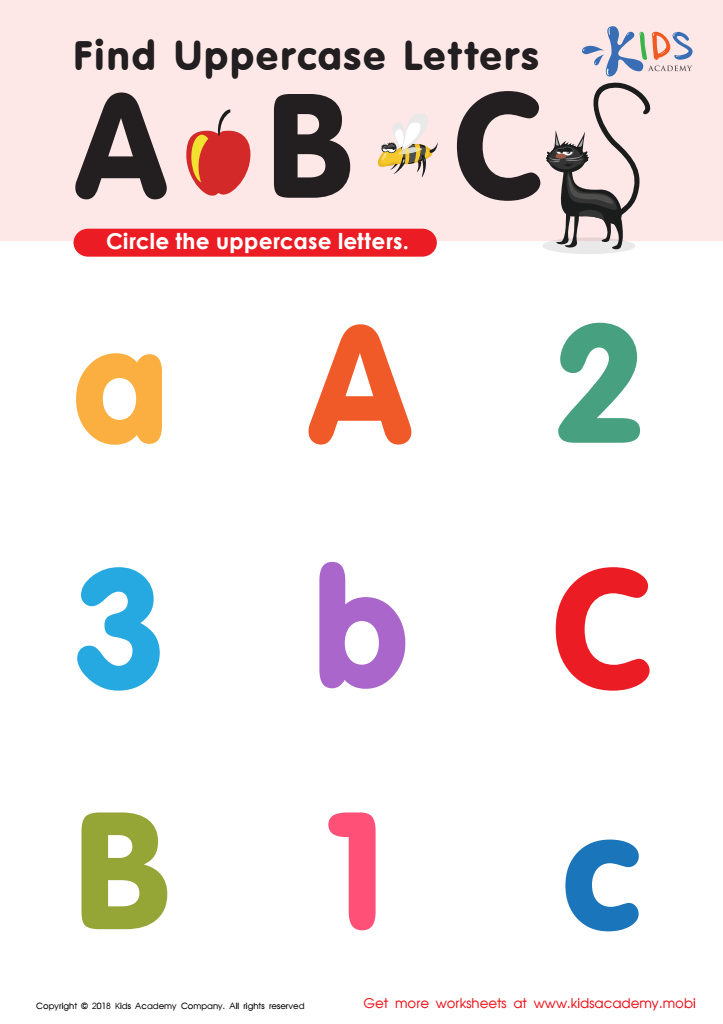
Find Uppercase Letters A, B, and C Worksheet
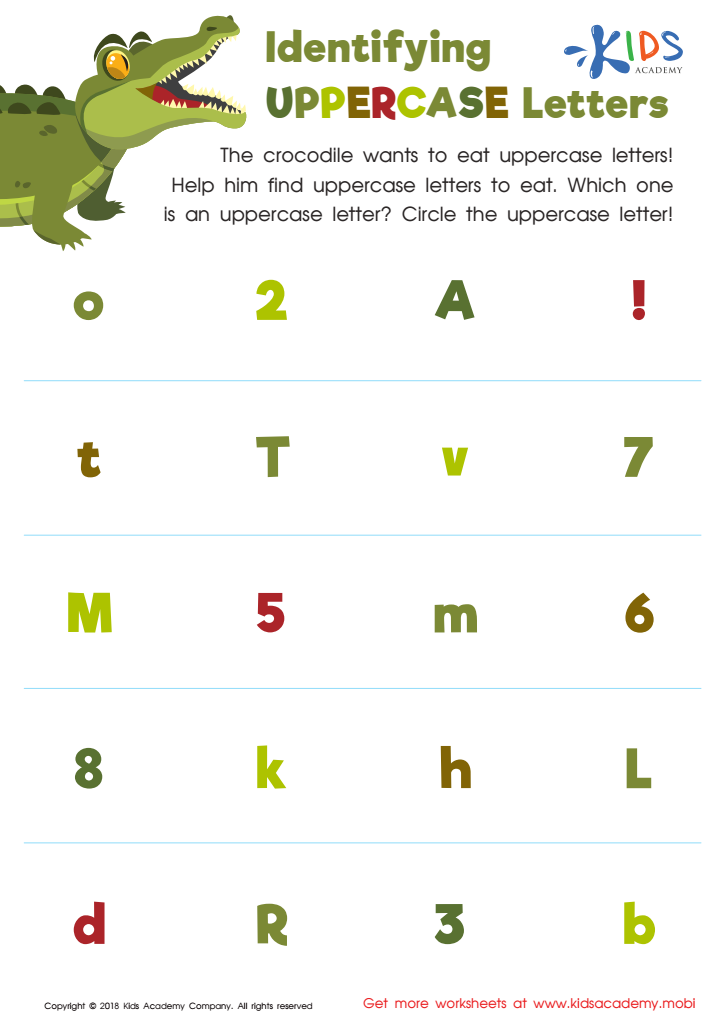
Identifying Uppercase Letters Worksheet
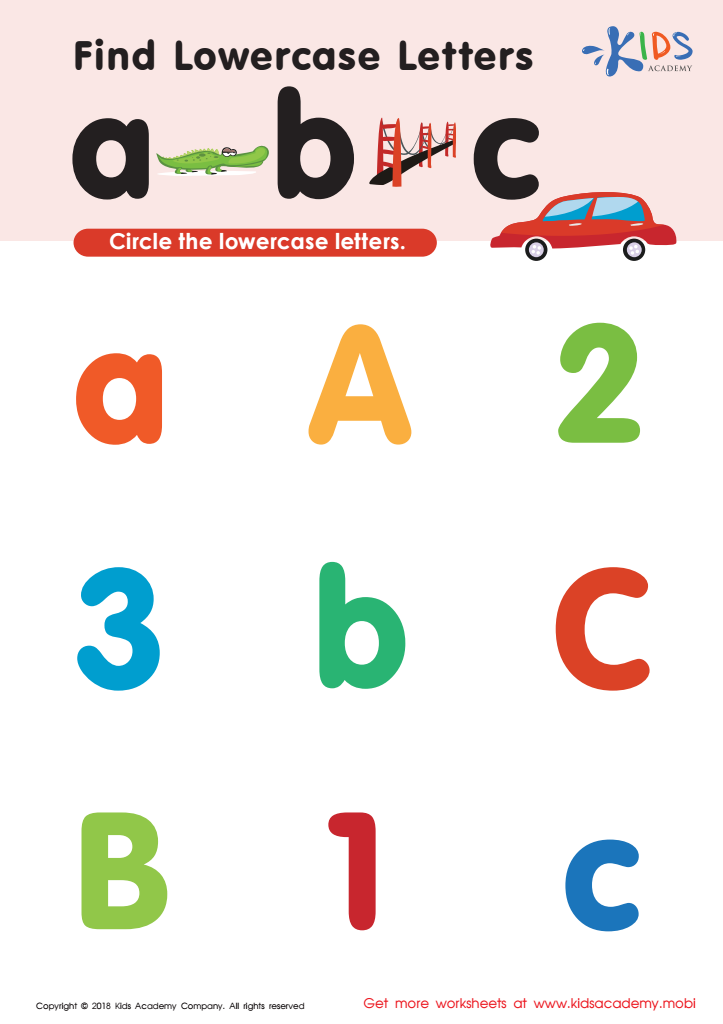
Find lowercase letters a b c Worksheet
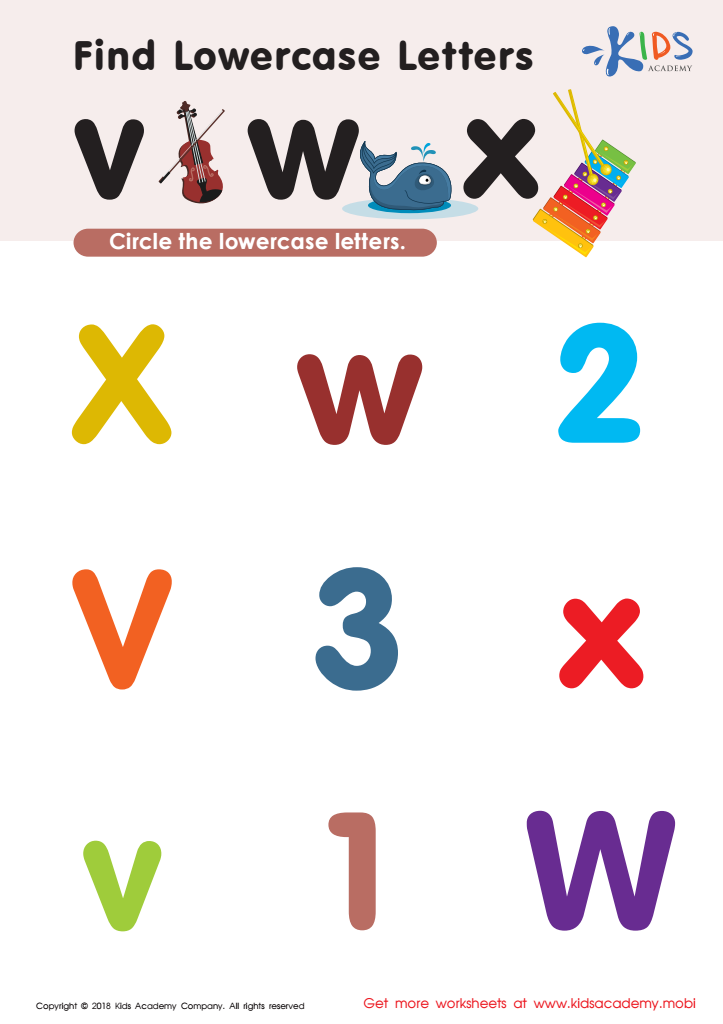
Find Lowercase Letters v w x Worksheet








Visual discrimination skills are crucial for children aged 6-7, particularly when it comes to recognizing letters and understanding the alphabet. During this developmental stage, children are honing their reading and writing abilities, which serve as foundational skills for their academic and personal growth.
Parents and teachers should care about strengthening these skills because they help children distinguish between similar-looking letters, such as "b" and "d," or "p" and "q." Developing visual discrimination aids in preventing confusion as children begin to decode words, ensuring they recognize and produce letters accurately.
Moreover, strong visual discrimination skills contribute to increased confidence in reading and writing. When children feel assured in these foundational skills, they are more likely to engage in literacy activities, fostering a lifelong love for learning. This, in turn, can enhance overall academic performance, as strong reading and writing abilities are linked to success in other subjects.
Ultimately, emphasizing visual discrimination skills in the early grades creates a smoother transition into more complex literacy tasks, helping children articulate their thoughts and comprehend written materials with greater efficiency. For parents and educators, supporting these skills is an investment in a child’s future academic journey.







