Letter recognition Letter G Worksheets for Ages 6-7
3 filtered results
-
From - To
Discover our engaging Letter G recognition worksheets designed for children ages 6-7! Perfect for early learners, these fun activities help reinforce essential literacy skills while keeping kids entertained. Our thoughtfully crafted worksheets include a variety of exercises that encourage recognition of both uppercase and lowercase 'G,' enhancing visual discrimination. Activities like tracing, coloring, and matching cultivate fine motor skills and reinforce learning concepts. With vibrant illustrations and interactive tasks, your child will enjoy mastering the letter G in no time! Explore our comprehensive resources to support your child's journey in developing a solid foundation in reading and writing with confidence.
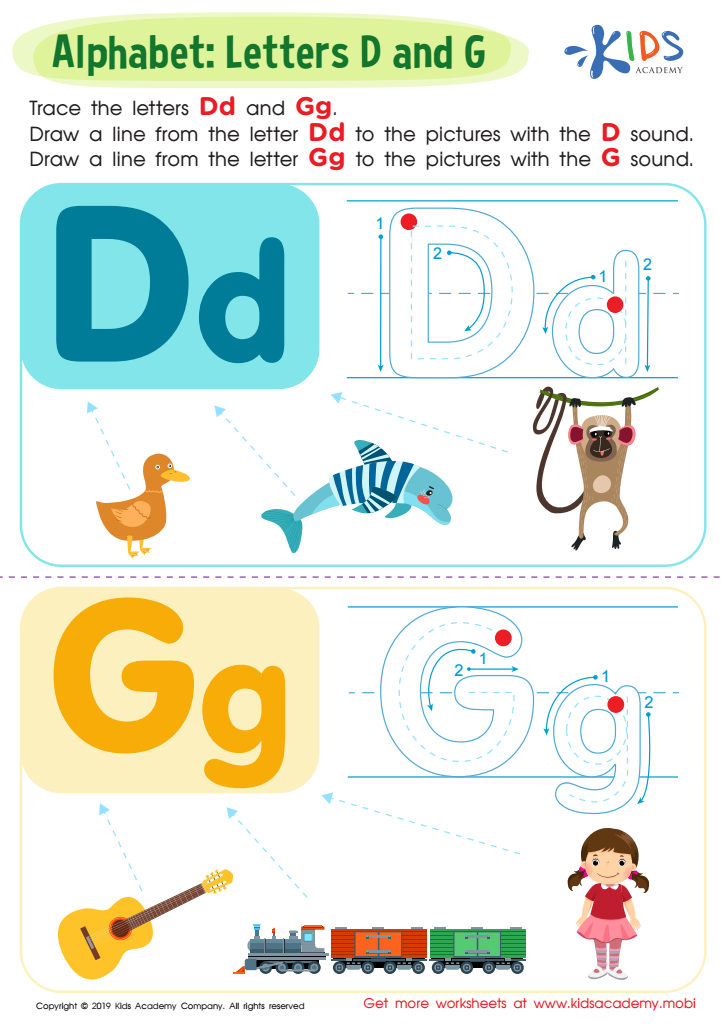
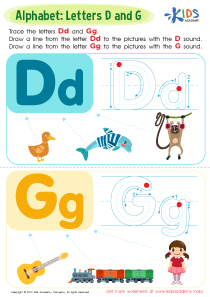
Letter D and G Tracing Worksheet

Letter G Tracing Page
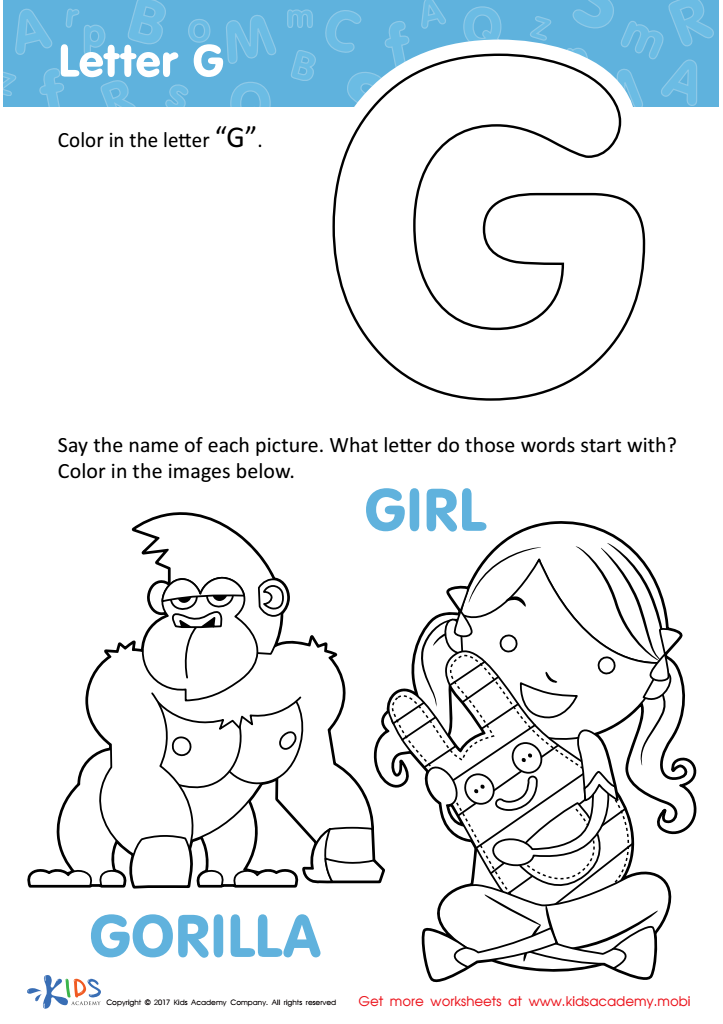
Letter G Coloring Sheet
 Assign to My Students






Letter recognition, specifically the letter G, is crucial for children ages 6-7 as they hone their reading and writing skills. Mastery of the alphabet provides a foundation for literacy development. Understanding that G is both a letter and a sound aids in phonemic awareness, enabling children to decode words effectively. For example, recognizing that G can produce both hard sounds, like in "goat," and soft sounds, like in "gem," aids in pronunciation and spelling.
Furthermore, familiarity with the letter G enhances vocabulary. Words like "grape," "girl," and "green" can be introduced in fun and engaging ways, allowing children to connect sounds to their everyday experiences. This connection enhances comprehension and encourages a love for reading.
Support from parents and teachers fosters an environment of learning. Interactive activities—like games, storytelling, or crafting—centre on the letter G can make the learning process more enjoyable and impactful. Encouraging creativity through drawing or coloring activities related to G can also reinforce recognition.
By nurturing letter recognition skills, caregivers position children for future academic success, instilling confidence in their reading abilities and fostering a positive relationship with learning. In this way, the letter G becomes a stepping stone towards greater literacy skills essential for lifelong learning.