Letter-sound association Letter Recognition Worksheets for Ages 6-7
9 filtered results
-
From - To
Our "Letter-Sound Association and Letter Recognition Worksheets" are expertly designed for children ages 6-7, providing ideal resources to strengthen their early reading skills. These engaging worksheets promote understanding of letter-sound relationships, enhancing letter recognition abilities. Each activity offers fun, interactive exercises, combining visual and auditory learning to build a strong literacy foundation. From identifying letters to matching them with corresponding sounds, these worksheets support young learners in achieving reading fluency. Perfect for classroom or home use, our worksheets align with educational standards, making learning both effective and enjoyable for your child. Explore endless educational fun today!
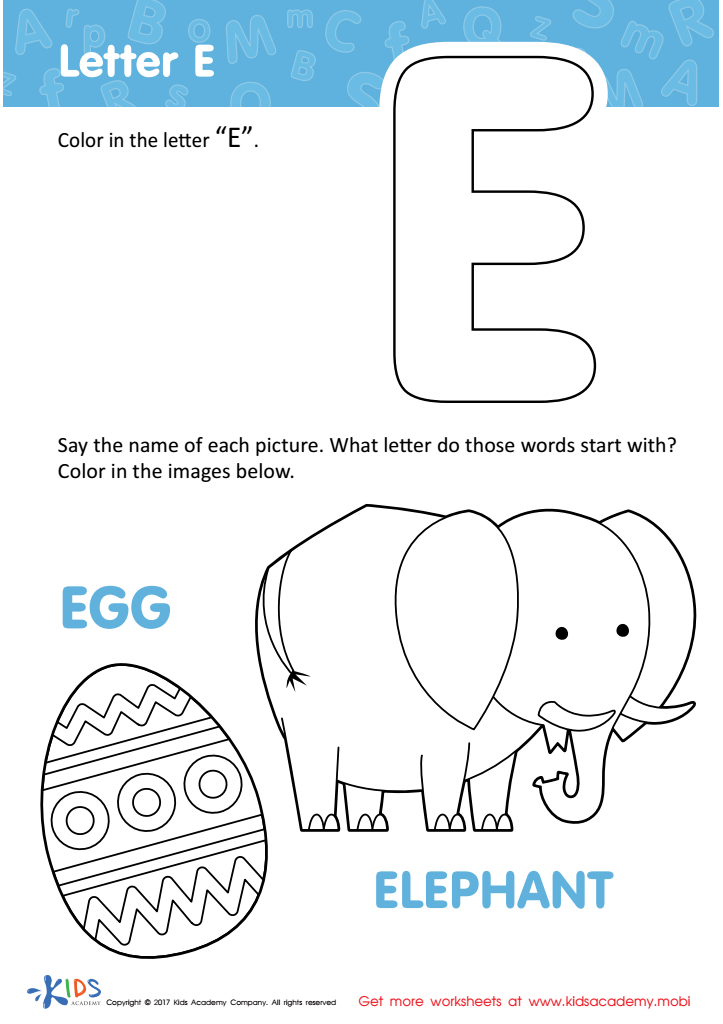
Letter E Coloring Sheet
 Assign to My Students
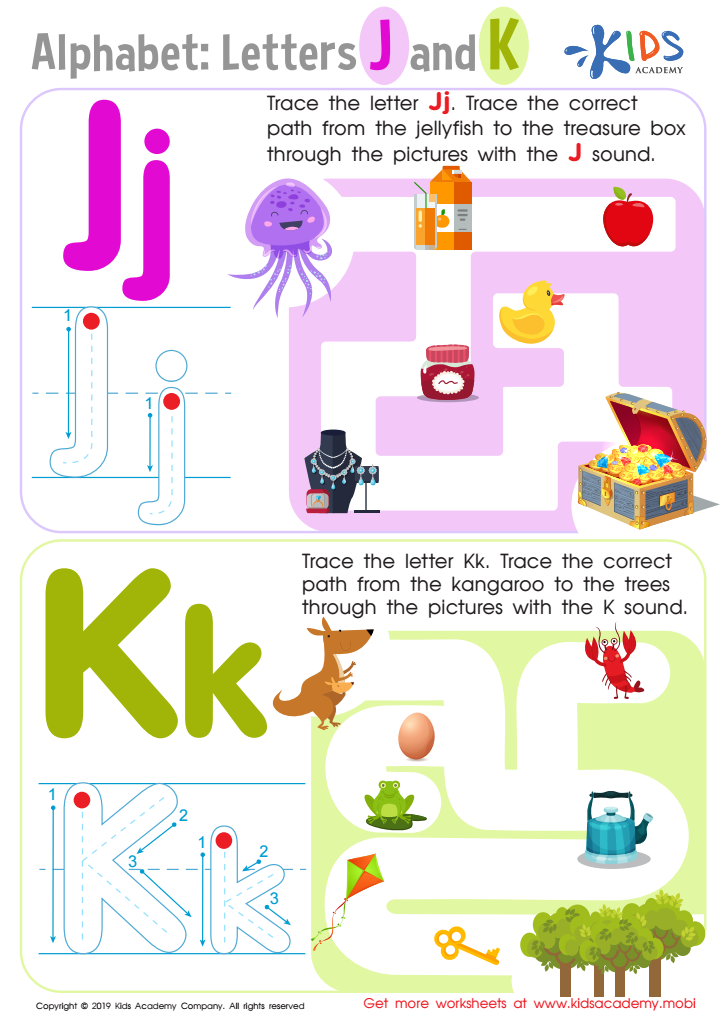
Letters J and K Tracing Worksheet
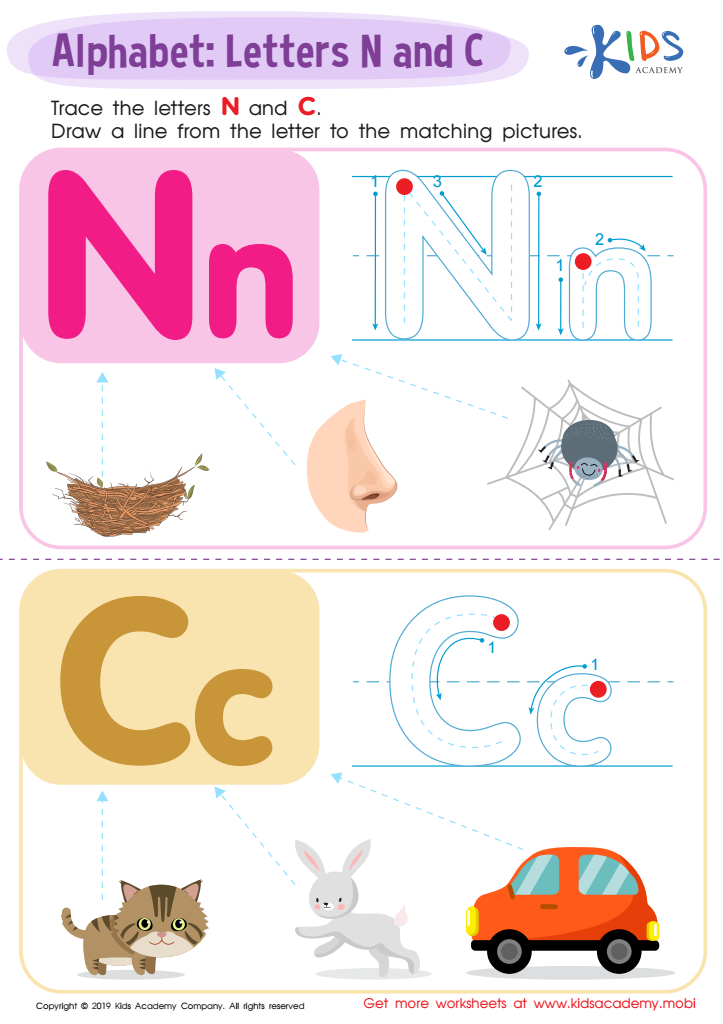
Letter N and C Tracing Worksheet
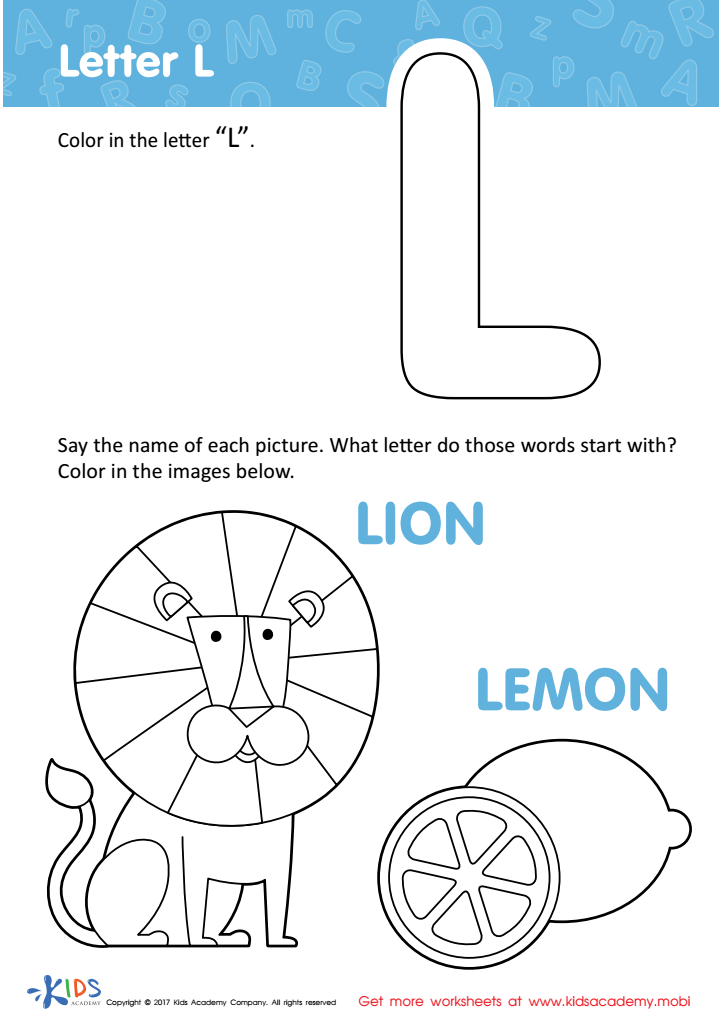
Letter L Coloring Sheet
Assign to My Students
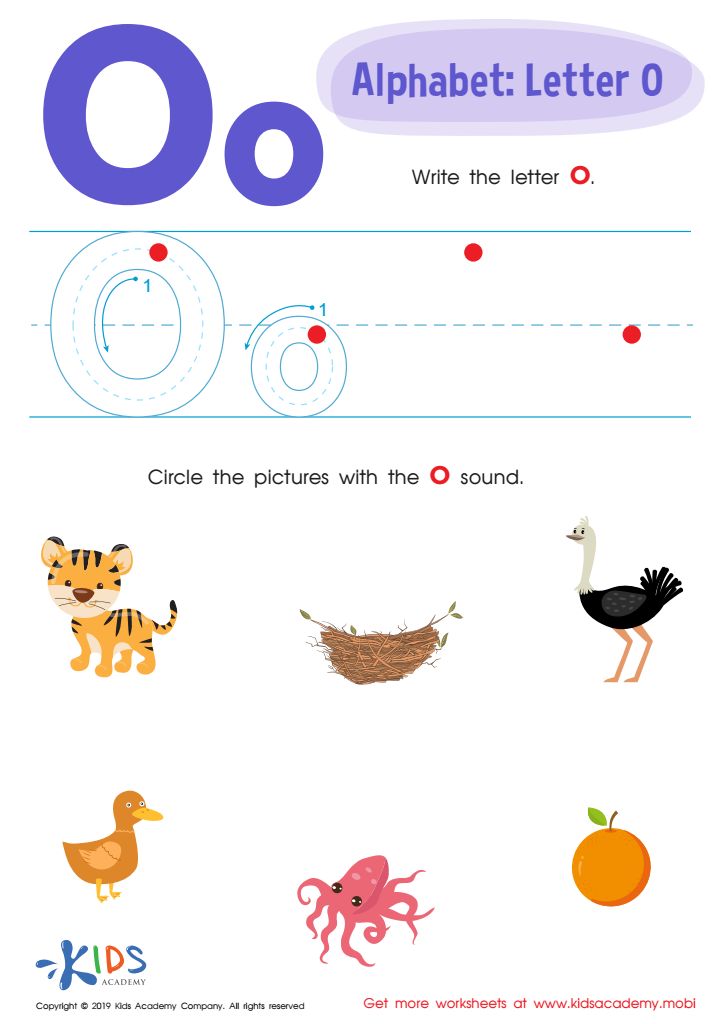
Letter O Tracing Worksheet
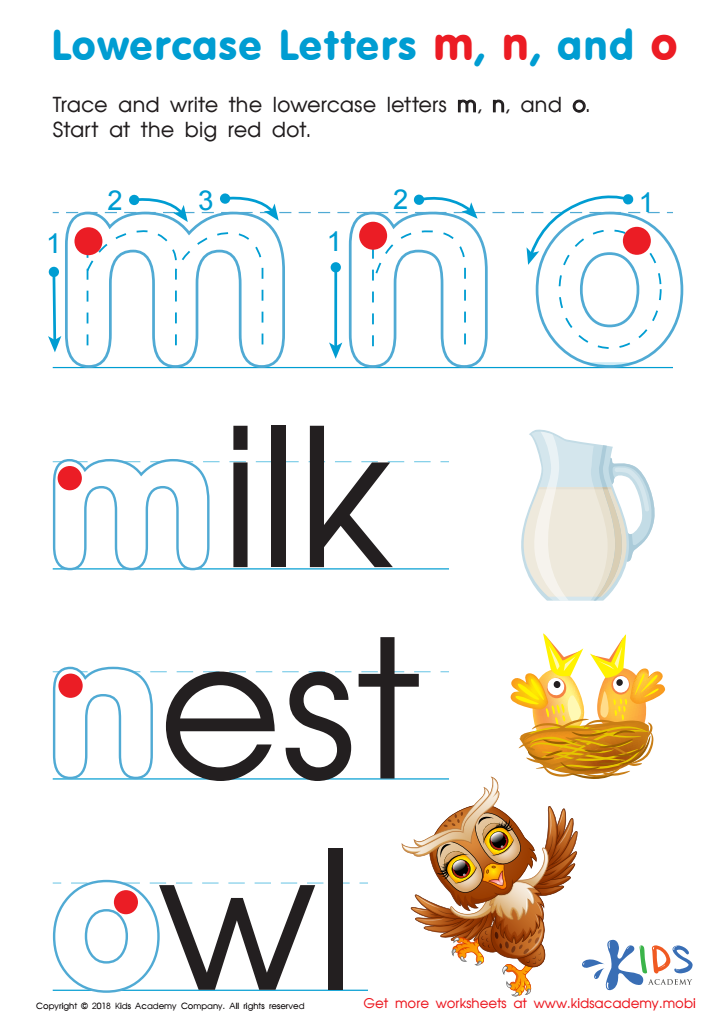
Lowercase Letters m n o Worksheet
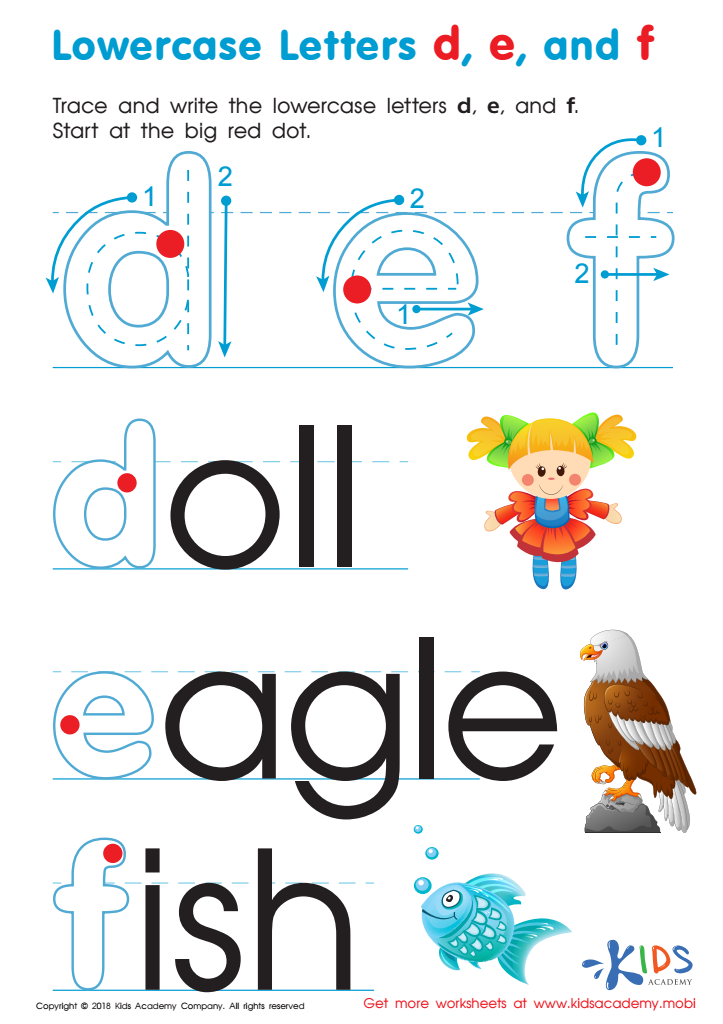
Lowercase Letters d e f Worksheet
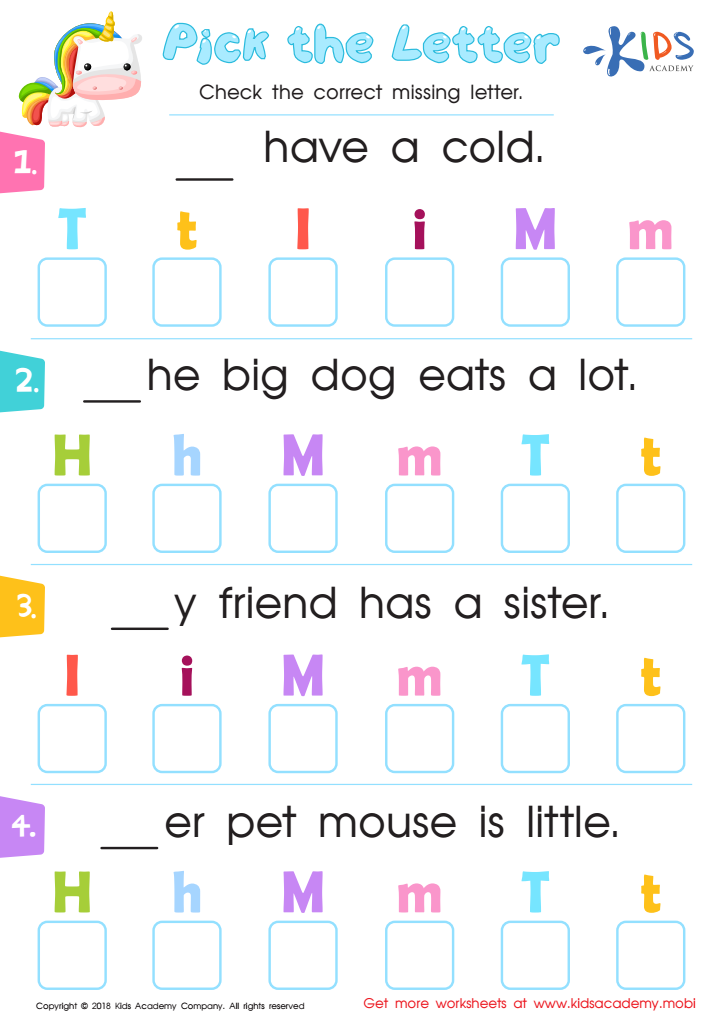
Pick the Letter Worksheet
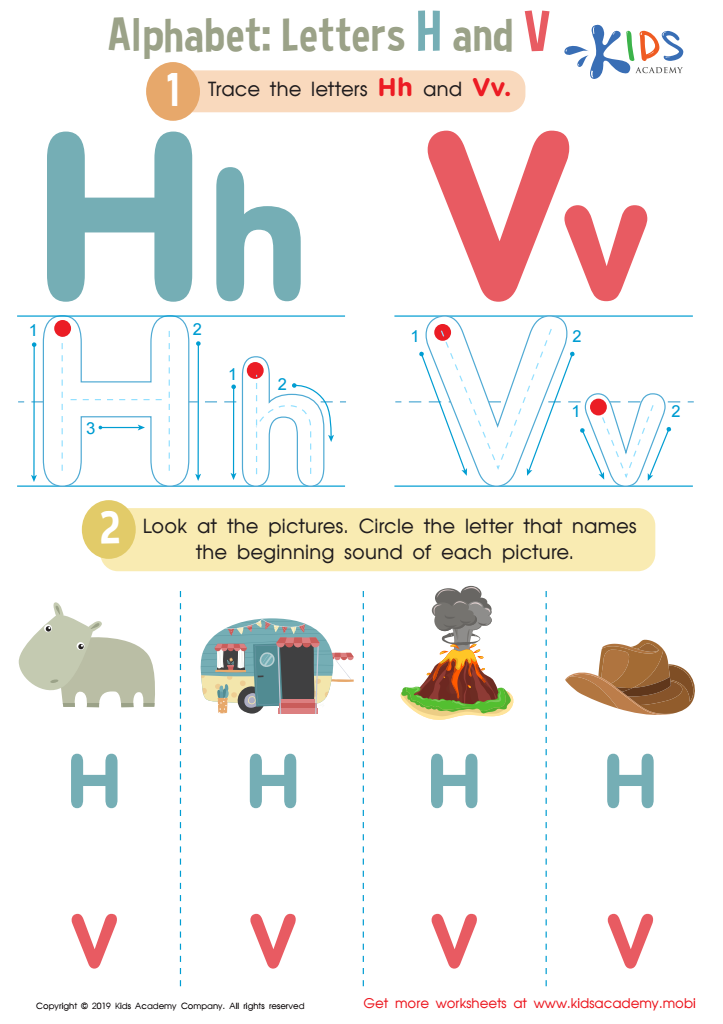
Letters H and V Tracing Worksheet








Parents and teachers should prioritize letter-sound association and letter recognition for children aged 6-7 because these skills form the foundation of effective reading and writing. At this age, children are typically in the early stages of formal education where acquiring literacy skills is crucial for their academic development.
Letter-sound association refers to the ability to connect written letters with their corresponding sounds. This skill is essential for phonemic awareness, which is a key predictor of reading success. When children understand that letters represent sounds, they can begin to decode words, allowing them to read more fluently and with greater comprehension.
Letter recognition is the ability to identify letters by name, understand their shape, and know their order in the alphabet. This skill is fundamental for both reading and writing. When children can swiftly recognize letters, they can more easily grasp sight words, follow text, and even experiment with writing their own words and sentences.
Early mastery of these skills sets the stage for greater academic achievement. Children with a strong grasp of letter-sound associations and letter recognition tend to have a more extensive vocabulary, better comprehension skills, and a positive attitude toward reading. Hence, focusing on these skills prepares young learners for a successful educational journey and fosters a lifelong love for reading.







