
Letter Tracing Letter Recognition Worksheets for Ages 6-7
6 filtered results
Difficulty Level
Grade
Age
-
From - To
Subject
Activity
Standards
Discover our engaging Letter Tracing and Letter Recognition worksheets designed specifically for children aged 6-7. These fun, interactive resources foster essential literacy skills by allowing young learners to practice letter formation while reinforcing their alphabet knowledge. Each worksheet encourages creativity and focus, helping students develop fine motor skills and boost confidence in writing. With colorful illustrations and enticing activities, these worksheets make learning enjoyable and effective. Perfect for both classroom and home use, our letter tracing activities pave the way for a strong foundation in reading and writing. Download and start your child's educational journey today!
Favorites
With answer key
Interactive
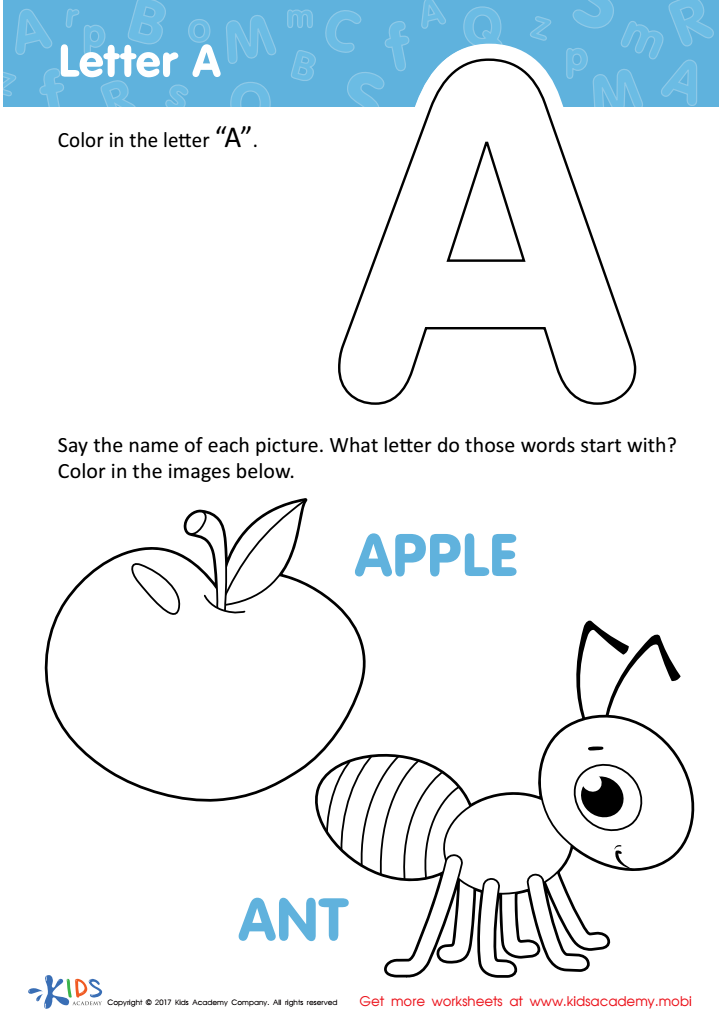
Letter A Coloring Sheet
This letter "A" coloring page is great for introducing kids to the alphabet! Let them exercise their creativity while they learn to recognize letters and sounds - it's a fun and easy way to help them get started.
Download (PDF)
 Assign to My Students
Assign to My Students
Letter A Coloring Sheet
Worksheet
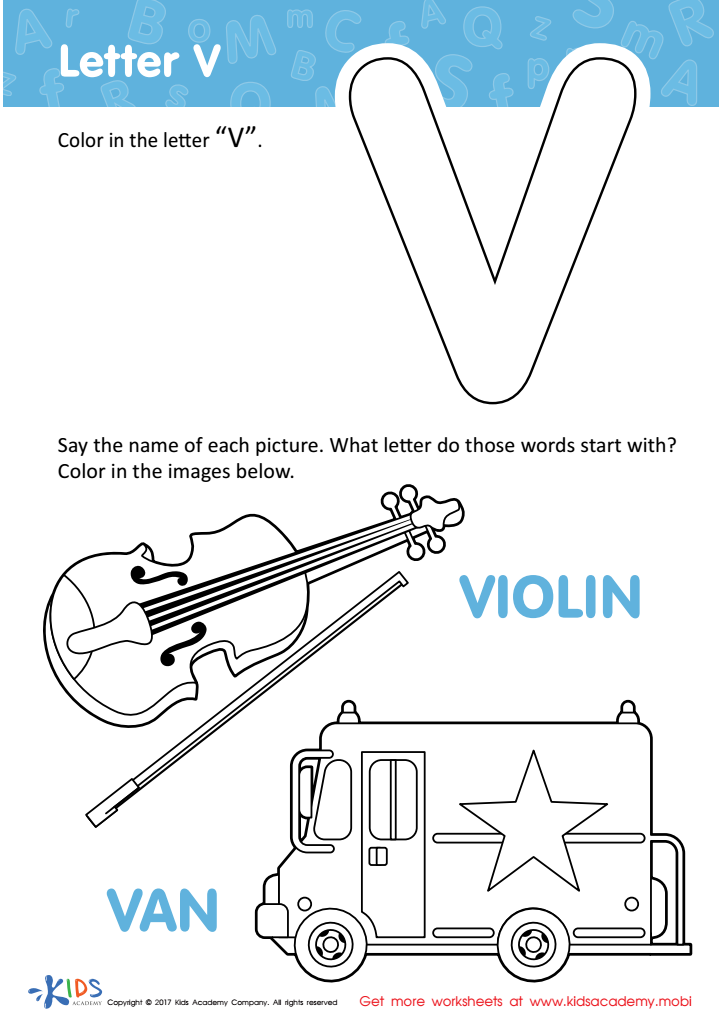
Letter V Coloring Sheet
This fun letter V coloring page can boost your child's knowledge of the letter "V" and its sound. Help them pronounce it correctly, too!
Download (PDF)
Assign to My Students
Assign to My Students
Letter V Coloring Sheet
Worksheet
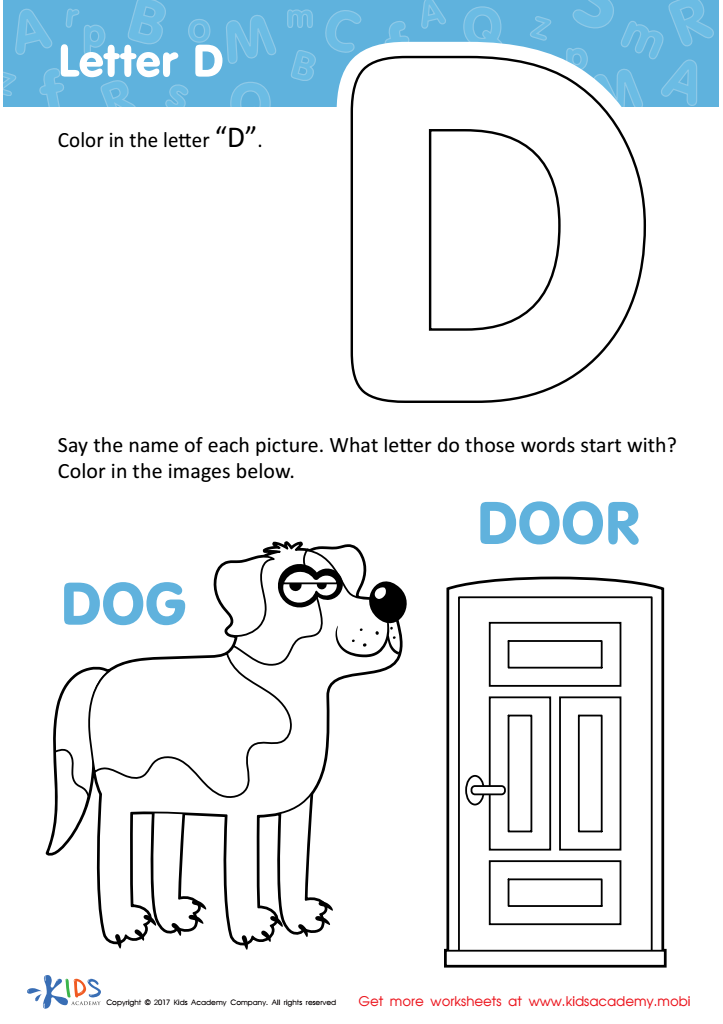
Letter D Coloring Sheet
Coloring with this letter "D" page is a great way to encourage your child's creativity while they learn the letter "D" and its sound. It's a fun activity to stimulate their imagination!
Download (PDF)
Assign to My Students
Assign to My Students
Letter D Coloring Sheet
Worksheet
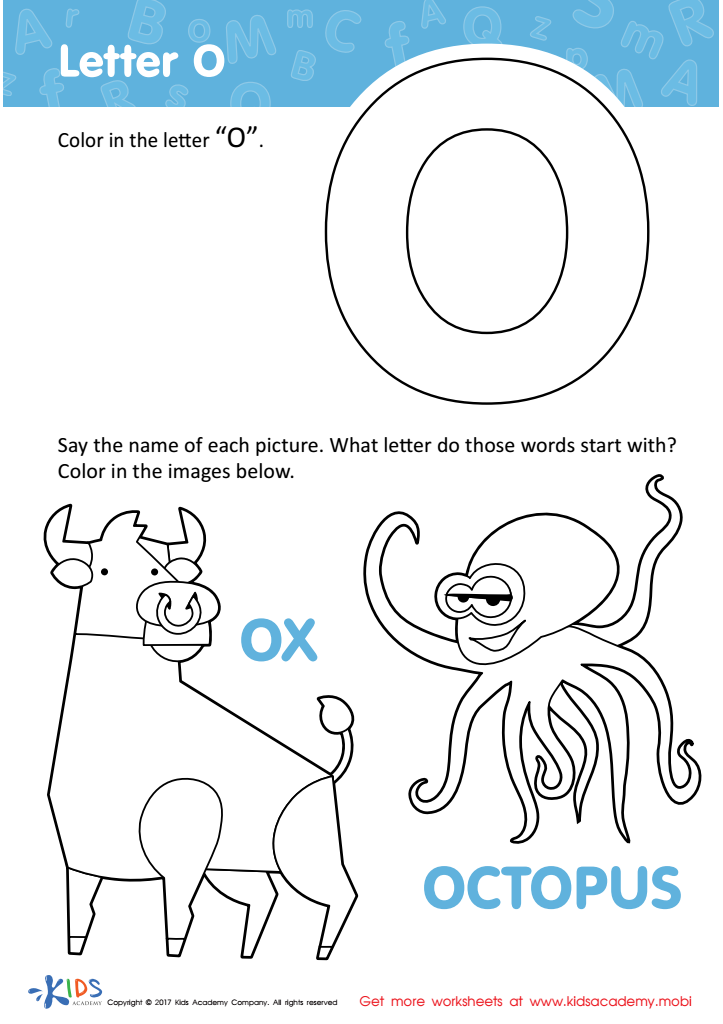
Letter O Coloring Sheet
Oh my! The letter "O" is so much fun. Coloring in the octopus and ox on this delightful letter "O" coloring page can help your child have fun while strengthening their recognition of the letter and sound.
Download (PDF)
Assign to My Students
Assign to My Students
Letter O Coloring Sheet
Worksheet
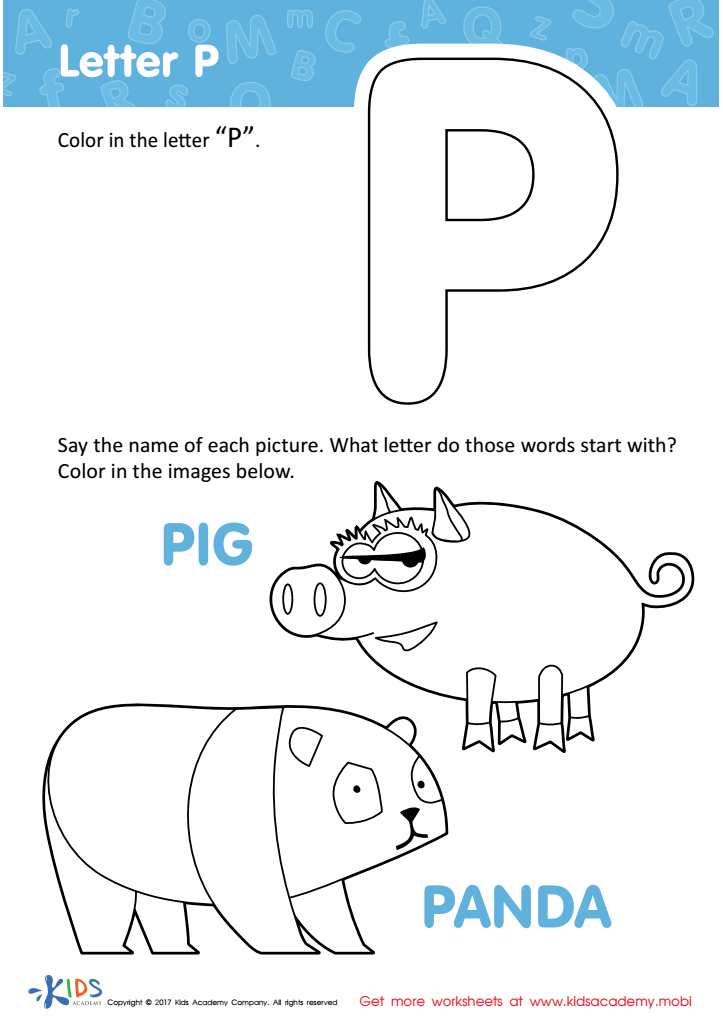
Letter P Coloring Sheet
Encourage your child's creativity and letter recognition with this "P" coloring page! Through coloring animals such as pigs and pandas, your little one will get to know the sound of the letter "P" and have fun too!
Download (PDF)
Assign to My Students
Assign to My Students
Letter P Coloring Sheet
Worksheet
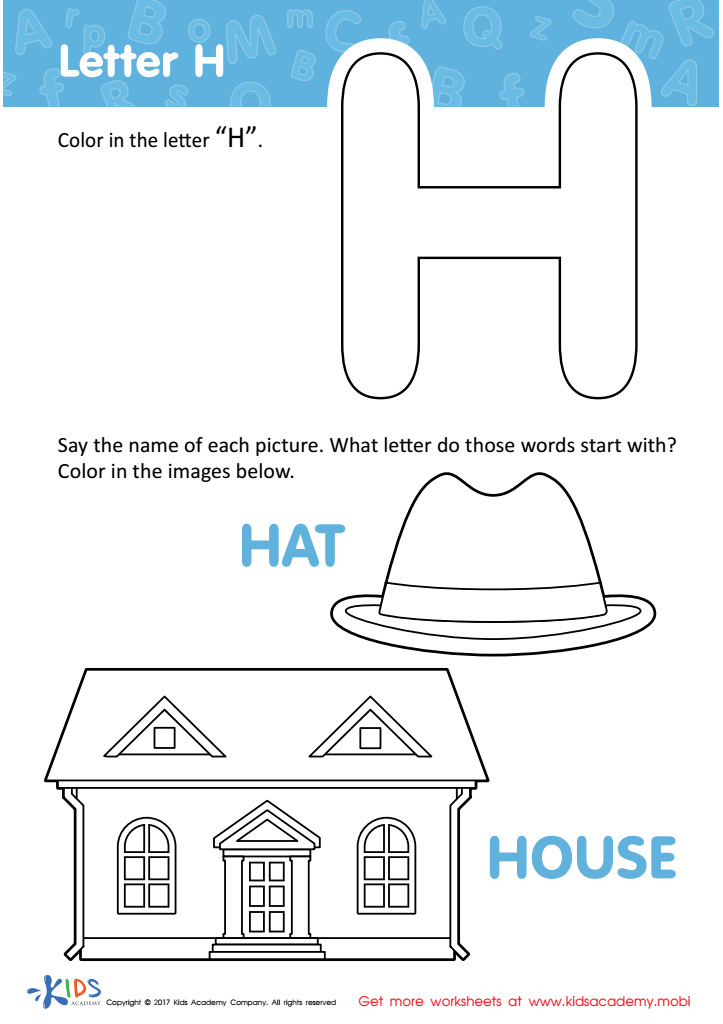
Letter H Coloring Sheet
This fun "H" coloring page will help your child recognize the letter and sound of "H"! With a hat and house to color, your little learner will have a blast picking colors and creating designs, all while learning about the letter "H"!
Download (PDF)
Assign to My Students
Assign to My Students
Letter H Coloring Sheet
Worksheet
Join Kids Academy for Free
Who is primarily going to use this learning content?








Letter tracing and letter recognition are crucial skills for children aged 6-7, as they serve as foundational elements for reading and writing development. At this age, children begin to transition from recognizing letters to understanding their sounds and uses in words, sets the stage for early literacy.
Parents and teachers should care about these skills for several reasons. Firstly, letter recognition enhances a child's ability to decode words, promoting better reading fluency. Research has shown that early exposure to letter tracing can improve fine motor skills, contributing to more legible handwriting. Tracing helps children develop hand-eye coordination and control, essential for effective writing.
Additionally, engaging in letter tracing activities can make learning enjoyable, fostering a positive attitude towards education. When kids become confident in their ability to recognize and write letters, they are more likely to participate actively in reading and writing tasks.
Furthermore, strong literacy skills are linked to academic success across subjects. Emphasizing letter tracing and recognition lays a solid foundation for future learning, ensuring that children are equipped to tackle more complex literacy concepts as they progress in school. In this way, supportive parental and teacher involvement can greatly impact children's educational journeys, instilling a love for learning early on.







