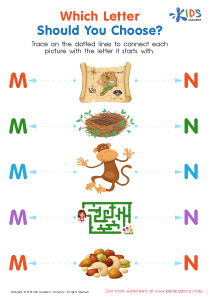
Lowercase identification Lowercase/Small Letters Worksheets for Ages 6-7
5 filtered results
-
From - To
Enhance your child's literacy skills with our engaging Lowercase Identification Worksheets designed specifically for ages 6-7. These interactive worksheets provide children with a fun way to recognize and distinguish lowercase letters. Through various activities, including tracing, matching, and coloring, young learners will build important foundational skills that promote reading and writing proficiency. Our comprehensive collection encourages independent practice, boosting confidence and reinforcing knowledge in a delightful manner. Perfect for home or classroom use, these worksheets lay the groundwork for successful communication and literacy development. Start your child's journey to mastering lowercase letters today! Explore our resources and watch them thrive!
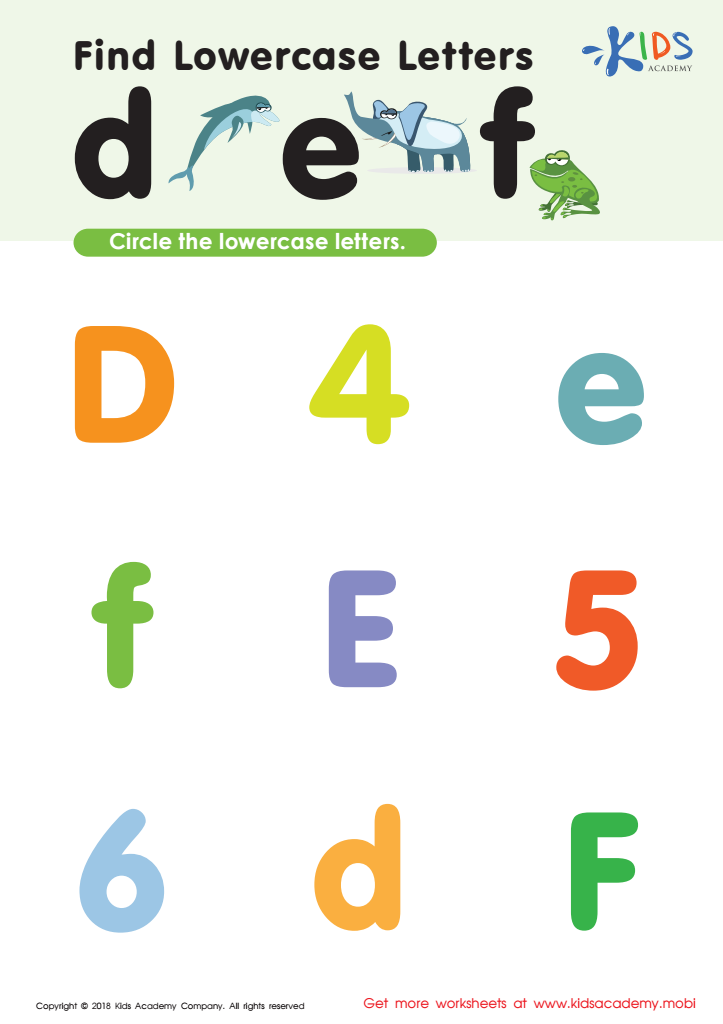
Find Lowercase Letters d e f Worksheet
 Assign to My Students
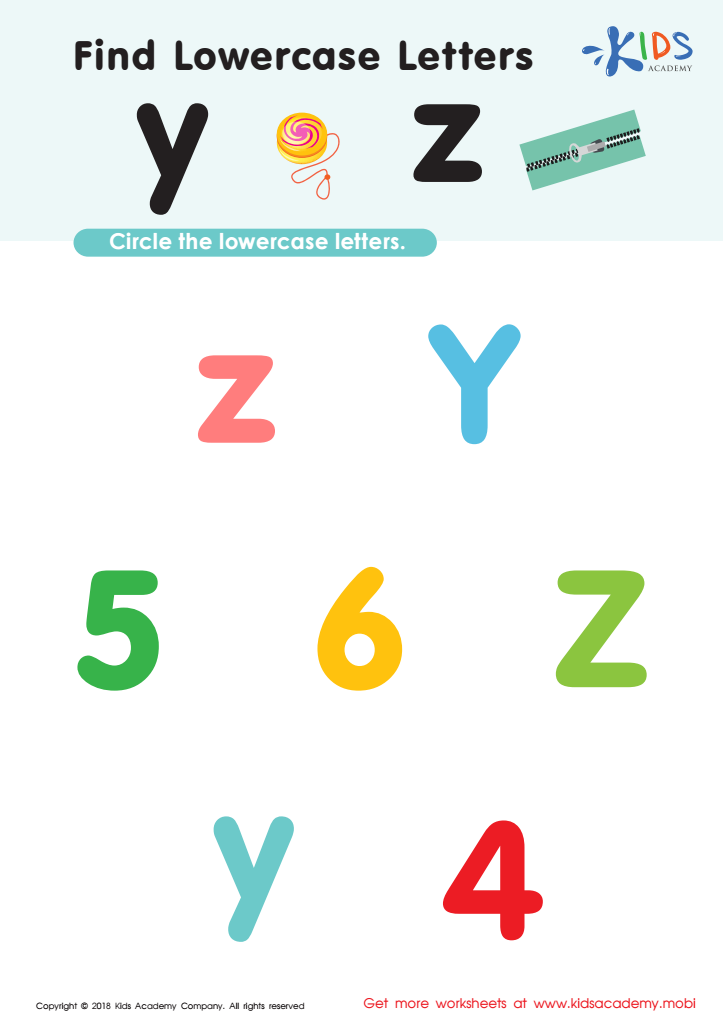
Find Lowercase Letters y z Worksheet

Find lowercase letters a b c Worksheet
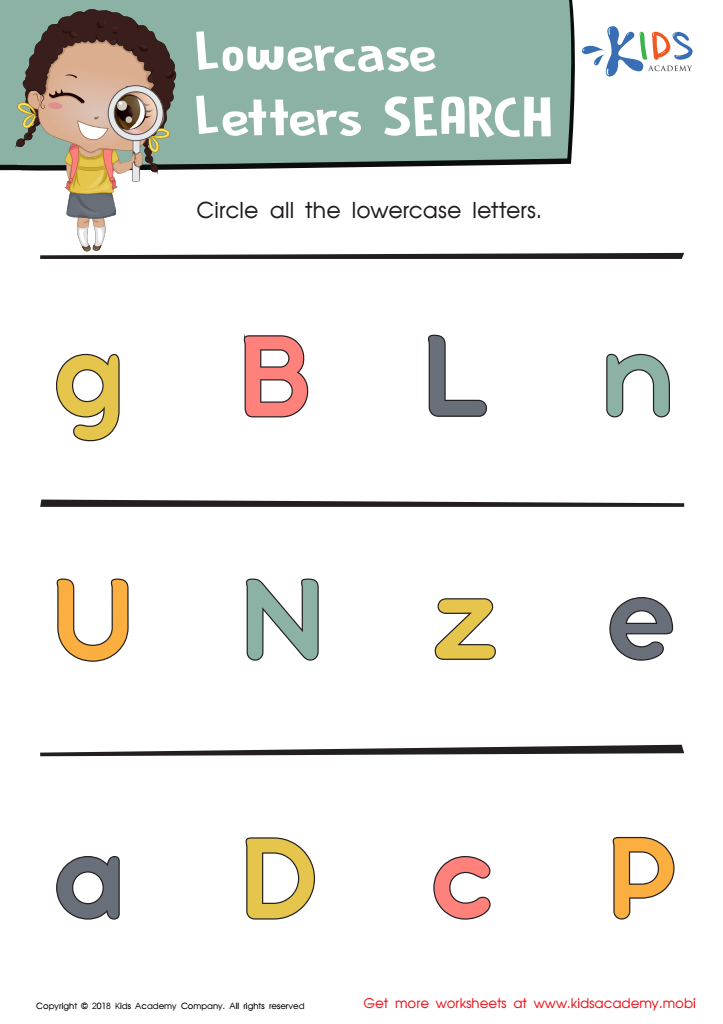
Lowercase Letters Search: Assessment Worksheet
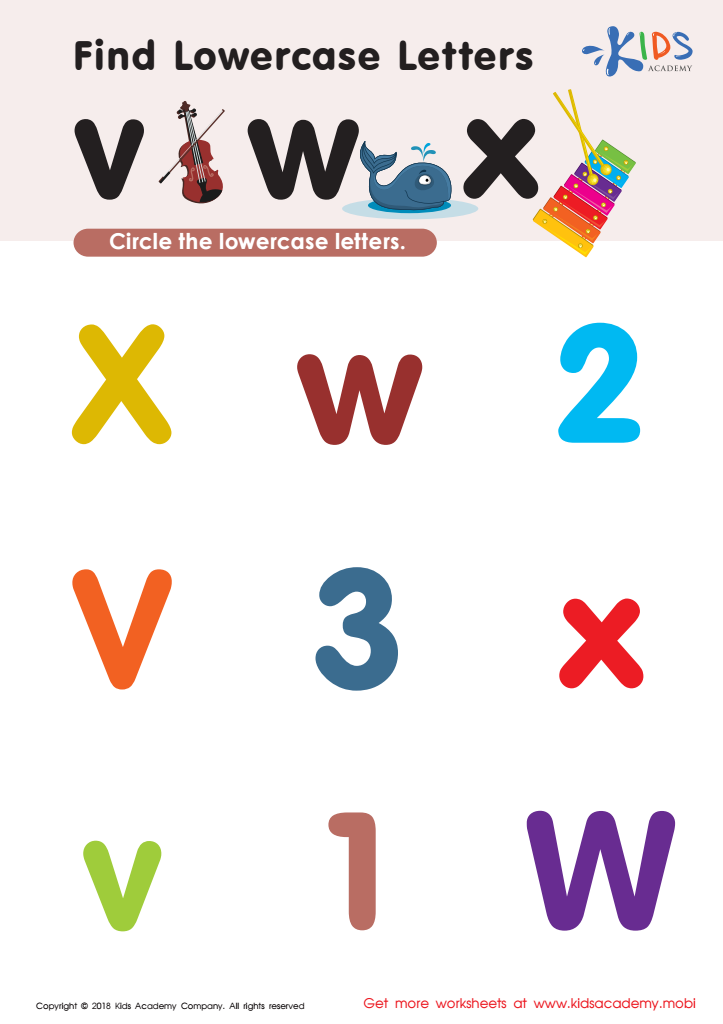
Find Lowercase Letters v w x Worksheet


Understanding and identifying lowercase letters is crucial for children ages 6-7, as it forms the foundation for reading and writing skills. At this age, students transition from recognizing letters to gaining proficiency in using them in context. Lowercase letters, which are predominant in texts, regularly appear in books, school materials, and everyday reading, making their recognition essential.
Early mastery of lowercase letters aids in developing phonemic awareness, a key component of literacy. When children can easily identify lowercase letters, they can begin to sound out words, improving their reading fluency. Additionally, knowing these letters contributes to effective writing skills. As children begin to write and construct sentences, understanding both the forms and functions of lowercase letters ensures clarity and consistency in their work.
Moreover, lowercase letters are often used in digital and print communication, making it vital for today’s tech-savvy environment. For parents and teachers, promoting lowercase letter recognition through playful activities, reading together, and utilizing engaging materials not only helps children succeed academically but also fosters a lifelong love for reading and learning. Therefore, lowercase letter identification is a critical component of early education that significantly influences a child's literacy journey.