
Long vowel recognition Phonics Worksheets for Ages 6-7
3 filtered results
Difficulty Level
Grade
Age
-
From - To
Subject
Activity
Standards
Enhance your child's reading skills with our "Long Vowel Recognition Phonics Worksheets" designed for ages 6-7. These engaging and educational worksheets are crafted to help young learners recognize and pronounce long vowels correctly, strengthening their phonics foundation. Each worksheet offers fun activities, such as matching, tracing, and word identification, making learning an enjoyable experience. Perfect for classroom use or home practice, our worksheets ensure steady growth in your child's reading abilities. Equip your young reader with the tools they need for literacy success. Download now from Kids Academy and watch them excel with confidence!
Favorites
With answer key
Interactive
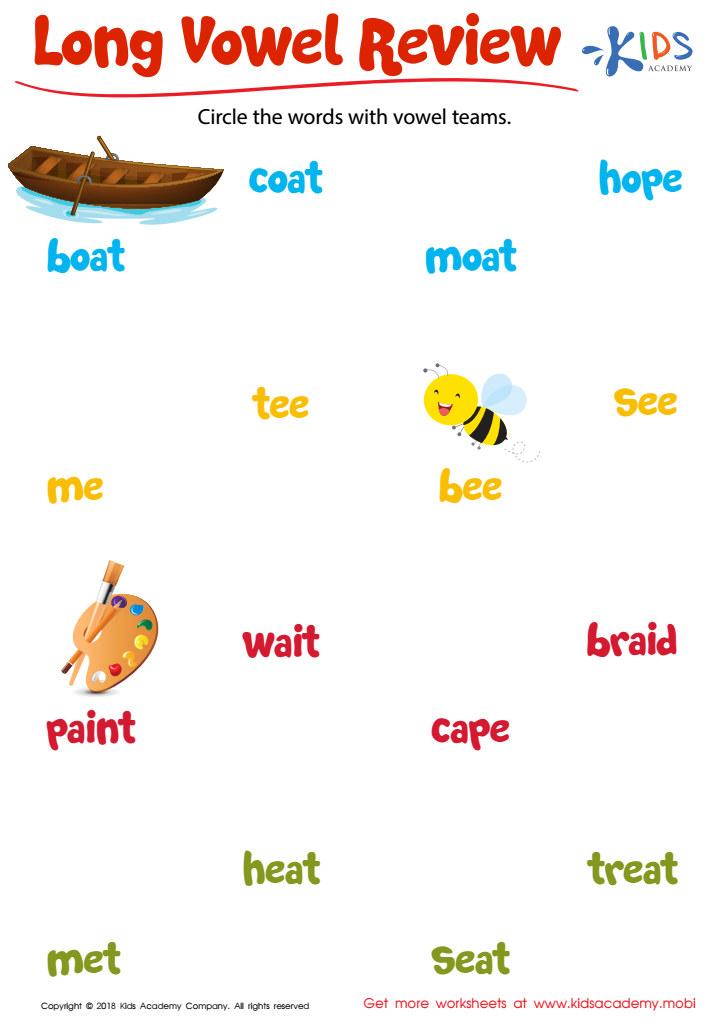
Long Vowel Review Worksheet
Vowel teams like "ea" and "ai" help us make words, and understanding these patterns aids emerging readers in becoming more fluent. This review worksheet has students finding words with vowel teams that make the long vowel sound, and helps them recognize high-frequency words.
 Assign to My Students
Long Vowel Review Worksheet
Worksheet
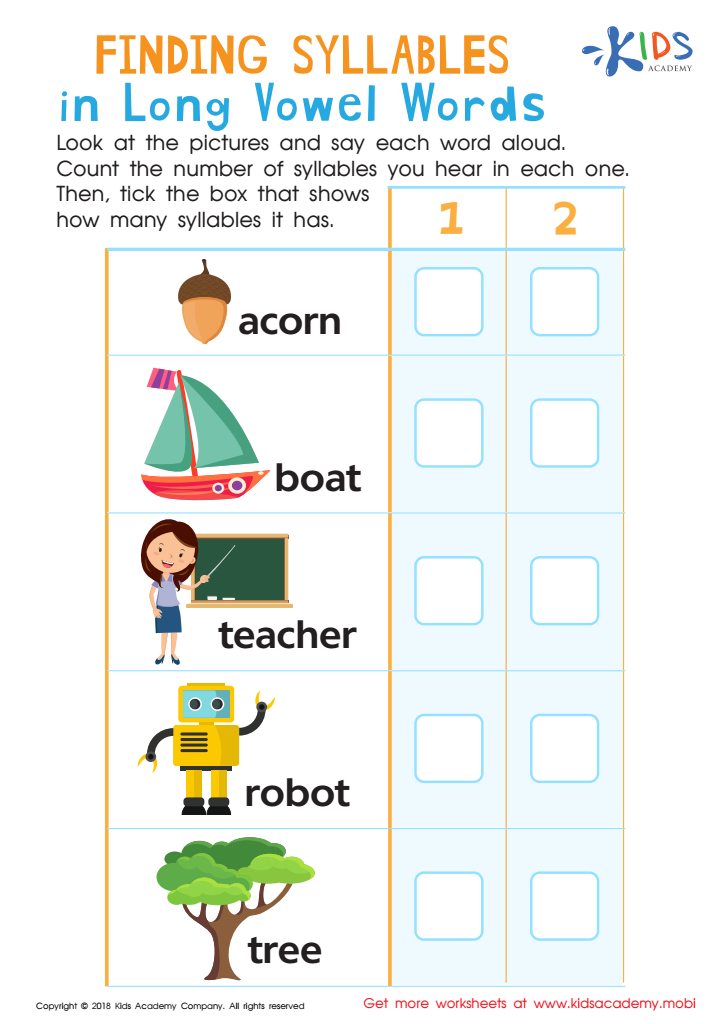
Finding Syllables in Long Vowel Words Worksheet
Help your kids identify objects and better count syllables in words. Look at the printout images with them and have them say each word out loud. Ask them to count syllables and tick the box with the correct number. With this worksheet, your kids will become more skilled.
Finding Syllables in Long Vowel Words Worksheet
Worksheet
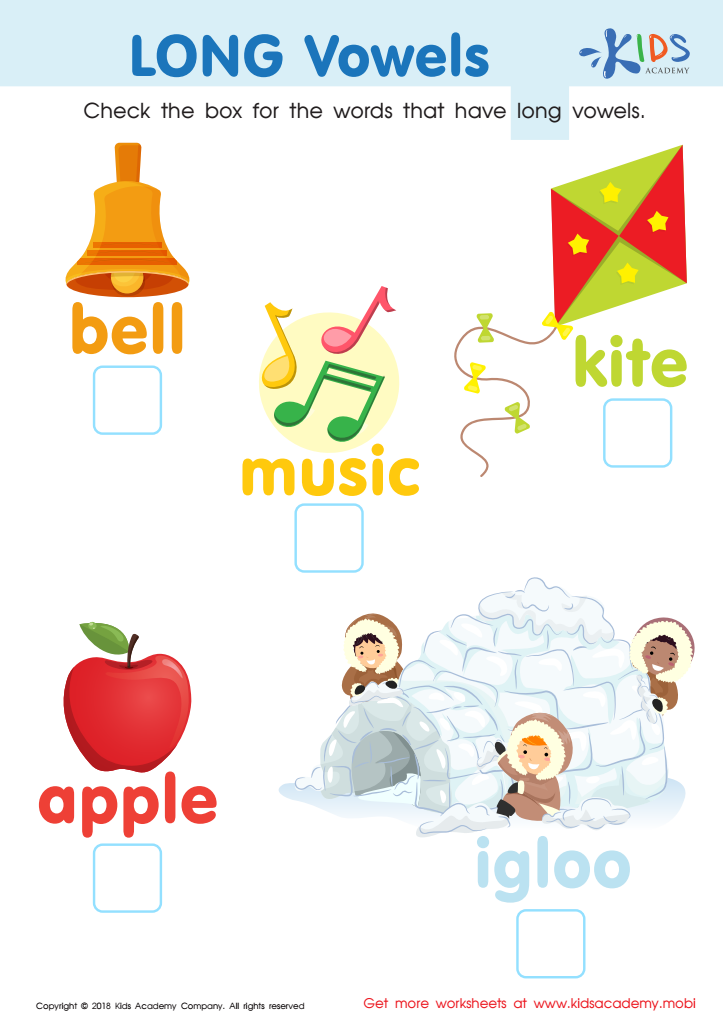
long vowels Worksheet
Have your early learner identify long vowels with this quick review. Ask them to name each picture aloud and listen out for the long vowel sounds to separate them from the shorter ones. Circle the ones that are long! Watch out for words with two vowels - they can be tricky!
long vowels Worksheet
Worksheet
Join Kids Academy for Free
Who is primarily going to use this learning content?








Long vowel recognition phonics is critical for children aged 6-7 because it lays the foundation for proficient reading and spelling skills, promoting overall literacy development. At this age, young learners transition from learning to read to reading to learn. Understanding long vowels helps children decode words more efficiently, enabling them to read fluently and with confidence.
Fluency is essential because it frees cognitive resources to focus on comprehension rather than decoding individual words. For example, recognizing the long 'a' in "cake" empowers a child to read without stumbling, maintaining the narrative flow of the story. This smooth flow is key in keeping a child engaged and interested in reading.
Furthermore, long vowel knowledge enhances spelling skills. Children who can identify and correctly use long vowels are more likely to produce phonemically accurate spellings. Words like "team" instead of "tem" become easier to spell correctly, reinforcing language conventions and boosting a child’s confidence and accuracy in writing.
Early mastery of these phonics skills provides a solid groundwork that supports future academic learning across all subjects. With strong reading and writing capabilities, children are better positioned to excel in their education, which can foster a lifelong love of learning. Hence, parents and teachers should prioritize long vowel recognition to cultivate robust early literacy skills.







