Rhyme recognition Phonics Worksheets for Ages 6-7
3 filtered results
-
From - To
Enhance your child's phonics skills with our engaging Rhyme Recognition Phonics Worksheets designed specifically for ages 6-7. These worksheets help young learners develop their listening and reading abilities through fun rhyming activities. By identifying and matching rhyming words, children not only improve their phonemic awareness but also boost their vocabulary and literacy. Featuring vibrant illustrations and interactive exercises, our worksheets make learning enjoyable and effective. Perfect for classroom use or at-home learning, these resources are essential for laying a strong foundation in reading. Explore our collection today and watch your child's confidence soar as they master the joy of rhymes!
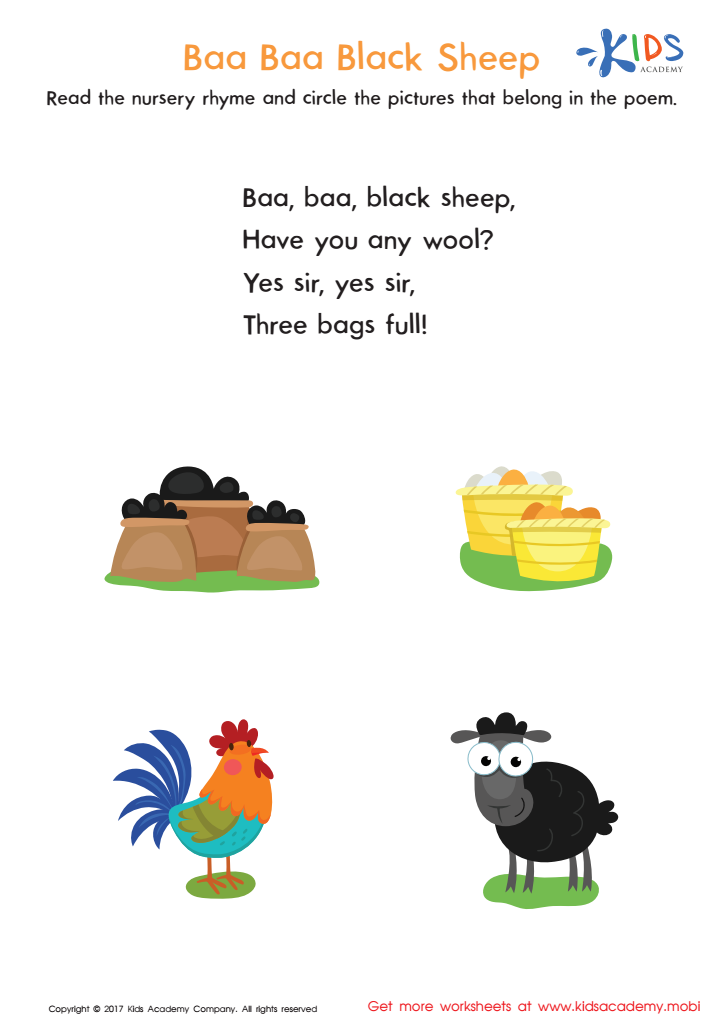
Baa Baa Black Sheep Printable
 Assign to My Students
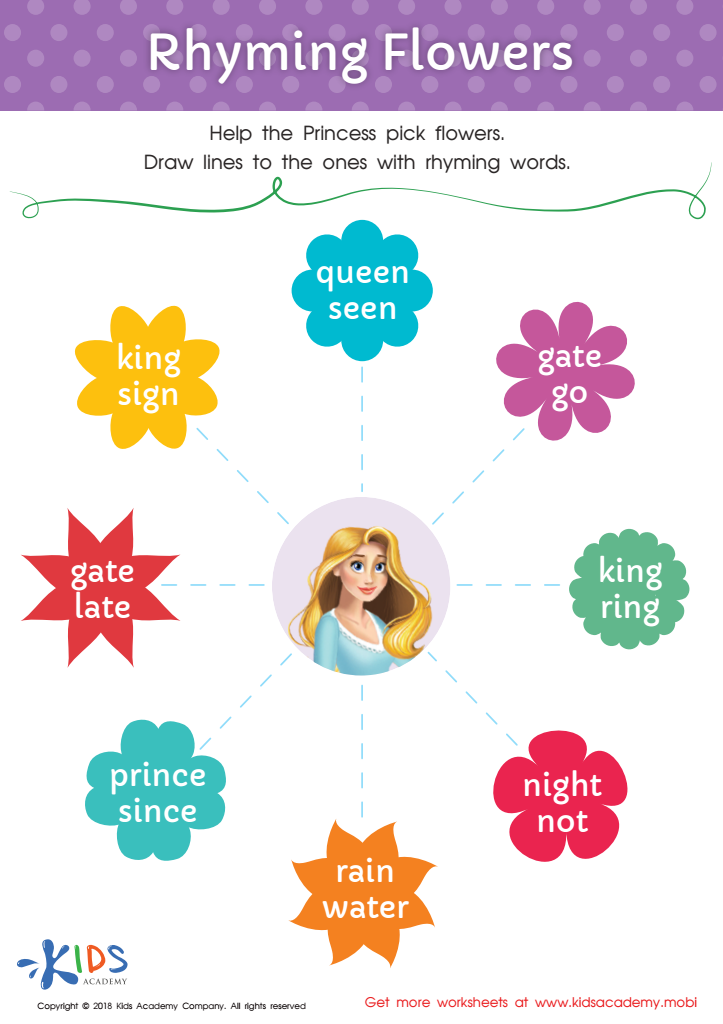
Rhyming Flowers Worksheet
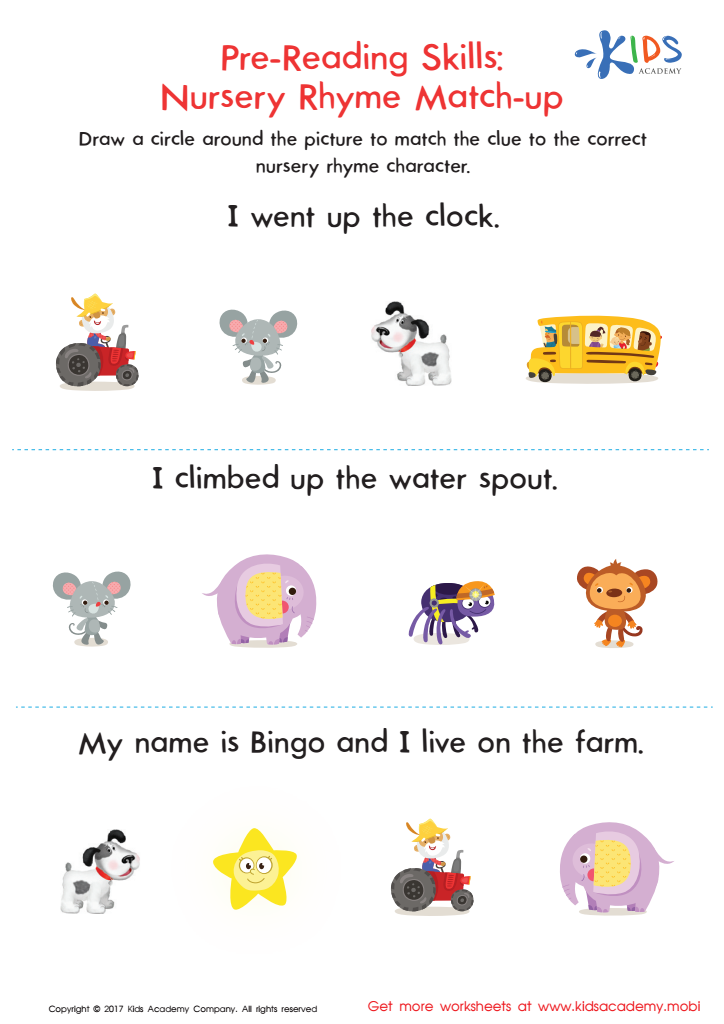
Nursery Rhyme Match–Up Worksheet








Rhyme recognition phonics is crucial for children aged 6-7 because it lays the foundation for reading and language development. At this age, children are transitioning from learning to read to reading to learn. Recognizing and understanding rhymes helps them grasp the relationships between sounds and letters, significantly enhancing their phonemic awareness. This skill is vital in decoding new words, facilitating fluency and comprehension.
Furthermore, engaging in rhyme exercises nourishes creativity and linguistic playfulness. It fosters a love for language, making learning more enjoyable and interactive. By recognizing patterns in sounds, children become more adept at noticing similar structures in words, which is essential for spelling and writing.
For parents and teachers, promoting rhyme recognition phonics provides a systematic approach to developing essential reading skills. It equips children with strategies to better tackle unfamiliar words, nurturing confidence and independence in their reading journey. Additionally, these exercises can be seamlessly integrated into everyday activities, making literacy development a natural part of a child's routine. By prioritizing rhyme recognition, we are investing in children’s academic success and overall communication abilities, setting them up for a lifetime of learning.







