
Rhyming skills Phonics Worksheets for Ages 6-7
3 filtered results
Difficulty Level
Grade
Age
-
From - To
Subject
Activity
Standards
Enhance your child's literacy with our engaging Rhyming Skills Phonics Worksheets designed specifically for ages 6-7! These worksheets help develop phonemic awareness through fun, interactive activities that support young learners in identifying and producing rhyming words. As children explore colorful illustrations and simple prompts, they will bolster their reading confidence and overall language development. Perfect for use at home or in the classroom, our carefully crafted resources cater to various learning styles, ensuring that every child can master this essential skill. Unlock the joy of learning with our rhyming worksheets and watch your child thrive in their phonics journey!
Favorites
With answer key
Interactive
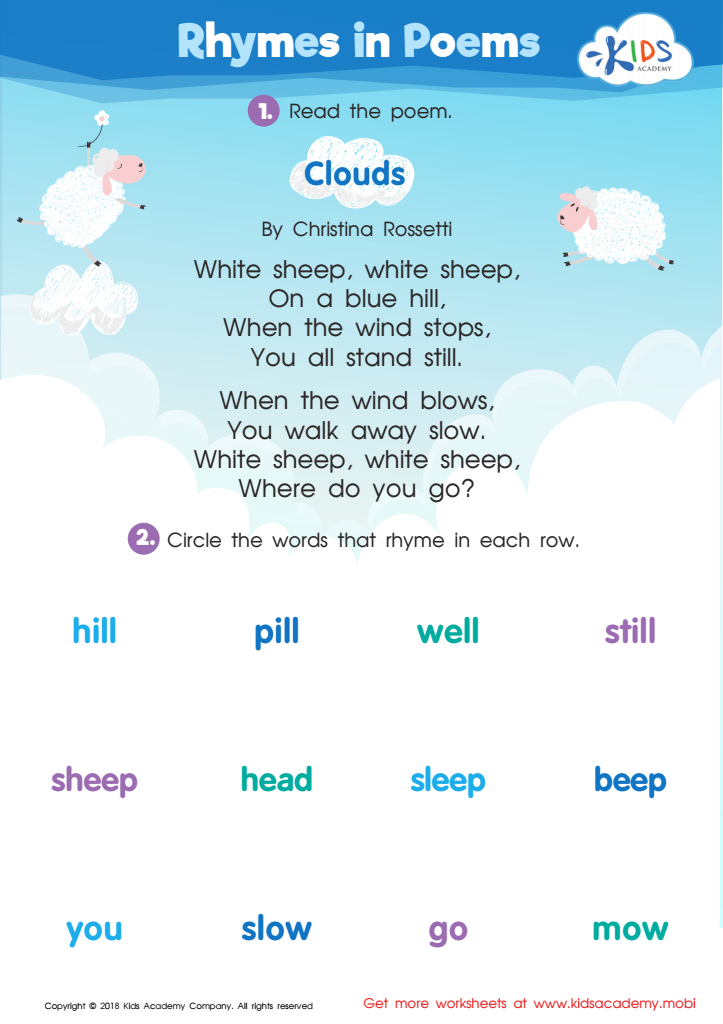
Rhymes in Poems Worksheet
Poems are lovely works of literature; some with rhymes, and some without. This poem for kids is full of rhymes and tells the tale of a sheep. Read it aloud to your kids, then help them circle the rhyming words.
 Assign to My Students
Rhymes in Poems Worksheet
Worksheet
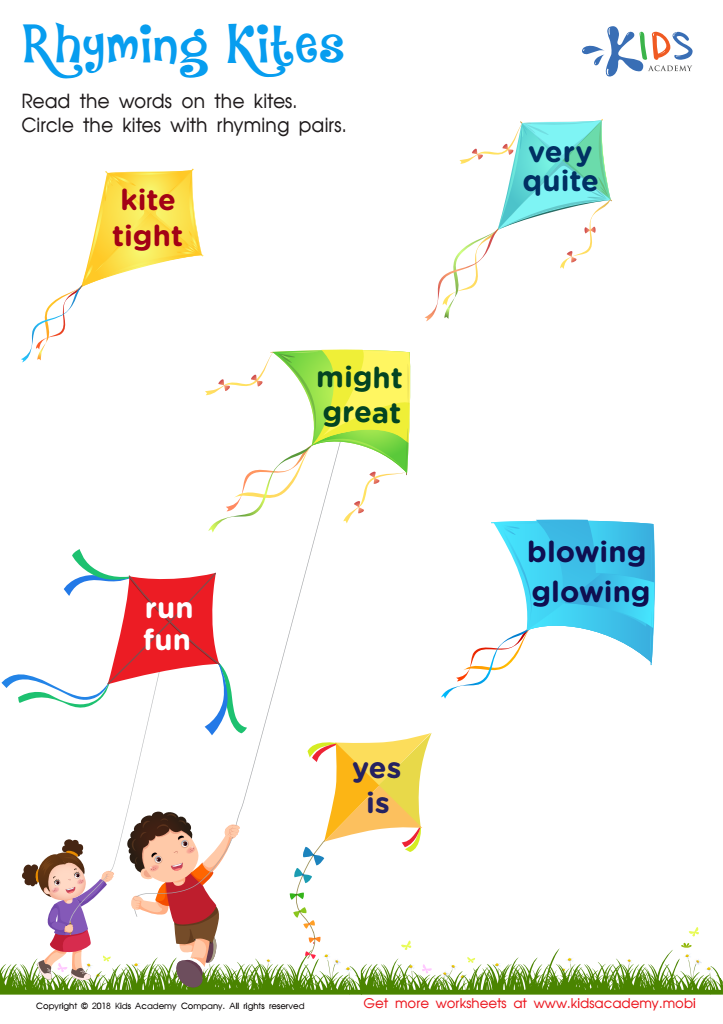
Rhyming Kites Worksheet
On a spring day, fly a kite! Kids Academy has a rhyming worksheet to boost your child's skills. Read the pairs of words aloud. Circle the kites if they rhyme, leave them blank if they don't. Listen carefully and find all the rhyming word pairs to complete this sheet!
Rhyming Kites Worksheet
Worksheet
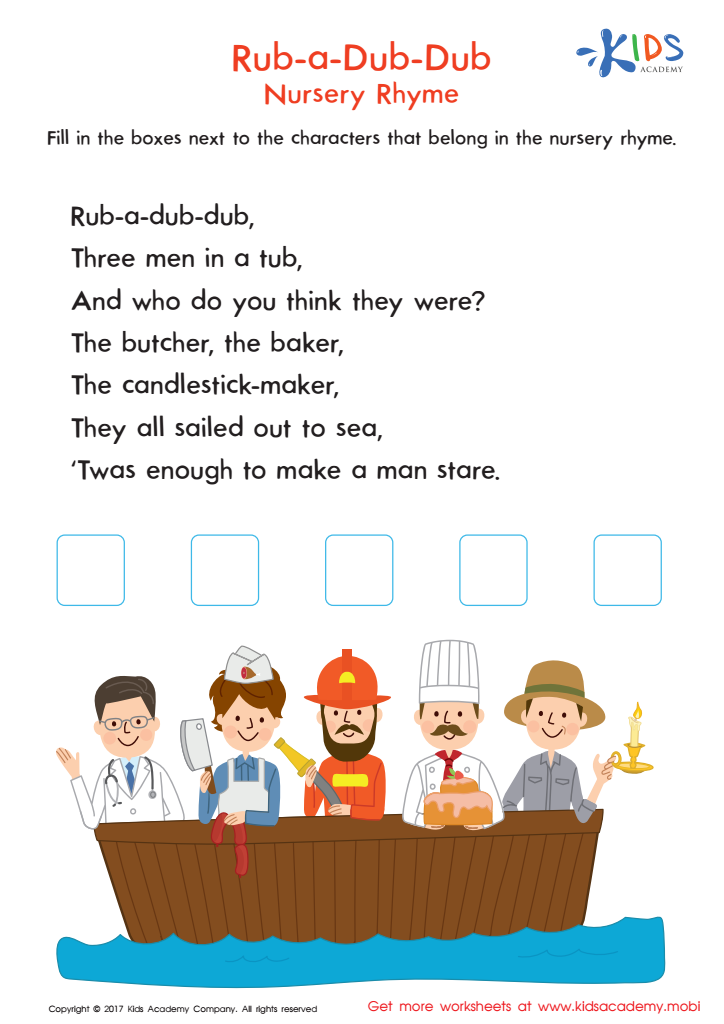
Rub a Dub Dub Printable
Delight your child and foster early reading skills with this printable nursery rhyme, Rub a Dub Dub! Let your little reader select the three men in the tub and practice important reading comprehension skills.
Rub a Dub Dub Printable
Worksheet
Join Kids Academy for Free
Who is primarily going to use this learning content?








Rhyming skills and phonics play a crucial role in the literacy development of children aged 6-7. At this age, children are transitioning from learning to read to reading to learn. Rhyming helps develop phonemic awareness, which is the understanding that words are made up of sounds. This awareness is foundational for decoding and spelling words accurately.
When children can recognize and generate rhymes, they strengthen their ability to hear, identify, and manipulate sounds within words. This is vital as they begin to blend sounds into syllables and words, improving their reading fluency. Moreover, engaging with rhymes enhances vocabulary and comprehension, giving children new contexts for words and ideas.
For parents and teachers, fostering rhyming skills through phonics activities can make reading more enjoyable. Incorporating songs, poems, and playful word games motivates children and makes learning feel less like a chore. Furthermore, developing strong rhyming capabilities helps instill confidence, as these children will be better equipped to tackle increasingly complex texts. Overall, nurturing these skills is essential for building a solid foundation in reading and literacy, critical to every child’s educational success.







