Hand-eye Coordination Tracing Letters Worksheets for Ages 6-7
5 filtered results
-
From - To
Boost your child's development with our Hand-eye Coordination Tracing Letters Worksheets, thoughtfully designed for ages 6-7. These worksheets offer a fun and interactive way to enhance key motor skills while building a strong foundation in letter recognition and writing. Ideal for young learners, the activities guide children through tracing letters, supporting both fine motor development and cognitive skills. Perfect for classroom or at-home practice, our worksheets ensure an engaging learning experience that fosters confidence and educational growth. Enable your child to improve their hand-eye coordination and enjoy the journey of learning to write proficiently.
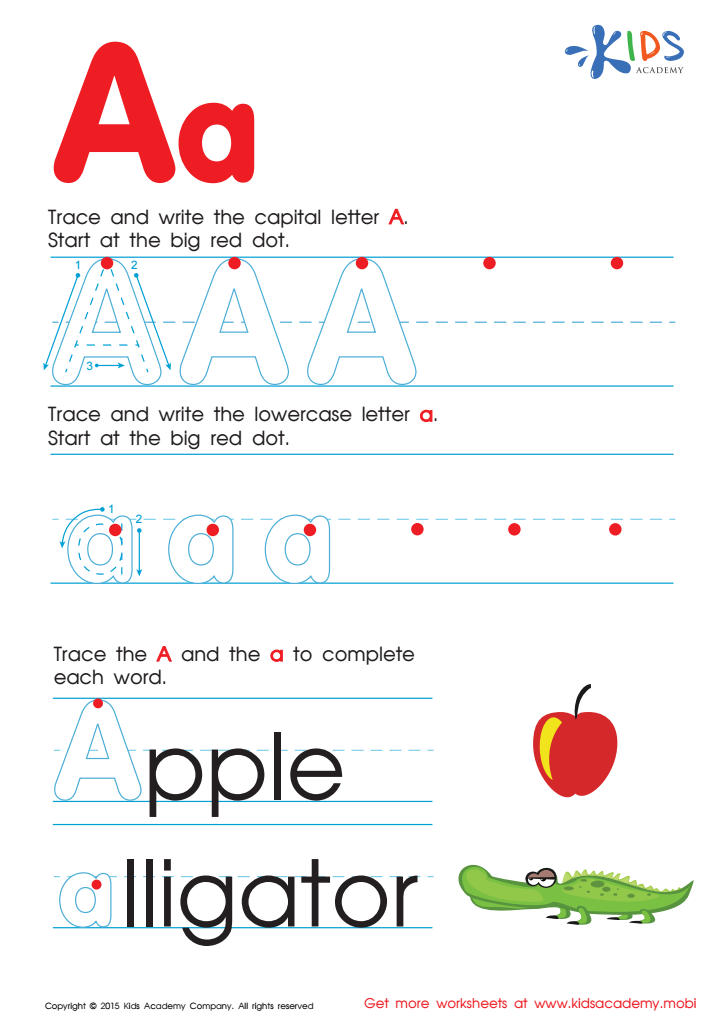
Letter A Tracing Page
 Assign to My Students
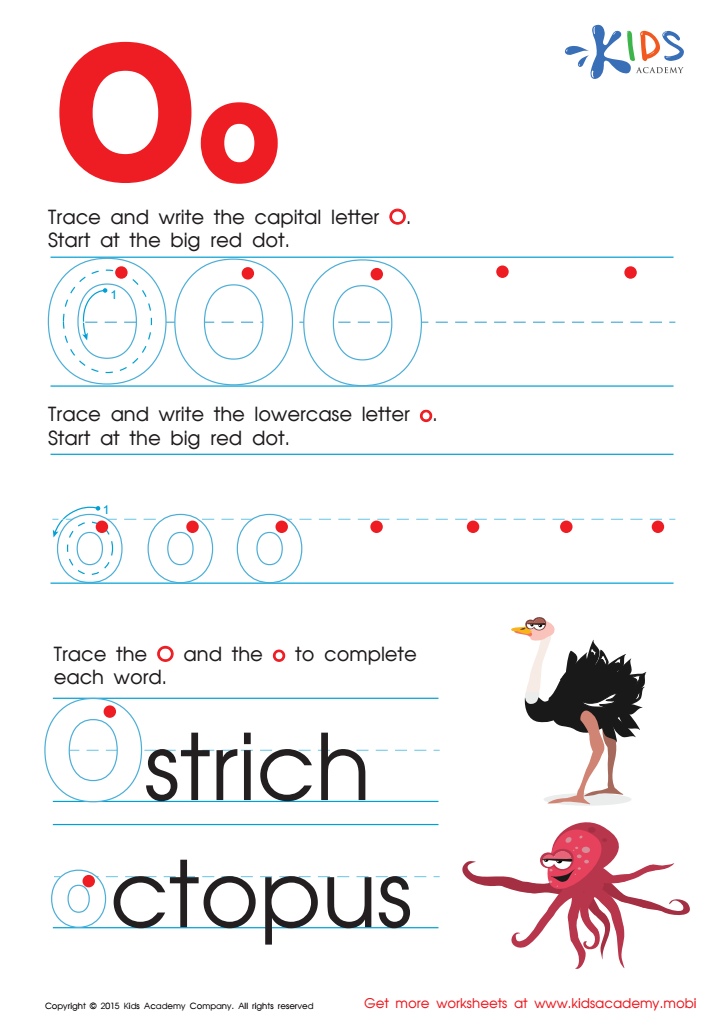
Letter O Tracing Page
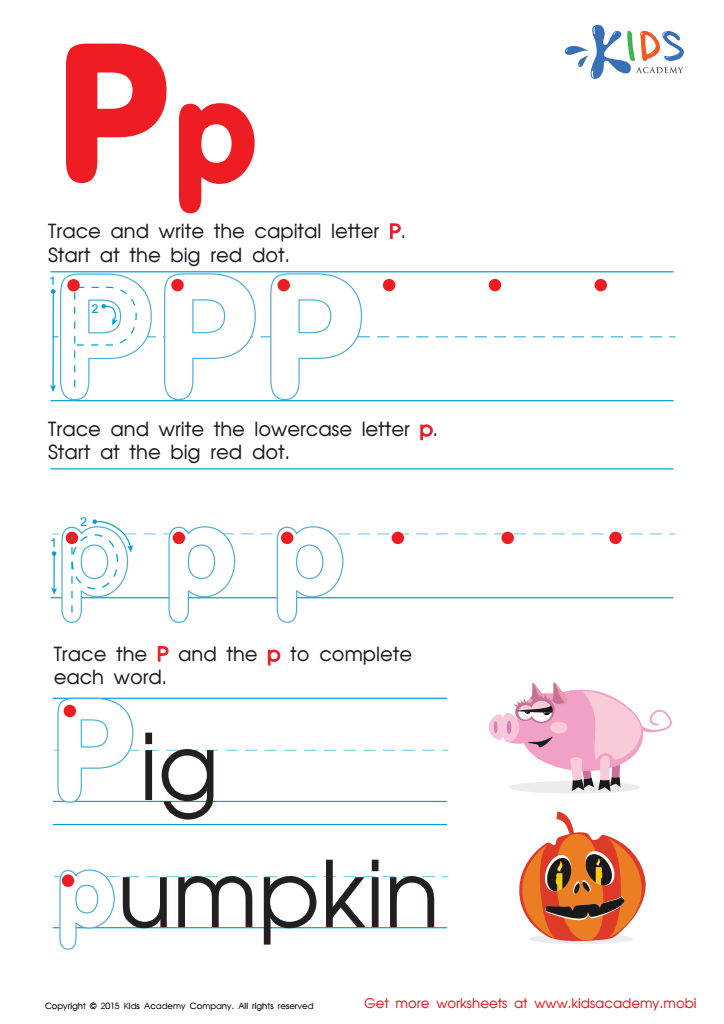
Letter P Tracing Page

Letter H Tracing Page
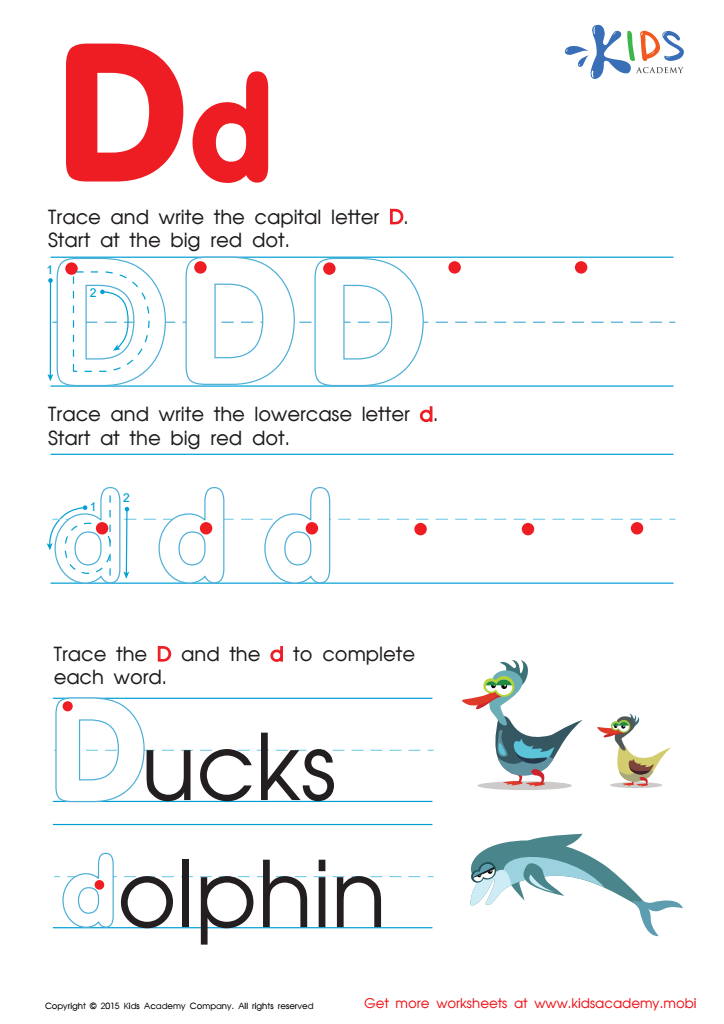
Letter D Tracing Page








Hand-eye coordination is crucial for children's overall development, and for ages 6-7, tracing letters serves as an excellent tool to enhance this skill. This period marks a vital phase in a child's educational journey when foundational skills in reading and writing are being established. Tracing letters helps children learn how to control their hand movements, which is crucial for writing legibility and efficiency.
Firstly, this activity strengthens the neural connections between the brain and the hand, promoting finer motor skills you might not get from less focused activities. A refined hand-eye coordination assists in day-to-day tasks like tying shoes, buttoning clothes, and even playing sports which are integral to a child's independent functioning and confidence.
Moreover, tracing letters can also elevate a child’s understanding of the shapes and structures of letters, aiding in literacy. The precision required in this activity ensures that children pay close attention to the form and details of each letter, enhancing their handwriting and comprehension skills. Additionally, practicing these skills can help improve focus and concentration, traits valuable throughout their academic and personal lives.
Overall, involving children in tracing letters prepares them measurably for more advanced educational challenges and hones vital life skills, making it an indispensable part of early education.








