Letter formation Tracing Letters Worksheets for Ages 6-7
4 filtered results
-
From - To
Boost your child's writing skills with our engaging Letter Formation Tracing Worksheets, designed specifically for ages 6-7! These printable worksheets provide young learners with fun, interactive opportunities to practice forming letters correctly. Through structured tracing exercises, children will develop fine motor skills while gaining confidence in their handwriting. Our easy-to-follow worksheets are perfect for reinforcing letter recognition and promoting early literacy. Each worksheet comes in colorful designs, making learning exciting and enjoyable! Ideal for at-home practice or classroom activities, these resources will help ensure your child writes beautifully and legibly. Start their writing journey today with our Letter Formation Tracing Worksheets!

Letter A Tracing Page
 Assign to My Students

Letter P Tracing Page
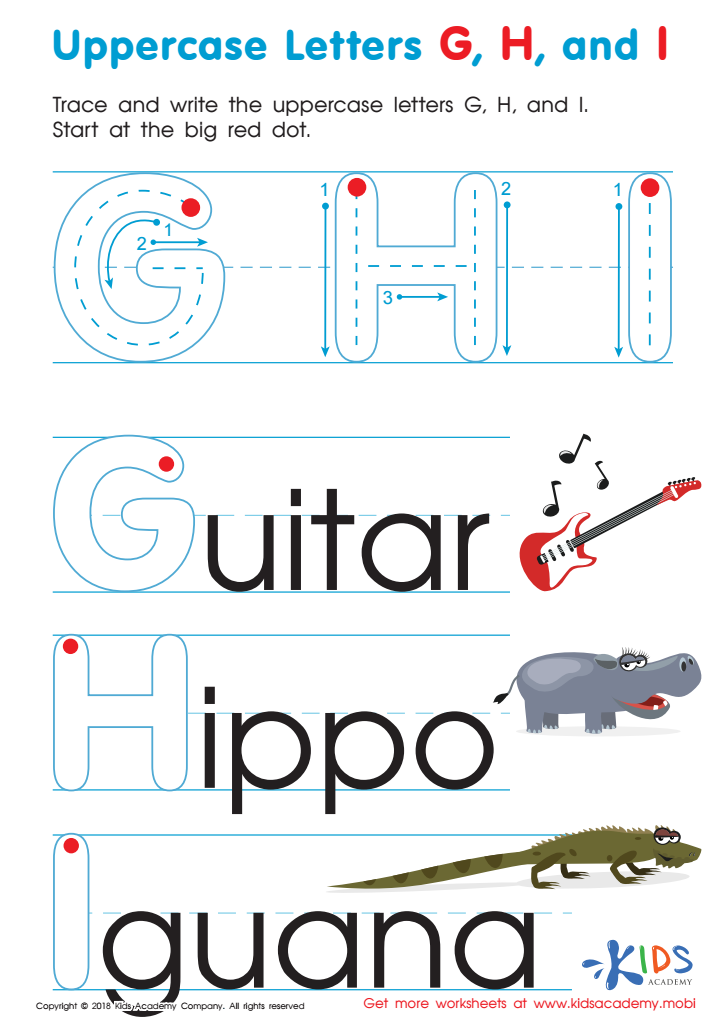
Uppercase Letters G, H, and I Worksheet

Letter G Tracing Page








Letter formation and tracing letters for ages 6-7 is a crucial developmental activity that parents and teachers should prioritize. At this age, children are refining their fine motor skills, which are vital for writing and other hand-eye coordination tasks. Proper letter formation helps children understand the structure of letters, enhancing their ability to recognize and reproduce them accurately, which is foundational for literacy development.
Tracing letters introduces children to the correct starting points and strokes required for each character, fostering confidence and encouraging practice. As they trace, they develop muscle memory, making future writing easier and more fluid. Furthermore, writing strengthens cognitive connections between sounds and symbols, aiding in their understanding of phonics and spelling.
Beyond literacy, consistent engagement in letter formation fosters patience, focus, and perseverance—essential life skills. It also creates opportunities for positive reinforcement from adults, promoting a love for learning.
Incorporating fun, engaging tracing activities can turn this learning process into an enjoyable experience, whether through interactive materials or playful exercises. Overall, emphasizing letter formation sets a cumulative foundation for academic success, supports cognitive development, and builds essential skills for communication as children progress in their education.








