Motor skills development Tracing Letters Worksheets for Ages 6-7
4 filtered results
-
From - To
Enhance your child's motor skills with our engaging Tracing Letters Worksheets designed specifically for ages 6-7. These printable resources focus on developing fine motor control and hand-eye coordination while making learning the alphabet fun and interactive. Each worksheet features beautifully designed letters that encourage children to trace, helping to cultivate their writing skills and boost confidence. As they practice, your young learners will gain mastery over letter shapes and improve their handwriting in a playful way. Perfect for home or classroom use, our worksheets make skill-building enjoyable and effective! Download today to support your child's early literacy journey.

Letter H Tracing Page
 Assign to My Students
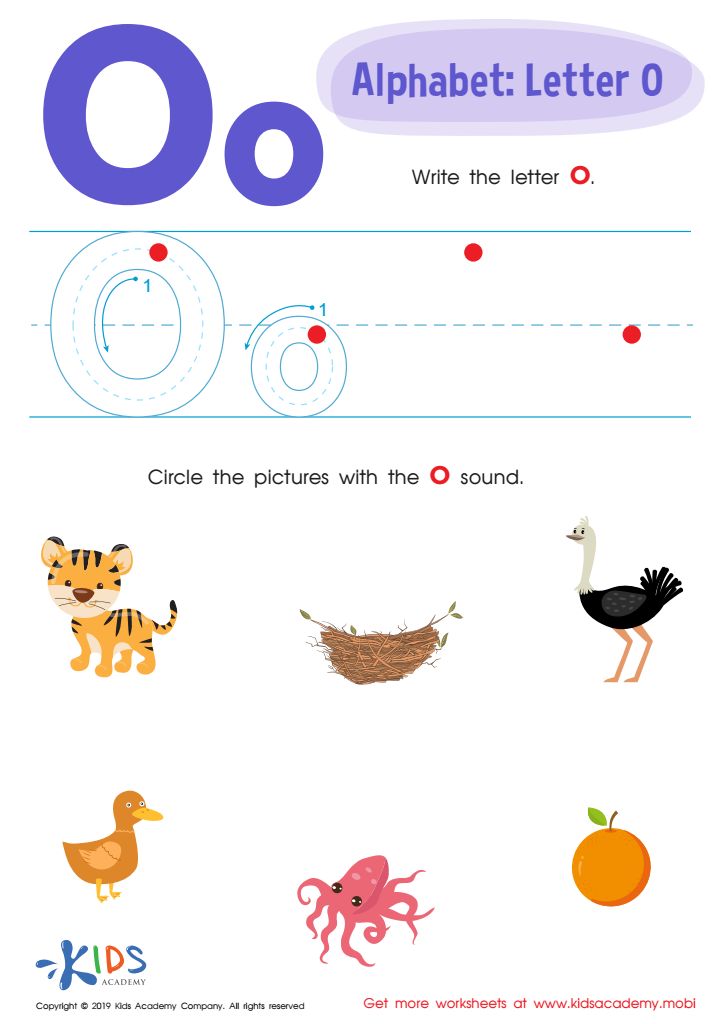
Letter O Tracing Worksheet
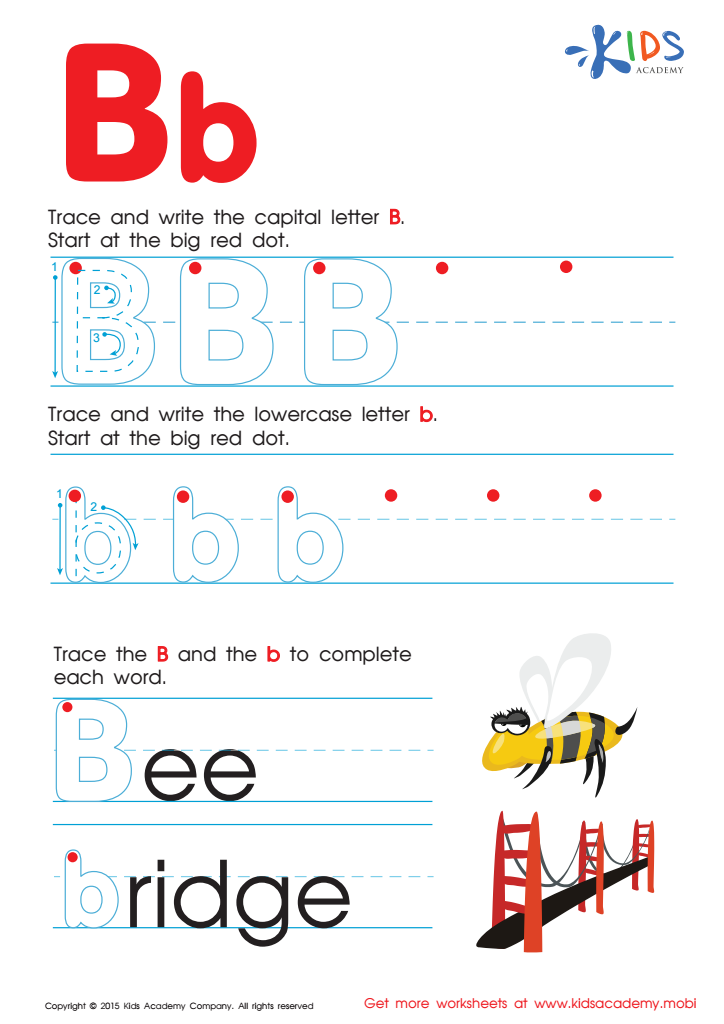
Letter B Tracing Page
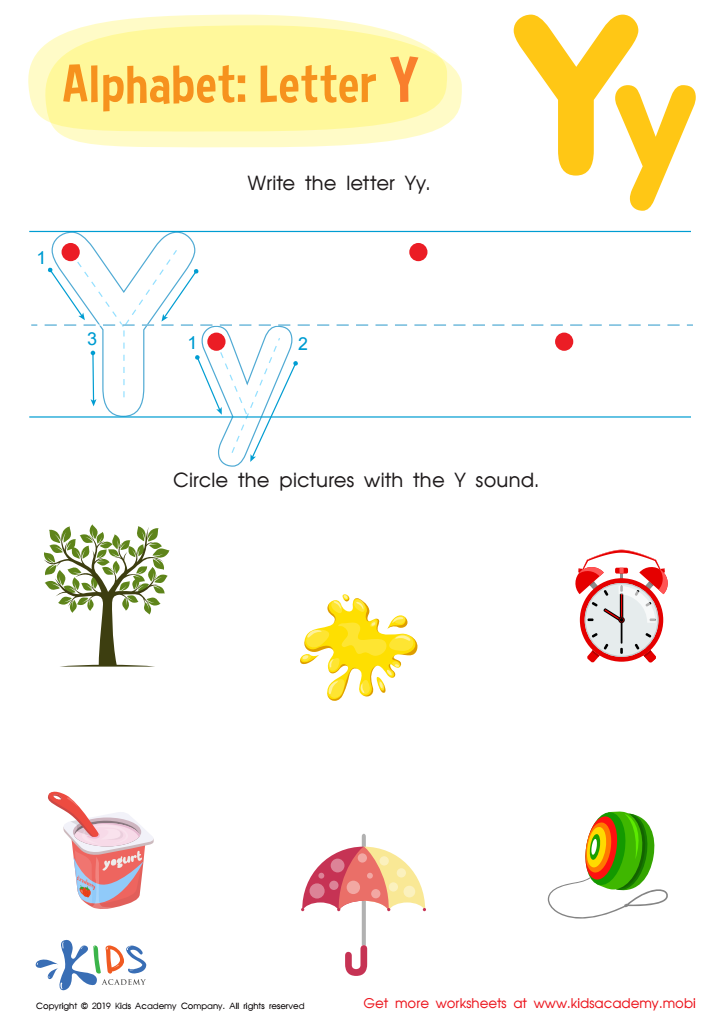
Letter Y Tracing Worksheet








Motor skills development, particularly through tracing letters for children aged 6-7, is crucial for several reasons. First, this activity promotes fine motor skills, which are essential for writing, typing, and daily tasks. Improved dexterity and hand-eye coordination gained through tracing letters enhances a child's ability to grasp, manipulate objects, and control writing instruments, laying the foundation for proficient handwriting.
Second, tracing helps reinforce letter recognition and phonics skills. As children trace, they not only familiarize themselves with the shape and structure of letters but also associate them with sounds, enhancing their reading readiness. This multilayered learning experience supports cognitive development by promoting patterns and memory.
Moreover, tracing letters can boost self-esteem and motivation. As children successfully complete letters, they gain confidence in their abilities, fostering a positive attitude toward learning and written communication. This is particularly important in a child's early educational journey, where encouragement and positive reinforcement matter greatly.
Lastly, when parents and teachers emphasize motor skills development through tracing, they support a well-rounded education that nurtures both academic skills and personal growth. Overall, promoting these skills ensures children are equipped for future learning challenges and lifelong skills.








