Word Recognition Two Letter Phonics Worksheets for Ages 6-7
6 filtered results
-
From - To
Boost your child's reading skills with our engaging Word Recognition Two Letter Phonics Worksheets, designed for ages 6-7! These worksheets provide an interactive approach to learning, helping young learners recognize and decode two-letter combinations. Each activity focuses on fun phonics exercises that build confidence and enhance literacy skills. Kids will enjoy practicing word recognition through colorful illustrations and thoughtfully curated exercises that promote effective learning. Perfect for home or classroom use, these worksheets support developmental milestones and foster a love of reading. Encourage your child’s educational journey today with our well-designed, easy-to-use phonics resources! Start building strong reading foundations now!
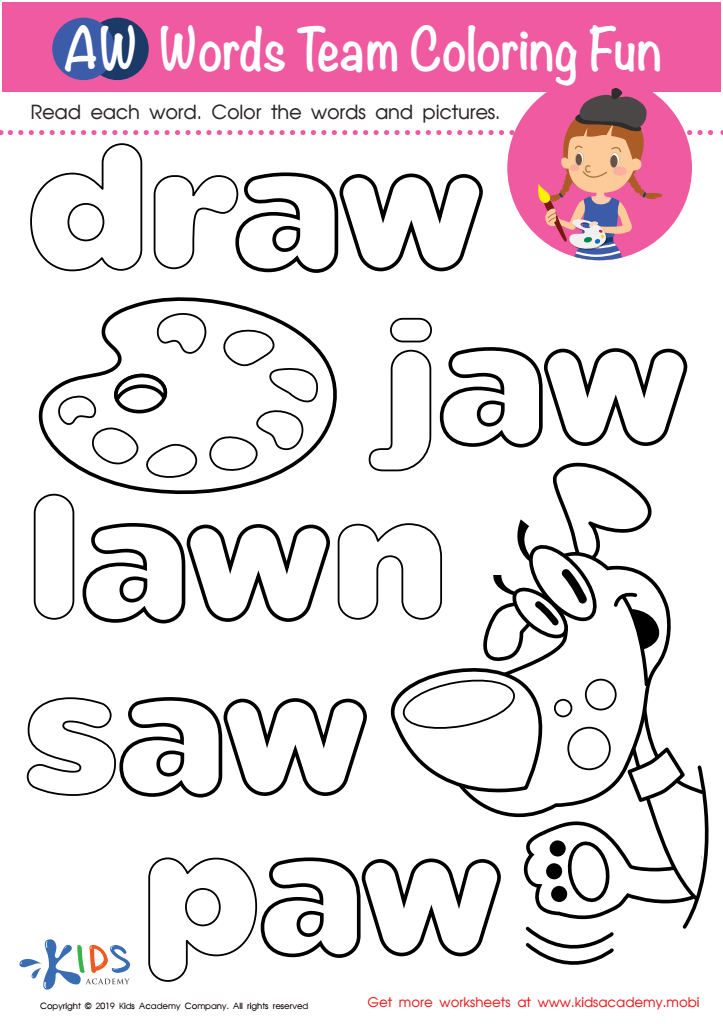
AW Words Team Coloring Fun Worksheet
 Assign to My Students
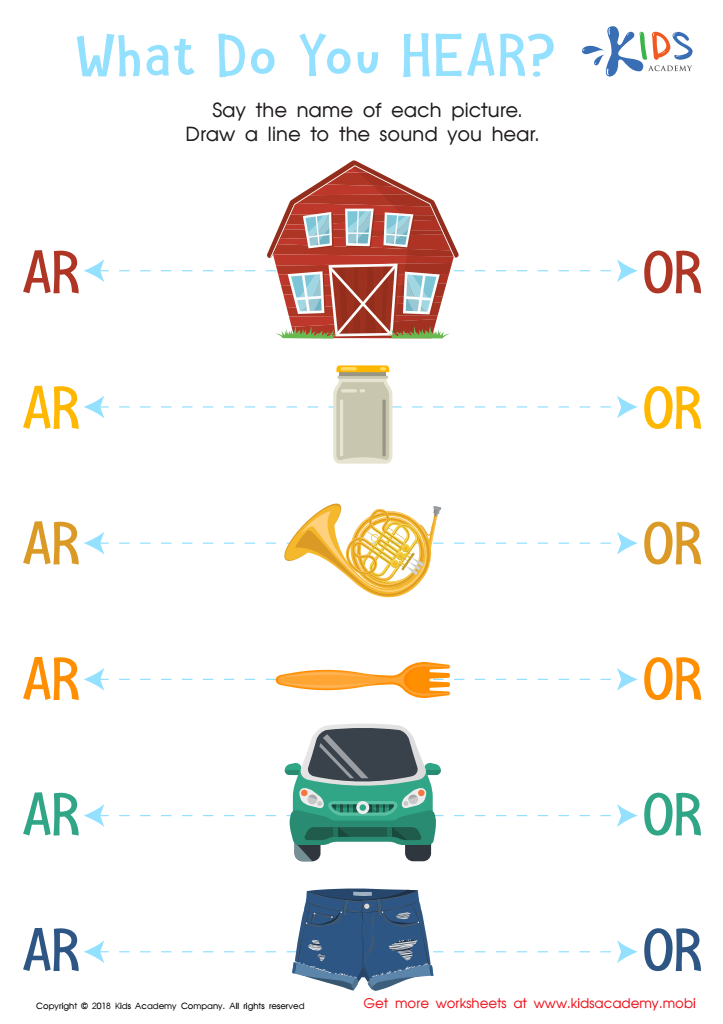
What do you hear Worksheet
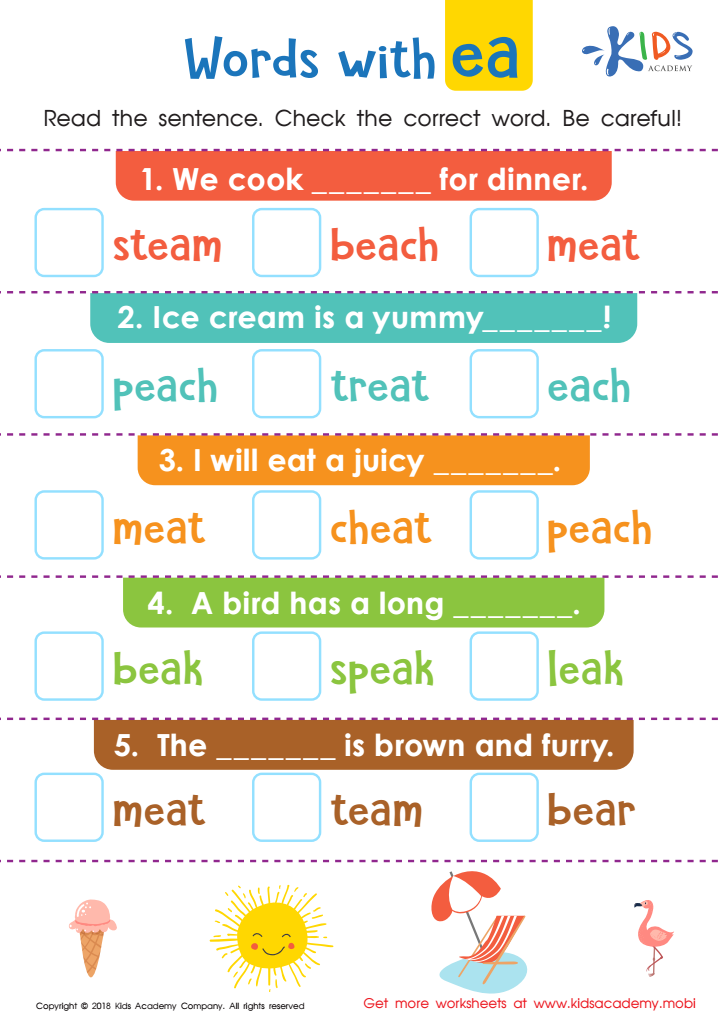
Words with ea Worksheet
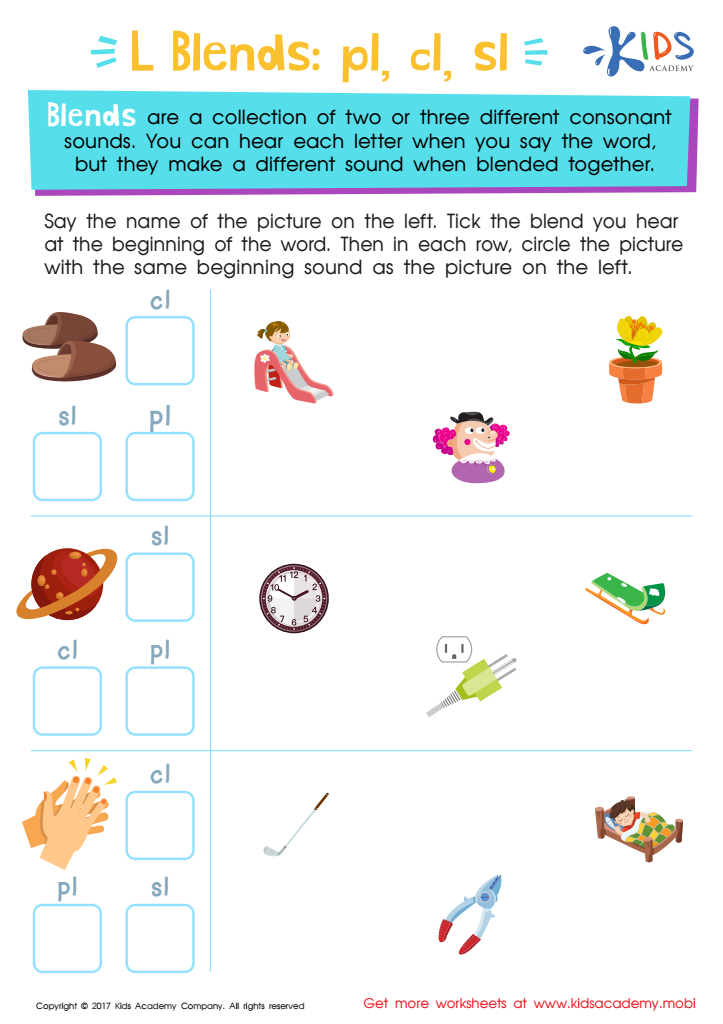
L Blends: "Pl", "Cl" and "Sl" Printable
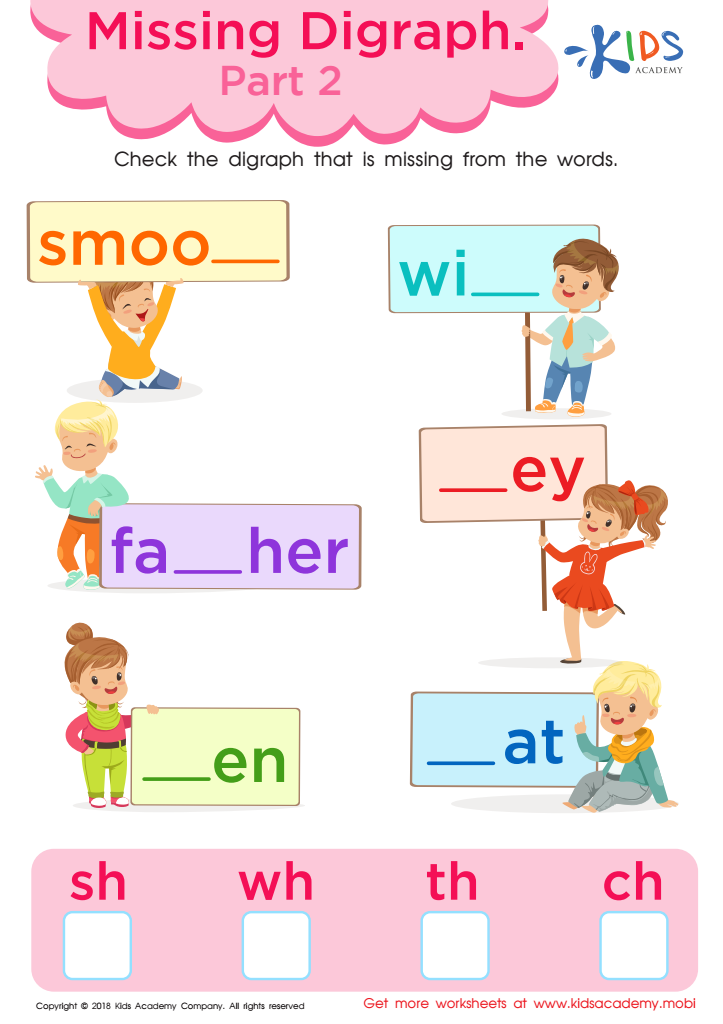
Missing Digraph: Part 2 Worksheet
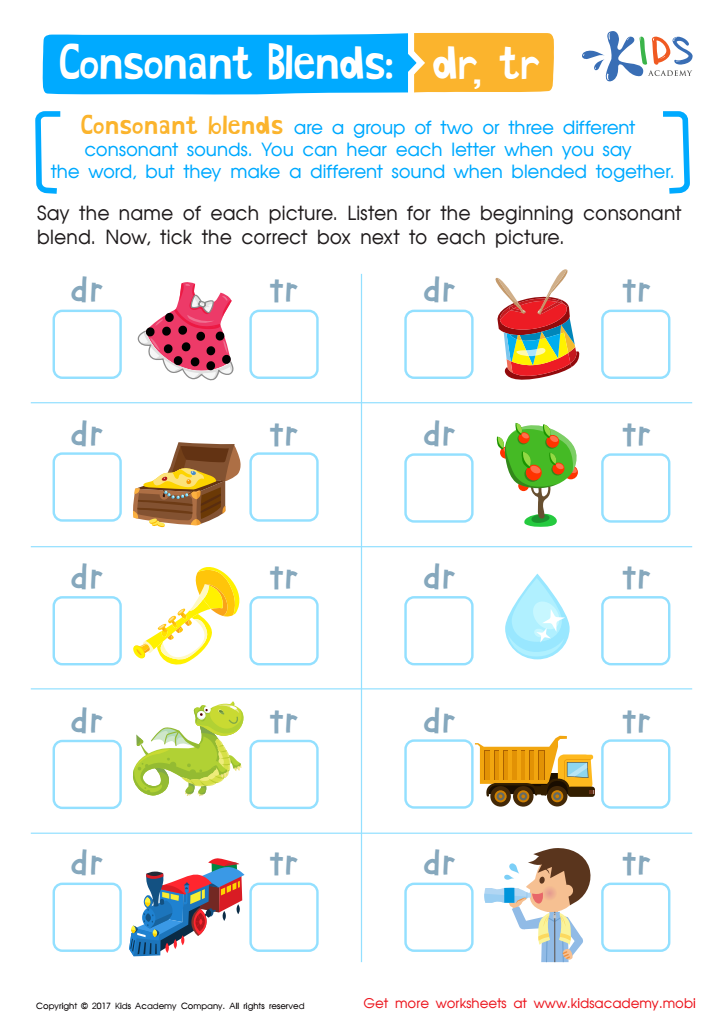
Consonant Blends: "Dr" and "Tr" Printable



Word recognition and phonics, particularly focusing on two-letter combinations, are crucial for children aged 6-7 as they lay the foundational skills for reading and literacy. Mastering these phonics helps children decipher unfamiliar words by breaking them into easily manageable parts. At this age, children are rapidly developing their reading abilities, moving from learning to read to reading to learn.
Two-letter phonic combinations, such as "th," "sh," or "ch," are prevalent in many common words. Understanding these patterns enhances a child's ability to recognize words quickly due to increased familiarity, thus improving their fluency and confidence in reading. This skill not only aids in everyday reading but also builds essential decoding strategies necessary for tackling more complex language as they progress.
Furthermore, strong phonetic awareness fosters a love for reading, engaging children with texts that spark curiosity. As educators and parents foster these skills, they help reinforce a supportive learning environment where children feel empowered to tackle new challenges. Ultimately, focusing on two-letter phonics contributes to a young child's overall academic success and joy in language exploration, making it a critical area of attention for caretakers in the important developmental years of ages 6-7.







