
Cognitive Development Vowels Worksheets for Ages 6-7
3 filtered results
Difficulty Level
Grade
Age
-
From - To
Subject
Activity
Standards
Explore our engaging Cognitive Development Vowels Worksheets designed specifically for children aged 6-7! Our resources focus on enhancing recognition and understanding of vowels, crucial for early literacy skills. Through interactive and thoughtfully crafted activities, kids will sharpen their cognitive abilities while learning the essential role vowels play in words. These worksheets are perfect for reinforcing concepts in a fun, stimulating way that caters to young learners’ developmental needs. Aligned with educational standards, our materials provide opportunities for practice and mastery. Join us in fostering a love for learning and helping your child excel in their reading journey!
Favorites
With answer key
Interactive
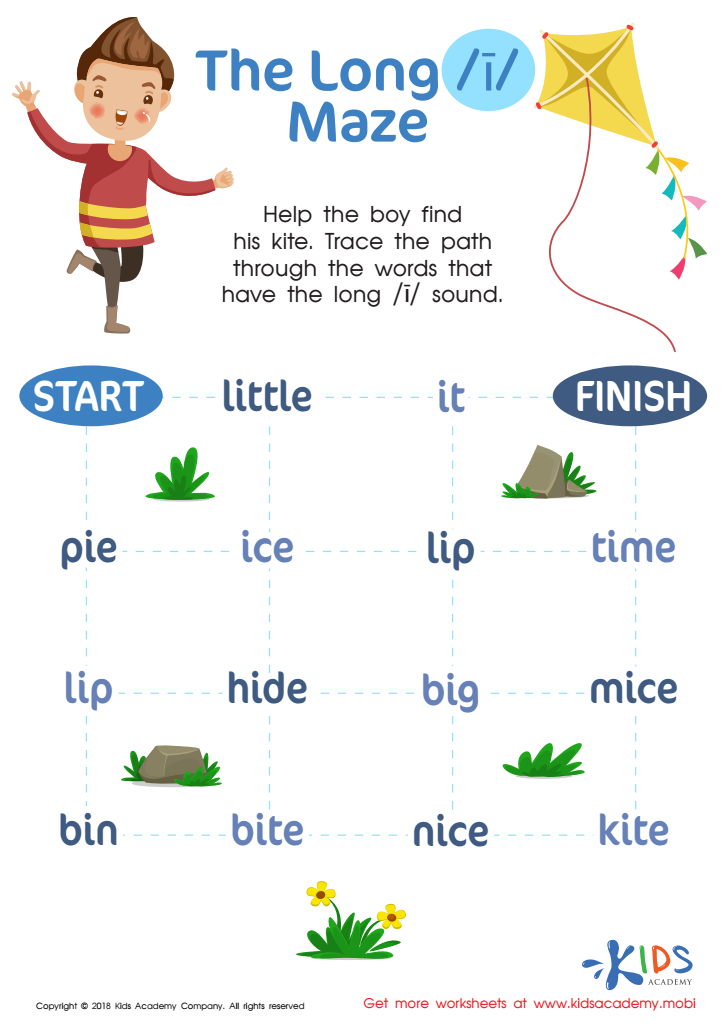
The Long I Maze Reading Worksheet
Help your child learn phonics to help them read. Show them the difference between long and short "i" sounds. Guide them as they use a pencil to trace words with the long "i:" sound in the "Help the Boy in the Picture" worksheet exercise. This will help them find the kite in the picture.
 Assign to My Students
The Long I Maze Reading Worksheet
Worksheet
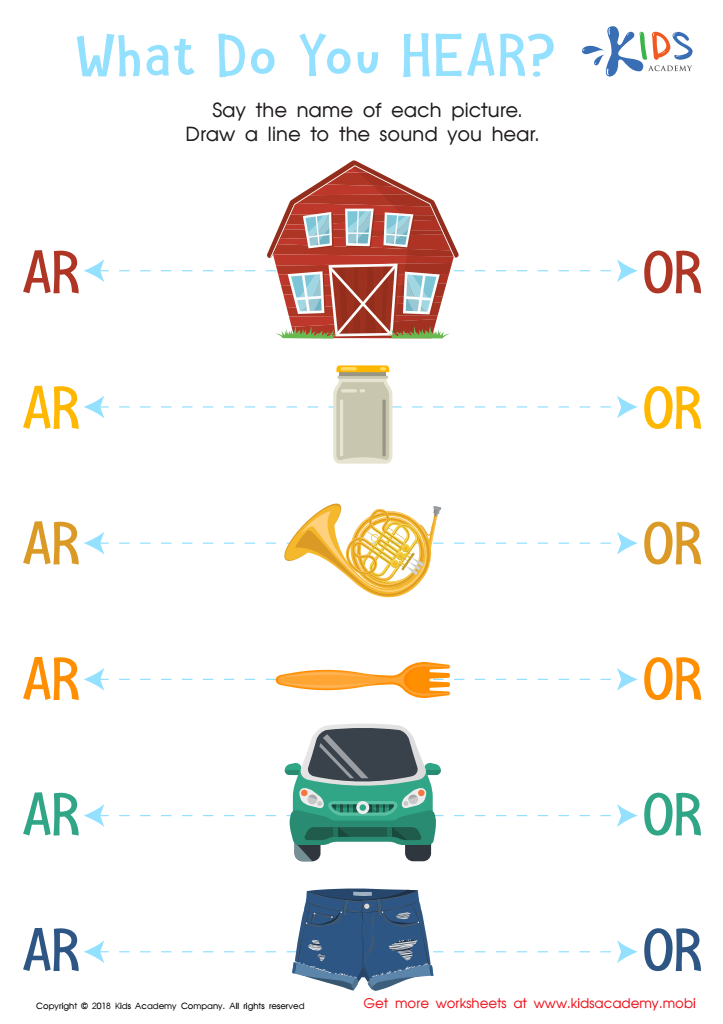
What do you hear Worksheet
Kids can practice distinguishing between r-controlled vowel teams /ar/ and /or/ with this worksheet. The pictures help identify the words and the sounds heard. Tracing a line to the correct sound supports fine motor skills development.
What do you hear Worksheet
Worksheet
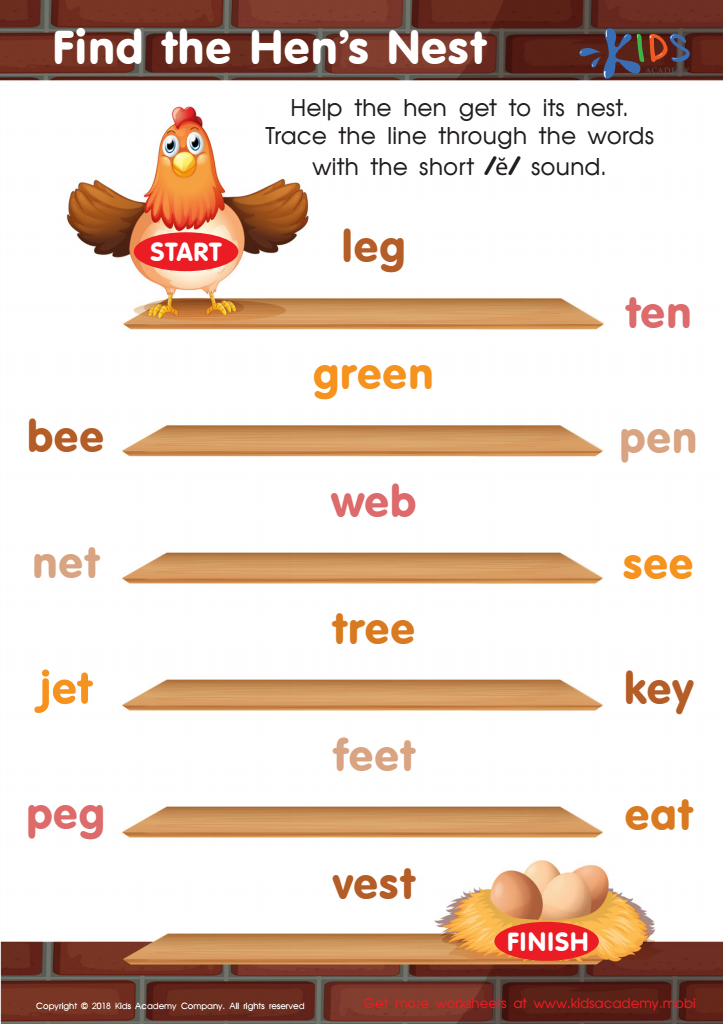
Find Hens Nest Reading Worksheet
Learning the short and long «e» sound can be tricky for kids just starting to learn the alphabet. Make it fun with this worksheet: it leads your kindergarten child to a hen's nest by following words with the short «e» sound. They'll be able to identify words with the sound by the end of the exercise.
Find Hens Nest Reading Worksheet
Worksheet
Join Kids Academy for Free
Who is primarily going to use this learning content?





Cognitive development in children ages 6-7 is pivotal as they begin to refine their ability to think, learn, and understand complex concepts. Vowels, particularly, play a crucial role in language acquisition and literacy development during this period. At this age, children are transitioning from learning to read to reading to learn, making a firm grasp on phonetics and vowels essential.
Parents and teachers should care about this aspect of cognitive development because vowels are foundational in forming words, affecting not just reading fluency but also comprehension. Understanding vowel sounds enables children to decode and spell, supporting their overall literacy skills. The ability to manipulate vowel sounds fosters critical thinking, enhancing a child’s capacity to learn independently.
Furthermore, attention to vowel recognition aids in building confidence in these young learners. Children who master their vowels are more likely to participate in reading activities, contributing to a positive learning environment. As children engage in phonetic awareness, listening, and speaking exercises, they also enhance their social and communication skills. By emphasizing cognitive development related to vowels, parents and teachers empower children to build a strong foundation for future academic success and effective communication.







