Sound differentiation Vowels Worksheets for Ages 6-7
3 filtered results
-
From - To
Unlock your child's reading potential with our engaging "Sound Differentiation Vowels Worksheets" designed specifically for ages 6-7. These interactive worksheets help young learners identify and differentiate between vowel sounds, laying a strong foundation for their literacy skills. Through vibrant illustrations and fun activities, children will explore short and long vowel sounds, enhancing their phonemic awareness and boosting their confidence in reading. Perfect for use at home or in the classroom, these resources promote active learning and facilitate a seamless transition from sound recognition to word formation. Equip your child with essential skills for a successful future in reading today!
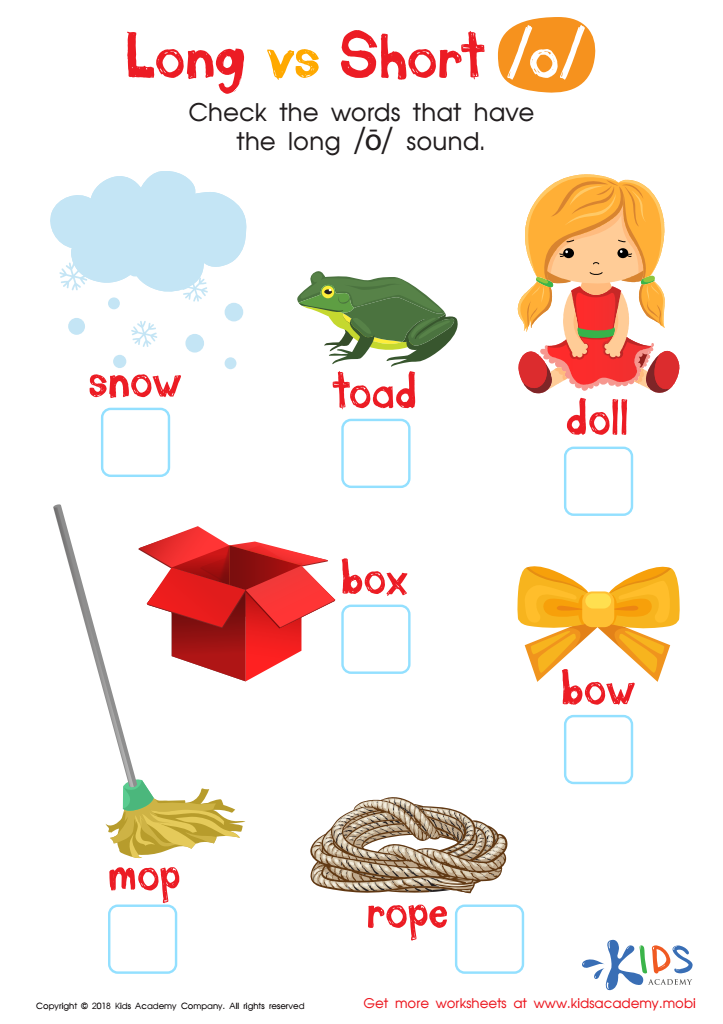
Long vs Short O Reading Worksheet
 Assign to My Students
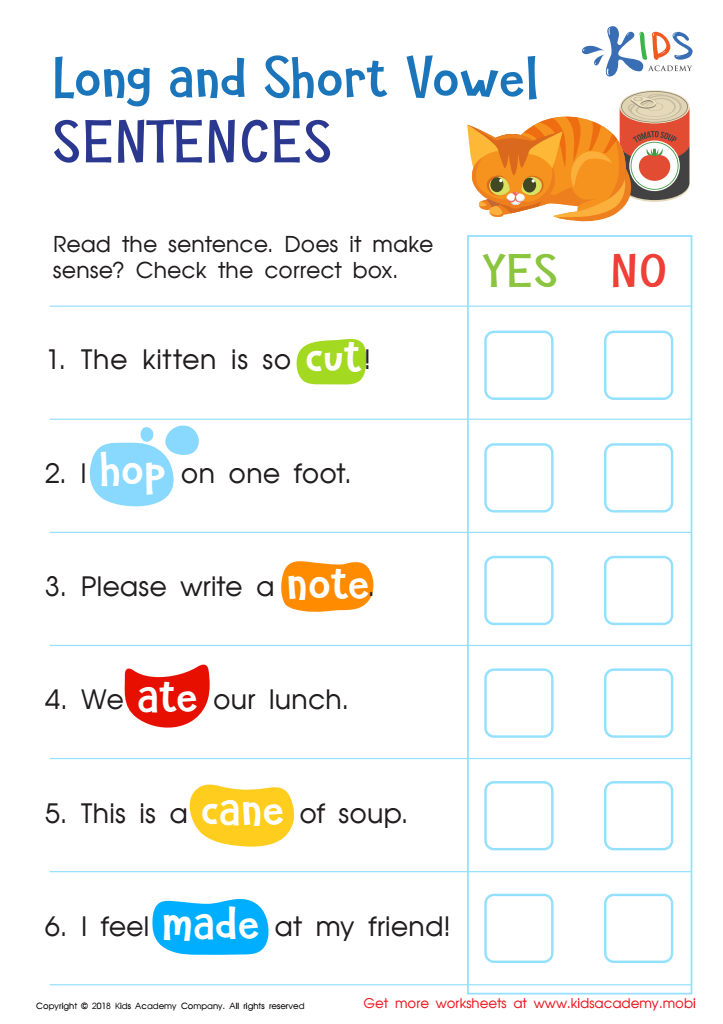
Long and Short Vowel Sentences: Assessment Worksheet
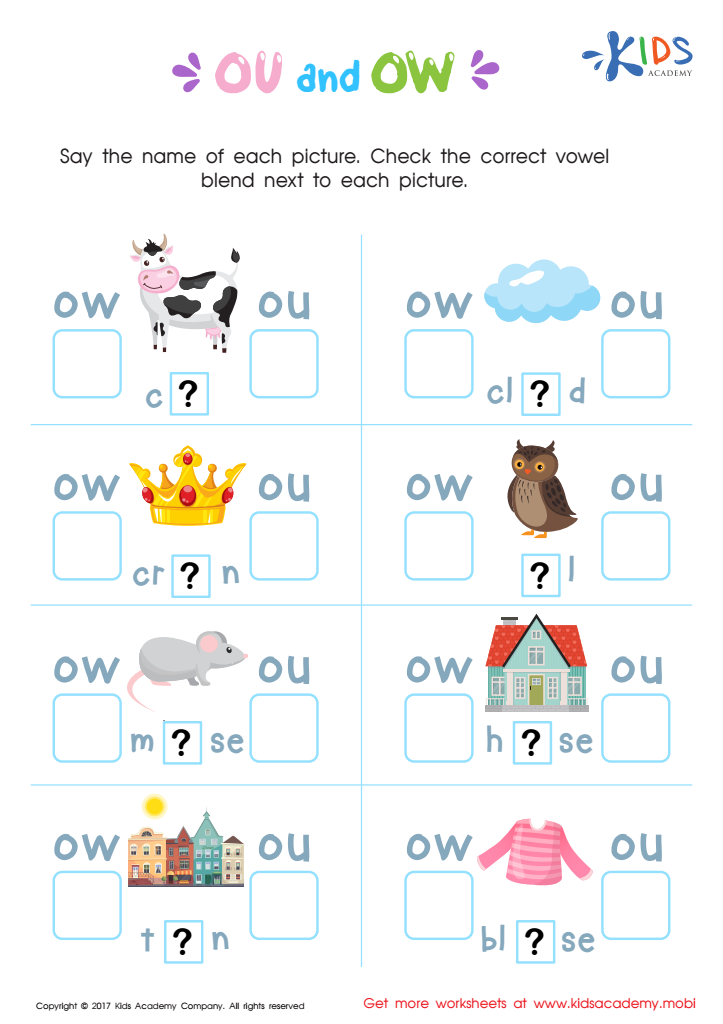
OU and OW Words Worksheet





Sound differentiation of vowels is crucial for children aged 6-7 as it lays the foundation for reading, writing, and overall literacy development. During this critical period, children are transitioning from learning to read to reading to learn. A solid understanding of vowels—particularly their different sounds—enhances phonemic awareness, enabling children to identify, manipulate, and use sounds in words.
When children can differentiate vowel sounds effectively, they gain the ability to decode unfamiliar words, which boosts their confidence and fluency. Misunderstanding vowel sounds can lead to reading difficulties, misconceptions in pronunciation, and poor spelling habits—all of which can hinder academic progress.
Moreover, engaging in sound differentiation activities fosters cognitive development and critical thinking skills. It encourages children to listen attentively and make connections between sounds and letters, facilitating a deeper understanding of language structures.
For teachers and parents, promoting vowel sound differentiation should be a key focus. It can be effectively integrated into daily activities, games, and reading exercises, reinforcing the importance of phonics in earlier education. By prioritizing sound differentiation, they're not just supporting literacy but also nurturing a lifelong love for learning and communication in their children.







