Word identification Vowels Worksheets for Ages 6-7
5 filtered results
-
From - To
Discover an engaging approach to help your 6-7-year-olds master word identification skills with our Vowels Worksheets! Designed to focus on vowel sounds and their applications, these printables cater specifically to young learners. Each worksheet incorporates fun exercises that reinforce recognition, pronunciation, and usage of vowels within words. Created by educational experts, these activities are perfect for enhancing reading skills, boosting confidence, and fostering a love for language. Easily accessible and parent-friendly, our effective resources ensure foundational literacy while keeping kids entertained. Equip your child with essential language tools today through our captivating Word Identification Vowels Worksheets!
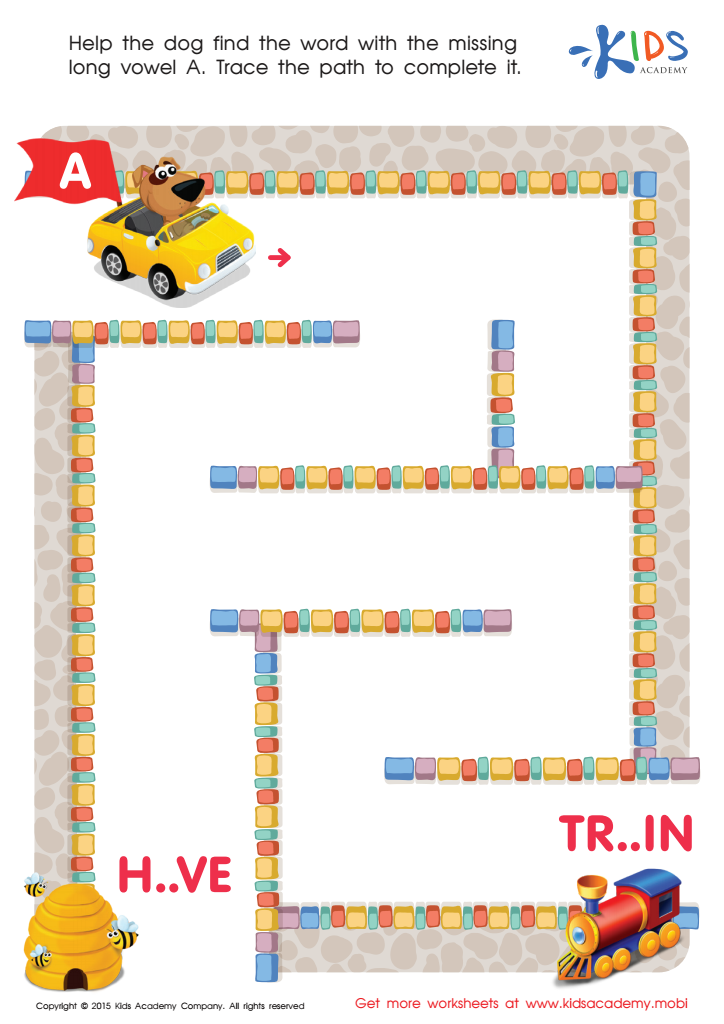
Long Vowel Sound A Worksheet
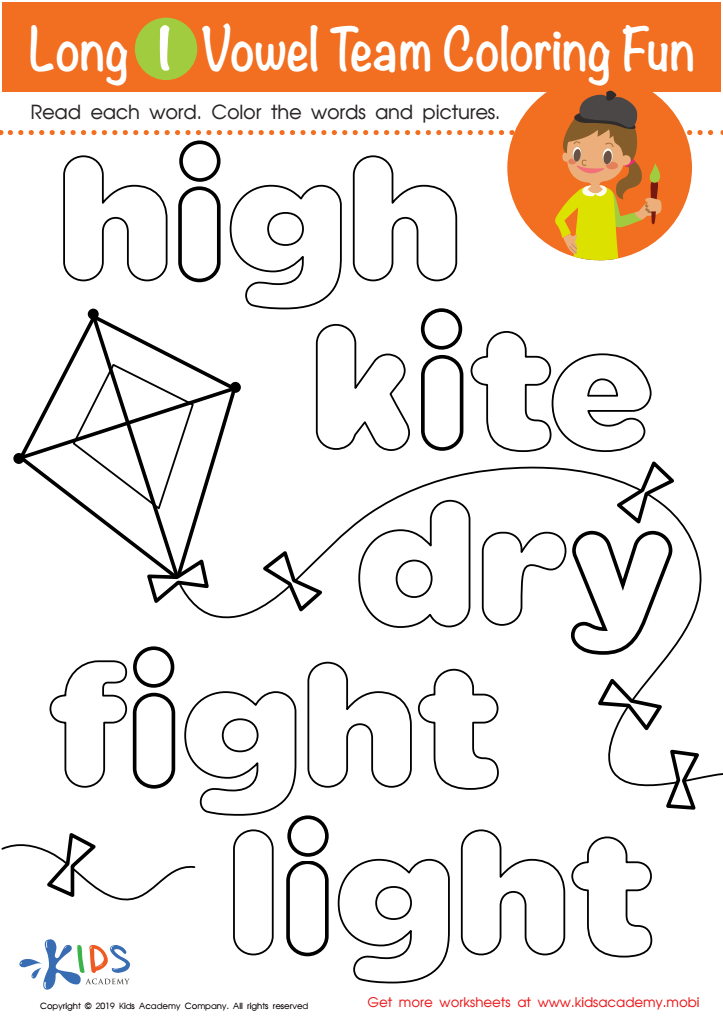
Long I Vowel Team Coloring Worksheet
 Assign to My Students
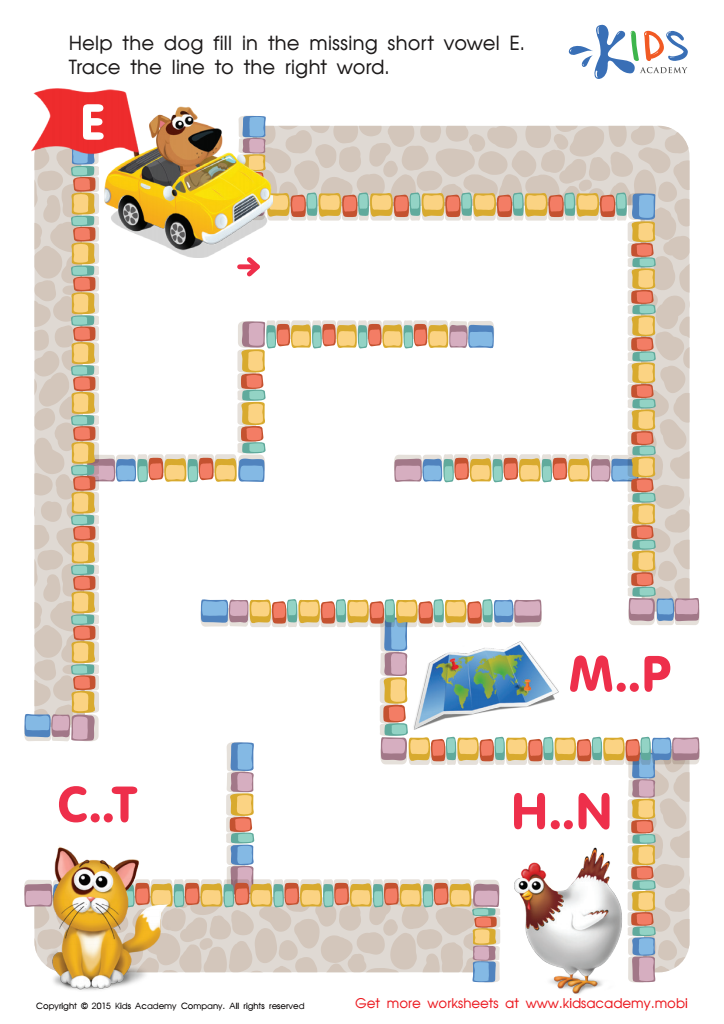
Short Vowel Sound E Worksheet
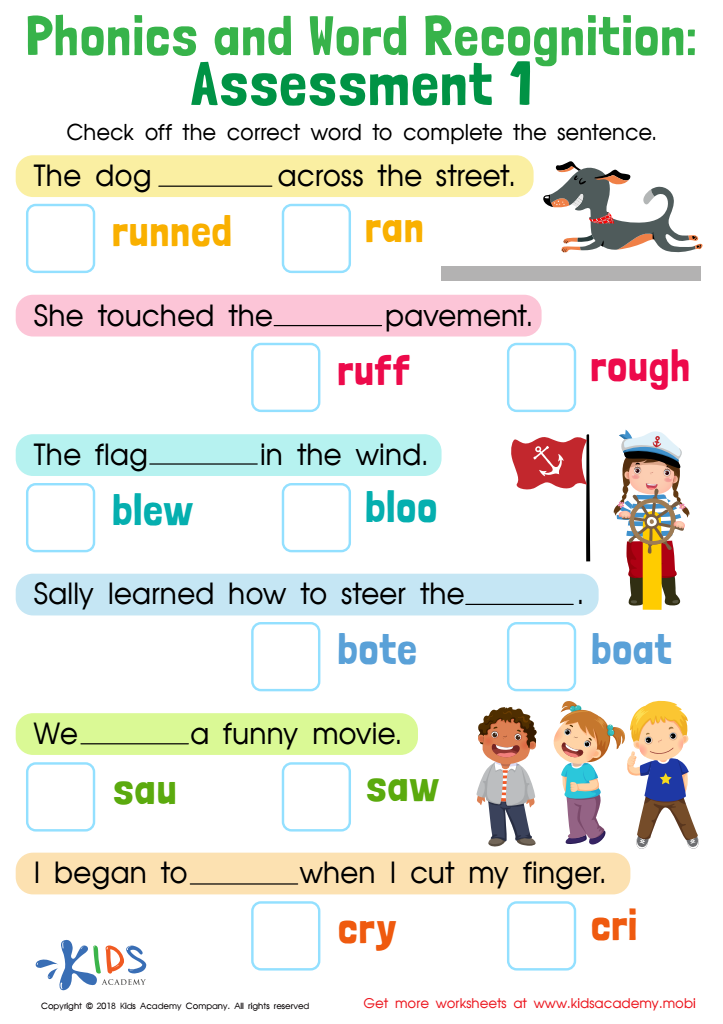
Phonics and Word Recognition: Assessment 1 Worksheet
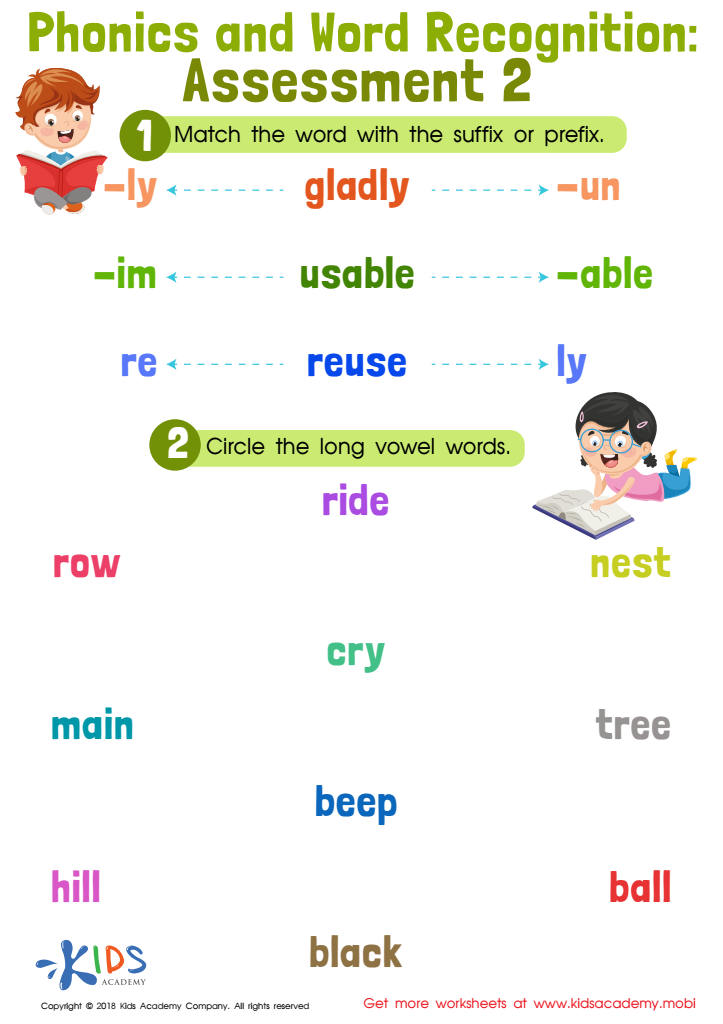
Phonics and Word Recognition: Assessment 2





Parents and teachers should place a strong emphasis on word identification and vowel recognition for children aged 6-7 because these foundational skills are crucial for literacy development. At this age, children transition from recognizing letters to decoding simple words, which sets the stage for fluent reading. Vowel sounds, in particular, play a central role because they are present in every syllable, making understanding them essential for accurate pronunciation and comprehension.
Mastering vowel sounds helps children decode unfamiliar words and spell correctly. For instance, comprehending the difference between short and long vowel sounds can aid in distinguishing words like "bit" from "bite." This not only boosts reading ability but also enhances vocabulary, as children become more confident in tackling new words.
Additionally, early success in reading fosters a positive attitude towards learning. When children can effortlessly identify and spell words, their reading proficiency grows, enabling them to access more complex texts. This early success builds self-esteem and encourages a lifelong love of reading and learning.
In summary, focusing on word identification and vowel sounds for young learners equips them with essential skills for academic success, ensuring they become confident, competent readers and capable communicators.







