Letter Tracing Practice English for Beginners Worksheets for Ages 6-7
3 filtered results
-
From - To
Discover our "Letter Tracing Practice Worksheets" tailored for beginners aged 6-7! These engaging and educational resources are designed to help young learners master the alphabet while enhancing their handwriting skills. Each worksheet focuses on tracing letters with clear guidelines, promoting correct letter formation and boosting confidence in early writing. Perfect for ESL learners, our worksheets incorporate fun themes and activities to keep children motivated and excited about learning. Whether at home or in the classroom, these tracing exercises create a solid foundation for future literacy skills. Encourage your child’s love for letters and watch their writing skills blossom!
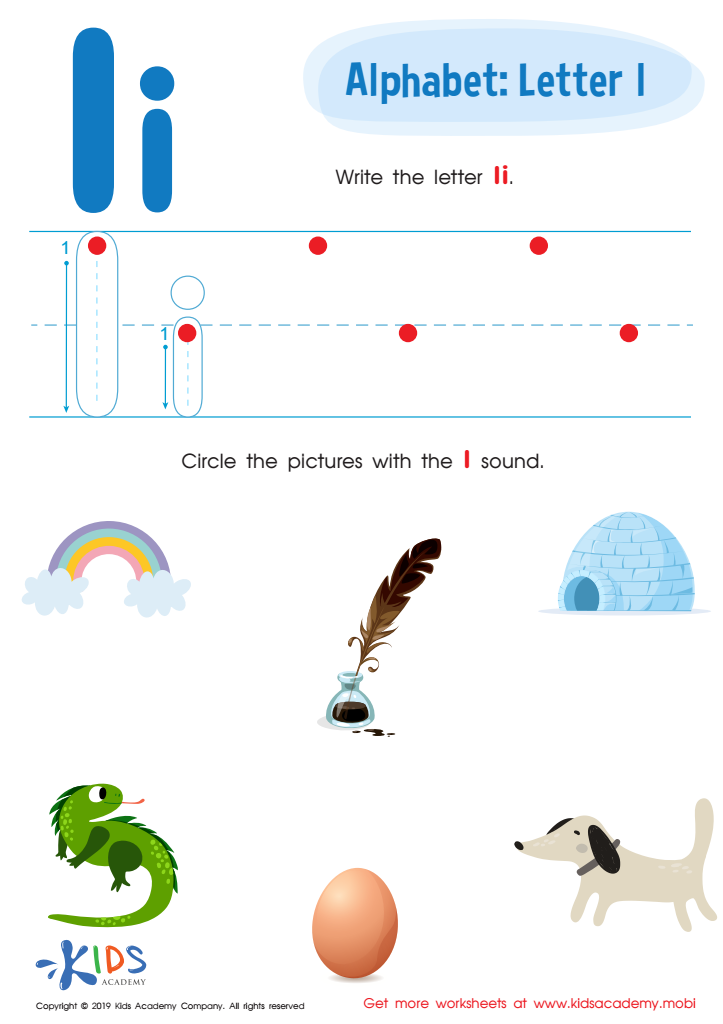
Letter I Tracing Worksheet
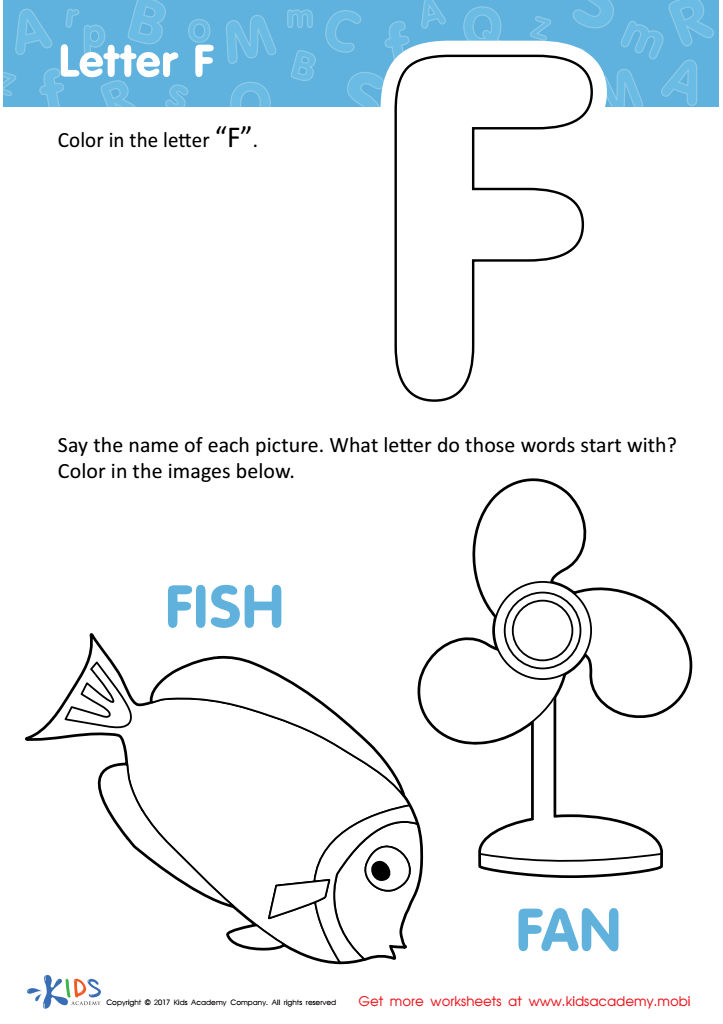
Letter F Coloring Sheet
 Assign to My Students
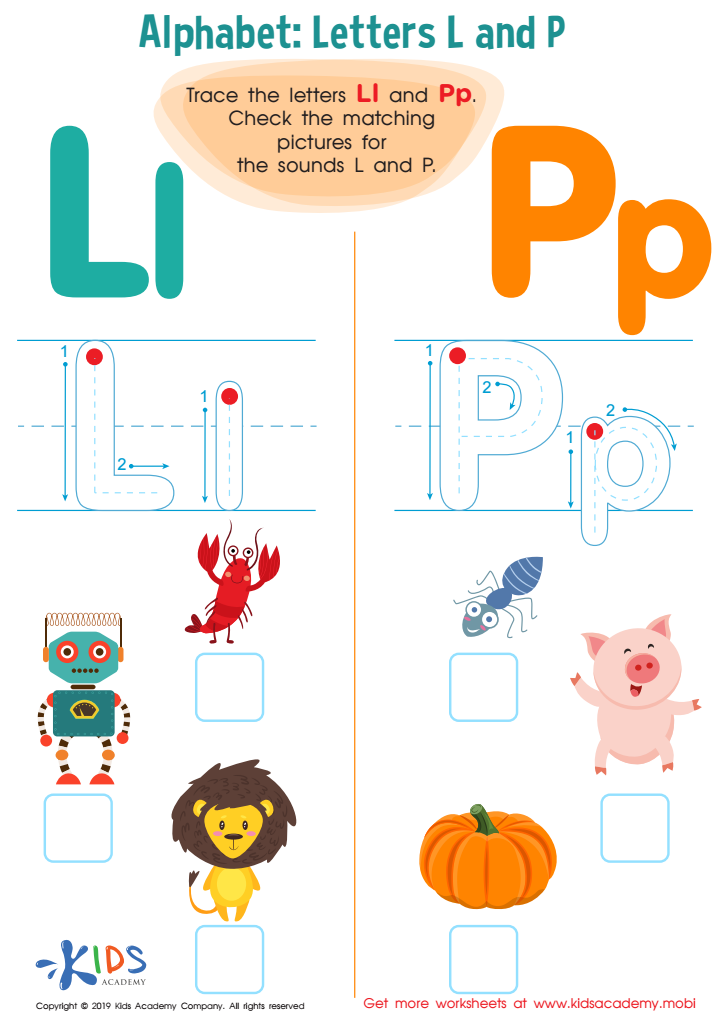
Letter L and P Tracing Worksheet





Letter tracing practice is crucial for beginners aged 6-7 as it lays the foundation for several key skills that are essential for academic success. Firstly, it enhances fine motor skills, which are vital for writing. At this age, children are developing hand-eye coordination and dexterity, and tracing letters helps strengthen the muscles in their hands.
Additionally, it promotes letter recognition, which is fundamental for reading and spelling. Understanding how each letter is formed supports phonemic awareness, allowing children to connect sounds with their corresponding letters. This connection is essential as they begin to read and write independently.
Moreover, letter tracing incorporates important aspects of cognitive development by helping students cultivate focus and patience. The repetitive nature of tracing can also reinforce memory retention and visual recognition of letters, aiding in the learning process overall.
For parents and teachers, investing time in letter tracing activities presents an opportunity for bonding and interaction, while also making learning fun. By engaging in this practice, children develop confidence in their writing abilities, setting them up for future literacy success. Thus, prioritizing letter tracing practice is beneficial for fostering young learners' academic groundwork and love for learning.