Applying math skills Worksheets for Ages 6-7
3 filtered results
-
From - To
Boost your child's math proficiency with our "Applying Math Skills Worksheets for Ages 6-7." These engaging, printable worksheets are designed to advance your child's understanding of key mathematical concepts. Children will gain confidence and strengthen their problem-solving abilities through fun and interactive activities involving addition, subtraction, measurement, and more. Each worksheet is crafted to align with core curriculum standards, ensuring your child builds a solid math foundation while also encouraging critical thinking. Perfect for both classroom and home use, our worksheets make math practice enjoyable and effective. Start empowering your young learner today!
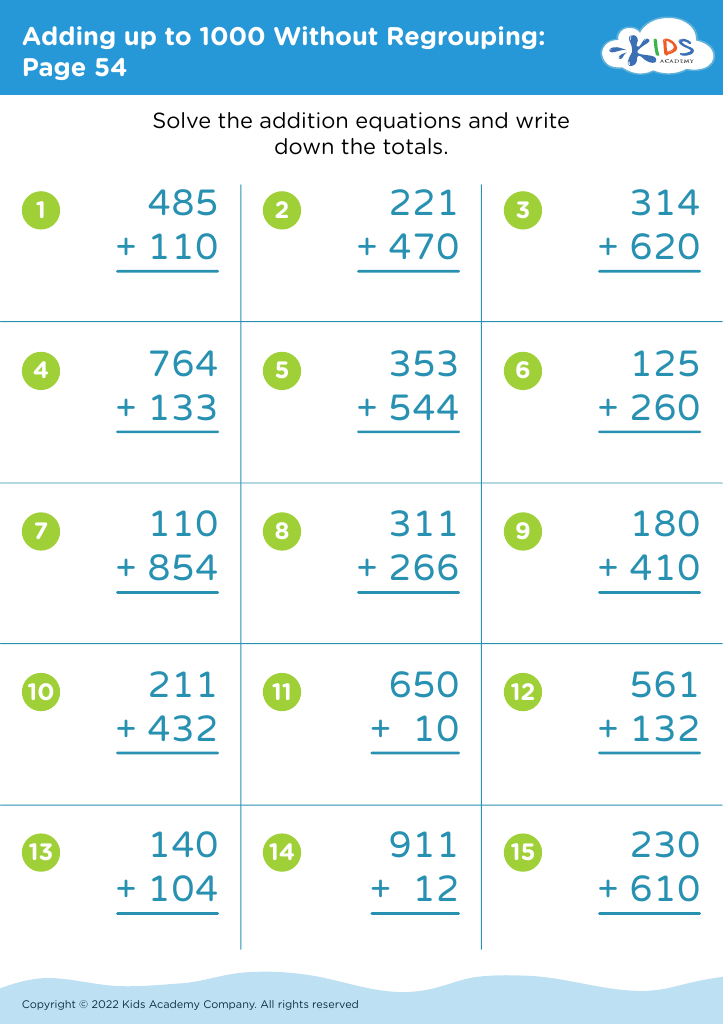
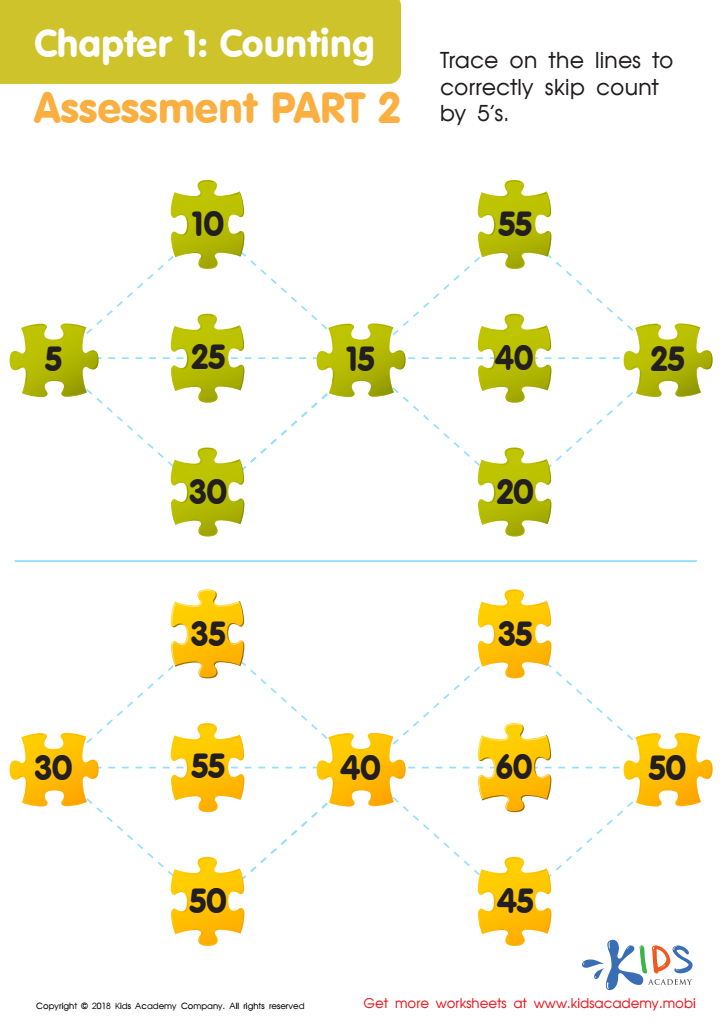
Counting: Assessment 2 Worksheet
 Assign to My Students
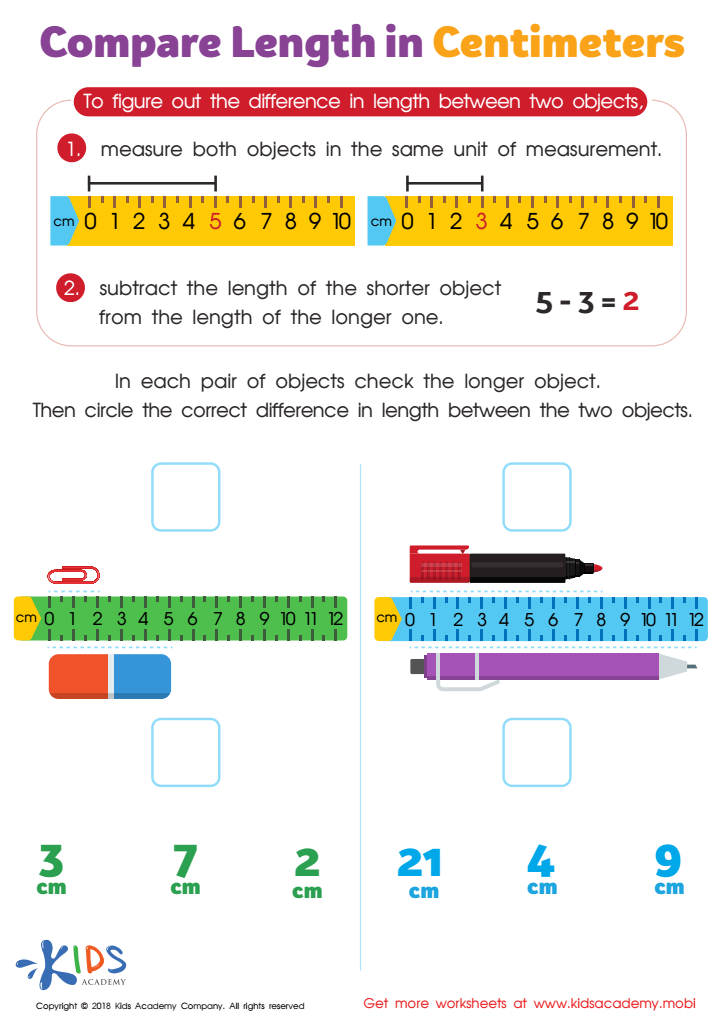
Compare Length in Centimeters Worksheet







For ages 6-7, applying math skills is crucial as it lays the foundation for future academic success and everyday problem-solving abilities. At this age, children are naturally curious and developing cognitive abilities that make them prime candidates for learning mathematical concepts. Engaging in math activities helps to enhance their logical thinking, reasoning, and analytical skills.
Math skills, such as addition, subtraction, sorting, and patterns, are fundamental not just for higher academic achievement but also for daily life. For instance, understanding numbers and basic arithmetic can help children in managing time, recognizing shapes, and even shopping. Moreover, these skills support other areas of learning – they notice patterns in the environment which help in science and creativity, and through measuring and comparing, they get introduced to geographical concepts.
Parents and teachers play a pivotal role by creating a positive learning environment that encourages exploration and confidence. By incorporating playful math games and practical applications, they can make math learning enjoyable and relevant. Cultivating an early interest in math reduces anxiety around the subject and builds a child’s confidence, leading to a lifelong appreciation and mastery of math that aids in professional and personal life. Supporting early math skills is essential for developing well-rounded, capable individuals.








