Basic counting skills Worksheets for Ages 6-7 - Page 2
26 filtered results
-
From - To
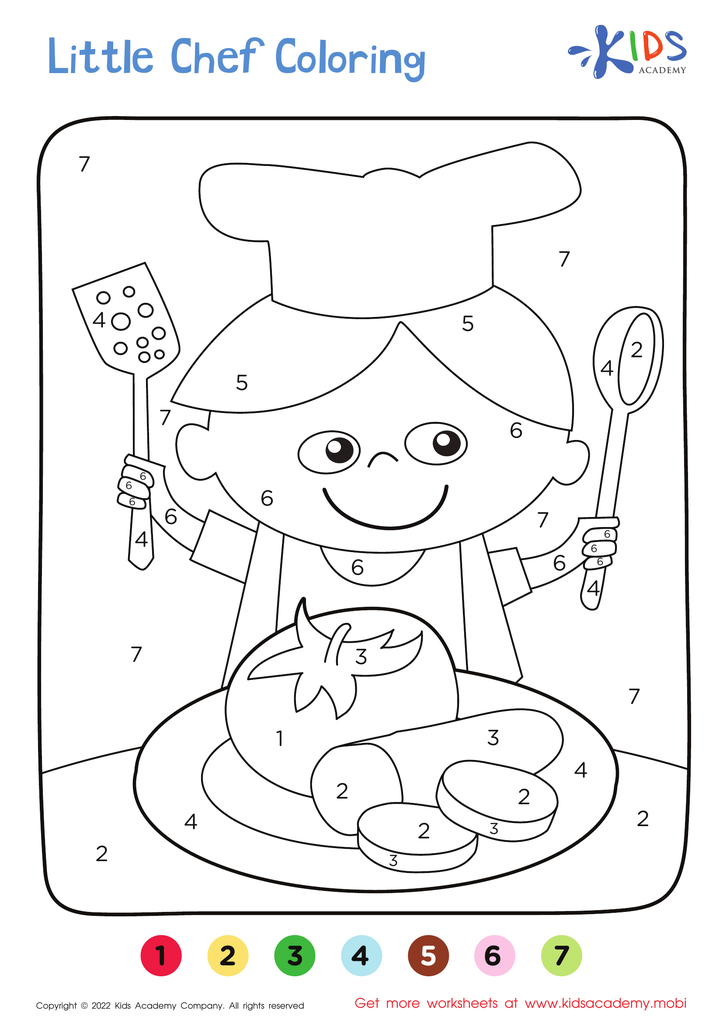
Little Chef – Coloring by Numbers
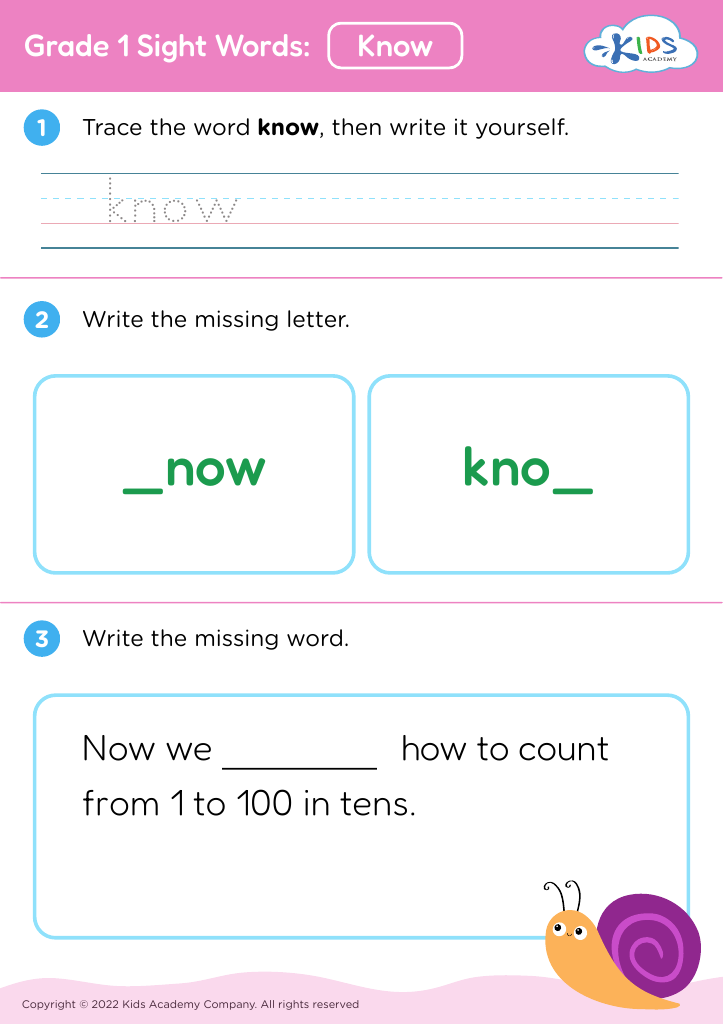








Basic counting skills serve as the bedrock for children's overall mathematical development and are crucial for ages 6-7. At this formative stage, children transition from simple rote counting to understanding quantity and number relationships. Proficiency in counting helps build a strong foundation that benefits them far beyond elementary mathematics. When children count accurately, they develop numerical literacy, which is essential for learning more complex concepts like addition, subtraction, and problem-solving tasks.
Furthermore, counting skills facilitate cognitive development, enhancing children's memory, attention, and sequencing abilities. These skills also lay the groundwork for real-life applications such as handling money, telling time, and measuring quantities, making everyday activities easier and more comprehensible.
Incorporating counting in playful, engaging ways, whether through games, songs, or hands-on activities, can stimulate a child’s enthusiasm for learning. This reinforces the concept that mathematics is fun and approachable, which is vital for fostering a positive attitude towards education as they progress academically.
By investing time in cultivating robust counting skills at an early age, parents and teachers equip children with the critical thinking skills and confidence needed to tackle more advanced mathematical challenges, setting them on a path to academic success and real-world competency.








