Comparative analysis Worksheets for Ages 6-7
5 filtered results
-
From - To
Discover our engaging Comparative Analysis Worksheets designed specifically for children aged 6-7. These resources help young learners master key skills in comparing and contrasting various objects, concepts, and characters. With vibrant illustrations and age-appropriate content, students develop critical thinking as they analyze differences and similarities. Our worksheets encourage interactive learning through fun exercises, boosting vocabulary and analytical skills essential for lifelong learning. Ideal for both classroom and home use, these worksheets offer a comprehensive approach to understanding comparative concepts while captivating the imaginations of young minds. Elevate your child's learning experience with our thoughtfully crafted Comparative Analysis Worksheets today!
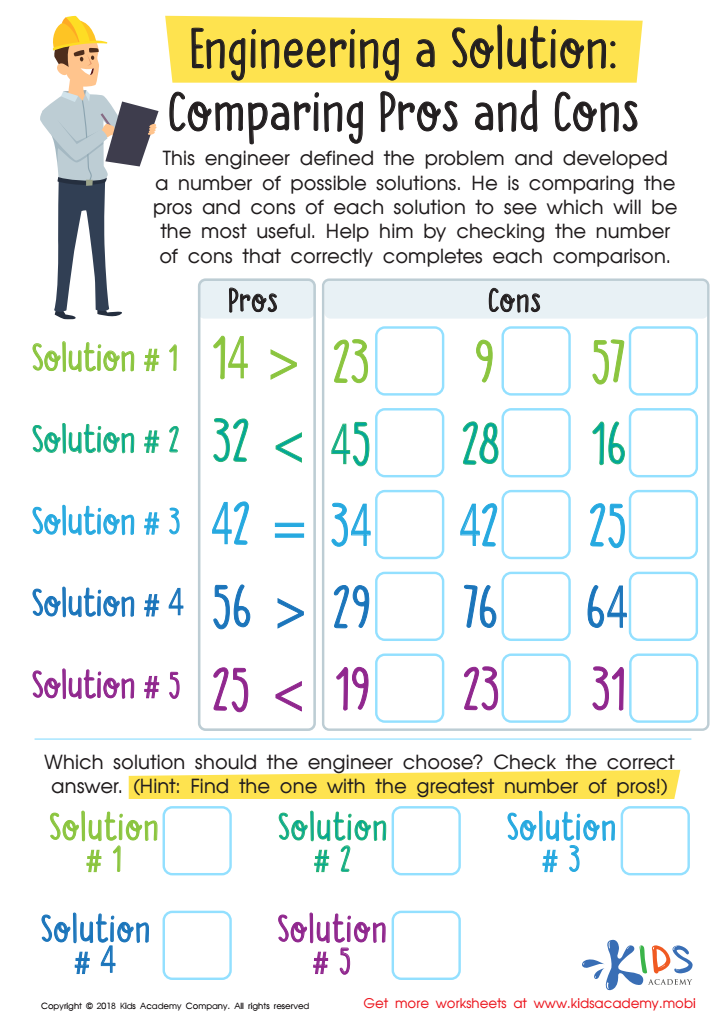
Engineering a Solution: Comparing Pros and Cons Worksheet
 Assign to My Students
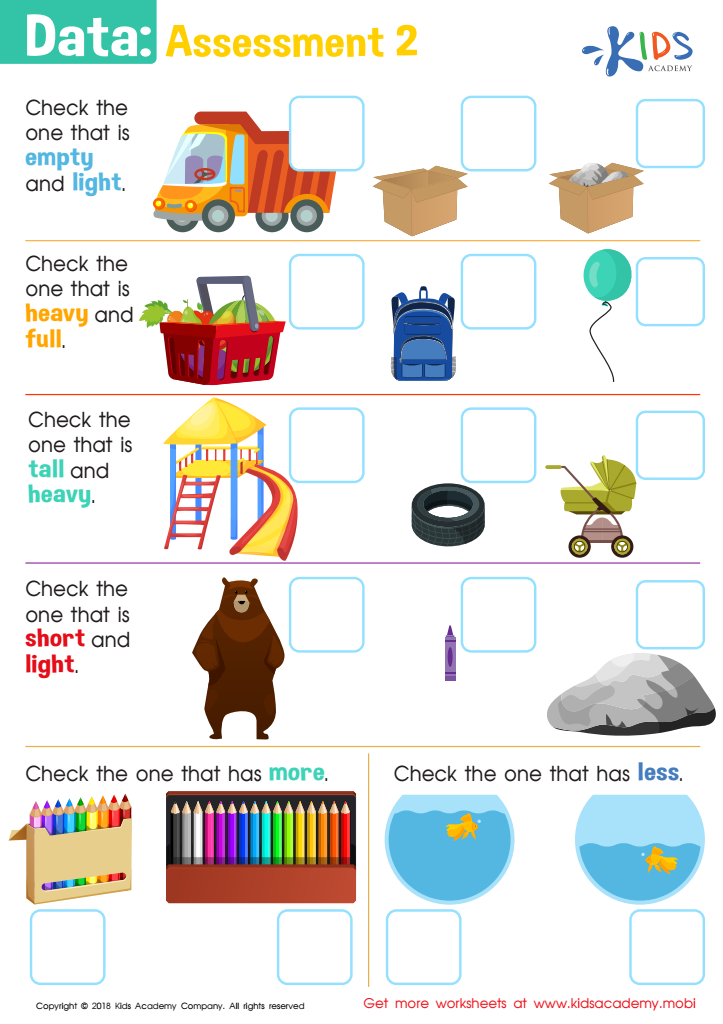
Data: Assessment 2 Worksheet
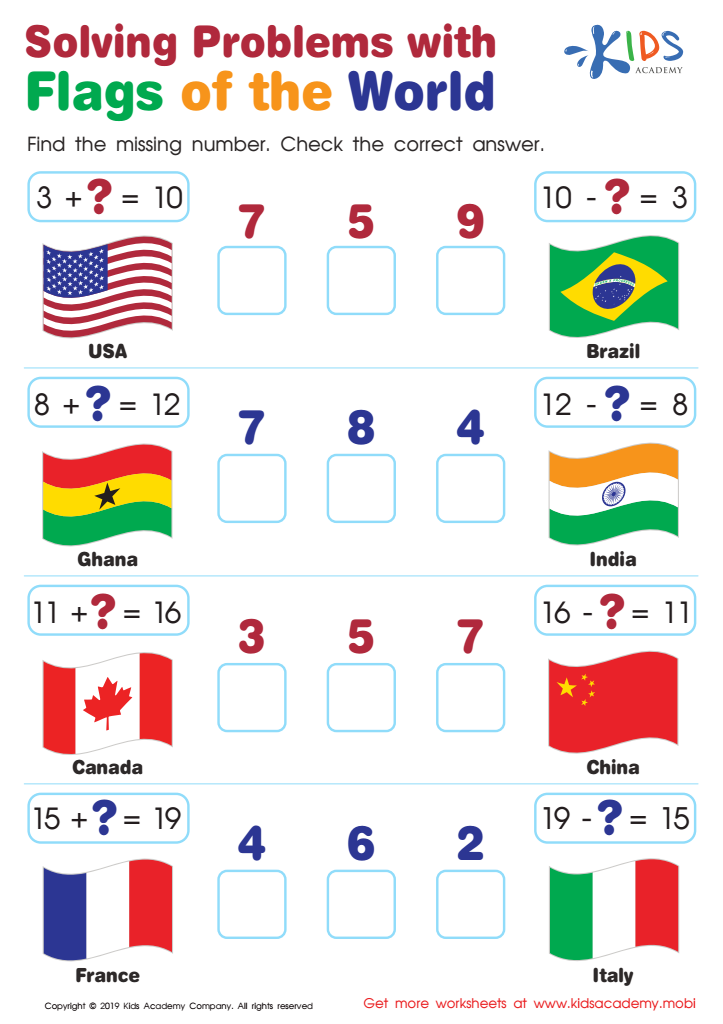
Solving Problems with Flags of the World Worksheet
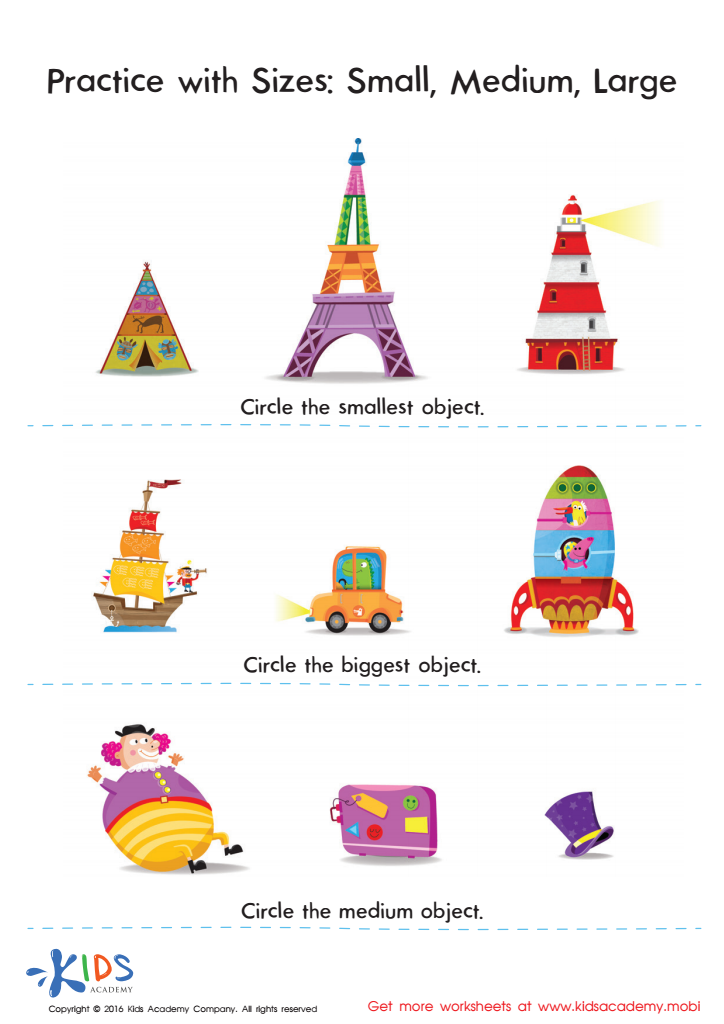





.jpg)
.jpg)

Comparative analysis is vital for parents and teachers of children ages 6-7 as it provides deeper insights into the learning and development of young learners. This age group is characterized by significant cognitive, emotional, and social growth, making it an ideal time to identify strengths and areas needing support. Through comparative analysis, educators can assess children’s performance against benchmarks or similar peers, enabling tailored instructional strategies that cater to individual needs.
Moreover, incorporating comparative analysis fosters a culture of continuous improvement. Teachers can refine their teaching methods by comparing the effectiveness of various approaches, resources, and interventions. This ensures that curriculum decisions are data-driven and focused on enhancing student engagement and achievement.
For parents, understanding where their child stands in comparison to peers can illuminate potential skills or challenges that may need addressing. This empowers them to collaborate effectively with educators in creating supportive home learning environments.
Ultimately, comparative analysis enhances educational outcomes, promoting healthy competition and encouraging students to reach their fullest potential while also building pathways for discussions between teachers and parents that benefit children's growth during these formative years. By caring about this process, parents and teachers can collaboratively shape brighter educational experiences and futures for young learners.








