Comparing weights Worksheets for Ages 6-7
3 filtered results
-
From - To
Our "Comparing Weights Worksheets for Ages 6-7" are designed to make learning fun and interactive for young learners. These engaging worksheets help children develop critical thinking and problem-solving skills as they compare and contrast different weights. Through playful, age-appropriate activities, kids will enhance their understanding of weight concepts, using a variety of objects to determine heavier, lighter, and equal weights. Perfect for classroom or home use, our worksheets align with educational standards to support your child's growth and confidence in math and science. Start your child's learning journey with our expertly-crafted comparing weights worksheets today!
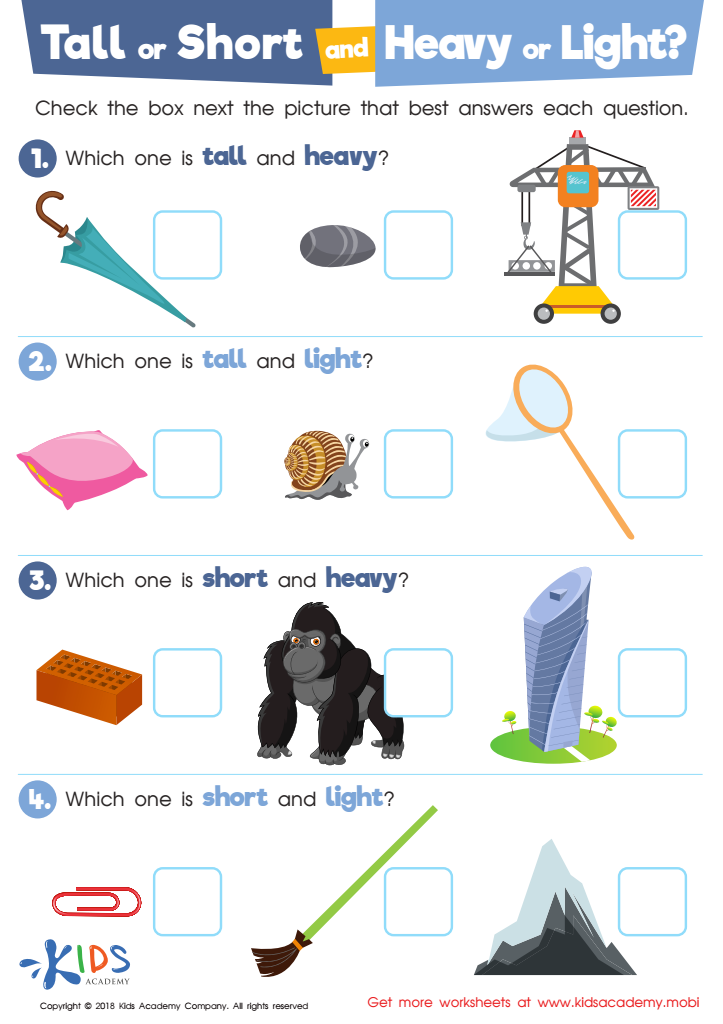
Tall or Short and Heavy or Light? Worksheet
 Assign to My Students
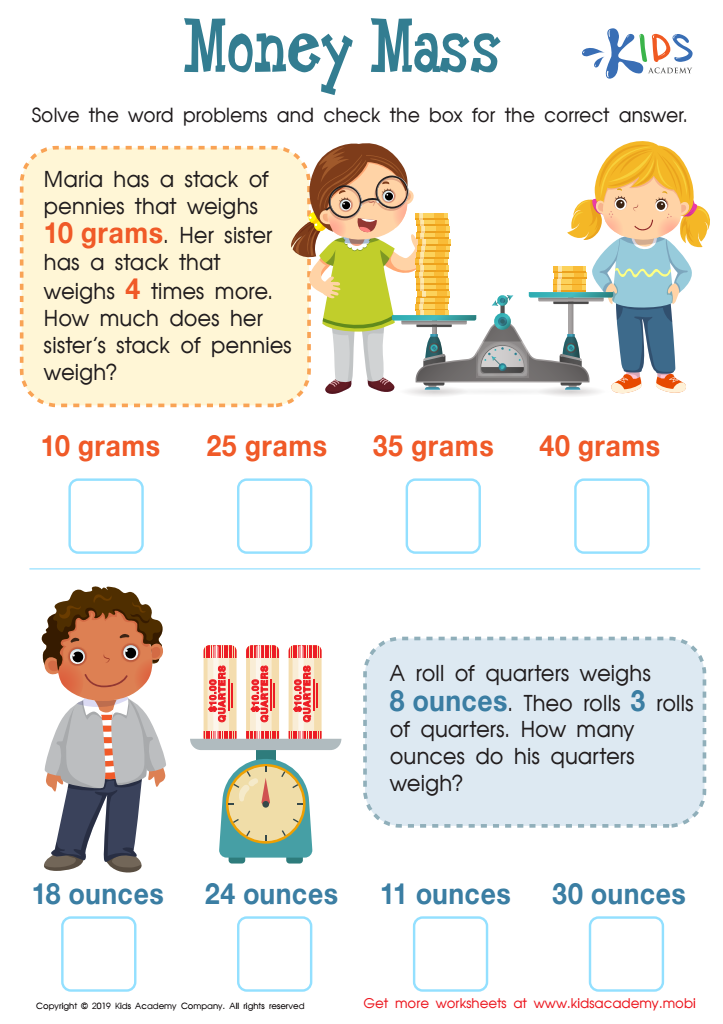
Money Mass Worksheet







Parents and teachers should place importance on teaching children ages 6-7 about comparing weights because it is a foundational math skill critical for cognitive development. At this age, children’s minds are highly receptive to hands-on learning experiences that foster their understanding of abstract concepts. By comparing weights, children develop their ability to measure, estimate, and differentiate between heavy and light objects, which in turn enhances their observational and descriptive skills.
Furthermore, comparing weights helps young learners build problem-solving and critical thinking skills. For example, when children compare the weights of different objects, they practice making predictions, testing them through experimentation, and analyzing the results. Such activities not only bolster their mathematical reasoning but also contribute to their scientific inquiry abilities.
Equipping children with these skills early on lays a solid groundwork for more advanced math topics they will encounter later. Beyond academics, understanding weight is a practical skill useful in everyday life, from cooking and shopping to playing and organizing spaces. Parents and teachers who emphasize this learning ensure their children students find math relevant and engaging, ultimately fostering a lifelong interest in the subject. Therefore, prioritizing the concept of weight comparisons can have a profound and lasting benefit on children's educational journey.








