Explore our engaging Contextual Understanding Worksheets designed specifically for children ages 6-7. These interactive resources enable young learners to enhance their comprehension skills by connecting concepts to real-world situations. Each worksheet encourages critical thinking and improves reading skills through fun activities, such as matching pictures to words, filling in the blanks, and answering questions based on context. Perfect for classroom use or homeschooling, our worksheets provide a balanced approach to learning, ensuring children grasp essential vocabulary and context clues. Elevate your child's learning experience and foster a love for reading with our comprehensive and enjoyable worksheets today!

Check out this FREE "Contextual understanding" Trial Lesson for age 6-7!

Suffixes –ful, -less

Favorites
With answer key
Interactive
  • 6-7
  • Contextual understanding
What's the Meaning? Worksheet

What's the Meaning? Worksheet

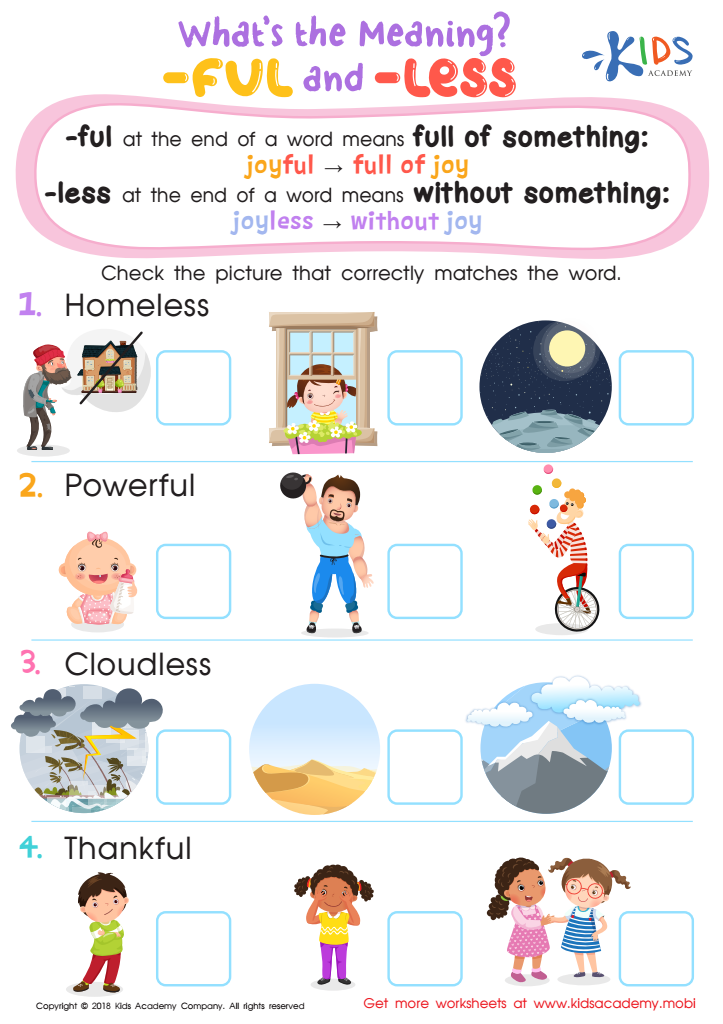
Look with your youngster through this colorful worksheet and match the pictures to the words at the top. These words have different meanings due to either a prefix or suffix being added, such as "ful" or "less".
What's the Meaning? Worksheet
Worksheet
What Does It Mean? Worksheet

What Does It Mean? Worksheet

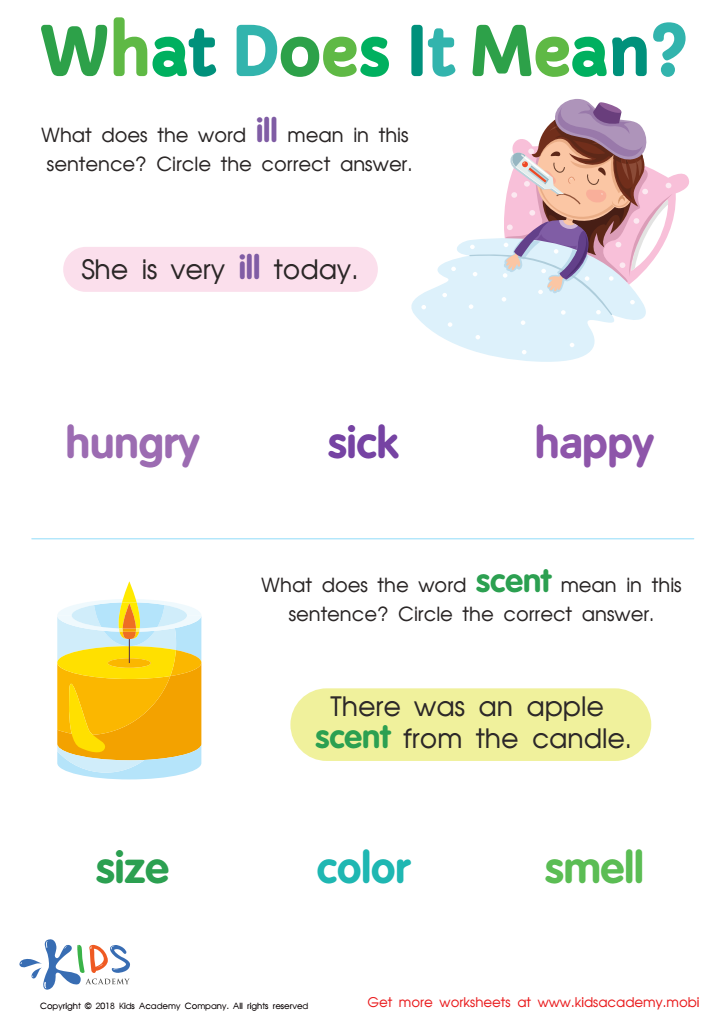
Students should know the meaning of words, even when used in different contexts. This worksheet has two sections. In the first, there's a picture on the right side. Ask students the meaning of 'ill' in "she is very ill today". Help them circle the correct answer from the options. The second section follows the same pattern. Make sure students circle the right answer.
What Does It Mean? Worksheet
Worksheet
Craft and Structure: Assessment 2 Worksheet 2

Craft and Structure: Assessment 2 Worksheet 2

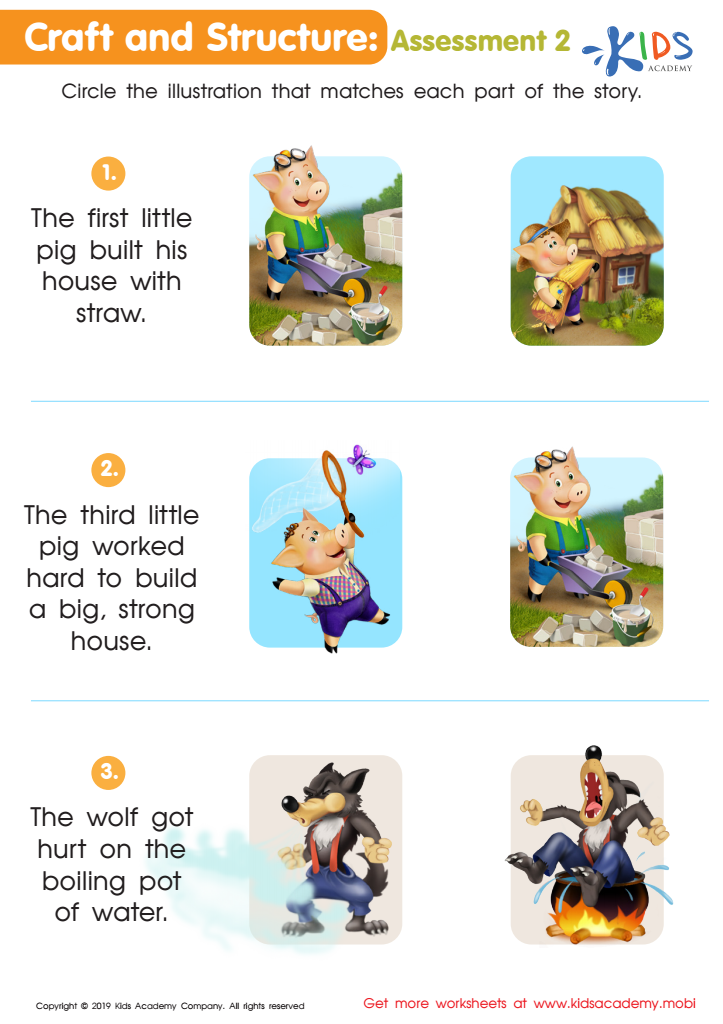
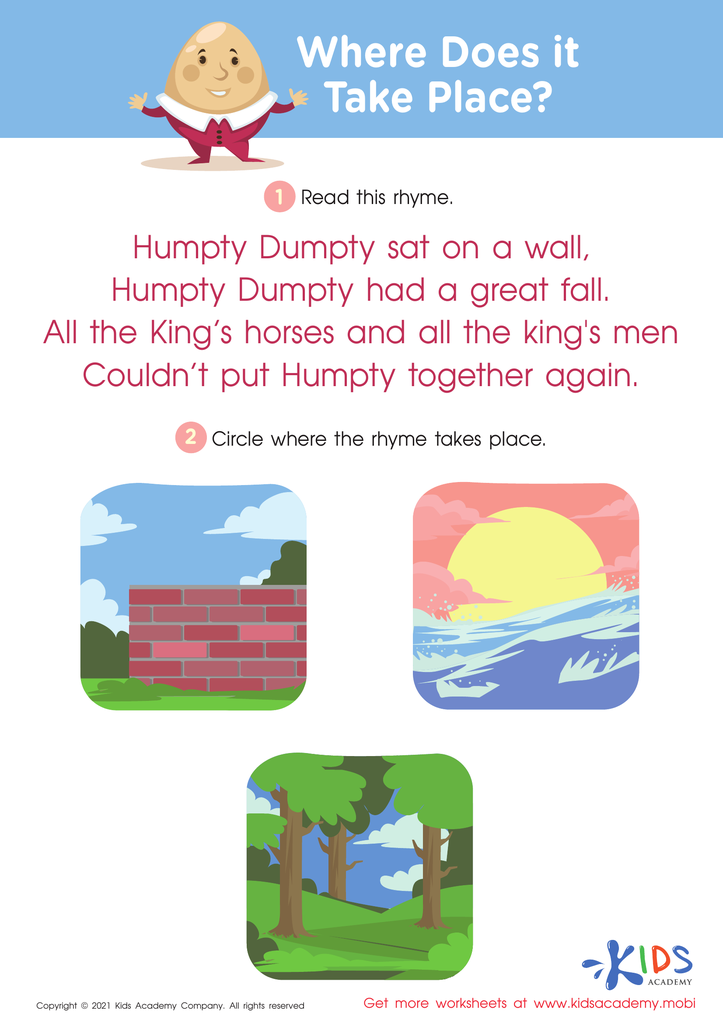
This fun printout with colorful illustrations will assess how much your kids pay attention to story time. Go through the pictures and help them circle the ones that match each part of the story. Stimulate their brains and have fun in the process!
Craft and Structure: Assessment 2 Worksheet 2
Worksheet
Where Does It Take Place? Worksheet

Where Does It Take Place? Worksheet

Original: The number of children who are enrolled in the school has increased by 10% from the previous year. Enrollment in the school has increased 10% from last year, with more children attending.
Where Does It Take Place? Worksheet
Worksheet
Guess the Meaning Worksheet

Guess the Meaning Worksheet

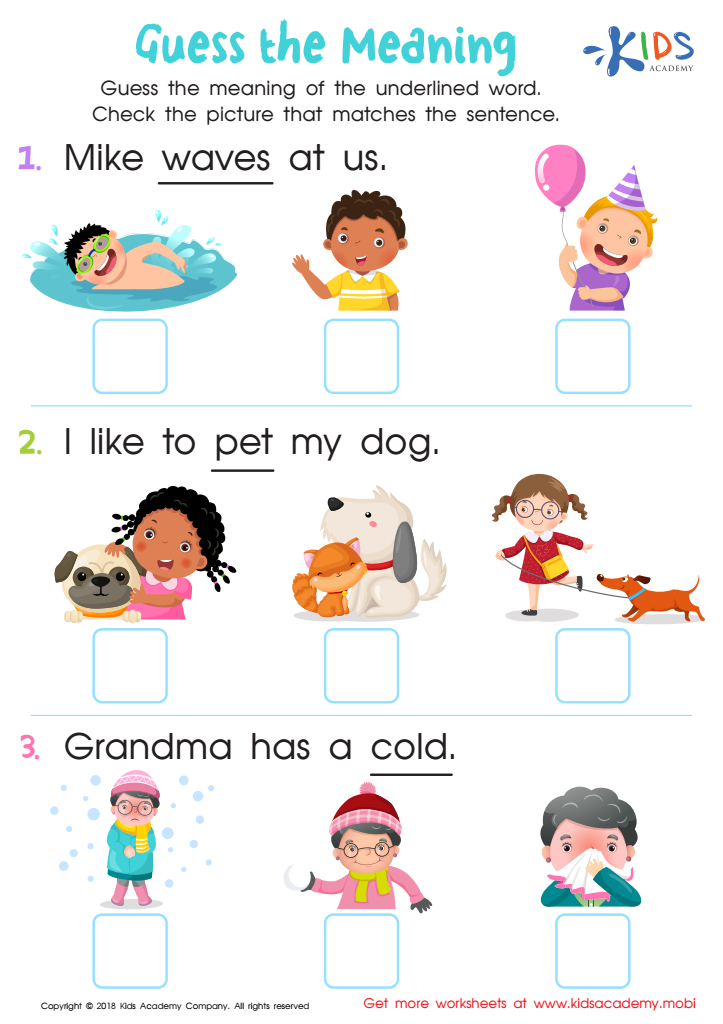
Help your child learn the meanings of words in different contexts by using this colourful, free worksheet. What is the meaning of the underlined words in each sentence? Look at the images and pick the one that accurately describes the word's context.
Guess the Meaning Worksheet
Worksheet
Reading: Fill in the Blank Worksheet

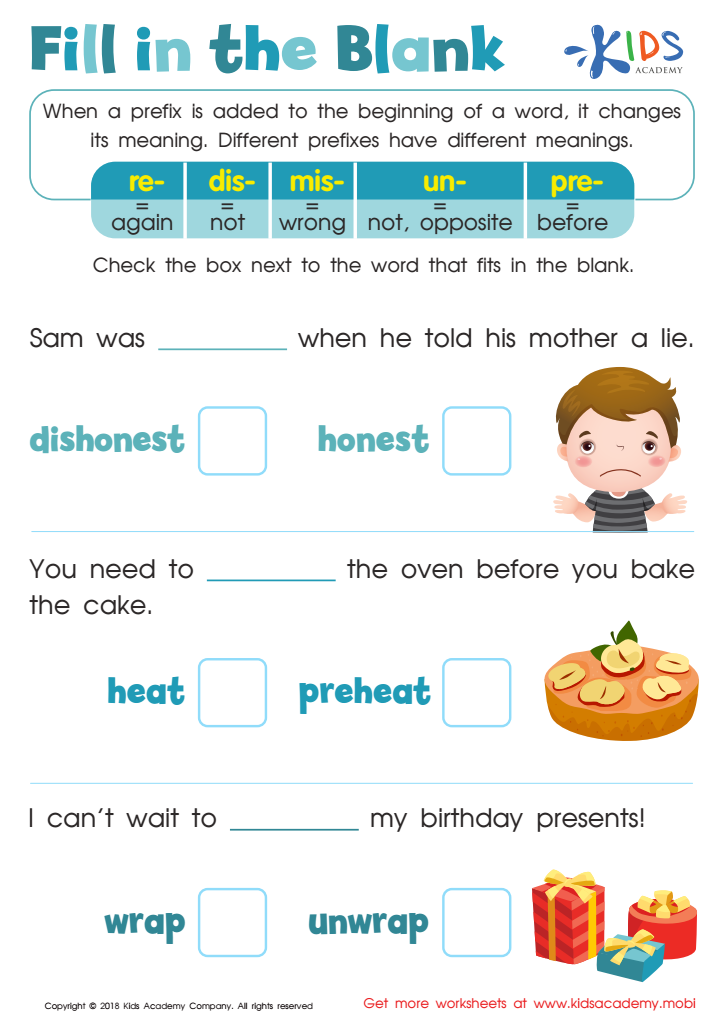
Reading: Fill in the Blank Worksheet

Students can practice understanding the meaning of common prefixes with this worksheet. They read sentences and pick the correct word with the appropriate prefix to complete it. Downloadable and a great addition to reading and vocabulary resources, this helps improve comprehension with mastery of the skill!
Reading: Fill in the Blank Worksheet
Worksheet
Shades of Meaning: Verbs Worksheet

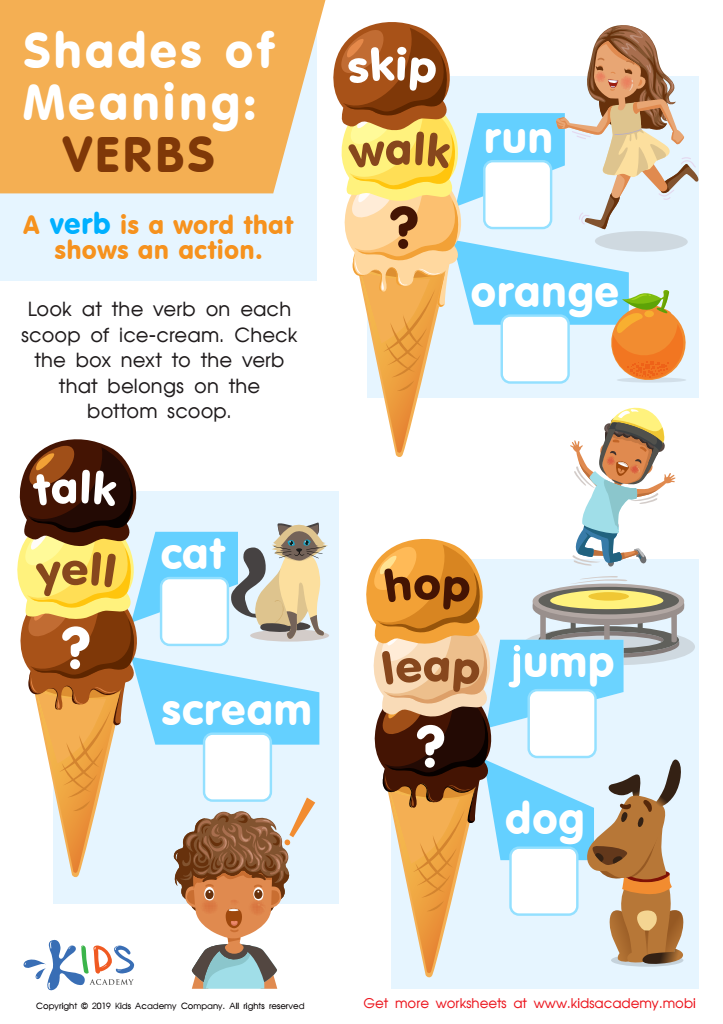
Shades of Meaning: Verbs Worksheet

Verbs are words that show action. Introduce kindergartners to verbs by having them check the box next to the verb that belongs on the bottom scoop in a worksheet. This is a great way to teach them this important part of speech and help them learn to write proper sentences and speak correctly.
Shades of Meaning: Verbs Worksheet
Worksheet
Adjectives: At The Zoo Worksheet

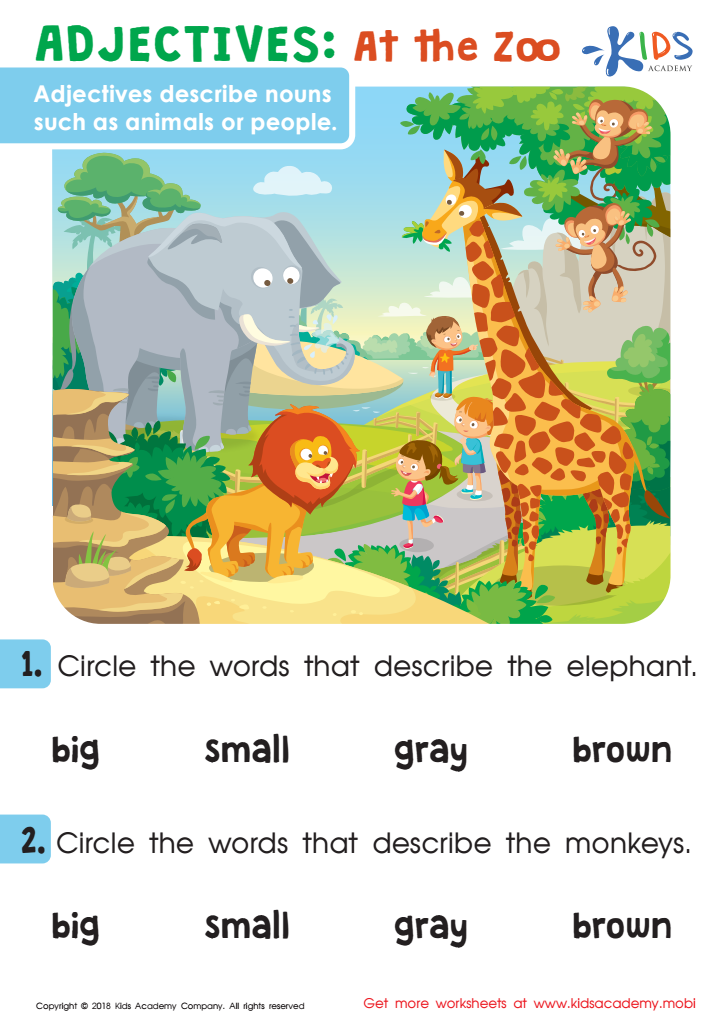
Adjectives: At The Zoo Worksheet

Take your kids to the zoo and ask them about their favorite activities and animals. This worksheet is a great way for kids to learn about adjectives. Explain that adjectives describe nouns like people or animals (e.g. big, tall, dark). Look at the printout with your kids and help them circle words that describe the animals in the picture.
Adjectives: At The Zoo Worksheet
Worksheet
Free printable synonym worksheets for 2nd grade

Free Printable Synonym Worksheet

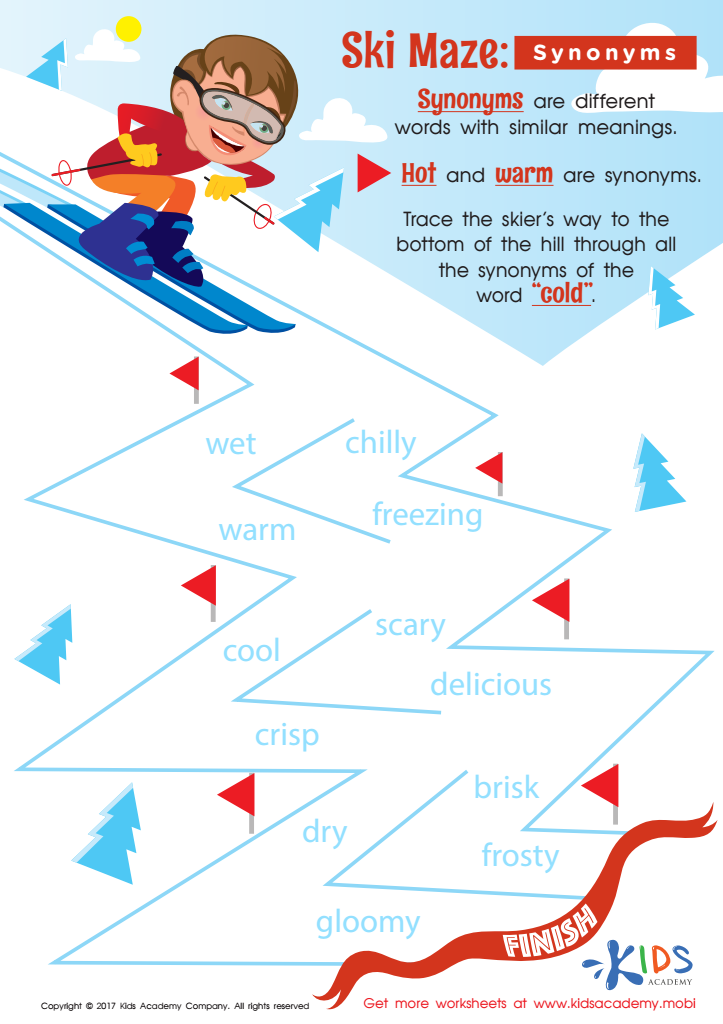
Our free printable synonym worksheet for 2nd grade will help kids learn similar words to expand their vocabulary. Kids will have fun challenging themselves to find all the words that are synonyms for “cold”. Enhance their language and writing with this joyful worksheet!
Free Printable Synonym Worksheet
Worksheet
What Does It Mean? Worksheet

What Does It Mean? Worksheet

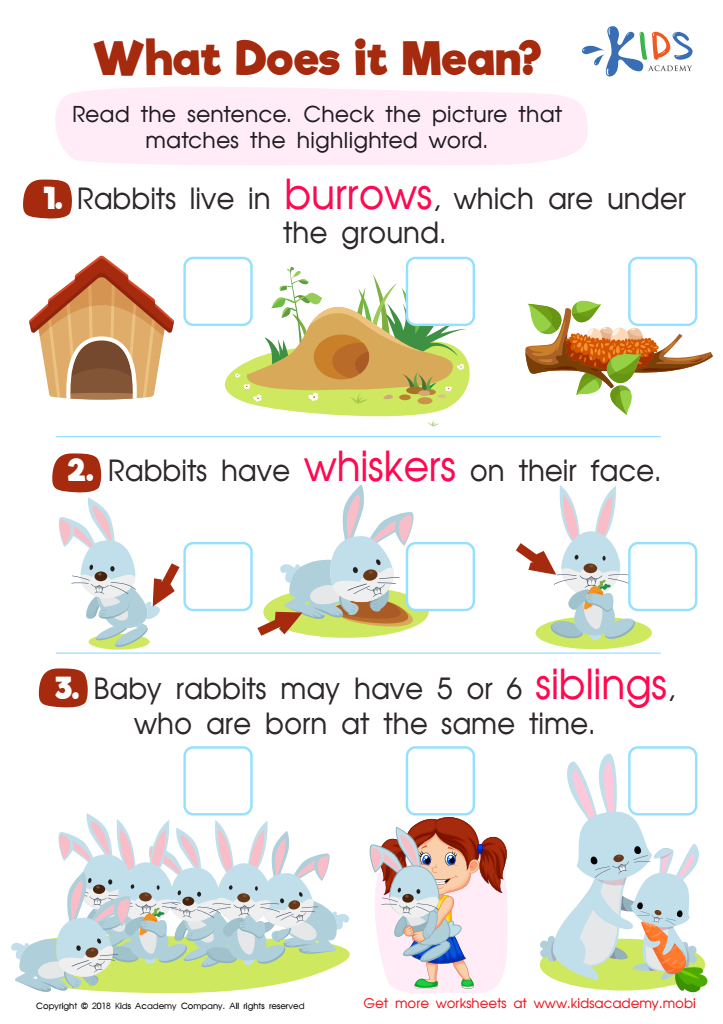
Teach your child to use context clues with this engaging Kids Academy worksheet. Read the sentences and find the pink-highlighted word. Use the other words in the sentence to figure out the meaning, then check the box next to the picture that represents it.
What Does It Mean? Worksheet
Worksheet
Word Choice Worksheet

Word Choice Worksheet

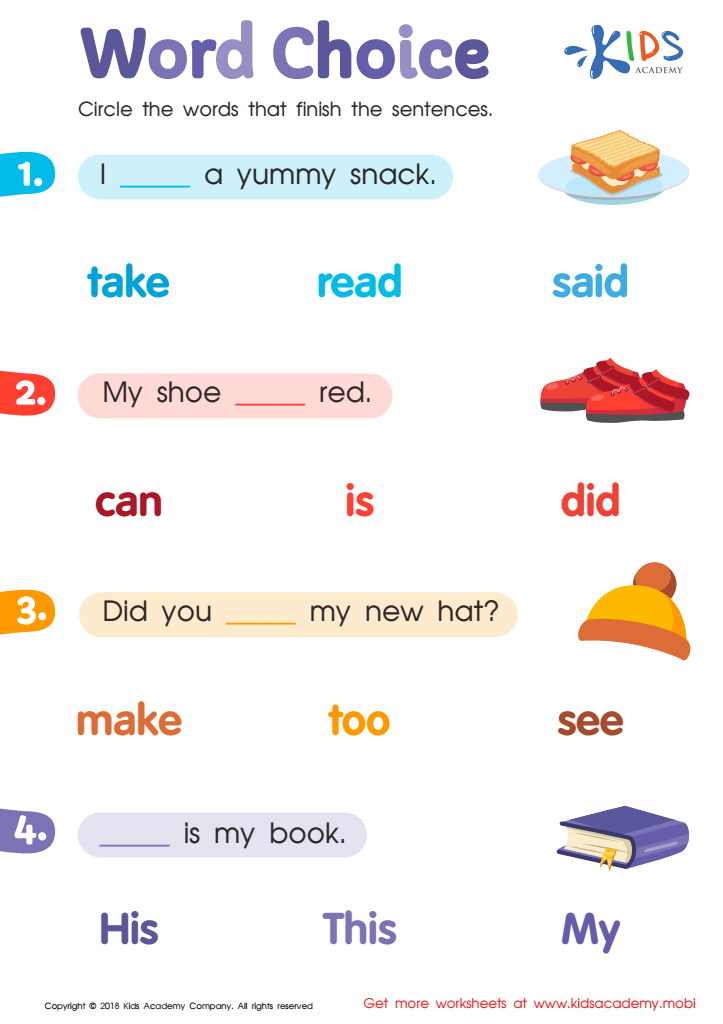
This worksheet can help your children become better readers. By now, you should have an idea of their reading level. Read the incomplete sentences aloud and point to the missing piece. Have your students pick the correct word they think best fits the sentence out of the options given.
Word Choice Worksheet
Worksheet


Contextual understanding is crucial for children aged 6-7 as it enhances their ability to connect new information with what they already know, facilitating deeper learning and retention. During this developmental stage, children are highly observant and curious, making it the perfect time to encourage them to see relationships within various subjects, like mathematics and language. By integrating context into learning, parents and teachers can help students make sense of abstract concepts, turning them into relatable ideas that inspire curiosity.

Additionally, fostering contextual understanding supports critical thinking and problem-solving skills. When children learn to place information within a real-world context, they become more adept at analyzing situations and developing solutions. This is especially important in a diverse classroom, as contextual learning can consider individual experiences and cultural backgrounds, promoting inclusivity and empathy.

Moreover, children who grasp context are more confident learners. They are likely to participate enthusiastically, express their thoughts, and engage with peers in meaningful discussions. For parents and teachers, emphasizing contextual understanding not only strengthens academic skills but also nurtures a generation of thoughtful, compassionate individuals ready to tackle future challenges.