Develop counting skills Worksheets for Ages 6-7
7 filtered results
-
From - To
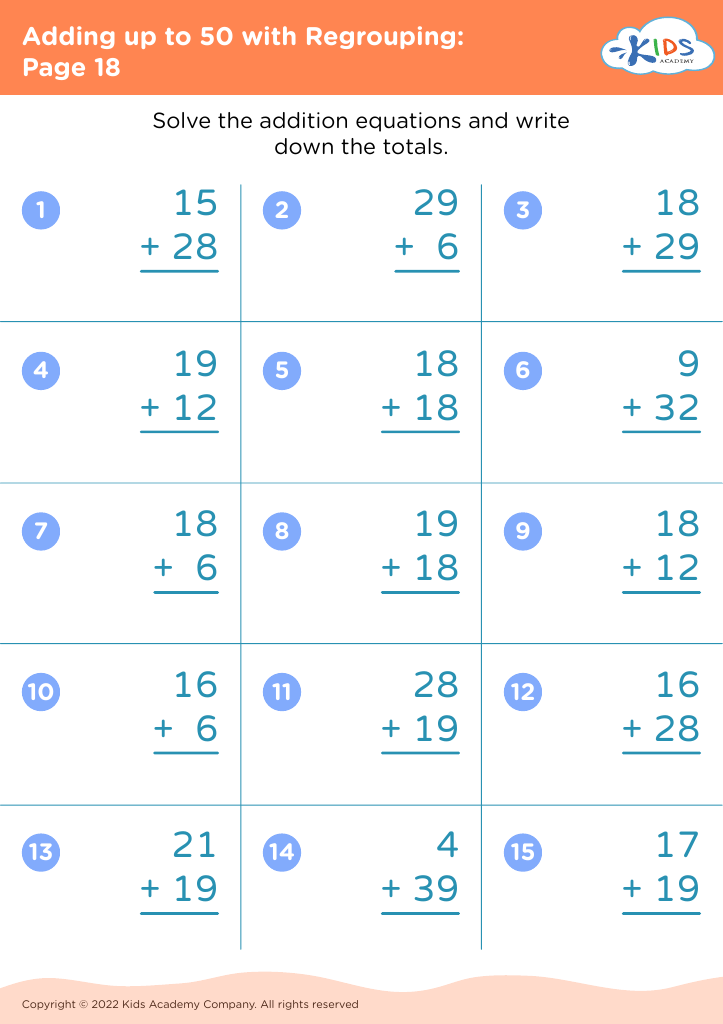
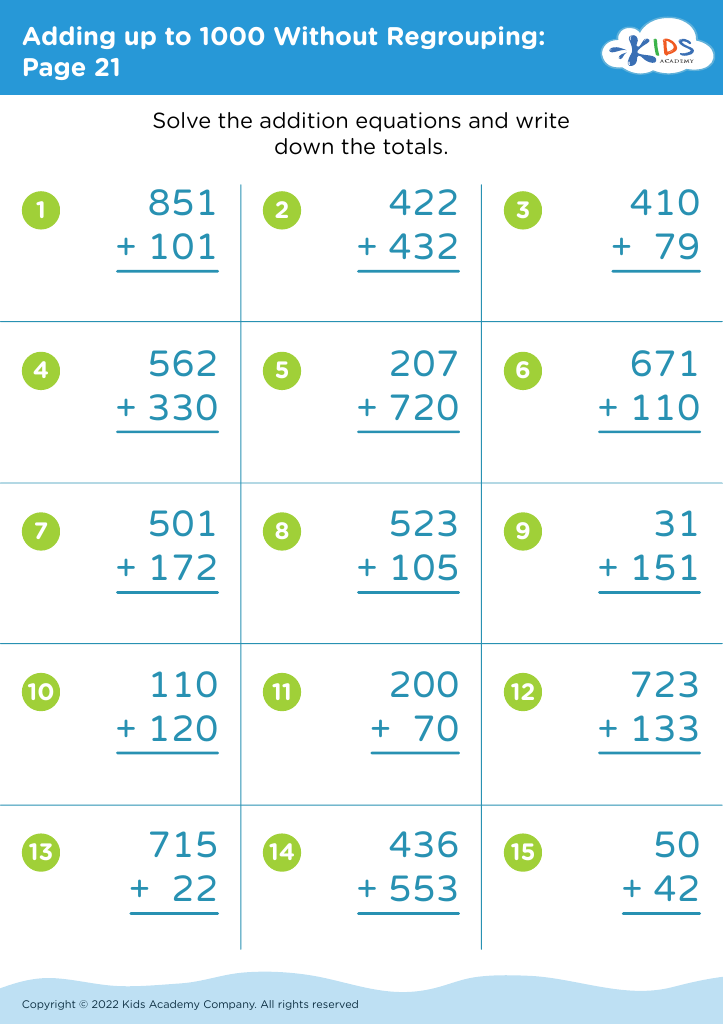
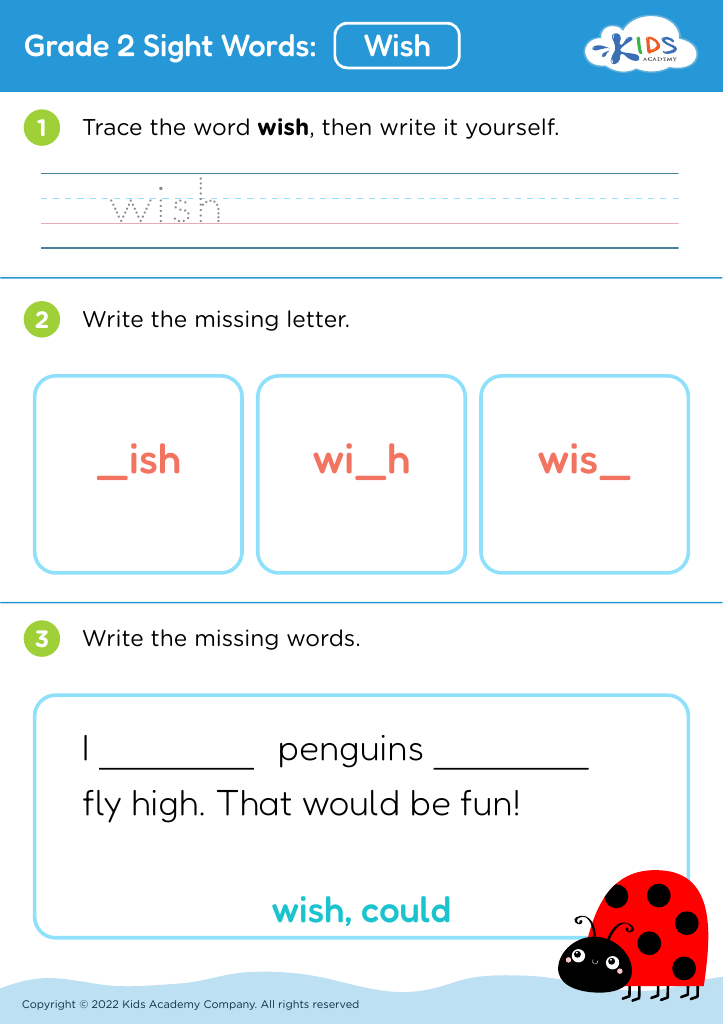
Discover our expertly designed counting skills worksheets tailored for children ages 6-7! These resources from Kids Academy engage young learners through fun and interactive activities that build a solid foundation in numerical understanding and sequencing. Each printable worksheet offers diverse exercises such as number tracing, counting objects, and basic arithmetic to reinforce these essential math skills. Ideal for both classroom and home use, our worksheets help children grasp counting concepts while promoting critical thinking and problem-solving abilities. Enhance your child's numeracy proficiency with our collection today and watch their confidence grow!
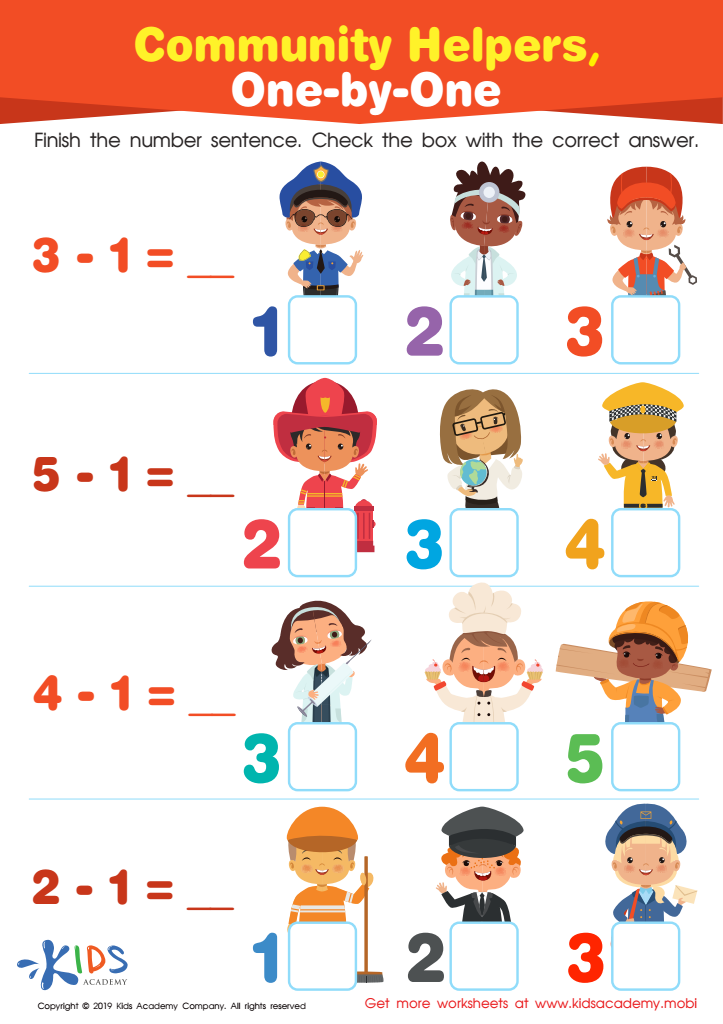
Community Helpers, One-by-One Worksheet
 Assign to My Students



.jpg)


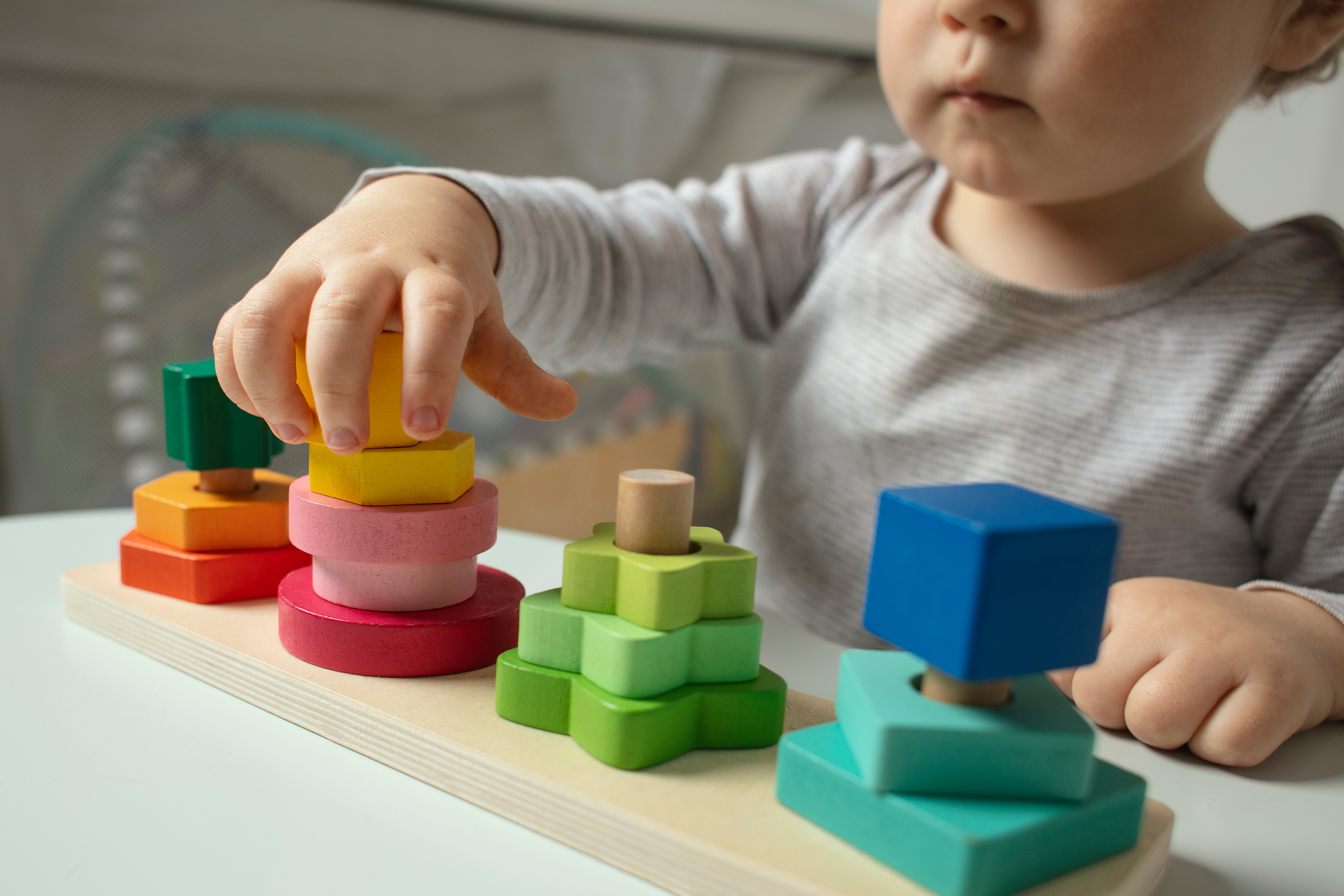
Developing counting skills in children ages 6-7 is fundamental for their overall mathematical growth and cognitive development, laying the groundwork for more complex mathematical concepts they'll encounter later. At this crucial stage, counting not only involves knowing the numbers in sequence but also understanding the relationship each number has with quantity. It helps build number sense, which is critical for performing basic arithmetic operations like addition and subtraction.
When children master counting, they learn to mentally visualize numbers, an essential skill that aids in problem-solving and logical thinking. Moreover, counting enhances memory and attention span, which benefits learning in other subject areas. It's often integrated with everyday tasks – such as counting steps or toys – making it practical and meaningful.
Early proficiency in counting also boosts confidence and fosters a positive attitude toward mathematics. Children are more likely to enjoy and excel in math if they start off with a strong foundation. Teachers and parents play a crucial role in this developmental phase by providing supportive and engaging learning environments that encourage interactive and fun counting activities. This nurturing boosts children's enthusiasm for learning and helps set them on a path to academic success. Prioritizing counting skills at this age contributes significantly to a child's future educational achievements and life skills.








