Directional understanding Worksheets for Ages 6-7
4 filtered results
-
From - To
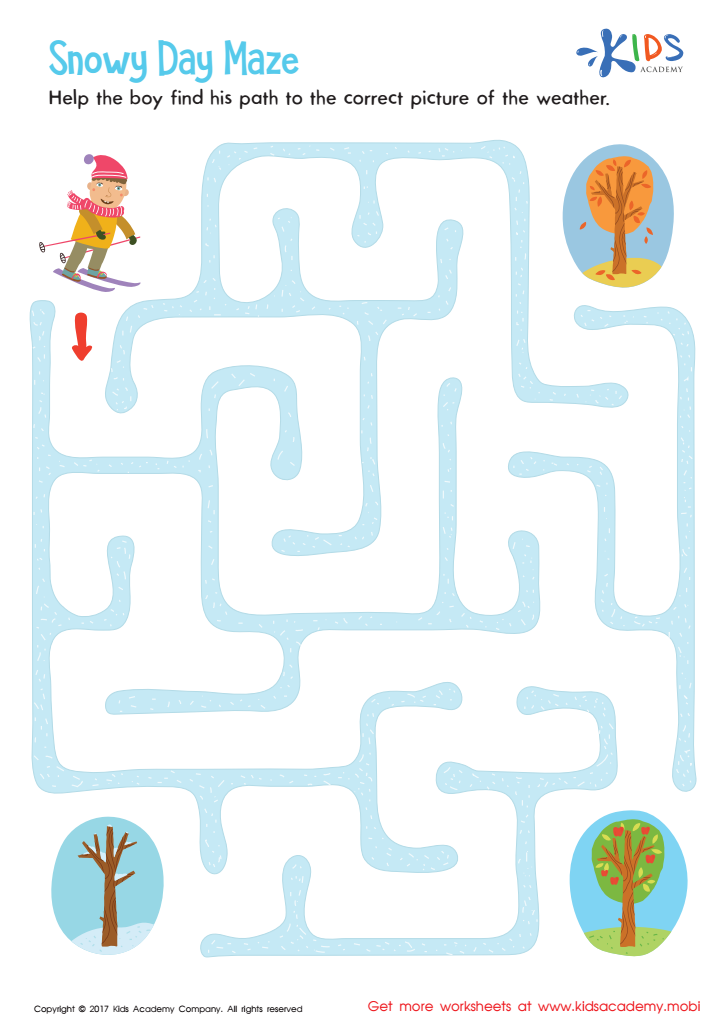
Enhance your child's directional skills with our specially-designed worksheets for ages 6-7! These engaging printables from Kids Academy will help young learners grasp essential concepts like left, right, up, and down through fun activities and puzzles. Ideal for early grade students, our worksheets foster spatial awareness and improve problem-solving abilities. Each activity is crafted to support classroom learning and at-home practice, ensuring children build a solid foundation in directional understanding. Accessible and easy to use, our worksheets make learning directions enjoyable and impactful. Start your child's journey to mastering directions today!
 Assign to My Students
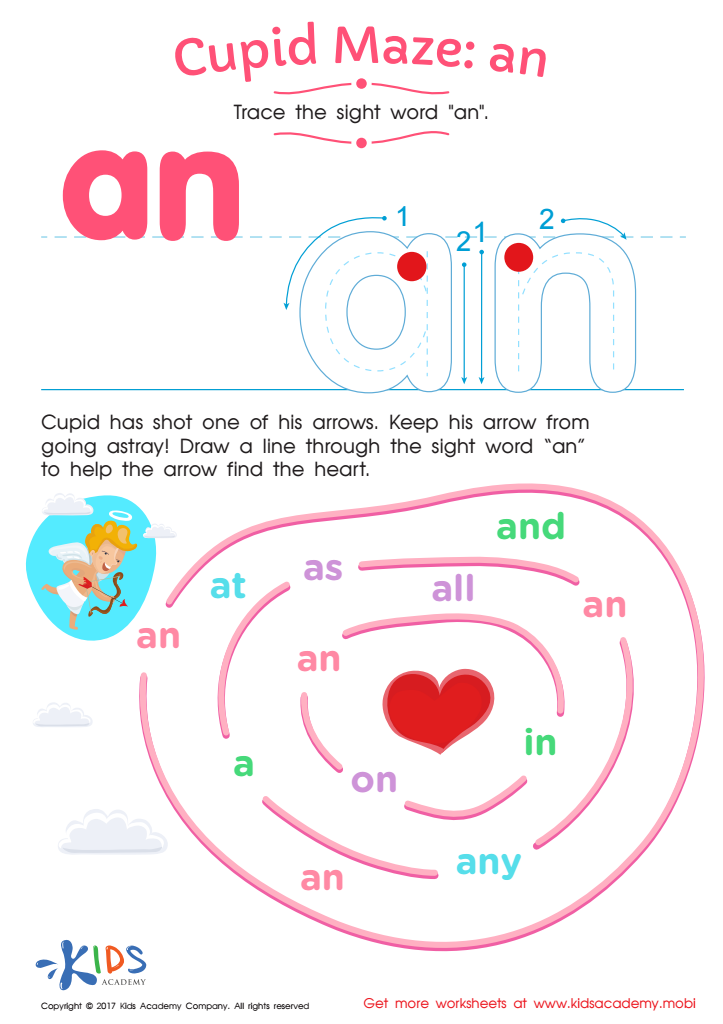
Cupid Maze: An Printable
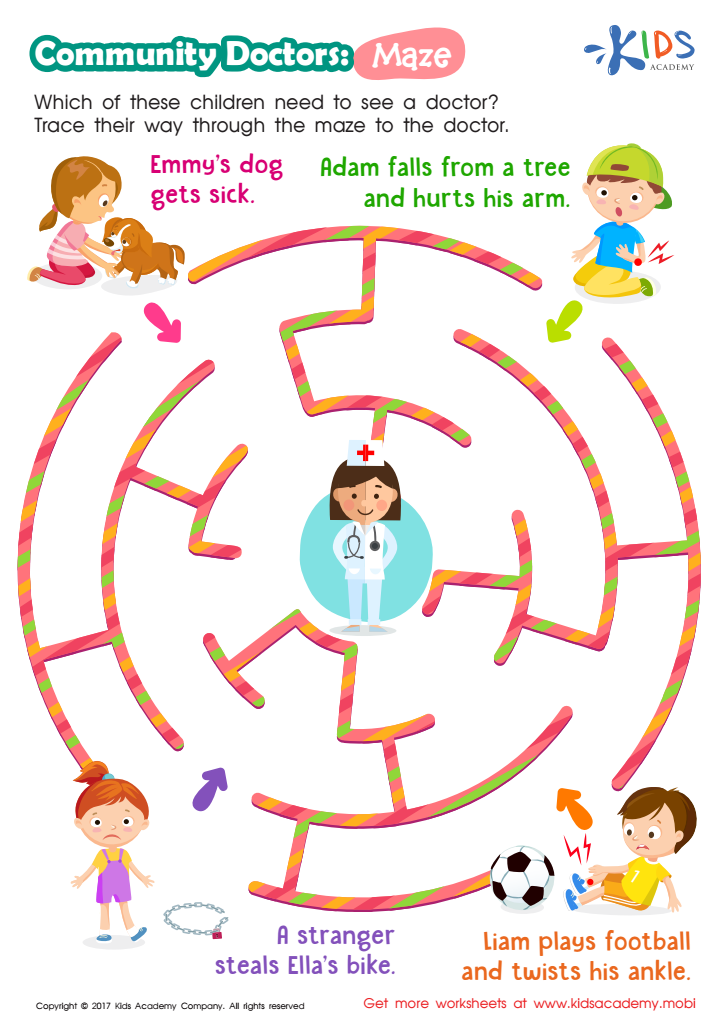
Community Doctors: Maze Printable
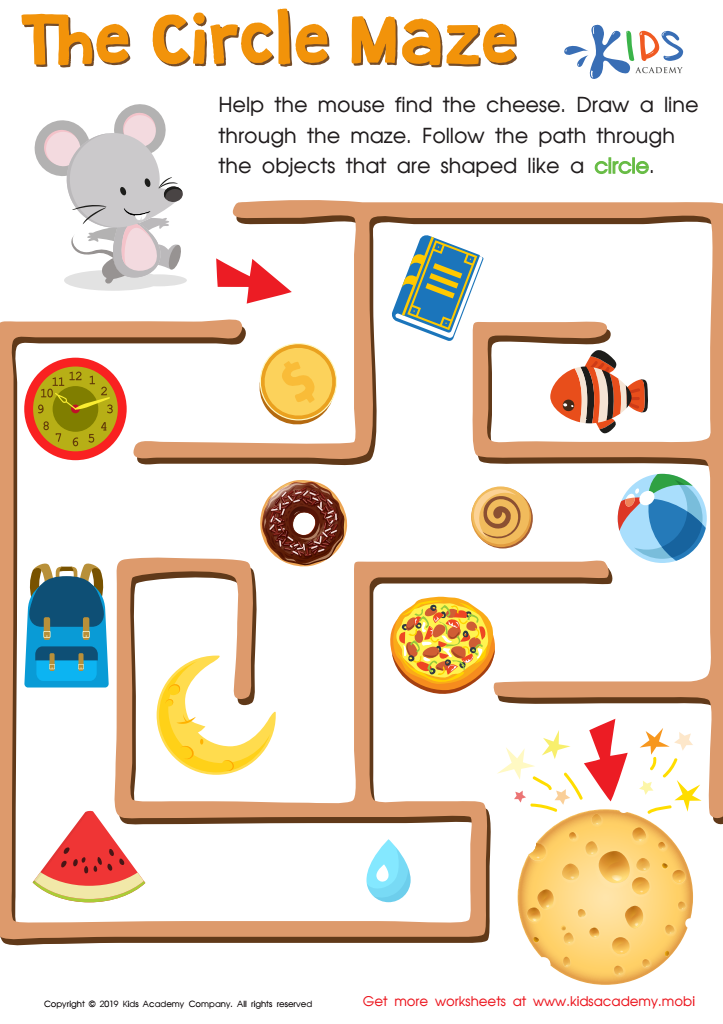
The Circle Maze Worksheet





Directional understanding is an essential foundational skill for children aged 6-7 that significantly impacts their cognitive and physical development. At this age, children start to explore the world more independently, and understanding basic directions—like left, right, up, and down—becomes crucial for their daily activities.
Firstly, directional understanding enhances spatial awareness. It helps children navigate their environment more effectively, whether it's moving through a classroom, playing on a playground, or finding their way while walking or biking. This skill is intrinsically linked to safety; knowing directions can prevent accidents and help children understand traffic rules or find safe paths.
Academically, directional skills are integral to reading and writing. Recognizing and making uppercase and lowercase letters — particularly those that are direction-specific like 'b' and 'd' — relies heavily on directional knowledge. It also supports mathematical concepts, such as understanding the placement of digits in numbers and learning geometry fundamentals.
Socially, this understanding aids in cooperative play. Games often require movements following simple directional commands, facilitating teamwork and communication with peers.
Parents and teachers play a pivotal role in reinforcing these concepts through consistent practice and engaging activities. Nurturing directional understanding is thus a cornerstone in helping children become more independent, academically proficient, and socially adept, laying the groundwork for complex learning in the future.








