
Drawing conclusions Worksheets for Ages 6-7
3 filtered results
Difficulty Level
Grade
Age
-
From - To
Subject
Activity
Standards
Unlock your child's critical thinking skills with our engaging "Drawing Conclusions Worksheets" for ages 6-7. Designed to promote logical reasoning and comprehension, these worksheets help young learners analyze hints and clues in stories, encouraging them to make thoughtful conclusions. Our colorful and interactive activities captivate children’s attention while fostering essential skills for academic success. With a variety of exercises tailored to different learning styles, your child will practice drawing conclusions in a fun and effective way. Enhance reading comprehension, storytelling, and analytical skills in a supportive, creative environment. Explore our worksheets today and watch your child thrive in their learning journey!
Favorites
With answer key
Interactive
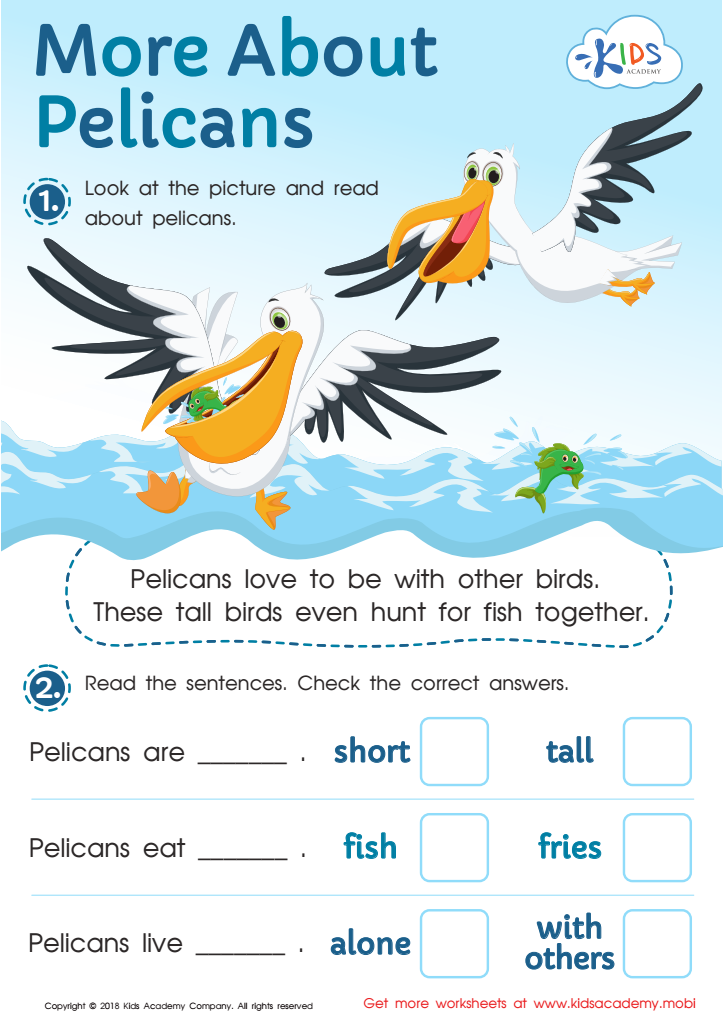
More About Pelicans Worksheet
Train your reader to look for clues in words with this fun worksheet about pelicans! As they read each sentence, they'll learn more about these majestic birds. Once they finish, answer the questions and explore even more!
 Assign to My Students
More About Pelicans Worksheet
Worksheet
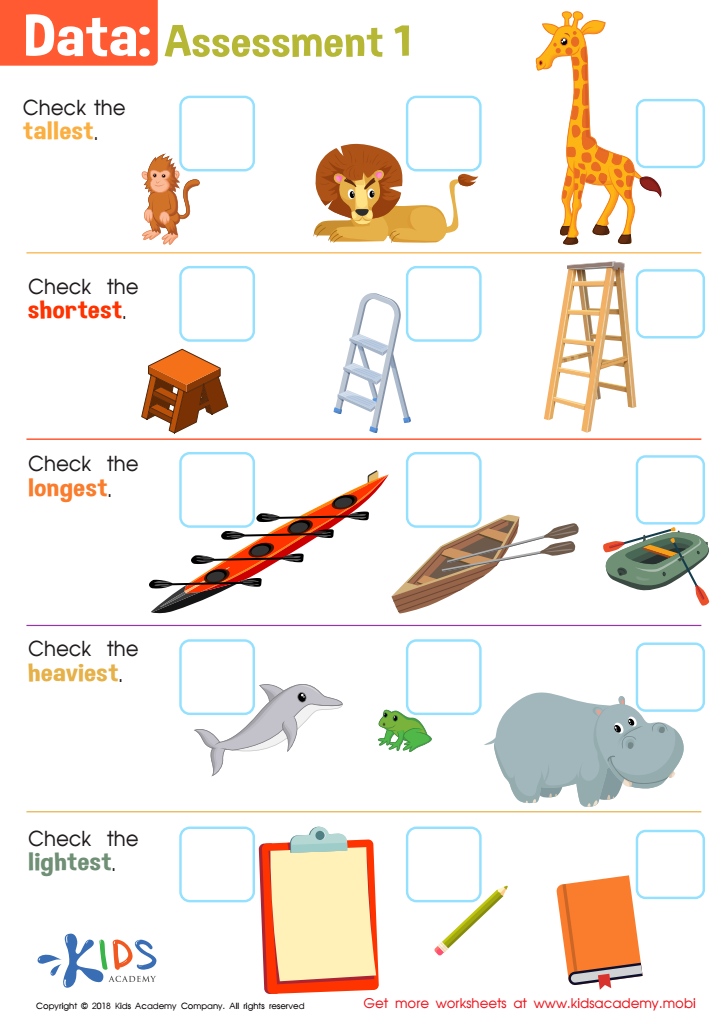
Data: Assessment 1 Worksheet
This free worksheet helps you assess where your young students are with measurement superlatives like tallest, shortest, heaviest, longest and lightest. It features cute, colorful pics of familiar objects so your kids have a reference, and helps you identify areas to work on.
Data: Assessment 1 Worksheet
Worksheet
Join Kids Academy for Free
Who is primarily going to use this learning content?








Drawing conclusions is a critical skill for children ages 6-7, as it lays the foundation for developing critical thinking and comprehension abilities. At this age, children are beginning to make sense of the world around them through observation and experience. Encouraging them to draw conclusions promotes analytical thinking and problem-solving skills, enabling them to understand cause and effect relationships in stories, experiments, and daily life.
As parents and teachers, fostering this skill means guiding children to look beyond immediate information and encouraging mature reasoning. When children learn to infer meanings, identify patterns, and synthesize available information, they gain a deeper understanding of texts and situations. This skill enhances their reading comprehension, making connections between what they read and real-life scenarios.
Moreover, drawing conclusions empowers children with the ability to think independently and make informed decisions. It encourages curiosity, as they ask questions and seek out answers based on evidence, rather than relying solely on direct instruction. By prioritizing the development of this skill, parents and teachers provide a toolbox that children can use throughout their educational journey and life beyond the classroom, reinforcing the value of thoughtfulness and inquiry.








