
Enhance fine motor skills Worksheets for Ages 6-7
4 filtered results
Difficulty Level
Grade
Age
-
From - To
Subject
Activity
Standards
Boost your child's fine motor skills with our engaging worksheets designed specifically for ages 6-7. These interactive activities focus on enhancing hand-eye coordination, dexterity, and grip strength through fun exercises like tracing, coloring, cutting, and folding. Our thoughtfully crafted worksheets cater to various skill levels, making learning both accessible and exciting. Parents and educators can utilize these resources to help children develop essential skills necessary for writing, crafting, and everyday tasks. Empower your little ones with a strong foundation in fine motor development while they enjoy hands-on learning experiences. Explore our collection and watch them thrive!
Favorites
With answer key
Interactive
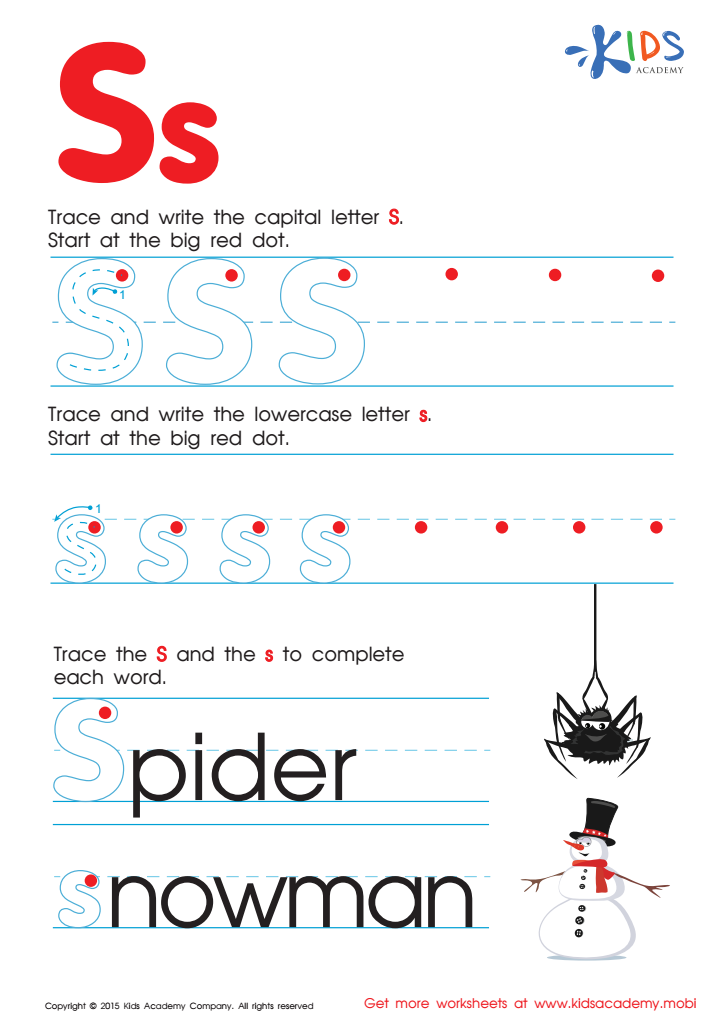
Letter S Tracing Page
Trace and write the capital and lowercase "S" on this ABC worksheet for kindergarten. Start with the big red dot and be careful. When you finish, help the spider and snowman in the pictures restore their words with the capital and lowercase letters. Continue learning the alphabet with Kids Academy.
 Assign to My Students
Letter S Tracing Page
Worksheet
Join Kids Academy for Free
Who is primarily going to use this learning content?






.jpg)

Enhancing fine motor skills in children ages 6-7 is crucial for their overall development and future success. At this age, children are increasingly engaging in activities that require precise hand movements, such as writing, drawing, and manipulating small objects. Effective fine motor skills contribute significantly to academic readiness; the ability to correctly grip a pencil or use scissors impacts their performance in school-related tasks.
Furthermore, strong fine motor skills support everyday activities, promoting a sense of independence. Children who can tie their shoes or button their shirts gain confidence and self-esteem. Developing these skills also encourages creativity, as children can better express themselves through art and craft activities.
Beyond the classroom, fine motor development plays a key role in social interactions. Children often participate in games that involve dexterity, which fosters teamwork and cooperation. Early interventions and support from parents and teachers can help identify and remedy any delays in fine motor skills, ensuring that children don't fall behind.
By prioritizing fine motor skills, parents and teachers lay a strong foundation for academic success, social development, and lifelong learning, enabling children to navigate their world with confidence and competence.








