Learning about ecosystems Worksheets for Ages 6-7
3 filtered results
-
From - To
Discover the fascinating world of ecosystems with our "Learning About Ecosystems Worksheets" designed specifically for ages 6-7! These engaging and colorful worksheets introduce young learners to fundamental concepts about habitats, food chains, and the interconnections between plants, animals, and their environment. Each activity is crafted to promote critical thinking and creativity while making learning fun. Perfect for both classroom and home use, these resources provide step-by-step guidance to help children explore nature's balance and biodiversity. Enhance your child's understanding of ecological relationships today with our interactive and informative worksheets, fostering a love for science and the environment in young minds.
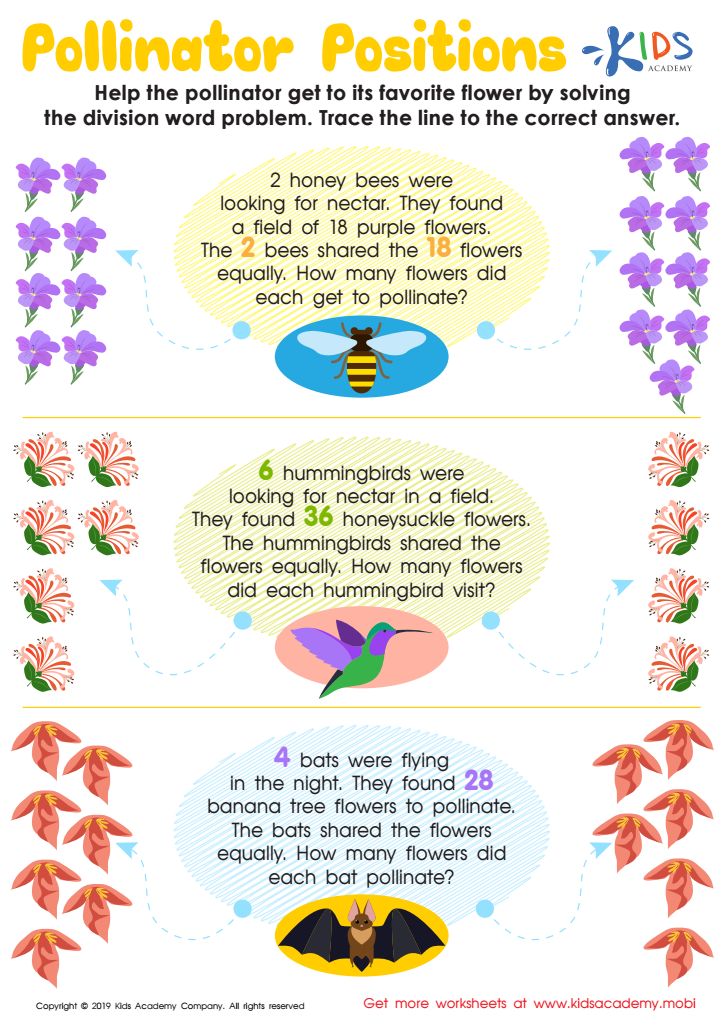
Pollinator Positions Worksheet
 Assign to My Students
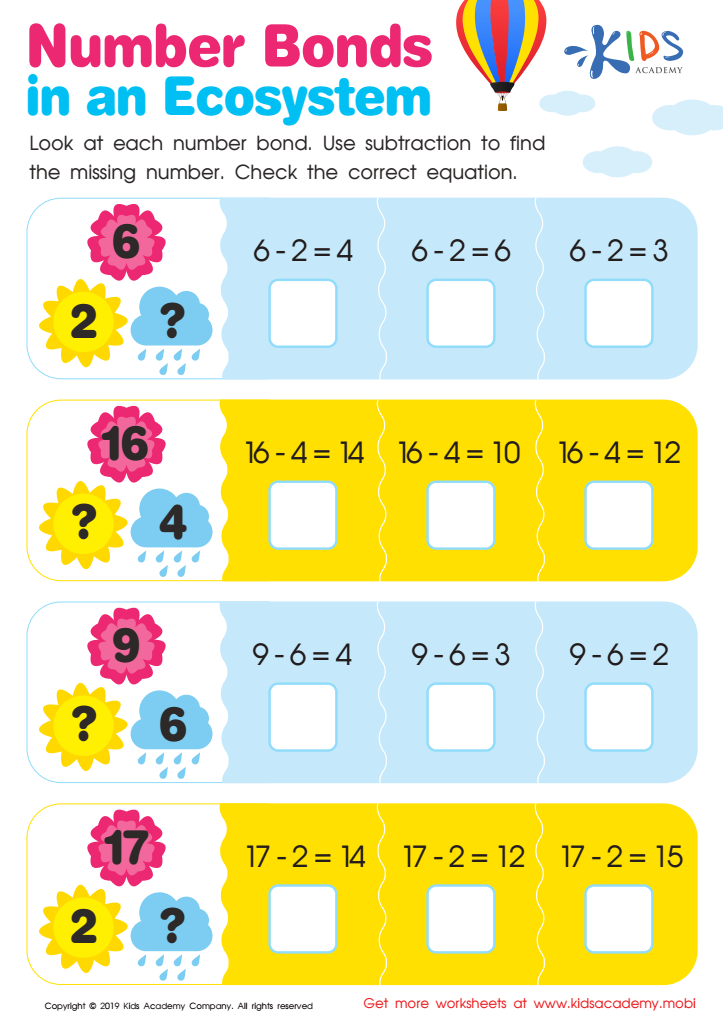
Number Bonds in an Ecosystem Worksheet
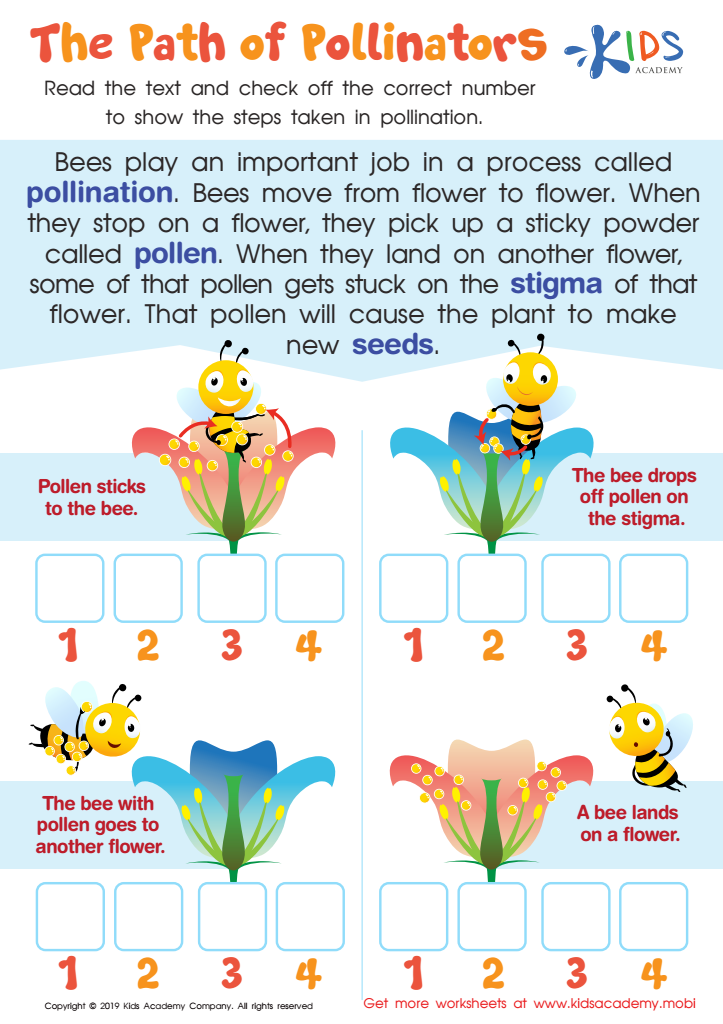
The Path of Pollinators Worksheet








Teaching young children about ecosystems is crucial for fostering a sense of environmental stewardship from an early age. For children aged 6-7, this is an essential time for developing an awareness of the interconnectedness of all living things. Learning about ecosystems helps them understand how animals, plants, and humans rely on one another for survival and the impact of human actions on these delicate balance systems.
Ecosystems education encourages curiosity and observation skills, as children learn about local flora and fauna. It cultivates problem-solving abilities as they explore issues like pollution, deforestation, and biodiversity loss, thus prompting them to think critically about ways to protect the environment. Moreover, these lessons can boost empathy and compassion, teaching children to appreciate the value of all life forms and the role they play in the planet’s health.
Additionally, understanding ecosystems lays the groundwork for lifelong learning and environmental responsibility. It can inspire the next generation of scientists, conservationists, and responsible citizens who are committed to making informed choices. By engaging children in ecosystem learning, parents and teachers help shape a more sustainable future, nurturing a generation that values and cares for the Earth.








